News
Bleaching dangerous to lactating mothers — Queen mother

- /home/u249204778/domains/spectator.com.gh/public_html/wp-content/plugins/mvp-social-buttons/mvp-social-buttons.php on line 27
Warning: Trying to access array offset on false in /home/u249204778/domains/spectator.com.gh/public_html/wp-content/plugins/mvp-social-buttons/mvp-social-buttons.php on line 27
&description=Bleaching dangerous to lactating mothers — Queen mother', 'pinterestShare', 'width=750,height=350'); return false;" title="Pin This Post">
- Share
- Tweet /home/u249204778/domains/spectator.com.gh/public_html/wp-content/plugins/mvp-social-buttons/mvp-social-buttons.php on line 72
Warning: Trying to access array offset on false in /home/u249204778/domains/spectator.com.gh/public_html/wp-content/plugins/mvp-social-buttons/mvp-social-buttons.php on line 72
&description=Bleaching dangerous to lactating mothers — Queen mother', 'pinterestShare', 'width=750,height=350'); return false;" title="Pin This Post">
The use of bleaching creams containing hydroquinone by a section of women particularly lactating mothers in the Wa Municipality of the Upper West Region, have become a source of worry to stakeholders who are bent on promoting nutritional wellbeing of children in the area.
The Queen of Duori in the Waala Traditional Area, Pognaa Amamata Mumuni who tabled the issue for discussion at the launch of infant nutritional wellbeing project at Wa, expressed concern of the use of such creams by lactating mothers in their quest to lighten their skins in preparation for the naming ceremony of their babies.
She said the women used the creams to lighten their skins in order to get rid of the change in body colour which mostly happened during pregnancy instead of allowing nature to gradually restore their colour in due time.
“According to Islamic tradition, a new born baby is named seven days after birth in a modest Islamic naming ceremony.
However, the event has recently been magnified by the youth with pomp and pageantry accompanied by expensive photoshoots by mother and baby in heavy cosmetic make-up”, she said.
The queen stated that in order to look good in front of the camera, the women resorted to using those harsh body creams immediately after birth to lighten their colour without the slightest knowledge of the effect it could have on their breastfeeding babies.
“Women who use these pomades often sweat a lot but when they are breastfeeding the babies, they do not clean the sweat off the breast and so feed the baby with those chemicals”, she stressed.
Pognaa Amamata Mumuni who is the Girl-Officer of Ghana Education Service (GES) in Wa Municipality called on the Ghana Health Service to introduce such topics in their nutrition sensitization programmes in order to minimise the practice but encouraged women to stop bleaching as it could have negative health implications on them.
The Regional Director of Health Services, Dr Damien Punguyire also said there was the need for mothers to protect their infants’ health by avoiding products that were inimical to the wellbeing of their babies,
“Aside the babies we are trying to protect, bleaching can also cause skin cancers and other health complications for the mother especially given the volume of sunshine we enjoy in this region, hence we encourage women to maintain their natural colour”, he added.
Taking the discussion a notch higher, the Regional Director at the Department of Gender, Mrs Charity Banye advised lactating mothers whose children were in school to spare some time and visit the schools in order to breastfeed them.
“It is disheartening to see that the lunch you packed for your toddlers is intact after picking them up from school with the excuse that they were not hungry when they actually were but there was no time for that one teacher who is attending to about 30 or more other children to concentrate on spending over 30 minutes feeding one child”, she said, painfully.
From Lydia Darlington Fordjour, Wa


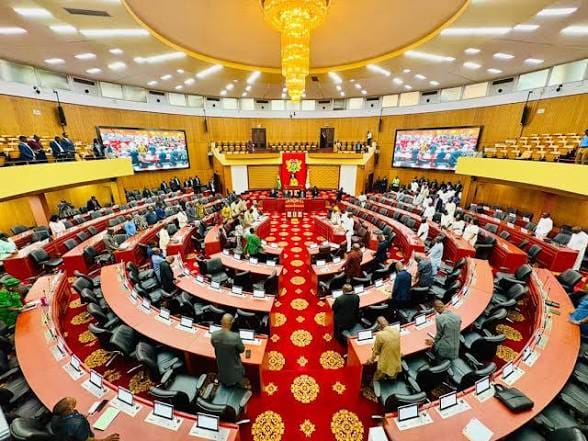
Parliament has clarified public commentary on social media regarding a notice on its notice board that read “No Vacancy for National Service Personnel 2026/2027. Kindly go for reposting.”
In a statement, signed by the Director of Media Relations, David Sebastian Damoah, Parliament said the notice has been misconstrued and was not a policy statement, a freeze on national service placements, or a change in its support for the National Service Scheme.
According to Parliament, the notice was a routine administrative message to prospective personnel who reported to the House, informing them that it has received more personnel than it can accommodate for the 2026/2027 service year and that they should seek reposting to other institutions.
It said it remains committed to the National Service Scheme and values the contribution of service personnel to its work, and regrets any confusion or inconvenience the wording may have caused.
By Edem Mensah-Tsotorme

Ghanaian public advocate Hopeson Yaovi Adorye has been elected to the Board of Directors of the World Taxpayers Association (WTA).
The election took place on Sunday, October 5, 2026, during the Association’s conference in Kraków, Poland.
His election marks a significant addition to his international leadership portfolio and provides a platform for Ghanaian and African perspectives to contribute to global discussions on taxpayer rights, responsible taxation, transparency and prudent management of public resources.
Reacting to his election, Mr. Adorye expressed appreciation to the leadership and members of the WTA for the confidence reposed in him.
“I am deeply honoured by this confidence and conscious of the responsibility that comes with it. Taxpayers are at the heart of every economy, and they deserve fairness, transparency, accountability and value for the taxes they pay. I look forward to working with colleagues from across the world to strengthen the voice of taxpayers and promote responsible fiscal governance,” he said.
According to him, taxation should not be viewed solely as a mechanism for raising government revenue, but also as an important component of the social contract between citizens and the state.
Mr. Adorye said governments have a responsibility to ensure taxes are collected fairly and public resources are utilised efficiently to deliver quality infrastructure, healthcare, education, security and other essential services.
His election also creates an opportunity to bring African experiences into international conversations on taxation and public expenditure.
Mr. Adorye, who is Executive Director of Taxpayers League Ghana, has previously served as Global Board Chairman of the International Youth Network for UN Security Council Resolution 2250, an NGO associated with the United Nations Economic and Social Council (ECOSOC).
He is expected to use his new role to champion fiscal accountability, taxpayer education, good governance and stronger citizen participation in public financial management.