News
Bishop raises alarm over rate of divorce

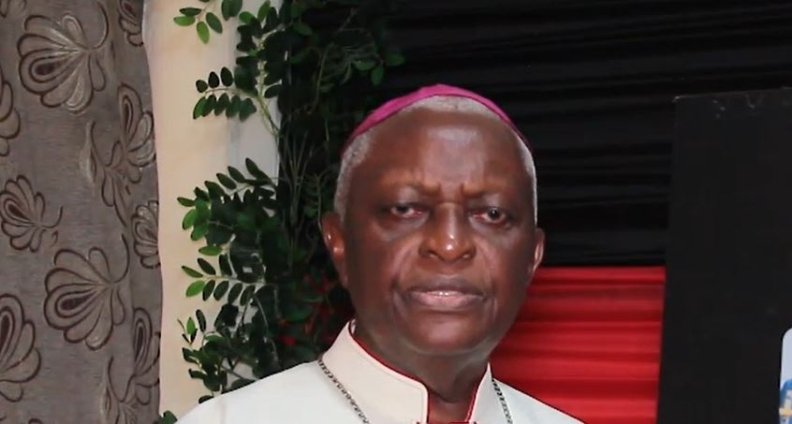
The Catholic Bishop of the Koforidua Diocese, Bishop Joseph Afrifa Agyekum, has expressed concern over the rising rate of divorce in the country, attributing the trend largely to inadequate knowledge about marriage and misplaced expectations of couples.
He said many marriages were collapsing because couples entered into the union without a clear understanding of the responsibilities, sacrifices and commitments that marriage demands.
The Bishop raised the concern while addressing congregants at the 50th anniversary of the Our Lady Queen of Peace Catholic Church at Madina on Sunday.
According to him, marriage was increasingly being viewed through unrealistic lenses shaped by social media, peer pressure and material expectations, rather than mutual respect, patience and shared values.
“Many people go into marriage with expectations that are not grounded in reality. When those expectations are not met, conflict sets in and eventually leads to separation or divorce,” he observed.
The Bishop noted that some couples lacked proper preparation before marriage, adding that pre-marital counselling was often treated as a formality rather than an opportunity to gain deeper insight into marital life.
He stressed the need for churches, families and society to intensify education on marriage, particularly among the youth, to help them make informed decisions before entering into marital unions.
The Bishop also urged married couples to embrace dialogue, forgiveness and understanding, saying disagreements were inevitable but could be resolved through patience and commitment.
He urged couples experiencing challenges to seek counselling instead of resorting to separation, emphasising that strong families remained the foundation of a stable and progressive society.
By Kennedy Afedzi
Join our WhatsApp Channel now!
https://whatsapp.com/channel/0029VbBElzjInlqHhl1aTU27










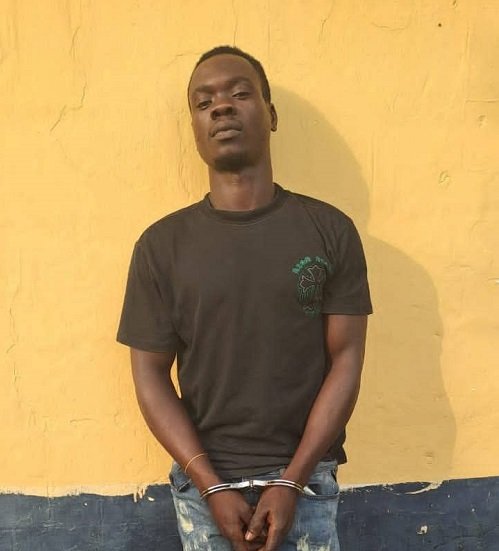
A 30-year-old man has been sentenced to 25 years imprisonment with hard labour by the Bekwai Circuit Court for his role in a 2022 robbery at a mining site at Manso Akwasiso in the Ashanti South Region.
The convict, Dominic Ofori, also known as Fanta, was arrested on 16th February 2026 after years on the run. He pleaded guilty before the Bekwai Circuit Court to robbery contrary to Section 149 of the Criminal Offences Act, 1960 Act 29, and was accordingly sentenced to 25 years imprisonment with hard labour.
On March 20, 2022, the Manso Adubia District Police received intelligence that a group of armed men from Manso Abodom were planning to attack a mining site at Manso Akwasiso to rob the owner of gold concentrate. Acting on the information, police mounted a coordinated operation and laid an ambush at the site.
At about 5:30 pm the same day, four-armed men arrived at the site, fired indiscriminately, and robbed the miners of their gold concentrate. The police team on surveillance intervened, resulting in an exchange of gunfire.
Three of the suspects, Abu Abubakar, Musah Latif, and Gideon Takyi, sustained gunshot wounds and were pronounced dead on arrival at St Martins Catholic Hospital at Agroyesum. Dominic Ofori escaped at the time but was later arrested and put before the court.
The Ashanti South Regional Police Command has assured the public of its continued commitment to combating violent crimes and bringing offenders to justice.
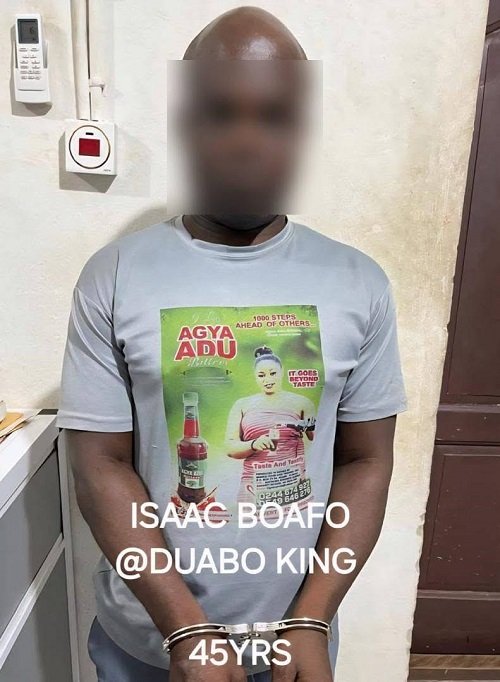
The Ashanti Regional Police Command has arrested 45-year-old Isaac Boafo, also known as “Duabo King,” for allegedly publishing false news intended to cause fear and panic.
Police said the arrest follows a viral TikTok video in which Boafo claimed that four officers at the Central Police Station in Kumasi engaged in inappropriate conduct with commercial sex workers during night patrols in Asafo.
Officers from the Police Intelligence Directorate (Ashanti Region) apprehended Boafo after receiving intelligence about the video.
During questioning, he admitted to creating the video to attract views and engagement online, and acknowledged that he could not prove the allegations.
Boafo also admitted making comments about the President of the Republic for content purposes and could not defend those statements.
He has been formally charged and is in detention as investigations continue.
The Ashanti Regional Police have warned the public against publishing or sharing false information on social media, noting that such acts can cause fear, panic, and damage reputations.
They said anyone found engaging in similar conduct will face legal action.
By: Jacob Aggrey