Sports
Appiah: Thomas Partey ideal for Arsenal


- /home/u249204778/domains/spectator.com.gh/public_html/wp-content/plugins/mvp-social-buttons/mvp-social-buttons.php on line 27
https://spectator.com.gh/wp-content/uploads/2020/10/Thomas-Partey-3.jpg&description=Appiah: Thomas Partey ideal for Arsenal', 'pinterestShare', 'width=750,height=350'); return false;" title="Pin This Post">
- Share
- Tweet /home/u249204778/domains/spectator.com.gh/public_html/wp-content/plugins/mvp-social-buttons/mvp-social-buttons.php on line 72
https://spectator.com.gh/wp-content/uploads/2020/10/Thomas-Partey-3.jpg&description=Appiah: Thomas Partey ideal for Arsenal', 'pinterestShare', 'width=750,height=350'); return false;" title="Pin This Post">
Kwesi Appiah says that his Ghana team-mate Thomas Partey has all the attributes on and off the field to be a big success at Arsenal.
The 27-year-old joined the Premier League side on Monday from Spanish side Atletico Madrid for his buyout clause of £45m.
Appiah, who most recently played for AFC Wimbledon, has played with Partey as part of Ghana squads in recent years and is confident that he is a good fit for Arsenal.
“Under Mikel Arteta, Arsenal is playing a lot of ball possession and playing out from the back and that will really suit his style because he is very comfortable on the ball,” Appiah told BBC Sport.
“Obviously, Spain has a very technical league as well so there is a lot of ball possession and passes being made; so it will suit him very well.
“The top teams in England play that way as well so you are looking at a player who is going to fit in quite easily.
“You look at Manchester United and the way Bruno Fernandes and the way he has taken the Premier League on so I see it as being a similar transition for Thomas.
“He has got that quality and style of play that Arsenal is looking to play so it will be a perfect match.”
Appiah, who played for Ghana as they finished runners-up to Ivory Coast at the 2015 Africa Cup of Nations, also has no doubts he will fit in to the Arsenal dressing room as well.
“He is a very nice guy, down-to-earth and he is a confident guy; he speaks well and he will get on well with the players,” Appiah added.
“There are some personalities at Arsenal that will match his energy and playfulness as well so I am sure he will fit in very well in the dressing room and be one of the leaders amongst the players as well.”
Partey’s journey to Arsenal has seen him work his way up from village football in Ghana to winning European titles and now to the Premier League.
His most successful year so far was 2018, when he won the Europa League and European Super Cup with his former club Atletico Madrid.
Since then he has been a regular starter for Atletico; making more than 40 appearances in all competitions for the Spanish side in both of the last two seasons and was part of the Ghana squad at last year’s Africa Cup of Nations in Egypt.
Those feats in 2018 earned him a nomination for the BBC’s African Footballer of the Year and this is what he had to say at the time about his journey from dusty village pitches in Ghana to European football’s top table.
“It’s not easy for a guy like me to come from a background where I had nothing to be at this level,” says the 25-year-old.
“I started in a small village where my father was the Team Manager. He did a lot of sacrifices which he never told me about.
“It was him selling his stuff to try and get me those new boots.”
The first place he made an impact was at local side in Krobo Odumase in Eastern Ghana.
“He was a good boy, very respectful and would rise up to every challenge,” says Ibrahim Issaka, one of his first coaches. “I knew Partey would become a star because he can play anywhere.”
Partey comes from a long production line of Ghanaian defensive midfielders, where the likes of Stephen Appiah, Sulley Muntari and Michael Essien made their name at the top of European football.
“I tried to be like a ‘stopper’ using the intelligence of Michael Essien, and also attack. I use the strength of Yaya Toure,” he says.
It was Partey’s natural ability that helped him get spotted by Atletico scouts.
He left Africa to join the Spanish side in 2011 – in a secrete journey that even his parents did not know about.
“I got into a car, they took me to the capital, and they gave me my passport and said: ‘Today you travelling,’” he told Marca earlier this year.
“My dad wasn’t at home. Nobody from my family knew anything, or where I was going that day – because if they were told then it would cause a lot of problems. I travelled to Spain and it was six or seven months before anyone realised that I wasn’t in Ghana.”
His first coach in Spain was former Atletico Madrid midfielder Alfredo Santaelena.
“As soon as we [the coaches] all saw him, we all agreed that he would be a player of the future,” says Alfredo. “He is a player with an innate talent.”
After loan spells at Mallorca and Almeria, Partey made his Atletico debut in 2015 and improved under manager Diego Simeone’s guidance.
“We all know he’s a great coach, one of the best coaches on the planet. He helped me to adapt to any position he put me in,” says Partey.
He will now be trying to impress Arteta and the Arsenal fans with what he has learnt from Simeone and his determination to continue improving.


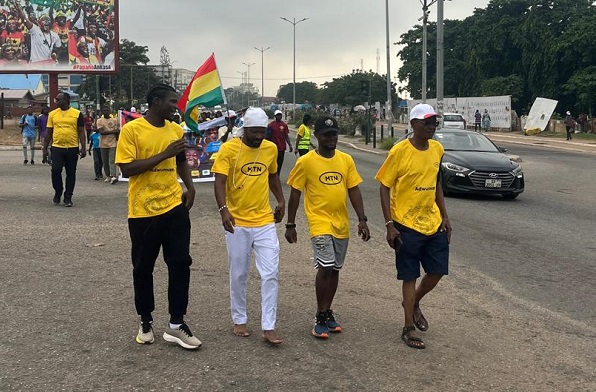
Students and management staff were joined by keep fit enthusiasts to partake in the 2026 edition of the Street Academy annual health walk held last Saturday.
It was held on the theme: “Feet on the Street, Hope in Motion.”
The event also brought opinion leaders from some of the Ga communities, sports men and women including former world boxing champion, Joseph Agbeko, and children from the academy and neighbouring communities.
The event was originally slated for July 18 but postponed due to President John Dramani Mahama’s declaration of July 17-18 as National Clean-up Day.
That development did not affect the event in any way as participants, mostly cladded in yellow outfits, turned up in their numbers.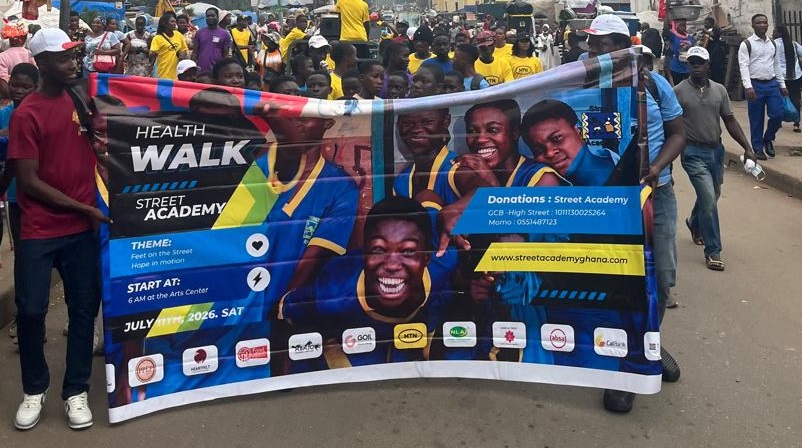
Spurred on by brass band music, the walk went through some of the principal streets of the capital, drawing more crowds from the communities it went through before returning to the Accra Arts Centre, the starting point.
Participants then went through another exhaustive aerobic session before they were refreshed.
Addressing the participants, Dr Ataa Lartey, the Founder and Executive Director of the Academy, commended them for turning out in their numbers for the walk, which he described as an event to enable the children and other guests to exercise.
Secondly, the event, he stated, was also to raise awareness about the plight of needy and underprivileged children, promote healthy living, and advocate the importance of basic education.
By Spectator Sports Reporter
Usually, when a coach is tasked to build a formidable national team for a major tournament, he does so with the best players available to him, with a special focus on local talents.
But where such local talents are not available or are unconvincing, the coach is allowed to supplement with foreign based players.
In this case, these players scouted beyond the borders of the country must be in top form and prove beyond reasonable doubt that they are far better than the locals.
Again, such players must also show some commitment and dedication to the national call.
A coach can however, decide to ignore this system in cases where there is insufficient time for the exercise, when there is a policy that forbids him from inviting certain crop of players, or if he finds himself in a position where he has no say on the players selected for him to use.
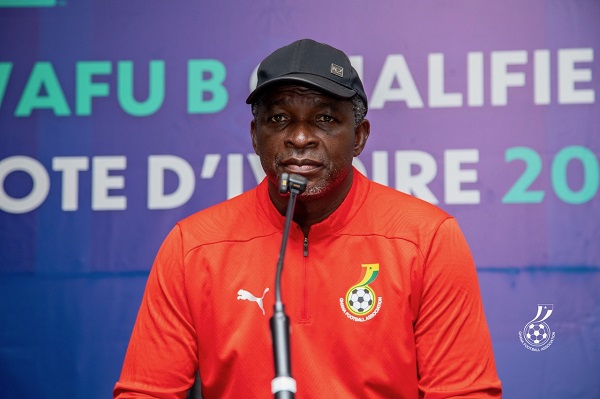
Recently, Coach Maxwell Konadu was tasked to build a Black Satellites team for the ongoing WAFU B U-20 championship in Cote d’Ivoire, a tournament which also serves as a qualifier for the 2027 Africa U-20 Championship which Ghana is hosting.
With that status, the Black Satellites become automatic candidates and rightfully, the focus should have been on a team to be groomed for the ultimate.
The sub-regional tournament did not actually oblige Konadu to rely on foreign based players, most of who are on pre-season assignments with their respective clubs.
Also, Konadu was under no misperception about quotas to allot local or foreign based players. It was very clear that the tourney was for the locals.
With this background, he is believed to have selected the players that formed the team that represented Ghana at the championship.
Sadly, Konadu and his boys disappointed woefully at the championship, failing to march his words against performance on the field.
Exiting just after the group stage came with little surprise. That has been the pattern for the national juvenile teams in their respective championships for now.
What left tongues wagging, however, was Konadu’s claim that lessons from the championship would help build a “stronger and more competitive squad for next year’s TotalEnergies CAF U-20 Africa Cup of Nations.”
The confusion lied in his admission that “the squad which competed in Côte d’Ivoire is unlikely to be the same one that represents Ghana at the 2027 TotalEnergies CAF U-20 Africa Cup of Nations.”
It would have made a lot of sense to rather build a team that uses the WAFU B Championships as a platform to prepare for the main championship next year, than selecting a team that in his own words is unlikely to compete.
This is a very common feature in other jurisdictions. The English FA, for instance, would have used an Under-18 team for the WAFU B, knowing the impact that experience would have on the team.
So clearly, the experience and lessons Konadu spoke about would be non-existent and would not help the team in anyway because if he happened to be in charge of the Ghana 2027 championship team, he would be supervising an entirely new team.
From where I sit, Konadu and whoever played any role in assembling this team got everything wrong and must be reminded that there would be no assurances that the next team would excel in the championship.
By Andrew Nortey