News
ADRA, UNHCR create market opportunities for refugees in WR


- /home/u249204778/domains/spectator.com.gh/public_html/wp-content/plugins/mvp-social-buttons/mvp-social-buttons.php on line 27
https://spectator.com.gh/wp-content/uploads/2021/09/Participants-and-organisers-at-the-fair.jpg&description=ADRA, UNHCR create market opportunities for refugees in WR', 'pinterestShare', 'width=750,height=350'); return false;" title="Pin This Post">
- Share
- Tweet /home/u249204778/domains/spectator.com.gh/public_html/wp-content/plugins/mvp-social-buttons/mvp-social-buttons.php on line 72
https://spectator.com.gh/wp-content/uploads/2021/09/Participants-and-organisers-at-the-fair.jpg&description=ADRA, UNHCR create market opportunities for refugees in WR', 'pinterestShare', 'width=750,height=350'); return false;" title="Pin This Post">
The Adventist Development and Relief Agency (ADRA) in partnership with the United Nations High Commissioner for Refugees (UNHCR) and the Ghana Refugee Board has organised a ‘product fair’ for refugees in the Western Region.
The exhibition, held last Tuesday at Aiyinase, was to create a market for products and services of refugees and enable them to become self-reliant, following their skills acquisition in agriculture and agro-processing, handicraft, petty trading, among others.
Themed “Providing Customer Experience: The Work of the Refugee,” the fair brought together about 16 participants from the Ampian and Krisan refugee camps who displayed variety of consumables and provided other services.
According to the organisers although a number of refuges had acquired skills, they were still unable to “penetrate local markets” due to language barriers, lack of effective marketing skills and limited spaces at the markets.
It is for this reason that the fair sought to create opportunities for the asylum seekers to strengthen their relationship with the local traders and clients and make their products more visible to the public.
The participants prepared and served local dishes at the Aiyinase Market, one of the biggest markets in the Western Region, while displaying other items such as cucumber, fresh eggs, chicken, sandwiches, which were patronised by the public.
Mr. Edward Acquah-Imbeah, Marketing Officer UNHCR-ADRA Livelihood Project, expressing satisfaction about the event, said the fair would be organised quarterly to help more refugees to exhibit their creativity.
He said other activities would be organised regularly to increase social interaction between the refugees and the host communities.
Ms. Christiana Badoo, UNHCR Livelihood Associate, also said more refugees would be supported so they could continue to live meaningful lives in various communities, and called on other stakeholders to support the self-reliance activities of refugees.
By Spectator Reporter



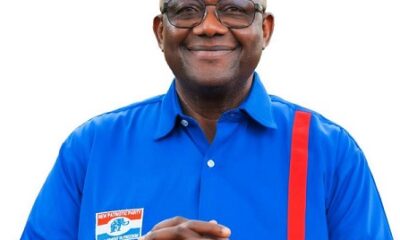
The Director of Legal Affairs of the New Patriotic Party (NPP), Gary Nimako Marfo, has questioned who will bear the cost of conducting presidential and parliamentary primaries following the Supreme Court’s ruling on the party’s delegate system.
Speaking to journalists, Mr. Nimako Marfo said he would not immediately comment on the ruling, adding that he wanted to wait for the full details before sharing his views.
“I don’t want to comment on it now. Let’s wait,” he said.
When asked about the Supreme Court’s decision that all members in good standing should vote in party elections, he shifted attention to the financial implications of implementing the ruling.
According to him, allowing all members in good standing to vote would increase the cost of organising internal party elections.
He questioned who would pay for the expanded electoral process.
“Who is going to pay for the cost of the elections?” he asked.
When a journalist suggested that political parties would bear the cost, Mr. Nimako Marfo replied, “Let’s wait and see.”
The comments come after the Supreme Court ruled that political parties should allow all members in good standing to vote in their internal elections, a decision that is expected to expand participation but also increase the financial and logistical demands of organising presidential and parliamentary primaries.
By: Jacob Aggrey
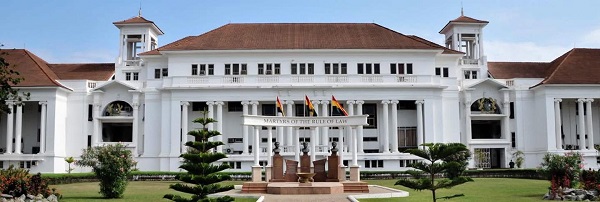
The Supreme Court of Ghana has declared the delegate system used by political parties to elect presidential and parliamentary candidates unconstitutional.
In a 5-2 majority decision delivered, the Court ruled that the long-standing system violates democratic principles and ordered all political parties to ensure every registered, card-bearing member participates in presidential and parliamentary primaries.
The ruling brings to an end decades of internal party elections conducted by a limited number of delegates.
The suit was filed by former Minister for Environment, Science, Technology and Innovation, Professor Kwabena Frimpong-Boateng; veteran politician Dr. Nyaho Nyaho-Tamakloe; and former Minister for Lands and Forestry, Dr. Christine Amoako-Nuamah.
The plaintiffs argued that the delegate system created inequality among party members by granting voting rights to a privileged minority while excluding ordinary members in good standing.
They told the Court that restricting voting rights to delegates was inconsistent with the democratic principles enshrined in the 1992 Constitution.
The Attorney-General’s Department supported the suit and urged the Court to adopt a “one member, one vote” approach.
In its submission, the State argued that political parties perform an important public function in Ghana’s democratic framework and that their internal electoral processes must reflect constitutional values of equality, participation and universal suffrage.
The Attorney-General further submitted that expanding voting rights to all registered members would strengthen accountability and deepen internal democracy within political parties.
The judgment means that going forward, presidential and parliamentary candidates will be selected by all registered members of a political party, instead of by delegates alone.
Political parties are expected to review their constitutions and structures to comply with the Court’s directive ahead of the 2028 general elections.
By Edem Mensah-Tsotorme