Hot!
Abortion, miscarriage can cause breast cancer

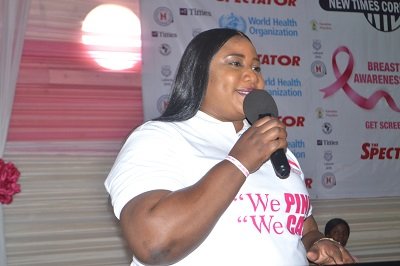
Dr Partey-Newman
The Chief Executive Officer of Ladybits Health and Wellness Clinic,Dr Victoria Partey-Newmansaysabortion and miscarriagecould put a woman at risk of developing breast cancer.
According to her, a miscarriage or termination of a pregnancy halt the process of breast enlargement which is occasioned by the increased levels of the estrogen hormones.
“So miscarriage or abortion will expose the mother to high concentrations of estrogen and it can give some type of breast cancer.”
Dr Newman said this in an interview with The Spectator on Thursday at herresidence in Dome, Accra.
“During pregnancy there are hormonal changes, one of the hormones that increases is the estrogen which helps with the increase in breast size, a process known as cell differentiation,” she said.
She said cell differentiation usually occurs in the second half of the pregnancy with miscarriage normally occurring in the first half.
She explained that when estrogen is released without the differentiation, it could put one at risk of developing breast cancer, especiallywhen the pregnancy was miscarried at that stage.
“It is the same with abortion; when one does not go full term with the pregnancy and the fetusis aborted before the first half of the pregnancy and there is an increase in estrogen without differentiation, it can lead to breast cancer.
“So we can say the hormonal changes of estrogen in the first half of pregnancy that affects the undifferentiated breast cells can put one at risk of breast cancer,” she stated.
DrPartey-Newman therefore urged women to constantly examine their breast and also called on government to take up the cost of treatment.
She encouraged men to support their partners when they are diagnosed of the disease and not abandoned them.
DrPartey-Newman said sucking the breast by men may reduce the risk of breast cancer among women.
She explained that the hormones released during breastfeedingwhich have been found to prevent breast cancer were also released during sucking.
However, she indicated that studies had not confirmed whether sucking of breast by men can reduce the risk of cancer likebreastfeeding.
“When a woman breastfeeds a child, there is the release of a hormone known as oxytocin. This hormone is what forms the bond between the mother and child. It is also released during love-making between a man and a women when the breast is sucked,” she said.
DrPartey-Newman saidthere were no confirmed studies on sucking of breast but sucking it has the tendency to reduce breast cancer just because of the release of hormones.
By Jemima Esinam Kuatsinu


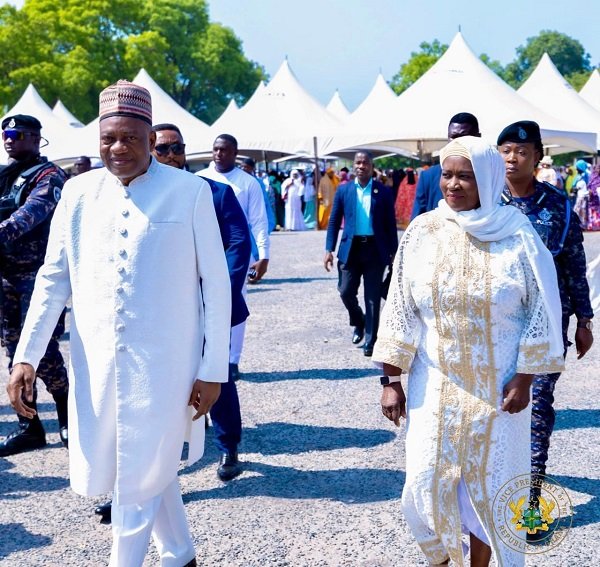
Vice President Jane Naana Opoku-Agyemang joined the Ahlus Sunna Muslim community at the forecourt of the State House to mark Eid, in the company of distinguished Imams, clerics, and fellow Ghanaians.
In her message, the Vice President highlighted Ramadan as a period defined by discipline, sacrifice, and moral renewal an opportunity for reflection, character building, and a recommitment to responsible citizenship.
She noted that the sacred observance reinforces shared values that unite the nation.
Extending warm Eid Mubarak wishes to the Muslim community in Ghana, Prof.Jane Naana Opoku-Agyemang called for continued peace, unity, and collective responsibility in building a harmonious society.
She further expressed hope that the blessings of Eid will bring joy to hearts, peace to homes, and strengthen national cohesion.

THE East Legon enclave in the Greater Accra Region is noted for housing the influential and affluent in society.
The area is synonymous with luxury mansions and ‘big-time’ businesses.
But within the same territory lies ‘Mempeasem,’ a community with a striking contradiction; it tells a totally different story.
‘Mempeasem’ translates from Twi, a local dialect, to “I don’t want trouble,” but the reality, however, is that the neighborhood is currently defined by a troubling disconnect between the admired reputation and its deteriorating infrastructure.
After publishing concerns expressed by a student in its ‘Write to the Editor’ column, The Spectator followed up to present detailed scenes of the sanitation problems in the area.

Residents are increasingly vocal about the lack of drainage systems, a deficiency that turns moderate rainfall into a logistical nightmare.
Without engineered channels for runoff, water settles in stagnant pools, eventually eroding roads.
The irony is sharp: billion-cedi homes often stand adjacent to clogged gutters and makeshift refuse sites.
The lack of public sanitation facilities and a centralised sewage system means that the environmental health of the area is constantly under threat, undermining the quality of life for its high-net-worth inhabitants and local workers alike.
Beyond waste and water, the community faces a broader infrastructure deficit.
Concerns about the prevalence of wooden structures in close proximity to refuse dump sites, where waste material is burnt, were raised; it’s a recipe for disaster.
The situation in Mempeasem is detrimental to public health and safety and serves as a wake-up call for urban planners and local authorities.
By Spectator Reporter