News
‘Sudan must pay US embassy attack victims’

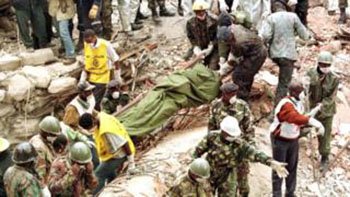
Sudan is required to pay punitive damages to some of the victims of the 1998 embassy bombings in Kenya and Tanzania carried out by al-Qaeda, the US Supreme Court has ruled.
More than 200 people died and thousands were injured in the attacks.
Sudan was accused of giving al-Qaeda and its leader Osama Bin Laden technical and financial support.
The Supreme Court ruling applies to US nationals, embassy employees and contractors.
The ruling comes at a time when Sudan’s new government is pushing to be removed from the US’s list of state sponsors of terrorism.
The unanimous decision by the Supreme Court means that about $800m (£650m) out of the more than $4bn that was awarded in punitive damages in 2011 has been reinstated, Christopher Curran, who was representing Sudan, is quoted by the Reuters news agency as saying.
Nine years ago, the judge in the Federal District Court in Washington said that Sudan should pay roughly $6bn in compensation as well as the $4bn in punitive damages, the New York Times reports.
In 2017, Sudan successfully challenged the ruling on the punitive damages arguing that they were awarded under a 2008 amendment to a law that could not be applied to something that happened 20 years earlier.
The Supreme Court decided on Monday that Congress had said it was possible for it to be used retrospectively.
“As always, Sudan expresses sympathy for the victims of the acts of terrorism at issue, but reaffirms that it was not involved in any wrongdoing in connection with those acts,” Mr Curran said.
The case of punitive damages for Kenyans and other nationals who were not directly employed by the embassies, as well as non-US relatives of any of those injured or killed in the attacks, was referred back to a lower court.
Matthew McGill, who was representing some of the victims, said: “We are hopeful that this soon will lead Sudan to reach a just and equitable resolution with its victims.”
The $6bn compensation was not in dispute in this case and in February it was reported that Sudan was in negotiations over the sum to be paid.
At that time, Sudan had agreed to compensate the families of 17 US sailors who died when their ship, the USS Cole, was bombed by al-Qaeda at a port in Yemen in 2000. -BBC


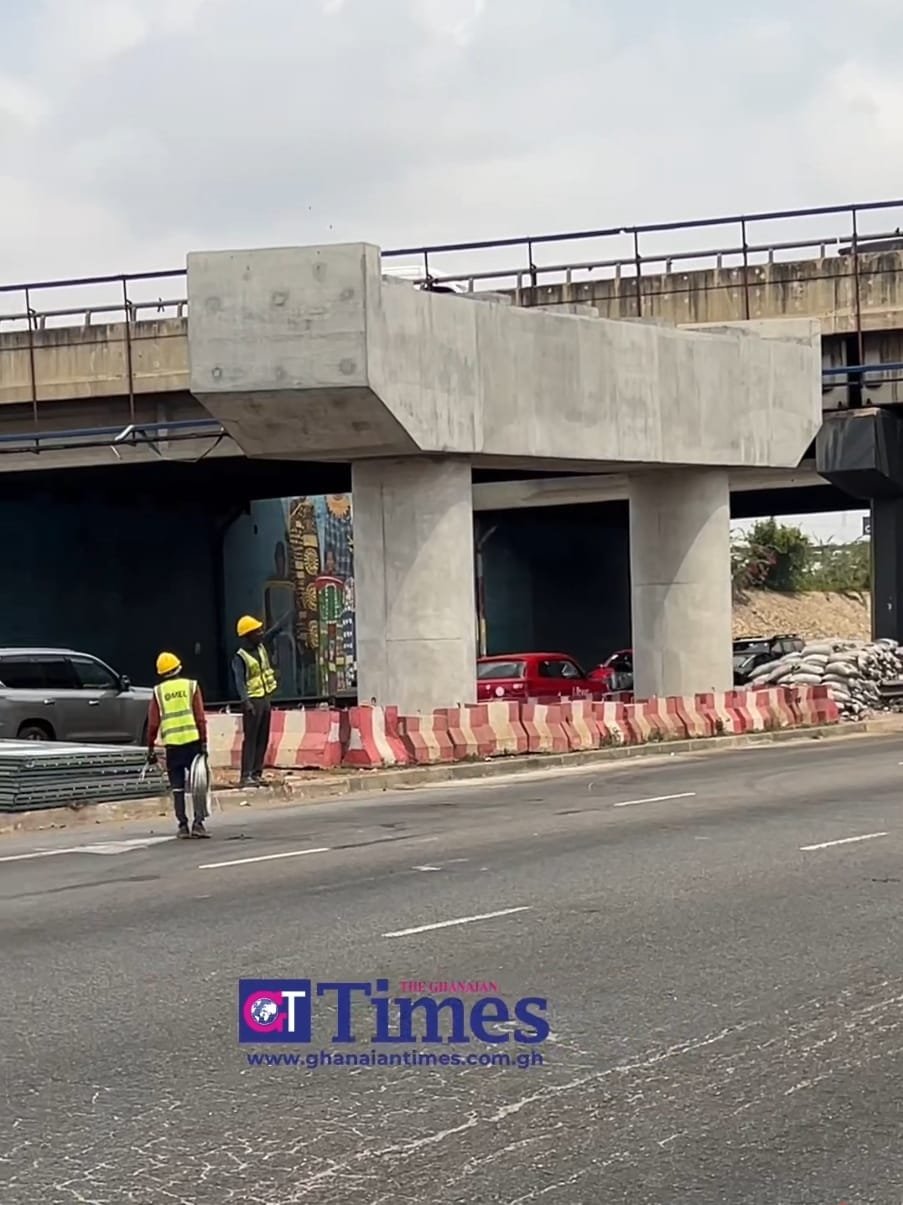
The Ghana Highway Authority has announced a temporary traffic management arrangement on sections of the Accra Tema Motorway and the Tetteh Quarshie Interchange as construction work continues on the motorway expansion project.
In a public announcement issued on March 5, the Authority explained that the arrangement forms part of ongoing construction works under the Accra Tema Motorway and Extension Projects.
It noted that the traffic adjustment is required to allow contractors carry out T beam launching works for the expansion of the Tetteh Quarshie Interchange Bridge on the N1 highway.
Under the arrangement, lanes on the N4 northbound carriageway, which serves traffic moving from Accra to Madina, will be temporarily closed.
Meanwhile, the southbound carriageway from Madina to Accra, which currently has four lanes, will be reconfigured into two lanes in each direction to accommodate traffic moving both ways.
The Authority indicated that the temporary traffic changes will take effect from Monday, March 9, 2026 and are expected to last for four months.
According to the statement, the lane reduction is necessary to create a safe working space for construction personnel and to ensure the safety of motorists using the road.
The Authority therefore advised drivers to be cautious, obey traffic signs and cooperate with traffic management officials throughout the construction period.
It encouraged members of the public who require further information to contact its Public Affairs Division through WhatsApp on 0551622244.
By: Jacob Aggrey
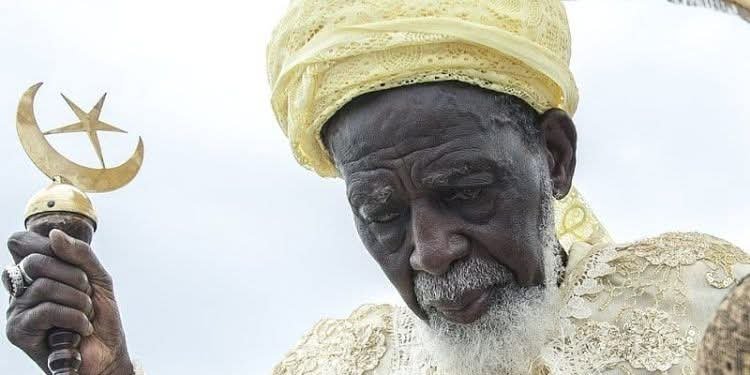
The National Chief Imam, Osman Nuhu Sharubutu, has congratulated the Government and people of Ghana as the country marks its 69th Independence Day, urging citizens to renew their commitment to national unity and democratic values.
In a statement to commemorate the celebration on March 6, he encouraged Ghanaians to use the occasion to strengthen their dedication to constitutional democracy, economic progress, interfaith harmony and peaceful coexistence.
He observed that the world was currently facing several challenges, including the rise of authoritarian governments and increasing military conflicts among nations.
According to him, humanity was experiencing turbulent times, with genocidal attitudes and violent extremism becoming more widespread in different parts of the world.
The Chief Imam explained that such global developments should inspire Ghanaians to come together and deepen their commitment to nation building while embracing unity in diversity.
He noted that although colonialism left a painful mark on the country’s history, Ghanaians could take comfort in their collective determination to overcome colonial subjugation and build a free nation.
Reflecting on the country’s independence struggle, he indicated that Ghanaians now remembered the victory for liberty rather than the hardship endured during the fight against tyranny.
The National Chief Imam offered prayers for divine guidance and blessings for the President, John Dramani Mahama, the Government and the people of Ghana.
By: Jacob Aggrey