Sports
Brand new car for Best Referee not bad idea, but …

- /home/u249204778/domains/spectator.com.gh/public_html/wp-content/plugins/mvp-social-buttons/mvp-social-buttons.php on line 27
https://spectator.com.gh/wp-content/uploads/2021/11/REFEREE.jpg&description=Brand new car for Best Referee not bad idea, but …', 'pinterestShare', 'width=750,height=350'); return false;" title="Pin This Post">
- Share
- Tweet /home/u249204778/domains/spectator.com.gh/public_html/wp-content/plugins/mvp-social-buttons/mvp-social-buttons.php on line 72
https://spectator.com.gh/wp-content/uploads/2021/11/REFEREE.jpg&description=Brand new car for Best Referee not bad idea, but …', 'pinterestShare', 'width=750,height=350'); return false;" title="Pin This Post">
Debates about referee decisions are part of the unique culture of football for both players and supporters alike.
Mistakes as a referee, will always happen; such controversy keeps making football more fun to watch.
Indeed, referees have a split second to make a decision and will never always get it right. Of course, no one is calling for perfection. No one is flawless!
However, some of the referees make such atrocious decisions that make you wonder whether they are even fit enough to handle juvenile football.
Now, we have reached a stage where the centre-men should be given no room to make ‘killer’ mistakes and just walk away, leaving in their trail irreparable damage on the affected teams.
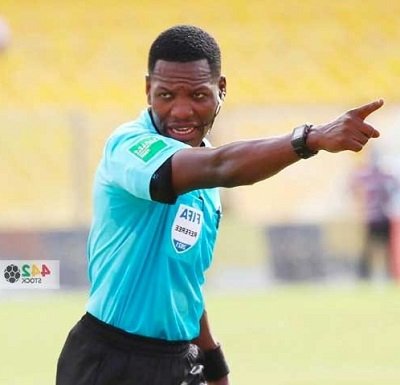
That is why one was thrilled by the announcement of the Ghana Football Association (GFA) that the Best Referee of the 2021/22 Premier League season would swagger away with a brand new car. It is good enough motivation.
According to the GFA, the prize will encourage referees to put their best foot forward in the upcoming league season which kicked off last Friday.
“For the Ghana Premier League (GPL), the best referee for the year will take home a car at the end of the season. I’m very sure that our referees will be happy,” said GFA President Kurt Okraku, during the GPL launch, three days ahead of the opener.
“The whole idea is to encourage our referees to be competitive and deliver top-notch performances over the course of the season,” he added.
About 90 Referees and Assistants were selected by the Referees Committee and underwent various training programmes for the 2021/22 campaign, and one expects to see a credible performance from them to make the game dirt-free and more enjoyable.
For such Nights-of-the-Whistle, they should not only be thinking about the ultimate prize (car), but be concerned about the image they live behind – several years after they had retired from the game.
Sixteen years after ‘hanging his famous whistle,’ Italian former football referee, Pierluigi Collina, is still broadly considered to be the best football referee of all time.
The instantly recognisable Collina, a no-nonsense Italian referee – known for his famous bald head and piercing eyes, remains one of the most respected figures in football, 16 years after handing in his shock resignation from officiating, aged 45.
In a glittering 28-year career of refereeing, he took charge of Champions League, World Cup and UEFA Cup finals but for many, it was Collina’s larger-than-life personality that earned him such a respected stature.
He demanded, and in turn, earned respect from players, managers and fans around the world.
If a player decided to misbehave, the Italian would take action, but he was always fair and reasonable.
“You have to be accepted on the field of play not because you are the referee, but because people trust you,” Collina said after retirement.
“This means you can reach the best result a referee can reach, which is to be accepted even when he is wrong.”
This calm but stern approach to officiating earned him FIFA’s “Best Referee of the Year” award six consecutive times between 1998 and 2003.
Indeed, he redefined a role that was previously seen by many as dull.
It is the hope of many that our referees would look up to Collina and some of the finest ‘centre-men’ in the business, to carve out their own niche.
As a matter of fact, we do not need referees to be baited with a brand new car to do their own job. It is not fair. Coming to the pitch with a clean intention of being professional and fair-minded to all, in itself, should serve as enough motivation.
Be that as it may, one can only wish the referees well and hope they repay the trust reposed in them by the FA and the football populace. They must endeavour not to be the reason for which many football enthusiasts would swear not to patronize local football. Again, that would be unjust.
Aside from that, referees would be saving themselves from the unwarranted physical attacks they are often subjected too on the field – and the bout of public criticisms, if they perform their duties proficiently. For now, the ball is in their court to prove us wrong.
PlainTalk with JOHN VIGAH

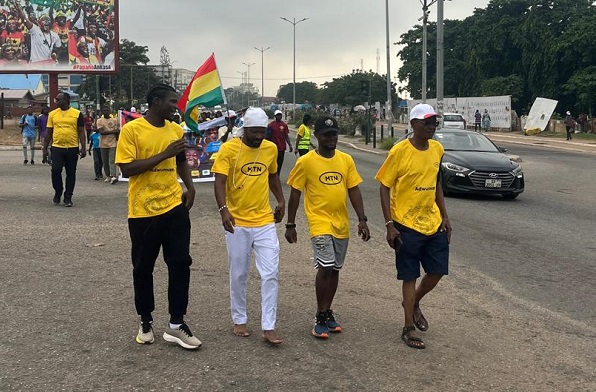
Students and management staff were joined by keep fit enthusiasts to partake in the 2026 edition of the Street Academy annual health walk held last Saturday.
It was held on the theme: “Feet on the Street, Hope in Motion.”
The event also brought opinion leaders from some of the Ga communities, sports men and women including former world boxing champion, Joseph Agbeko, and children from the academy and neighbouring communities.
The event was originally slated for July 18 but postponed due to President John Dramani Mahama’s declaration of July 17-18 as National Clean-up Day.
That development did not affect the event in any way as participants, mostly cladded in yellow outfits, turned up in their numbers.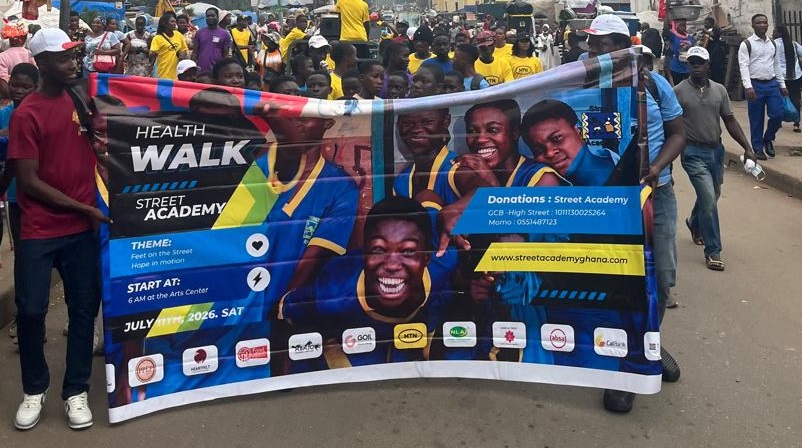
Spurred on by brass band music, the walk went through some of the principal streets of the capital, drawing more crowds from the communities it went through before returning to the Accra Arts Centre, the starting point.
Participants then went through another exhaustive aerobic session before they were refreshed.
Addressing the participants, Dr Ataa Lartey, the Founder and Executive Director of the Academy, commended them for turning out in their numbers for the walk, which he described as an event to enable the children and other guests to exercise.
Secondly, the event, he stated, was also to raise awareness about the plight of needy and underprivileged children, promote healthy living, and advocate the importance of basic education.
By Spectator Sports Reporter
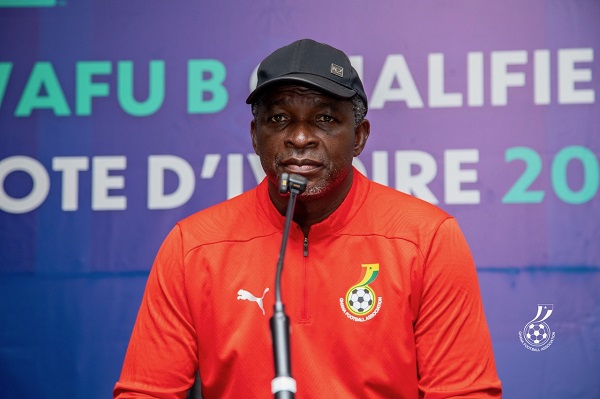
Usually, when a coach is tasked to build a formidable national team for a major tournament, he does so with the best players available to him, with a special focus on local talents.
But where such local talents are not available or are unconvincing, the coach is allowed to supplement with foreign based players.
In this case, these players scouted beyond the borders of the country must be in top form and prove beyond reasonable doubt that they are far better than the locals.
Again, such players must also show some commitment and dedication to the national call.
A coach can however, decide to ignore this system in cases where there is insufficient time for the exercise, when there is a policy that forbids him from inviting certain crop of players, or if he finds himself in a position where he has no say on the players selected for him to use.
Recently, Coach Maxwell Konadu was tasked to build a Black Satellites team for the ongoing WAFU B U-20 championship in Cote d’Ivoire, a tournament which also serves as a qualifier for the 2027 Africa U-20 Championship which Ghana is hosting.
With that status, the Black Satellites become automatic candidates and rightfully, the focus should have been on a team to be groomed for the ultimate.
The sub-regional tournament did not actually oblige Konadu to rely on foreign based players, most of who are on pre-season assignments with their respective clubs.
Also, Konadu was under no misperception about quotas to allot local or foreign based players. It was very clear that the tourney was for the locals.
With this background, he is believed to have selected the players that formed the team that represented Ghana at the championship.
Sadly, Konadu and his boys disappointed woefully at the championship, failing to march his words against performance on the field.
Exiting just after the group stage came with little surprise. That has been the pattern for the national juvenile teams in their respective championships for now.
What left tongues wagging, however, was Konadu’s claim that lessons from the championship would help build a “stronger and more competitive squad for next year’s TotalEnergies CAF U-20 Africa Cup of Nations.”
The confusion lied in his admission that “the squad which competed in Côte d’Ivoire is unlikely to be the same one that represents Ghana at the 2027 TotalEnergies CAF U-20 Africa Cup of Nations.”
It would have made a lot of sense to rather build a team that uses the WAFU B Championships as a platform to prepare for the main championship next year, than selecting a team that in his own words is unlikely to compete.
This is a very common feature in other jurisdictions. The English FA, for instance, would have used an Under-18 team for the WAFU B, knowing the impact that experience would have on the team.
So clearly, the experience and lessons Konadu spoke about would be non-existent and would not help the team in anyway because if he happened to be in charge of the Ghana 2027 championship team, he would be supervising an entirely new team.
From where I sit, Konadu and whoever played any role in assembling this team got everything wrong and must be reminded that there would be no assurances that the next team would excel in the championship.
By Andrew Nortey