Features
Robert Ekow Grimmond-Thompson: A man driven by innovation, creativity, purpose


- /home/u249204778/domains/spectator.com.gh/public_html/wp-content/plugins/mvp-social-buttons/mvp-social-buttons.php on line 27
https://spectator.com.gh/wp-content/uploads/2026/08/Mr-Grimmond-Thompson.jpg&description=Robert Ekow Grimmond-Thompson: A man driven by innovation, creativity, purpose', 'pinterestShare', 'width=750,height=350'); return false;" title="Pin This Post">
- Share
- Tweet /home/u249204778/domains/spectator.com.gh/public_html/wp-content/plugins/mvp-social-buttons/mvp-social-buttons.php on line 72
https://spectator.com.gh/wp-content/uploads/2026/08/Mr-Grimmond-Thompson.jpg&description=Robert Ekow Grimmond-Thompson: A man driven by innovation, creativity, purpose', 'pinterestShare', 'width=750,height=350'); return false;" title="Pin This Post">
Thousands of tiny glass seed beads, carefully stitched by hand onto an old, weathered jute sack, tells a story that goes beyond art. They speak of patience, resilience and a belief that beauty can emerge from the most unexpected places.
It is a philosophy that has guided Robert Ekow Grimmond-Thompson throughout his life.
For more than three decades, Grimmond-Thompson has refused to be confined to a single profession. A software engineer, systems architect, eco artist and independent researcher, he has built a career that brings together technology, creativity and the study of human movement.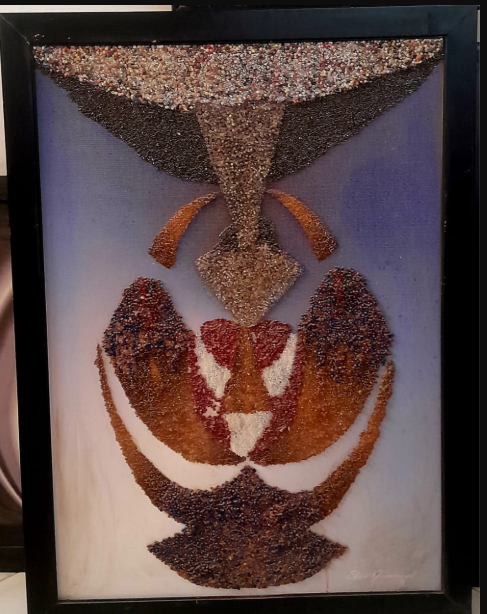
His journey is driven by curiosity, determination and an unwavering desire to understand how different fields can work together to improve lives.
His love for solving problems began in the world of computers. As a software engineer and systems architect, he developed a deep appreciation for structure, precision and logical thinking.
But the more he worked with technology, the more he became convinced that the same principles used to understand computer systems could also be applied to understanding people.
That belief led him on a lifelong journey of research into the relationship between movement, posture and emotions.
Through years of independent study and practice, he developed proprietary frameworks that he describes as Emotional Surgery and Neurokinetic Aesthetic Surgery.
According to Grimmond-Thompson, these approaches are designed to help people better understand the connection between their physical posture, emotional wellbeing and overall balance.
His work also explores ideas such as Optic Nerve Ignition, reflecting his interest in how the body’s sensory systems may influence movement and emotional wellbeing.
His decades of research are brought together in his book, Reclamation of Sovereignty. More than a collection of theories, the book reflects his belief that people should never allow difficult experiences to define them.

Instead, he encourages readers to see challenges as opportunities for growth, healing and personal transformation.
Away from technology, Grimmond-Thompson has found another way to express his ideas through art. As an eco-artist, he is passionate about sustainability and believes that beauty can be created from materials that many people would simply discard.
One of his most remarkable creations is Sovereign Reclamation, a monumental textile artwork made from old, weathered jute sacks decorated with thousands of tiny glass seed beads.
The painstaking work took years to complete and demanded extraordinary patience, creativity and attention to detail.
For Grimmond-Thompson, the old jute sacks represent the struggles, disappointments and scars that everyone carries through life.
The colourful beads, carefully sewn onto the fabric, symbolise hope, resilience and new beginnings. Through his art, he reminds people that their past should never be something to hide. Instead, it can become the foundation for strength, growth and a brighter future.
His philosophy extends beyond art. He believes the spaces where people live and work influence the way they think, feel and perform.
He encourages the use of colour, thoughtful design and beautiful surroundings to create environments that promote peace, creativity and emotional wellbeing.
In today’s fast-paced world, Grimmond-Thompson also believes in the importance of slowing down. Through what he calls the “Aesthetic Rest Hour,” he encourages people to take time away from the pressures of everyday life to reflect, recharge and reconnect with themselves.
In his view, moments of stillness are just as important as moments of hard work.
Another principle he lives by is self-respect. His preference for smart tailoring, good posture and a professional appearance goes beyond fashion. To him, it reflects discipline, confidence and personal dignity.
He believes the way people carry themselves often reflects how they value themselves.
Despite his many professional accomplishments, Grimmond-Thompson remains a lifelong learner with interests beyond his work.
He enjoys playing chess, a game that challenges his mind and sharpens his strategic thinking.
He also enjoys car racing during his leisure time, appreciating the focus, precision and excitement that come with the sport. These hobbies reflect the balance he maintains between careful thinking and adventure.

After church on Sunday, Afrakoma said a quiet prayer, asking for divine help in getting Beesiwa to agree to her suggestion. She and Beesiwa were mates in senior high school, and they both studied for the Diploma in Business Studies at Koforidua Polytechnic, and they obtained jobs with Madam Bruwaa, a big distributor of provisions and textiles, where they were offered modest salaries.
They both got jobs at the National Bank, but just when they started, the parents of a young man based in the US, Sam Abrokwa, approached Beesiwa’s parents to ask for her hand in marriage.
Although the parents knew each other and Beesiwa remembered Sam as her senior in basic school, she told her parents that she would only agree to marry him after getting to know him.
The two parents tried, but she flatly refused to marry a guy she had never met. Eventually, it was agreed that she would meet him when he came to Ghana for a brief visit, but she insisted that she would only go and join him some time after they had met.
So they spoke on phone regularly, with Sam always expressing the desire to see her in the shortest possible time. Beesiwa, on the other hand, was polite and friendly, but reserved.
She quietly hoped that in due course, she would experience what would enable her to see her husband in him.
So it happened after some four months. Sam called to say that he had arrived in Koforidua, and would be calling on her in the afternoon. Beesiwa and her parents prepared a sumptuous meal for him, but he got to the house around 10pm, accompanied by two friends, obviously drunk. He apologized for his lateness, and after some 10 minutes asked Beesiwa to come with him to his house. Beesiwa said politely but firmly that she could not join him, and pleaded that they make it the following day.
He was very irritated by that answer, but he eventually accepted to come back the following day. As she lay in bed, Beesiwa wondered whether there was any hope for a future with Sam. Which normal person, she said to herself, goes to meet his wife and in-laws for the first time drunk? Perhaps tomorrow would be different.
Sam returned after 8pm the following day, a little sober but still drunk. He turned down the offer of a meal, and Beesiwa followed him to his home. A few minutes after offering her a seat, he turned on her, and started undressing her. Beesiwa started to object, but he flared up.
“Hey! You are not going to play games with me, after the monies I have spent on you. Your parents asked for money on several occasions, and I sent it. So how dare you refuse me sex?” Absolutely shocked, Beesiwa quietly gave in, and after less than 10 minutes Sam turned on his side and, with a big smile on his face, fell asleep. Beesiwa managed to dress up, walk out of the house and call Afrakoma. Afrakoma turned up in a taxi and took her to her house, and she narrated her experience to her.
“I can’t believe this. So your parents virtually sold you to him, and never told you?” “I don’t think I can face the two of them again. My own parents have given me the most violent experience of my life. I don’t want to see them again.”
“Take a shower Beesiwa, and try to get some sleep. I will go and see them tomorrow morning.”
“Hello Afrakoma. How are you? Your friend went to her husband’s place yesterday. She may be back in a day or two.”
“Actually, Ma, I came to discuss that with you and Daddy. I don’t need to sit down. Ma, Afrakoma went to Sam’s house with him reluctantly, because like yesterday, he was drunk.
As soon as they stepped in his room, he started removing her dress. When Beesiwa started to object, he told her that he had paid money to her parents, so she could not reject him.
She was so shocked that she just stayed silent and he slept with her. Fortunately he fell asleep, so she called me, and I went with a taxi to take her home.
Forgive me Ma, but I think you and Daddy have treated Beesiwa, a beautiful virgin determined to have an honourable, marriage, in the most despicable fashion. I’m trying to be polite, but I don’t know what your financial need was, which enabled you to betray your own daughter this way.
For your information, I have sent a message to Sam that Beesiwa and I need to know how much money is owed to him, and my husband and I will support her to pay. Good morning.” As the two parents stood with their mouths open, she walked away.
By Ekow de Heer
Features
Environmental stewardship is an act of worship: The Islamic response to climate change, environmental degradation (Part 3)
Within the Ghanaian context, environmental degradation has reached alarming proportions.
The destruction of forests, pollution of major rivers, indiscriminate dumping of refuse, bushfires, coastal erosion, and rapid urban expansion continue to undermine public health, agricultural productivity, and economic resilience (Environmental Protection Agency Ghana, 2024).
Particularly concerning is the widespread contamination of water bodies through illegal mining activities, which has rendered several rivers unsafe for domestic use and increased the cost of water treatment. These realities illustrate the tangible consequences of fasād described in the Qur’an more than fourteen centuries ago.
Islam does not merely prohibit environmental destruction; it encourages believers to become agents of restoration (iṣlāḥ). The Qur’an consistently contrasts corruption with reform, calling believers to promote justice, preserve creation, and contribute positively to society.
Environmental restoration through reforestation, river conservation, responsible waste management, and sustainable agriculture therefore constitutes an important dimension of iṣlāḥ.
Every effort to restore degraded ecosystems is not only a contribution to national development but also an act of obedience to Allah.
Understanding environmental degradation as fasād fundamentally reshapes the Muslim response to today’s ecological crises.
Pollution is no longer viewed merely as poor sanitation, nor deforestation as simply an economic issue. They become moral failures that violate humanity’s covenant as Khalifah and threaten the balance established by Allah.
This ethical perspective provides a compelling foundation for addressing one of Ghana’s most pressing environmental challenges—illegal mining, commonly known as galamsey-which represents one of the clearest manifestations of environmental corruption in contemporary society.
Illegal mining (Galamsey): An Islamic and national crisis
Among the many environmental challenges confronting Ghana today, none has generated greater national concern than illegal small-scale mining, popularly known as galamsey.
Although mining has contributed significantly to Ghana’s economic development for decades, illegal mining has evolved into a major environmental, social, and governance crisis.
The indiscriminate use of heavy machinery, excavation of farmlands, destruction of forest reserves, and pollution of rivers with mercury and other toxic substances have left lasting scars on the nation’s natural resources.
Beyond its environmental consequences, galamsey raises profound moral and ethical questions that demand reflection from an Islamic perspective.
Ghana continues to experience substantial forest loss due to illegal mining, illegal logging, agricultural expansion and human settlement.
The degradation of forest reserves weakens biodiversity conservation, reduces carbon sequestration, and increases vulnerability to climate-related disasters such as flooding and drought (Forestry Commission Ghana, 2024).
The environmental cost of illegal mining is staggering. Rivers that once supplied clean drinking water and supported fishing communities have become heavily polluted. Productive agricultural lands have been rendered infertile, forests have been cleared indiscriminately, and biodiversity has suffered extensive loss.
These developments threaten food security, increase the cost of water treatment, reduce agricultural productivity, and compromise the health and livelihoods of millions of Ghanaians (United Nations Development Programme [UNDP], 2023; Environmental Protection Agency Ghana, 2024).
Climate resilience is also weakened by illegal mining. Forests serve as important carbon sinks, regulate rainfall patterns, protect watersheds, and reduce soil erosion. Their destruction accelerates land degradation and increases communities’ vulnerability to flooding and drought.
Consequently, the environmental damage caused by galamsey extends far beyond mining sites, affecting entire ecosystems and future generations.
From an Islamic standpoint, such destruction constitutes a clear violation of humanity’s responsibility as Khalifah. Allah entrusted human beings with the care of the earth, not its reckless exploitation.
While Islam recognises the legitimacy of earning a lawful livelihood through commerce, agriculture, industry, and the responsible extraction of natural resources, these activities must be conducted within the limits of justice, public welfare, and environmental responsibility.
Economic benefit can never justify the destruction of Allah’s creation or the endangerment of human life.
The Qur’an repeatedly condemns those whose pursuit of worldly gain results in widespread destruction. Allah says, “And when he goes away, he strives throughout the land to cause corruption therein and destroy crops and animals.
And Allah does not like corruption” (Qur’an 2:205, Sahih International). Although revealed in a broader ethical context, this verse powerfully illustrates the destructive consequences of human greed.
The deliberate destruction of fertile land, vegetation, water bodies, and wildlife for short-term financial gain closely reflects the type of corruption condemned by the Qur’an.
The Prophet Muhammad (peace be upon him) established another enduring principle when he declared, “There should be neither harming nor reciprocating harm” (Sunan Ibn Majah, Hadith 2341; Al-Muwatta of Imam Malik, Hadith 1461).
This legal maxim (lā ḍarar wa lā dirār) has become one of the foundational principles of Islamic jurisprudence. It requires Muslims to avoid actions that cause unjustifiable harm to individuals or society.
Illegal mining clearly violates this principle because its consequences extend far beyond those directly involved. Entire communities lose access to clean water, farmers lose their livelihoods, children face long-term health risks, and future generations inherit degraded ecosystems.
The crisis of galamsey also illustrates the relevance of the higher objectives of Islamic law (Maqāṣid al-Sharī’ah). The preservation of life (Hifz al-Nafs) is threatened when polluted rivers expose communities to toxic chemicals and waterborne diseases.
The preservation of wealth (Hifz al-Māl) is undermined through the destruction of farms, fisheries, and other sustainable sources of income. The preservation of intellect (Hifz al-‘Aql) is endangered by exposure to hazardous substances such as mercury, which can impair neurological development and cognitive function.
The preservation of lineage (Hifz al-Nasl) is compromised as environmental degradation jeopardises the health, livelihoods, and welfare of future generations. Even the preservation of religion (Hifz al-Dīn) is affected because Islam calls believers to uphold justice, fulfil trusts, and refrain from causing corruption on earth. Thus, galamsey undermines every major objective that Islamic law seeks to protect.
The issue is not solely an environmental problem but also a governance challenge. Weak enforcement of environmental regulations, corruption, inadequate land-use planning, and economic hardship have all contributed to the persistence of illegal mining.
Ghana has enacted laws to regulate mining activities and protect the environment, including the Minerals and Mining
Act, 2006 (Act 703), as amended, and the Environmental Protection Act, 2025 (Act 1124).
Furthermore, Article 41(k) of the 1992 Constitution of Ghana places a civic duty on every citizen “to protect and safeguard the environment. Effective implementation of these legal frameworks requires political commitment, institutional integrity, and active public participation.