Editorial
Enhancing children’s literacy and numeracy skills

The foundation of education at the basic level is the to pay attention to the development of our literacy and numeracy skills.
The need for the development of such skills is necessary to ensure that right from the basic level, children of school-going age are adequately prepared to develop their reading as well as mathematical skills.
Literacy skills include the development of children’s aptitude test towards the development of word formation and reading skills. Such reading skills are what result in high-level competence in the ability of people to read and write satisfactorily.
Many of our children are unable to read very well because right from the beginning many of them are not introduced to reading and literacy skills.
Usually, children who develop their skills at an early stage regarding reading are able to perform creditably well when given the chance to develop their creative skills in reading.
As has been stated already, apart from reading or literacy skills, there is the need for children to develop their creative skills in numeracy and basic calculations.
The development of such numeracy skills is what helps the children to be quantitative-oriented, meaning that it helps them to go about their calculations with ease. If quantitative and numeracy skills are encouraged, it helps the children to embrace mathematics as they climb in the educational ladder.
Thus, both numeracy and literacy skills serve as foundation block upon which reading and comprehension as well as mathematics skills can be developed and used in reading and calculations as students go through the educational system.
These days, it is easy to come across many people who have finished school at various levels yet are not able to express themselves well in the official language of instructions: English Language.
In the same way, some of them have developed phobia or fear for mathematics simply because right from the beginning their literacy and numeracy skills had not been developed in the way expected.
If the country’s educational system is to be given a sound foundation for rapid socio-economic development, then we need to pay greater attention to the foundations that help to build up fundamental skills in literacy and numeracy.
Indeed, all academic work and professions as well as acquisition of knowledge in schools are greatly linked to the foundations acquired with regard to the development of our mathematical and reading skills.
The implication of this is that, we need to lay a good foundation for children of school-going age, so that the skills they develop in these areas will be used in enhancing their reading abilities.
The Spectator is aware that the Ministry of Education is working hard to bring reforms in the educational sector. We welcome such bold and necessary measures, so that children in our educational institutions will be able to perform better as far as acquisition of academic and professional knowledge, critical thinking skills and creativity in general are concerned.
We wish the educational sector well and encourage all educationists, students and academic institutions to do their best and collaborate with one another in the interest of the nation.


Dear Editor,
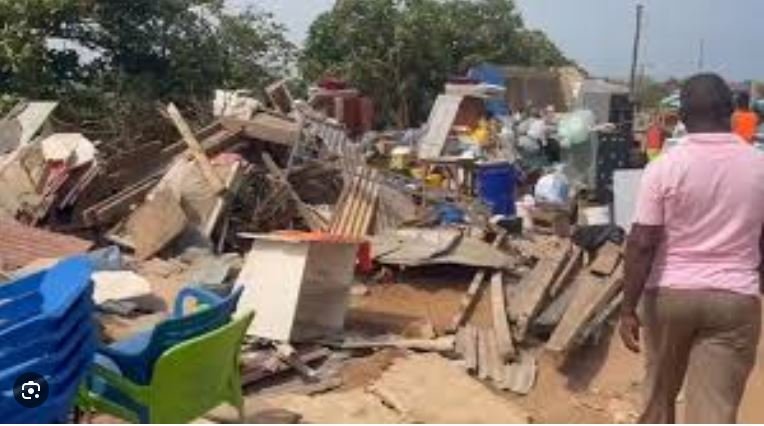
I wish to use this esteemed platform to urge the traditional councils of Osu and La to call for independent investigation into the recent demolition exercise at Kaajaano.
The exercise rendered hundreds homeless.
Information about the reason for the demolition has been scanty with those desiring to know feeding heavily on social media posts.
One particular name –Jato, has been associated with it but under whose instruction the exercise was carried is also not known.
Sadly, instead of getting to know who ordered the demolition and for what reasons, traditional authorities of Osu and La have been embroiled in a tug-of-war over ownership of the said land.
This is premature. At this moment, they should call for investigation into the exercise to know the people behind it.
When that is done, then discussions about the owners of the site can begin. That would end the posture of the two neighbouring town which has the potential to turn into something else.
Ataa Osa Mensah,
Osu
Dear Editor,
I wish to use your respected platform to draw the attention of the Bank of Ghana (BoG) to the behaviour of traders and some drivers about the use of lower denomination coins, specifically the 20 and 10 pesewas.
About two weeks ago, I read in your sister newspaper, The Ghanaian Times about this problem and the caution that followed from the BoG and some economic analysts.
The warning they gave was that the continuous rejection of the notes could create pricing problems which can eventually affect inflation.
I thought that would put to bed that practice or refusal to accept the coins when given out as change or use to pay for particular service.
Unfortunately, the problem still persist among traders, drivers, customers and passengers alike. Only last week, there was as altercation in the Accra Central area where a woman refused to accept five 20 pesewas note totaling one cedi.
As the argument continued, the trader decided not to sell to the customer again after by-standers explained to her that it was still a legal tender and those that refused it could become offenders.
This is an issue the BoG and other regulatory agencies must go and explain to the people and let them know that it is unlawful not to accept a currency that is still in use.
It nothing was done, it could create a much more serious problems.
Mary Osei Badu,
Swedru