Health Essentials
Demystifying nausea

- /home/u249204778/domains/spectator.com.gh/public_html/wp-content/plugins/mvp-social-buttons/mvp-social-buttons.php on line 27
Warning: Trying to access array offset on false in /home/u249204778/domains/spectator.com.gh/public_html/wp-content/plugins/mvp-social-buttons/mvp-social-buttons.php on line 27
&description=Demystifying nausea', 'pinterestShare', 'width=750,height=350'); return false;" title="Pin This Post">
- Share
- Tweet /home/u249204778/domains/spectator.com.gh/public_html/wp-content/plugins/mvp-social-buttons/mvp-social-buttons.php on line 72
Warning: Trying to access array offset on false in /home/u249204778/domains/spectator.com.gh/public_html/wp-content/plugins/mvp-social-buttons/mvp-social-buttons.php on line 72
&description=Demystifying nausea', 'pinterestShare', 'width=750,height=350'); return false;" title="Pin This Post">
Nausea is a very common complaint and almost everyone experiences this sometime in their life. It is an experience that occurs with the feeling that you are about to vomit. When you are nauseated you may feel weak, sweaty and have too much saliva in your mouth.
You may even vomit. Pregnancy, illness and motion sickness are among the long list of conditions that may cause nausea.
Over the past 48 hours I have had at least six people complain about nausea to me, and I feel that is a signal that we re-visit this common complaint.
Nausea and vomiting are usually completely normal reactions but may also signal an underlying serious condition.
They are often your body’s response to foreign substances or irritants. Your brain may signal the urge to vomit if you eat contaminated food or contract a stomach virus.
Common causes of nausea
Nausea is often associated with distaste for food or an urge to vomit. People with nausea may also feel the urge to retch. This occurs when your chest and abdominal muscles contract without your control.
Some of the common conditions that may present with nausea (with or without vomiting) include:
1. Abdominal causes
a. Gastroenteritis – may be caused by a viral or bacterial infection
b. Peptic ulcers
c. Food poisoning or food allergies
d. Overeating
e. Liver disease
2. Medication
a. Several medicines may cause this. Antibiotics are a common culprit and so are drugs used in the management of cancer.
3. Problems with the head and neck
a. Migraine headaches or motion sickness.
b. Stroke
c. Head injury
d. Infection in and around the brain or brain tumour
e. Diseases of the ear
4. Hormonal changes
a. Including those that lead to morning sickness during pregnancy
5. Toxins in the blood
a. Such as alcohol and nicotine
6. Other conditions
a. Diabetes
b. Appendicitis
c. Urinary tract infection, intestinal obstruction
7. When to seek emergency care
Quite often nausea will not require urgent medical attention. The problems are usually short-lived, lasting just a few minutes to several hours and subsiding on its own within 24 hours. Seek immediate attention if you have any of the following:
1. Vomiting that is blood or bile stained
2. Fever greater than 38 degrees Celsius
3. Severe abdominal pain
4. Headache and a stiff neck
5. Vomiting for more than 24 hours
6. Signs of dehydration, including increased thirst, dry mouth or infrequent urination.
Tips to make recovery brisk and smooth
• Take small amounts of clear liquids such as water or flat ginger drinks
• Avoid caffeinated beverages such as cola, coffee and tea
• Eat small meals every few hours. This helps your stomach digest food gradually
• Avoid odours such as tobacco, perfumes or strong cooking smells
• Bland foods that can absorb stomach acids are preferred and these include rice, crackers and unbuttered bread.
Dear reader, next time you experience that uncomfortable feeling in the chest, stomach or back of the throat, remember that it may stop as suddenly as it started but never ignore it if it is associated with major warning signs.
AS ALWAYS LAUGH OFTEN, ENSURE HYGIENE, WALK AND PRAY EVERYDAY AND REMEMBER IT’S A PRICELESS GIFT TO KNOW YOUR NUMBERS (blood sugar, blood pressure, blood cholesterol, BMI)
Dr. Kojo Cobba Essel
Health Essentials Ltd (HE&W Group)
(dressel@healthessentialsgh. com)
*Dr. Essel is a Medical Doctor with a keen interest in Lifestyle Medicine, He holds an MBA and is an ISSA Specialist in Exercise Therapy, Fitness Nutrition and Corrective Exercise. He is the author of the award-winning book, ‘Unravelling The Essentials of Health & Wealth.’
Thought for the week – “The next big thing in Healthcare in Ghana is the Medics Clinic. Send me an email at dressel@healthessentialsgh. com for more information.”
References:
1. www.webmd.com
2. Health Ink Communications
By Dr. Kojo Cobba Essel


When it comes to cancer risk factors; ALL RISK FACTORS ARE NOT CREATED EQUAL. Someone may have several risk factors but remain perfectly fine while another may have only one or none yet end up with breast cancer or other cancers.
We cannot say with certainty that we can do all it takes to prevent cancer BUT we can do a lot to reduce our risk.
TEN (10) TIPS TO CANCER RISK REDUCTION
- Weight Control – being overweight or obese increases risk to SEVERAL cancers.
- Smoking – cigarette smoking predisposes one to several cancers including lung cancer. Other forms of air pollutants serve as risks too.
- Alcohol – limit intake or avoid. It has the power to expose one to several cancers as well especially when we can’t apply brakes to how much we consume.
- Healthy Eating
- Limit intake of processed food and sugar
- Limit intake of red meat
- Fruits and vegetables should be a mainstay of our diet.
- An antioxidant rich food like cocoa should be part of our food. The purer the cocoa, the better
- Fibre in your food is crucial.
- Exercise – on its own reduces risk for breast and colon cancers directly and many others through weight control.
- Also increases immunity.
- Cancer Screening – be regular so cancers can be detected early and managed aggressively.
- Vaccinations – take vaccines where needed e.g. Hep B vaccine or vaccine against HPV (human papilloma virus accounts for the majority of cervical cancers)
- Know your Family History
- Anyone in your family with a cancer? Necessary to be on your guard but also remember that you may be the first person in your family with a particular cancer.
- Start your family early and breast feed for as long as possible to reduce risk of breast cancer.
- Check exposure to Ultraviolet Light and other forms of radiation. Protect your skin.
- Practice SAFE SEX
- HPV infection leading to cervical cancer is commoner when one is exposed to sex early, directly or indirectly has multiple partners but NOT everyone follows this rule. As in many situations, outliers do exist.
- Conditions such as HIV/AIDS may suppress your immune system if not managed appropriately.
Do add two (2) others of your choice and send to me via email. Together we can protect ourselves.
Will treating H. Pylori infections be a game changer too?
ALWAYS remember that CANCER PREVENTION HAS NO QUICK FIX – we need to follow these points over and over.
AS ALWAYS LAUGH OFTEN, ENSURE HYGIENE, WALK AND PRAY EVERYDAY AND REMEMBER IT’S A PRICELESS GIFT TO KNOW YOUR NUMBERS (blood sugar, blood pressure, blood cholesterol, BMI)
Dr. Kojo Cobba Essel
Health Essentials Ltd/ Medics Clinic
(dressel@healthessentialsgh.com)
*Dr. Essel is a Medical Doctor with a keen interest in Lifestyle Medicine, He holds an MBA and is an ISSA Specialist in Exercise Therapy, Fitness Nutrition and Corrective Exercise. He is the author of the award-winning book, ‘Unravelling The Essentials of Health & Wealth.’
Thought for the week – “WHERE YOU LIVE SHOULD NOT DETERMINE IF YOU LIVE.”- WHO
By Dr. Kojo Cobba Essel
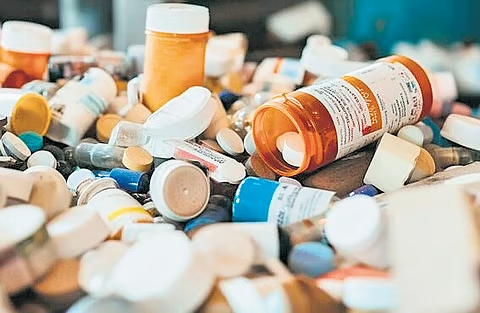
Accidental poisoning of children at home, starting point of drug abuse by teenagers at home and uninformed self-medication have one thing in common; in all three unused or unwanted medicines are likely culprits. The harm we cause when we fail to properly dispose of medicines we do not need is crippling.
So many people have out of fear or anxiety converted their homes into mini-pharmacies where medicines that are supposed to keep us alive are stocked. COVID-19 worsened this practice and no-bed syndrome also plays a role.
Some of these medications may end up complicating our conditions as we self-diagnose and treat ourselves with what “the all-knowing “social media curb-side doctors prescribe.
From “blood-thinners” including aspirin to steroids, antibiotics, assorted supplements, ivermectin, hydroxychloroquine and even tanks filled with oxygen have found their way into homes. People including children will now “consume” some of these medicines and any left-overs may be accidentally taken, given out to family and friends with “similar” symptoms etc.
We all run the risk of abusing drugs and unfortunately some may end up indulging in “hard drugs.”
Prior to COVID-19 many of us had turned our homes into dumping sites for medicines and we have now expanded our range of supplies. We seem to develop “unholy” attachments to drugs and end up keeping them for years even when they have long expired. I have had several unpleasant requests to identify a drug that is partly decomposed and has no name on its container. Unfortunately I have on all occasions refused to even make an attempt. My trade may teach me many things about humans and medicines but it also teaches me to be wary whenever I attempt to play Sherlock Holmes especially with medicines that are not labelled.
I took another look at “DUMP”, which is acronym for “disposal of unused/unwanted medicines programme.” I must admit I was extremely impressed with the usefulness of the DUMP. Many countries have tried a variety of approaches including self-disposal but I think the option that is being promoted in Ghana by Dr Edward Amporful, Cocoa Clinic and other patrons is exceptional. In my candid opinion every hospital, company and home should adopt this programme.
All you need to do is to return all unused/unwanted or even expired medicines to participating hospitals. Put these medicines in labelled receptacles or bins that are provided. You do not need to disclose your identity, just walk away because your work is done. The necessary arrangements have been made with the relevant regulatory bodies for the safe disposal of such medicines.
Sounds absolutely simple yet this has the potential to save lives; that baby who could have accidentally swallowed some of these medicines is still alive and the teen who would eventually have been hooked on stronger drugs is spared the agony.
I think bins should be in all offices so that staff could drop off their medicines and the appropriate steps taken. Market places could also have these bins available and locked and properly secured to prevent people taking the boxes away. Even homes can have a similar bin for discarding and then periodically taken to participating hospitals/clinics. Unused or unwanted medicines should not find their way into a First Aid Box, they don’t belong there.
How do we amass “riches” in unused, unwanted or even expired medicines?
• We may not adhere to the right dose of the medicine thus we end up accumulating medicines at home.
• Sometimes our healthcare provider may make changes to medicines especially when we have chronic diseases such as high blood pressure but we do not return the old ones to the hospital but instead keep them at home.
• Sometimes we react to a drug and stop taking it, leaving the excess at home. I am not sure why we keep these at home when we are aware we are no longer going to use them.
• …and now we stock medicines for fear that we may not have access to some when we have an emergency. Our excuse is that many people are hoarding social-media proposed life-saving medication. After all we are all still learning.
In support of ‘DUMP’
• A frequent cause of accidental poisoning of children at home is having unused/unwanted or expired medicines within their reach. I have seen children rushed to the emergency room for this reason. Some were lucky to live while others had their exciting life cut short. Start DUMP today and help save lives. Even adults sometimes end up with complications because they assumed a drug was used for something completely different.
• People tend to play doctor or pharmacist at home because they pass on unused medicines to family and friends. This is often the starting point of uninformed self-medication. Many people are unaware that doses and types of medicines needed do not depend only on having an illness that appears similar to what another person on a particular medicine was given.
• When unused or unwanted medicines are improperly disposed of, they may eventually end up polluting water bodies etc. Start DUMP and make a statement on protecting our water bodies.
• Drug resistance is often a consequence of abuse of medicines such as antibiotics and anti-malarias. Kofi starts medicine required to be taken for one week and feels better after three days so he stops. A few days or weeks later Awo appears to have a similar illness so Kofi gives her the medicines left for four days. The process of developing drug resistance has just taken off.
• Keeping expired medicines at home may lead to unsuspecting people taking them and they may end up with additional problems.
• Improper storage of medicines may affect its potency. A typical example is keeping medicine that needs to be refrigerated in a hot room instead. Return these medicines.
We could jeopardise our health or that of others just because we are keeping unused or unwanted medicines. STOP. THINK. JOIN DUMP TODAY! You will be saving lives.
AS ALWAYS LAUGH OFTEN, ENSURE HYGIENE, WALK AND PRAY EVERYDAY AND REMEMBER IT’S A PRICELESS GIFT TO KNOW YOUR NUMBERS (blood sugar, blood pressure, blood cholesterol, BMI)
Dr. Kojo Cobba Essel
Health Essentials Ltd/ Medics Clinic
*Dr. Essel is a Medical Doctor with a keen interest in Lifestyle Medicine, He holds an MBA and is an ISSA Specialist in Exercise Therapy, Fitness Nutrition and Corrective Exercise. He is the author of the award-winning book, ‘Unravelling The Essentials of Health & Wealth.’
Thought for the week –“IN CASE OF AN EMERGENCY you may need someone to be alerted. Since majority of us own cellphones, plan your own rescue by saving this person’s phone number preceded with “ICE.” An example is ICE Kojo Essel.The more people we have who know about “ice” the better for us all. Spread the news!!”
References/Credit:
• Dr. Edward Amporful, Cocoa Clinic.
• www.healthessentialsgh.com