News
Low budget, teacher absenteeism, causes of poor performance in basic School.

- /home/u249204778/domains/spectator.com.gh/public_html/wp-content/plugins/mvp-social-buttons/mvp-social-buttons.php on line 27
https://spectator.com.gh/wp-content/uploads/2024/10/UNICEF-education-team-and-journalists-at-the-event-1000x600.jpg&description=Low budget, teacher absenteeism, causes of poor performance in basic School.', 'pinterestShare', 'width=750,height=350'); return false;" title="Pin This Post">
- Share
- Tweet /home/u249204778/domains/spectator.com.gh/public_html/wp-content/plugins/mvp-social-buttons/mvp-social-buttons.php on line 72
https://spectator.com.gh/wp-content/uploads/2024/10/UNICEF-education-team-and-journalists-at-the-event-1000x600.jpg&description=Low budget, teacher absenteeism, causes of poor performance in basic School.', 'pinterestShare', 'width=750,height=350'); return false;" title="Pin This Post">
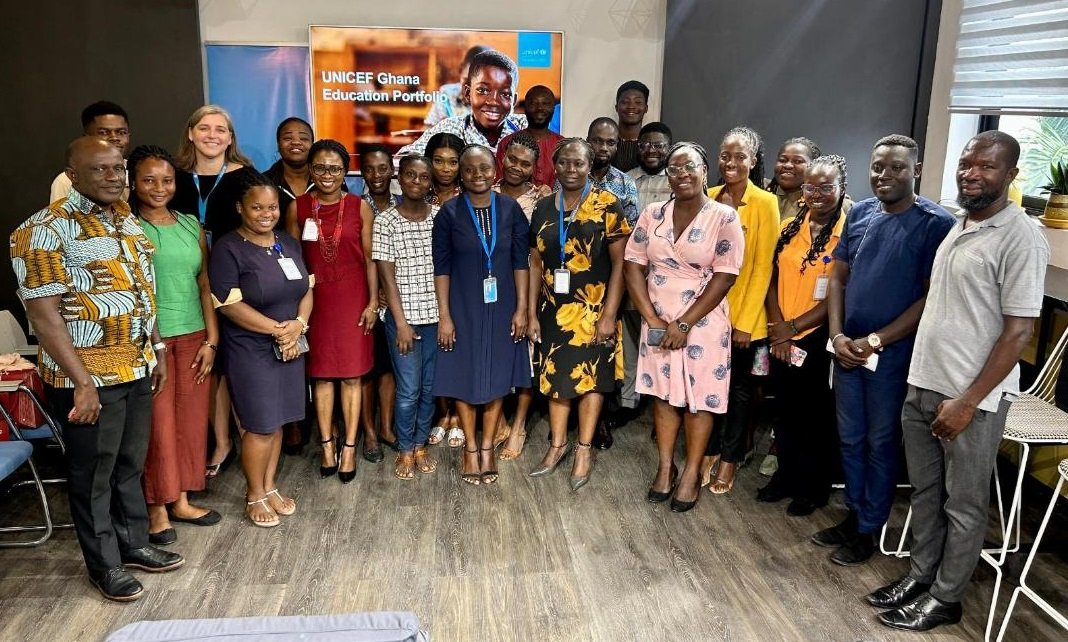
UNICEF education team and journalists at the event
The decline in budget allocation for Ghana’s basic education sector and high rate of teacher absenteeism have been identified as some of the major causes for the drop in performance of school children at that level of education.
According to a United Nations International Children’s Emergency Fund (UNICEF) statistics, a significant decline in basic school allocation has been recorded in recent years, explaining that in 2019, 39 per cent of the education budget was allocated to basic education, but that figure dropped to 19.6 per cent in 2024.
This came to light last week Thursday at the third UNICEF Media Café addressed by the Chief of the UNICEF Education team, Ms Christin McConnell.
According to her, about 98 per cent of the current budget allocated to basic education is spent on salaries, leaving little room for resources such as infrastructure, learning materials, and teacher training which she said had directly impacted the quality of education received by children.
Also, she stated that about 11 per cent of teachers are absent from school on any given day across all the levels, contributing to the non-effective learning for almost six years.
Despite these challenges, Ms McConnell noted that there had been significant progress in early childhood education with over 120,000 kindergarten children receiving basic learning materials and health screening as part of an initiative dubbed, ‘My First Day at School.’
She further stated that UNICEF’s differentiated learning programme which aims at providing remedial education to struggling students has also been instrumental in improving quality and early childhood education.
An Education Officer at UNICEF Ghana, Ms Rhoda Enchill speaking on access and inclusion in education disclosed that an estimated 40,000 children with disabilities in Ghana had never attended school.
According to her, the figure underscores the ongoing challenges faced by children with special needs in accessing education, despite government efforts to make school more inclusive.
She mentioned that 1.2 million children aged between four and 17 were still out of school across Ghana, adding that the figure included 623,000 primary school-aged children who are not enrolled.
Ms Enchill said despite the progress made in access to education, foundational learning levels remain low explaining that children were still struggling to read at the grade levels.
She indicated that results from the 2022 National Standard Test (NCT) revealed that only five out of 10 children in grade four could read.
And as part of efforts to standardise and promote inclusivity and sign language in the country, Ghana has developed a harmonised sign language dictionary for deaf teachers and learners.
A sign language dictionary is a resource that provides definitions, illustrations, or video demonstrations of signs used in a specific sign language.
The dictionary, she stated, will serve as a reference for both deaf and hearing individuals to learn and understand the meanings and hand gestures associated with words, phrases, or concepts in sign language.
By Jemima Esinam Kuatsinu





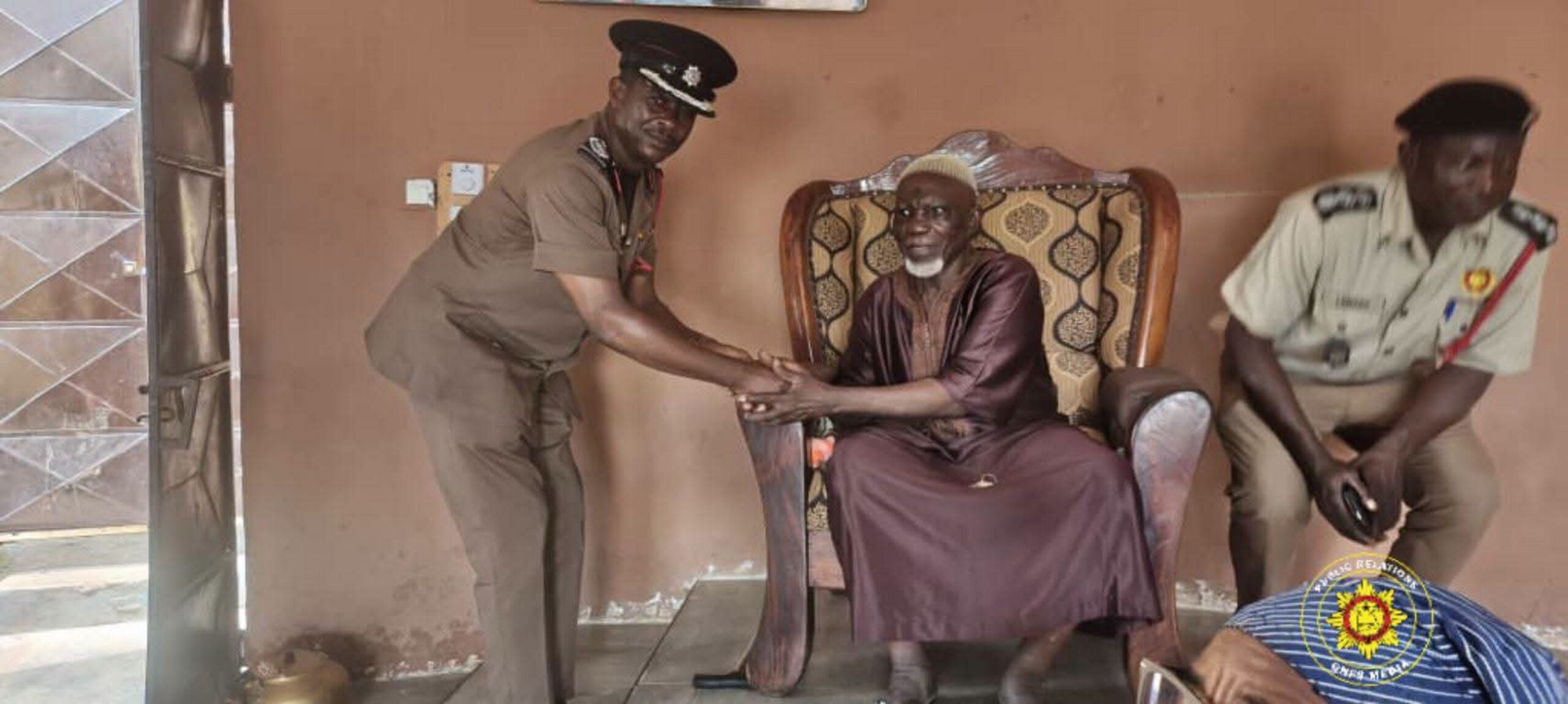
The Paramount Chief of Bamvum, Abdulai Ziblim, has donated a one-acre plot of land at Jongshegu, a suburb of Tamale, to the Ghana National Fire Service (GNFS) for the construction of a new fire station.
The Northern Regional Commander of the GNFS, ACFO I Joseph Koranteng, led a delegation to formally accept the land and expressed appreciation to the Chief for his commitment to public safety.
The proposed fire station is expected to improve emergency response times and strengthen fire safety coverage as Jongshegu and surrounding communities continue to expand rapidly.
The Chief called on stakeholders to support the swift development of the facility, while ACFO I Koranteng described the donation as a strong example of collaboration between traditional authorities and state institutions to protect lives and property.
By Edem Mensah-Tsotorme
The Narcotics Control Commission (NACOC) has arrested three suspects for allegedly representing and facilitating the activities of Dutch fugitive Jos Leijdekkers, popularly known as “Bolle Jos”, in Ghana.
According to NACOC, the arrests followed the reported seizure of a cocaine shipment by French customs, which is allegedly linked to a wider drug trafficking network.
The Commission indicated that the three suspects are currently in its custody and assisting investigators to establish their alleged roles in the trafficking operation.
NACOC, in a statement dated September 14, 2026, said the arrests form part of efforts to prevent Ghana from becoming a safe haven, transit point or operational base for international drug trafficking organisations.
The Commission stressed that it would continue to work with both local and international law enforcement agencies to disrupt the individuals, finances and infrastructure supporting the illegal drug trade.
It assured that the rights and legal protections of all persons under investigation would be respected.
Jos Leijdekkers, also known as “Bolle Jos”, is a Dutch fugitive who has been linked to international drug trafficking activities.
By: Jacob Aggrey