Sports
Developing sports with manifestoes

- /home/u249204778/domains/spectator.com.gh/public_html/wp-content/plugins/mvp-social-buttons/mvp-social-buttons.php on line 27
https://spectator.com.gh/wp-content/uploads/2024/08/a-6.png&description= Developing sports with manifestoes', 'pinterestShare', 'width=750,height=350'); return false;" title="Pin This Post">
- Share
- Tweet /home/u249204778/domains/spectator.com.gh/public_html/wp-content/plugins/mvp-social-buttons/mvp-social-buttons.php on line 72
https://spectator.com.gh/wp-content/uploads/2024/08/a-6.png&description= Developing sports with manifestoes', 'pinterestShare', 'width=750,height=350'); return false;" title="Pin This Post">
Ghana must at least be at the apex of football, globally in the next decade or so, if manifestoes of the two major political parties in Ghana are anything to go by.
The elections are a little over four months away and expectedly, the New Patriotic Party (NPP) and National Democratic Congress (NDC) are making a lot of promises to solve problems in the sports sector that have existed for ages.
Clearly, some of these problems have just been ignored even when the two parties were in power and in good positions to address them.
The fact that solutions are now being proffered from left, right to centre suggests how important the quest to wield power is to a politician.
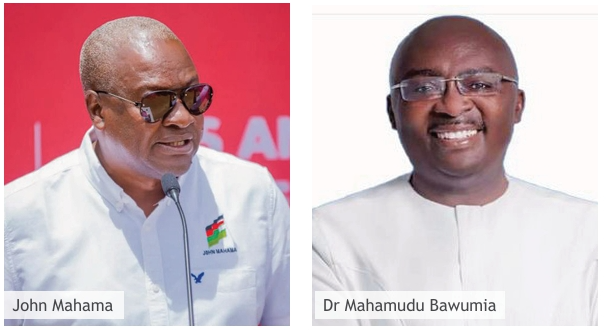
DrMahamuduBawumia, Vice President and flagbearer of the New Patriotic Party (NPP), kick-started the football played in manifestoes with the announcement to establish a Sports Development Fund to develop young talents when elected to office on December 7.
At the party’smanifesto launch at the Ghana Secondary Technical School in Takoradi, he explained how the fund would develop sports infrastructure, talents, and grassroots sports programmes, including the revival of colts football and leagues across the country.
A government under DrBawumia is also expectedto upgrade the surfaces of the football pitches in Kumasi, Accra, Cape Coast, Legon, Tamale and Essipun to meet international standards.
The NPP will also build six 5,000-seater capacity stadiums for the new regions and provide busesfor Premier League Clubs.
DrBawumia would also supervise the establishment of a Ghana School Sports Secretariat to create more opportunities for young people in sports and collaborate with international sports bodies like the NBA and NFL to make Ghana a hub for emerging sports in Africa.
He would also start an “Operation Olympics Glory” programme by dedicating resources towards the preparation and readiness of athletes towards the 2028 Olympics in Los Angeles, USA.
Few days later, NDC responded in an acrobatic style as its candidate, John DramaniMahama, pledged to undertake emergency refurbishment of pitches at the various national stadiums if it wins power in the December 7 elections.
“We’ll pursue our long-standing policy of establishing international standard stadia in all regions, build more multi-purpose sports facilities to promote regional sporting events and inter-school competition as part of our talent development policy.”
The manifesto also revealed the party’s intentions to augment the salaries of all registered footballers with additional allowances.
“We would ensure equitable investments in other national teams, such as women’s football teams, parasports teams, juvenile teams, and lesser-known sports.
“We would upgrade the UEW Sports College into a modern sports university training programmes in sports, related medicine, science, and sports management/administration at campuses around Ghana.”
These pledges may come as greatand mouthwatering news for the ‘football people’because they are geared more towards football.
It, however, leaves question marks over what would be done to bridge the huge gap between football and other sports.
Bostwana has become a model sports nation for Africa in recent times following the exploits of Lestile Tebogo at the just ended Olympic Games held in Paris.
The young athlete silenced the American and Jamaican sprinters at the showpiece, a feat he repeated at the 2024 Diamond League.
A tiny Island like St. Lucia had an athlete on the podium following an excellent performance from Julian Alfred in the female sprints.
These were gains from proper investments in sports over the years and not just football.
Upgrading our pitches, making available more playing centres, improving the league and the many others outlined by the NPP and NDC are laudable, but Ghana would be worse off if the over concentration on football does not change.
By Andrew Nortey





If there is a club Kumasi Asante Kotoko would want to avoid, definitely it would be Kpando Heart of Lions, and not Hearts of Oak.
Kotoko and Hearts have sold to soccer fans some of the electrifying football atmosphere to underline their age-long rivalry.
Despite their stature in Ghana football, however, the lions from Kpando have been the most difficult and toughest opponents for the Porcupine Warriors.
Clashes between Kotoko and Hearts have produced mixed outcomes. It remains one of the few games which outcomes can be very challenging to predict.
But the story with Heart of Lions is straightforward. It hands them the dominance card over Kotoko; making them favourites most of the time when they are paired together.
Tomorrow at the Baba Yara Sports Stadium, the Porcupine Warriors would slug it out in their Matchday 2 encounter of the Ghana Premier League (GPL) with Heart of Lions.
Asante Kotoko and Heart of Lions have faced each other in 12 recorded official head-to-head matches, with Heart of Lions holding the upper hand.
They boast six wins, and two for Asante Kotoko, with the rest of the four ending in draws.
As recent as the last three years, Kotoko has been winless in their last six games, registering three draws with the Lions winning three.
This clearly suggests that the Porcupine Warriors would be engaged in another battle of their lives when they welcome Heart of Lions to the Baba Yara Stadium, a venue that has proven to be a comfortable hunting ground for the visitors.
Coming from a 1-1 draw against Debibi United on Matchday 1 and a Democracy Cup victory over Hearts of Oak, Kotoko must be ready to clip the claws of the deadly Lions if they hope to tame them to halt that trend.
The Bibiani Dun’s Park is also expected to be full of fireworks as GoldStars welcome Hearts of Oak.
It will be one that will draw the fans in the area as both sides prepare the game with different agenda. While Hearts emerged 4-0 conquerors of Berekum Chelsea in Accra, GoldStars suffered a 1-0 loss to Bechem United.
The quest to consolidate the week one gains or to bounce back from defeat would conspire to make the game a mouthwatering one.
Swedru All Blacks would also engage Debibi United at the Swedru Stadium while Berekum Chelsea lock horns with Dreams FC at the Golden City Park and Karela against Bechem United.
At the Aliu Mahama Stadium, Karela United will face Bechem United; Young Apostles versus Basake Holy Stars at the Wenchi Stadium while Aduana FC take on Sarmatex.
The round will commence today with a fierce tie between FC Ashantigold versus Vision FC.
By Andrew Nortey
SKIP THE QUEUE, TAP THE NEWS
You can now read the Ghanaian Times and The Spectator newspapers from the comfort of your device via TimesNewsPlus.
Join our WhatsApp Channel: https://whatsapp.com/channel/0029VbBElzjInlqHhl1aTU27

When the Greater Accra Region emerged winners of the 35th Inter-Regional Basic Schools Netball Competition at the University of Ghana, Legon, one name stood out above the celebrations: Miss Lilly Akutu Zotorvie, a young shooter from the rural community of Mangoase in the Ada West District.
The Junior High School student of Englishie-Kenya D/A Basic School was the tournament’s standout scorer, netting an astonishing 132 goals in five matches for Team Greater Accra.
That translates into an average of 26.4 goals per match, a remarkable scoring record that has attracted attention from spectators and netball enthusiasts at the competition.
For Miss Zotorvie, however, the impressive statistics tell only part of the story; behind the goals is the journey of a young girl from Mangoase, a community outside Ghana’s major sporting centres, whose talent was discovered at a local netball clinic and gradually nurtured into the regional school competition.
She was reportedly spotted by Mr Ebenezer Kisseh, a journalist and coach, who recognised her potential during a netball clinic.
What could have remained an ordinary community sporting activity instead became the beginning of a promising journey for the young player.
Her performance subsequently earned her an opportunity to compete in the Greater Accra Super Zonal Games, where she impressed enough to progress to the regional level.
At the 35th Inter-Regional Basic Schools Netball Competition, she converted that opportunity into an outstanding individual performance, combining precision, consistency and confidence in front of the post.
Her exploits have also brought renewed attention to the pool of sporting talent that exists in communities far from Ghana’s traditional sporting centres.
For a young player from Mangoase, the progression from a local netball clinic to representing Greater Accra at an inter-regional competition demonstrates the importance of early talent identification and sustained opportunities for development.
Miss Zutorvie’s emergence also presents a reminder that some of Ghana’s promising sporting talents might be found in schools and communities where access to structured training and competitive opportunities remains limited.
Now, after scoring 132 goals in five matches and helping Greater Accra claim the inter-regional title, the young shooter has given coaches, sports administrators and talent scouts another reason to look beyond the country’s major sporting centres.
As Greater Accra celebrates its victory, her performance is likely to remain one of the most memorable individual highlights of the competition – and perhaps the beginning of a much bigger sporting journey for the Ada youngster. -GNA
SKIP THE QUEUE, TAP THE NEWS
You can now read the Ghanaian Times and The Spectator newspapers from the comfort of your device via TimesNewsPlus.
Join our WhatsApp Channel: https://whatsapp.com/channel/0029VbBElzjInlqHhl1aTU27