Editorial
Let’s all support victims of Akosombo and Kpong floods

Last week, angry residents in Kasoa blocked the highway to express their disapproval of the poor quality of the roads and to call on the authorities to address the issues as soon as possible.
The demonstration caused heavy traffic on the Kasoa-Accra highway with majority of passengers alighting from their vehicles to walk to their destinations.
The demonstrators claim that despite years of heavy motor traffic on a stretch of the highway between Old Barrier and the Kasoa Toll Booth because of the frequent floods, nothing has been done to improve the situation.
Other areas include Atala, Tuuba, Amanfron, Osiadan, SCC, Broadcasting among others.
The protesters bemoaned the deteriorating state of the road and the amount of floodwaters covering it anytime it rains causing silt from the hillside to wash over the road and making driving across it difficult.
Although the road is a significant one that connects to the Central and Western Regions as well as some West African countries, there are many potholes and gullies along it, making the situation extremely dangerous and halting economic activity.
Heavy traffic has been an everyday occurrence for commuters travelling between Accra and Kasoa for business purposes, costing them a lot of time.
Travelling on that stretch of road is extremely difficult due to the unendurable traffic, which is especially bad during peak hours and on Saturdays when people drive to attend funerals, visit their children in school, or attend other events.
In addition, there is constant traffic jam in the Budumburam portion due to market activities along the wayside, which is caused by commercial activity on that stretch of road.
It is time to find a lasting solution to this to allow cars to drive freely.
The Ghana Highway Authority (GHA) needs to act quickly to alleviate the extreme traffic congestion on the Accra-Kasoa road in order to save the lives of those who use it.
Resolving these road and traffic congestion problems can help to reduce traffic, boost the economy, facilitate travel, and offer respite to residents and commuters.


Dear Editor,
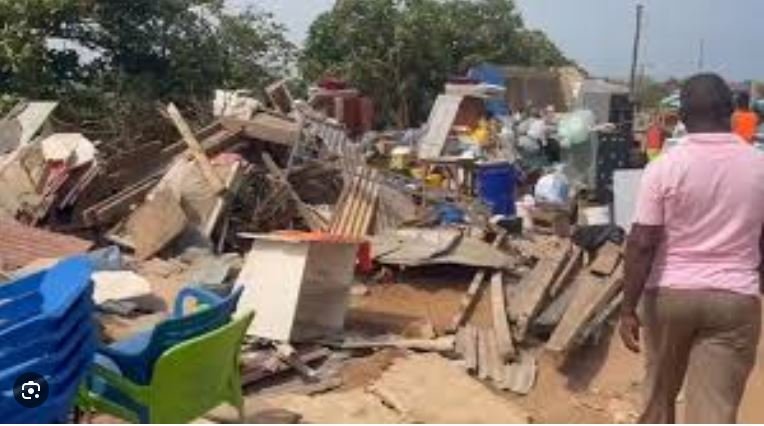
I wish to use this esteemed platform to urge the traditional councils of Osu and La to call for independent investigation into the recent demolition exercise at Kaajaano.
The exercise rendered hundreds homeless.
Information about the reason for the demolition has been scanty with those desiring to know feeding heavily on social media posts.
One particular name –Jato, has been associated with it but under whose instruction the exercise was carried is also not known.
Sadly, instead of getting to know who ordered the demolition and for what reasons, traditional authorities of Osu and La have been embroiled in a tug-of-war over ownership of the said land.
This is premature. At this moment, they should call for investigation into the exercise to know the people behind it.
When that is done, then discussions about the owners of the site can begin. That would end the posture of the two neighbouring town which has the potential to turn into something else.
Ataa Osa Mensah,
Osu
Dear Editor,
I wish to use your respected platform to draw the attention of the Bank of Ghana (BoG) to the behaviour of traders and some drivers about the use of lower denomination coins, specifically the 20 and 10 pesewas.
About two weeks ago, I read in your sister newspaper, The Ghanaian Times about this problem and the caution that followed from the BoG and some economic analysts.
The warning they gave was that the continuous rejection of the notes could create pricing problems which can eventually affect inflation.
I thought that would put to bed that practice or refusal to accept the coins when given out as change or use to pay for particular service.
Unfortunately, the problem still persist among traders, drivers, customers and passengers alike. Only last week, there was as altercation in the Accra Central area where a woman refused to accept five 20 pesewas note totaling one cedi.
As the argument continued, the trader decided not to sell to the customer again after by-standers explained to her that it was still a legal tender and those that refused it could become offenders.
This is an issue the BoG and other regulatory agencies must go and explain to the people and let them know that it is unlawful not to accept a currency that is still in use.
It nothing was done, it could create a much more serious problems.
Mary Osei Badu,
Swedru