Features
Why this unnecessary burden on pensioners and individual bond holders in the country?

- /home/u249204778/domains/spectator.com.gh/public_html/wp-content/plugins/mvp-social-buttons/mvp-social-buttons.php on line 27
Warning: Trying to access array offset on false in /home/u249204778/domains/spectator.com.gh/public_html/wp-content/plugins/mvp-social-buttons/mvp-social-buttons.php on line 27
&description=Why this unnecessary burden on pensioners and individual bond holders in the country?', 'pinterestShare', 'width=750,height=350'); return false;" title="Pin This Post">
- Share
- Tweet /home/u249204778/domains/spectator.com.gh/public_html/wp-content/plugins/mvp-social-buttons/mvp-social-buttons.php on line 72
Warning: Trying to access array offset on false in /home/u249204778/domains/spectator.com.gh/public_html/wp-content/plugins/mvp-social-buttons/mvp-social-buttons.php on line 72
&description=Why this unnecessary burden on pensioners and individual bond holders in the country?', 'pinterestShare', 'width=750,height=350'); return false;" title="Pin This Post">
Treasury Bonds are medium term debt instruments (Securities) issued by the Government of Ghana and sold to individuals or companies to raise funds for a specific time at a fixed or variable interest rate. The bonds have maturity periods exceeding two years.
Over here in Ghana, there is no upper limit but a maximum limit of GHc500.00 is required for the purchase of a bond. It generally includes a commitment to pay periodic interest called coupon payment and to repay the face value on the maturity date.
BENEFITS FROM BONDS
Unlike savings, bonds, especially those from government and major companies tend to be a safe investment. They can offer much higher return than savings account. The nature of this facility, has encouraged the majority of companies and individuals to rope onto the scheme with the intentsion of recouping sizeable interests to support them in various ways and endeavours. Even most employers in the country have taken advantage of the immense benefits to register their workers on the scheme.
In recent times, the government in its determination to revive the country’s ailing economy, has adopted a number of measures including a suspension on payment of external debt.
It,therefore, announced a Domestic Debt Exchange Programme which requires institutional holders of eligible bonds to agree to writing to the Central Securities Depository (CSD) to exchange their current holdings to new ones.
DOMESTIC DEBT EXCHANGE AND PENSION FUND
Initially, the government announced that Pension funds would be included in the debt exchange programme but Organised Labour, stood firmly against the decision which many believed was part of the conditions spelt out in the International Monetary Fund (IMF) laid out processes for the economic bailout. Organised Labour including the Civil and Local Government Staff Association of Ghana (CLOGSAG) and the Industrial and Commercial Workers Union (ICU), had all rejected the government’s attempt to include the pension funds in the debt exchange program.
According to organised Labour, it was against the law for the government to touch the pension funds. While CLOGSAG and the Ghana Medical Association (GMA) served notice that members would embark on industrial action, should the government fail to heed their call, the ICU also stated that it would be compelled to join other labour unions to demonstrate against such measures by the government.
After series of meetings between the government and Organised Labour on that thorny issue, the general consensus was to exempt the pension funds from the debt restructuring programme.
Hear the Minister of Employment and Labour Relations Mr. Ignatius Baffour Awuah, on the outcome of the meeting on Thursday, December 22, 2022. “Government and the organised labour will work together to resolve all issues to make the program successful towards the restoration of macroeconomic stability of the country.”
INDIVIDUAL BONDHOLDERS
It is surprising to know that after the attempts to include the pension funds on the debt restructuring programme had failed, the government has now turned its attention on individual domestic bondholders, as part of measures to salvage the ailing economy.
In the latter part of December last year, the government invited individual bond holders to exchange their old bond holdings for new ones with extended maturity in a domestic debt exchange programme. The invitation to this exchange programme, expired on January 16, 2023, at 4 pm, but the deadline has been extended to 31st January, 2023, at 4 pm.
According to the government, this exchange programme, would allow the country to restore sound public finance and sustainable debt levels and to kick-start economic growth, following the impact of COVID-19 pandemic. It noted that the alternative to the debt exchange would be far worse economic crisis with protracted closure from international markets, including imported goods and services, and further domestic both for the real economy and the financial sector. It would also mean depleted fiscal resources to support the neediest.
INITIAL EXEMPTION OF INDIVIDUAL BONDHOLDERS
It is recalled that individual bondholders were initially exempted from the Domestic Debt Exchange Prrogramme that the government launched on Monday, December 5, 2022.
However, the Finance Minister, Mr. Ken Ofori-Atta, in announcing the exemption of pension funds from the Debt Exchange Programme in response to recommendations by major stakeholders on December 22, 2022, said it would come at a cost.
It is important to state that the government has reached staff level agreement with its negotiation with the IMF for a three-billion-dollar bailout. Therefore, the amendment in debt Exchange programme is necessary to reach a Management and Board levels agreement with the IMF.
THREATS OF LEGAL SUIT AGAINST GOVERNMENT
This latest development has sparked off threats of legal suit in court by individual bond holders against the government. According to the Vice President of IMANI, Ghana, an Economic Think Tank, Bright Simons, three groups representing individual bond holders, have commenced mobilisation to file legal suit against the government for including individual bond holders in the Debt Exchange Programme. He explained in a tweet that individual/retail investors to Ghana’s debt default would increase the risk of litigation.
While some of these individual bond holders have threatened to commit suicide if the government fails to heed their call to rescind its decision of including their bonds on the debt exchange programme, since the benefits from that investments are the source of their livelihood and, therefore, taking them away from them mean, killing them softly, others have complained that profits from the bonds, are what they depend on to cater for their families, including their children’s school fees.
According to them, times are hard and the cost of living is unbearable, hence the profits from their investment are what they use to cushion themselves.
A number of prominent personalities including the Majority Leader in Parliament have cautioned against this latest move to involve individual bond holders in the Domestic Debt Exchange Programme, saying it is dangerous for the country’s development.
According to Mr Osei-Kyei-Mensah Bonsu, the progamme could wipe out the middle class and negatively affect the savings culture of Ghanaians. He has suggested that the Finance Minister should properly engage with the major stakeholders.
The Minority caucus in Parliament has also called for total suspension of the Domestic Debt Exchange Programme and suggested a national economic crisis dialogue by stakeholders to discuss the whole issue, including the individual bondholders matter.
ECONOMY IN SHAMBLES
It is a fact that the economy is in a state of comma and our doctors will simply put it that it is receiving serious medical attention at the Intensive Care Unit (ICU) at a medical facility with all the life supporting gadgets including oxygen and drips fixed on it. The moment, you dismantle these supporting gadgets, means death.
It is so sad that, managers of our economy have supervised the economy to that extent of deterioration, despite other natural factors like COVID-19 and Russian-Ukraine war, which they have always relied upon to defend themselves anytime they are criticised.
What is amazing, is for the fact that our finest economists and financial analysts, keep giving pieces of advice to government that will help revamp the ailing economy, but because of political expediencies, these practical and reasonable advice and suggestions are constantly ignored and left in the burner, hence the situation we find ourselves at the moment.
What we have to do as a nation which is interested in building a sound and progressive economy to rub shoulders with other advanced nations in the world, is for us to unite and push party affiliations to the background and collectively pool ideas to build this country after all, this is the only country we have and nowhere else to go.
SUFFERING GHANAIANS NEED TO BE SPARED
The people are, indeed, suffering in the midst of economic difficulties and other challenges. The cost of living is unbearable, prices of goods and services continue to escalate daily, inflation is terribly high, the cedi which appreciated against the United States of America (USA) dollar during the Christmas period is beginning to depreciate, fuel prices, although reduced a little is not the best, insurance premiums and other road worthy taxes are astronomically high.
In the midst of all these economic challenges, the government cannot continue to burden the citizens with policies that are inimical to their progress. That cannot be tolerated whatsoever in any civilised country such as Ghana.
The government should find alternatives to address the present economic challenges and stop these unnecessary ad hoc and indirect measures to mitigate the numerous economic problems.
Contact email/WhatsApp of author
ataani2000&yahoo.com
0277753946/0246933366
By Charles Neequaye

There is a scripture that is found in Matthew 6:22 which says that the lamp of the body is the eye and therefore the eye must see well to enable the body to get to its destination.
What most people do not know is that behind the scenes, there is a strong interaction between the eyes and the brain before a picture becomes clear. The state of mind therefore is crucial to the eye seeing clearly to enable the body to process accurately the information the eyes are feeding it for proper identification of what the eyes see.
This is similar to how a person behaves i.e. what informs the decisions that forms in the mind that results in the actions that a person performs. The actions of a person does not therefore just happen but is as a result of things that went on in the mind, which in most cases resulted from information passed on to it by the eyes either consciously or unconsciously.
There are so many issues that affect our society which makes one wonder, whether the people who displayed such acts were created by someone or something other than God.
How can a person see a beach created by God with beautiful beaches and fresh air blowing all around, decides to defecate at such places, and therefore desecrate the environment? lt is simply mind boggling?
When other people in other countries who dwell on the coast are using their beaches for tourist attraction purposes as a means of livelihood and also to promote environmental health, some people living around our beaches, have turned them into rubbish dumping sites and toilets.
It is a very sad situation and the earlier we did something about it the better. It is a national emergency that must engage the attention, first of the government and then the citizenry, where religious bodies and NGOs must play a critical role.
The things we focus on in this country, needs to be addressed. Our minds which processes the info the eyes send to the brain, must be disciplined. There are certain behaviours that a disciplined mind can ignore even when the eye has provided info to the brain. One of the things a disciplined mind does, is the avoidance of a second look, which is critical for every person who wants to avoid adultery or fornication.
Once a person is not blind, he will see things. The boobs, the ‘shankus’, the coca cola shapes, the light complexioned, the dark complexioned etc. the eyes will definitely see and report same to the brain. What the brain or the mind decides to do or instructs the eye to do is the issue.
It can decide to instruct the eye to take a second look and let the mind drool over it or say ignore it and that will be the end.
If the mind becomes trained to focus on environmental issues like clean environment, the eyes will automatically be reporting on insanitary conditions to the brain as and when it sees them. The mind will pay attention to such data and begin to process them and to identify solutions to deal with the reported insanitary conditions.
There is the need to encourage citizens to train the mind to focus on the right thing so that in tandem with the eyes, focus will be maintained. When the mind is so trained, it communicates with the eye to also focus on hood things that helps in both are spiritual life and our secular lives, for indeed the eyes are the lamp of the body. God bless.
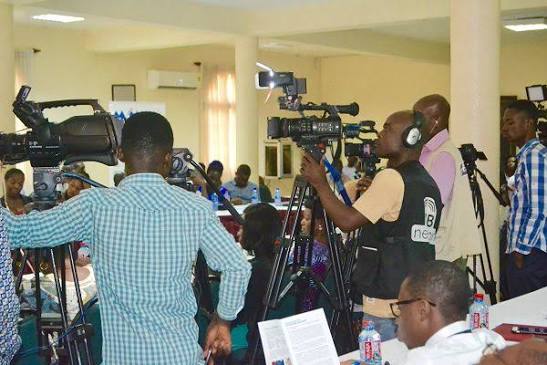
THE relationship between New Times Corporation (NTC) and African Concrete Productions (ACP) is based entirely on matters of the stomach. Each depends on the other in a dietary symbiosis, reinforced by the close proximity of each other
At lunchtime, you’d see a particular set of Times workers marching regimentally to ACP to face the wall. You’d think they are soldiers. It has long been declared that the company manufactures the best kokonte in the Greater Accra Region. ACP is, therefore, a culinary haven for those NTC kokonte fans, both male and female.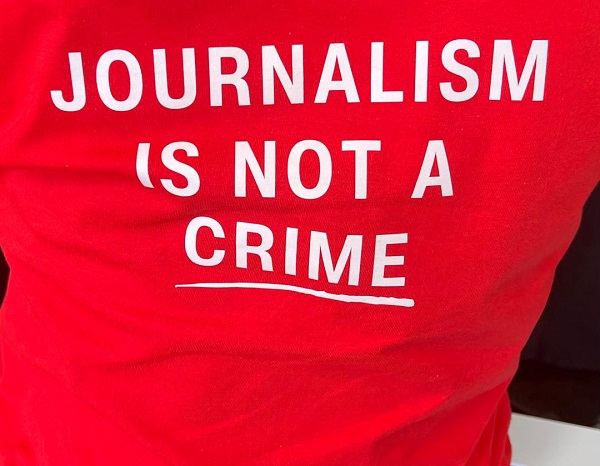
As the NTC kokonte warriors cross the border to ACP, you’d see some ACP banku fanatics dancing joyously to NTC. They are lucky folks because they do not have to obtain visa to enter into ‘Times’ to attack the balls of banku with precision and accuracy. They also claim that the lightsoup at ‘Times’ is arguably the best in West Africa.
So the relationship between the two entities was quite cordial and based practically on stomach palaver, until ACP workers staged an industrial revolution, whereupon the managing director, accountant and estate manager were allegedly stripped naked and locked up in a room. An insurgency had began in earnest.
An ACP worker came to ‘Times’, this time not to eat banku and okro. He had come to inform newsmen that juicy stuff awaited them at ACP. It could make a front page lead story.
A camerawoman and a female reporter were accordingly dispatched to go and bring back news, juicy news as juicy as kokonte and groundnut soup.
I was driving to work when I espied the familiar camerawoman clicking away outside the ACP premises. I didn’t see any ‘Times’ reporter but angry workers who were on the verge of getting violent. I slowed down and the driver behind blew his horn at me like a lunatic. I drove on.
Later, I heard the reporter and camerawoman were harassed and brutalised. The report came,. “The camerawoman, Mrs Salome Adonu-Agbottah and reporter Mrs Doreen Allotey, in an attempt to retrieve the camera which the workers had seized from them were severely beaten. They were manhandled and almost pushed into a big gutter opposite the company’s premises.
BRUISES
“….The camerawoman had bruises on her body, her hand bag was destroyed and the money in it stolen. Mrs Allotey’s watch was also snatched and her feet stamped on.”
Luckily, it was not her nose that was trampled upon. She has a beautiful nose.
The bad news was received with extreme sorrow. If the victims had been men, it would not have seemed too bad. But to brutalise women is just unacceptable. The New Times Corporation has not stopped mourning the incident which has been condemned in many circles.
Some people keep asking me why Times sent females to cover a potentially violent demonstration. I tell them they might as well ask why CNN’s amazon, Christina Amanpour, is assigned to cover the carnage in Bosnia-Herzegovina and Rwanda. She is always on the frontline in jeans and jacket.
Journalism is a potentially hazardous profession, and once you accept to study and practise the trade, you might as well bone up to face any assignment as long as your superiors feel you are capable of handling it or you have demonstrated the capacity to handle it. Both males and females can be assigned anywhere, anytime just like policemen and women are assigned.
The only difference between cops and pressmen is that the latter are armed only with a pen and the former with a gun. The question is should newsmen also arm themselves so that in any event of an assault they would not be found wanting in self-defence? They can’t adequately defend themselves with a pen and a jotter. A pen cannot even disfigure an opponent’s upper lip.
Photo-journalists have particularly suffered violence. Spectator ace-cameraman Vincent Dzatse was severely assaulted by AMA men when he attempted to take pictures of their indiscretions.
Sports cameraman, P. K. Arthur has been beaten more than once at the sports stadium when riots errupted and he wanted to capture it on his lenses.
Some sports journalists have been banned from entering the Accra Sports Stadium by supporters because in their comments, they didn’t write “sense”. Some supporters once nearly lynched Christian Abbew, Spectator Sports Editor, near a courtroom. He was stoned like the biblical Stephen. He had gone to defend a contempt charge.
I think it is time journalists met and discussed how best to defend themselves in any event of an attack by individuals or mobs. In the pursuance of their duty, they must be free from harassment and assault.
Some journalists go to work and return home with a black-eye or a double fore-head. It is just not right. Something has to be done about it. I think journalists should be armed. But first we must be trained in the use of firearms so that our warning shot do not hit below the belt. What about training in Kung Fu?
This article was first published on Saturday, October 17, 1998.