Features
Beggars in the City: Civic Responsibility vrs Religious Obligation

- /home/u249204778/domains/spectator.com.gh/public_html/wp-content/plugins/mvp-social-buttons/mvp-social-buttons.php on line 27
Warning: Trying to access array offset on false in /home/u249204778/domains/spectator.com.gh/public_html/wp-content/plugins/mvp-social-buttons/mvp-social-buttons.php on line 27
&description=Beggars in the City: Civic Responsibility vrs Religious Obligation', 'pinterestShare', 'width=750,height=350'); return false;" title="Pin This Post">
- Share
- Tweet /home/u249204778/domains/spectator.com.gh/public_html/wp-content/plugins/mvp-social-buttons/mvp-social-buttons.php on line 72
Warning: Trying to access array offset on false in /home/u249204778/domains/spectator.com.gh/public_html/wp-content/plugins/mvp-social-buttons/mvp-social-buttons.php on line 72
&description=Beggars in the City: Civic Responsibility vrs Religious Obligation', 'pinterestShare', 'width=750,height=350'); return false;" title="Pin This Post">
One cannot help but notice that in recent years there have been increased activities of beggars on the principal streets of major cities (Accra, Kumasi, Tamale etc.) in the country. Arguably Accra has been the leader in the activities of beggars in the country.
In Ghana begging is prohibited by law. Thus, Section 2 of the Beggars and Destitutes Act, 1969 (N.L.C.D. 392), makes begging a criminal offence. A person who is found begging, wandering, or who is on any premises or place to beg may be arrested by a police officer without a warrant. A person arrested for begging is liable on conviction to a fine not exceeding GH₵1,800.00 or to a term of imprisonment not exceeding three (3) months or to both the fine and the imprisonment. However, the above prohibition does not apply to a person who is soliciting or receiving alms under a religious custom or the custom of a community or for a public charitable purpose or organized entertainment and a juvenile that is a person under the age of seventeen (17) years(Section 2(3)(4) of N.LC.D 392). Additionally, Section 6 of N.L.C.D 392 provides that a person found wandering about and unable to provide evidence of having a settled place of abode or employment, visible and sufficient means of subsistence, ora defective found neglected or abandoned shall be deemed to be destitute.
Notwithstanding the above express prohibition of begging in Ghana, the activities of beggars have gradually increased in some parts of the country over the period. Lead in this trend is the influx of migrant beggars from some parts of West Africa who most often uses children as their tool for begging. Due to the socioeconomic status of the country and the cost involved in enforcing this law on begging, the government of Ghana most often turns a blind eye to the activities of these beggars. This has emboldened these beggars to expand their activities as well as recruit more people into this venture.
Over the years, I have encountered these seven categories of beggars on the streets of Accra; I describe them by their status and the way they operate.
First is the “Professional Beggars”, these are mostly able-bodied people who have made up their minds they will beg as a source of livelihood. These people love begging, they enjoy begging, and they don’t want to do any other thing in life than to beg.I dare say that even if you attempt to help them secure decent jobs or set up businesses for them, they will still go back to begging. Some of these beggars believe their religion sanctions the giving of alms thus they must make themselves available for others to give the malms (one may argue that this is allowed under Section 2(3) of the Beggars and Destitutes Act).
The second is “Lying Beggars” this category of beggars may also be “Professional Beggars”. In addition to being “Professional Beggars”, they have mastered the art of begging by carefully crafting emotionally blackmailing stories full of lies. These beggars mostly come up with stories of needing financial assistance for medication, , hospital bills, food, and transportation among others. One will think that but for their needs, they wouldn’t be begging. However, this is just a scheme they use to solicit financial assistance from sympathetic people.
The third is “Circumstantial Beggars” these are mostly physically challenged people who due to unfortunate circumstances are unable to engage in any decent jobs or business ventures hence they resort to begging. Arguably if not for their physical challenges some of them may not be on the street begging.
The fourth is “Aggressive Beggars”.This category of beggars mostly resorts to the use of verbal or physical abuse to compel their targeted individual to give them money. Most often they get offended and use abusive words on an individual if they ask for money politely and the said individual refuses them. They may also physically restrain you in the street by grabbing your hand, holding your dress or bag among others just to compel you by the discomfort to give them money.
The fifth is “CasualBeggars” these are able-bodied people who are not Professional Beggars. However, from time to time these people resort to begging to augment their income from whatever business activities they may be engaged in. This category can also be referred to as “Occasional Beggars”.
The sixth category of beggars in the city is “Need-Based Beggars”. These are people that beg on the street because a need has arisen in their lives that they don’t have any means of taking care of the said need other than begging. These beggars usually have a genuine need that must be attended to, but they don’t have the financial muscle to do so all by themselves. Most often once the said need is met, they stop begging and undertake their normal activities devoid of begging on the street.
The seventh is “ChildBeggars”.These are children below the age of seventeen (17) years that are mostly used by “Professional Beggars” as a mechanism to undertake their begging activities. This category of beggars has been introduced in recent years by the influx of migrant beggars from some parts of West Africa. These children cling on to individuals on the street just to collect money from them whilst their parent/guardian relaxes under a shade supervising their activities. Most children under Section 2(4) of the Beggars and Destitutes Act and Section 18(g) of the Children’s Act, 1998 (560)(as amended) would not be held criminally responsible for begging. However, it is a criminal offence to use children as a mechanism to undertake begging activities. Such an act is deemed as exploitative child labour under Section 87 of the Children’s Act.
Note that the above categories of beggars are not mutually exclusive as there may be some beggars that fall within two or more of the above categories. There may also be another group of beggars I have not encountered who may operate differently from the ones I have identified above.
Section 5 0f the Beggars and Destitutes Act provides that a person who permits or encourages another person to commit an offence under Section 2 may be arrested by a police officer without a warrant. The person is liable on conviction to a fine not exceedingGH₵1,800.00 or to a term of imprisonment not exceeding three (3) months or to both the fine and the imprisonment. The question is does an individual commit an offence of encouraging another person to beg by giving alms to a beggar?if so, why do a lot of people still gives to beggars despite the possibility of suffering these penalties if arrested?
Most religions globally believe in giving to the needy in society. Also, our sociocultural orientation as Ghanaians encourages the giving of alms to the needy in our communities. As such it is not surprising that a lot of people give to these categories of beggars identified above when they encounter them on the street without hesitation. If you are a Christian believer like me, you might seek solace in Mathew 5:42 ESV which admonishes us to “Give to the one who begs from you, and do not refuse the one who would borrow from you”. If you are a Muslim, you might draw inspiration from one of Islam’s pillars, Zakat which is alms giving or charity. Whatever your reason for giving to those who beg on the street, there is always a contrast between adhering to your religious beliefs and your civic duty not to encourage beggars on the street by giving alms to them.
Let me conclude with my most recent encounter with a beggar: on 25th May 2022, I went to Madina (a suburb of Accra) in the morning to purchase some items. I had to use the footbridge at Madina Zongo Junction to crossover to the other side of the street because the store I was going to was on the opposite side of the direction I came. Midway through my journey on that “anaconda size” footbridge, I was approached by a decently dressed fair lady. She had in her hand a placard with the inscription “Come to me, all you who are weary and burdened, and I will give you rest. Take my yoke upon you and learn from me, for I am gentle and humble in heart, and you will find rest for your souls. For my yoke is easy and my burden is light.” Matthew11:28-30NIV. When we got close to each other, she asked me to read the inscription on the placard which I did. Under normal circumstances, I would have ignored her, but as religious as I am, I had to respect the carrier of the gospel of my Lord and Savior, Jesus Christ. So, I paused and decided to listen to her share the gospel with me.
What was she trying to do? your guess is as good as mine.She was not trying to preach the gospel of Jesus Christ to me but only to use the inscription on the placard as a means to get my attention. She started with a story about how she inadvertently stepped into someone’s “black magic” at Takoradi, which got her leg swollen, because of that, she was bedridden for six(6) months and had to undergo a series of surgical operations before she got back on her feet. Since the incident, she had lost her job and she had to undergo the final surgical procedure to bring her leg back to normal. She then proceeded to say she was raising money for the surgery, and I should give her GH₵20.00 to support her cause. I told her I didn’t have a GH₵20.00 note to give to her. From the inconsistencies in her storyline, I could sense she was lying. Also, she was wearing a long skirt, and clearly, I wouldn’t even dare to ask to see the leg. She then negotiated downward and said I could give her any amount, even if it was GH₵5.00 or GH₵1.00. For her not to waste my time further, I gave her a GH₵10.00 note.
After this encounter with this lady, who is a “Professional Lying Beggar”, I met her at that same spot on the Madina Zongo Junction footbridge attempting to catch my attention with the same strategy. That was a couple of weeks after my first encounter with her.
In light of the above encounter, I leave you with these questions: How do we religious people balance our beliefs in giving alms on one hand? On the other hand, as patriotic citizens, our civic duty is not to encourage this social nuisance that is gradually taking over the principal streets of our major cities. What must the government working through its ministries, departments and agencies do to reduce, if not irradicate this social nuisance that is engulfing our major cities.
Autor:
The writer is a Legal Practitioner
Email: barnabas.abisa@gmail.com

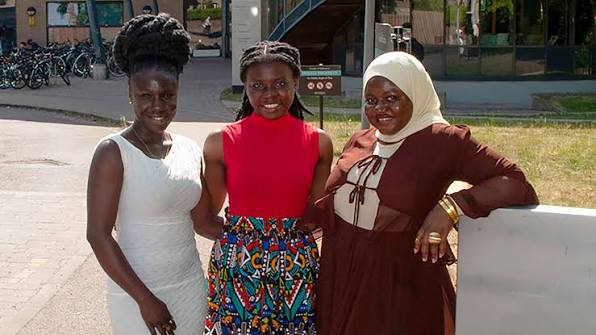
The average modern Gold Coaster born and bred in Sikaman is an adventurous creature. Go to any part of the world and you’ll find Ghanaman diligently slugging it out either in the snow or in hot sweltering weather, earning a decent living.
Go to Guinea and see Ghanaman in the garb of a herbalist, curing the sick of various ailments. He makes the Guinean understand that not all diseases are caused by James Lucifer alias Jimmy Satan. On the contrary, most diseases are caused by kooko which can even attack the human nose and turn it upside down.
That kooko is also the cause of poverty and the internal bleeding of personal back-pocket economies. And that kooko can be cured using the chemistry underlying Sikaman herbal medicine which has been blessed by the gods of Larteh.
And before Ghanaman starts dispensing his herbal concoctions, he must attract the passing crowd with some Sıkaman-originated choreography, akin to a combination of adowa and agbadza, such that the dancer can easily dislocate a shoulder and start crying for his mother.
When the crowd is enough to form a quorum, Ghanaman must perform magic as a side-attraction, and proceed to sell his drugs. The drugs are genuinely made from potent herbs which the Pharmacy Board of Sikaman says it has no confidence in. Believe me, Ghanaian herbalists are practising in neighbouring countries like Guinea, Cote d’Ivoire, Sierra Leone and Benin, while we are discouraging them from practising in Sikaman.
Go to Las Palmas and see Ghanaman as a fisherman. He sails on Korean-owned boats and is forced to eat garlic and raw tuna for radiant health. The garlic is also supposed to protect him against witches. But sometimes, he is not good bedfellows with some Korean crew members, and once in a while a fight breaks out.
The typical Korean is a Kung Fu expert and before displaying a golden dragon data. He must first terrify Ghanaman with a Korean dance which consists of wild arms and leg throwing. But Ghanaman is usually not daunted. Why has he been eating cancer kenkey all years without developing cancer? It mean is a superhuman capable of countering Kun fu side-kicks to the ribs.
Anyhow Ghanaman’s most potent arsenal lies in his fists. If he is a southpaw, it mean left fist is probably insured and can cause damage. When Ghanaman lands a cassava blow and it lands on a Korean chest, it has the effect of a cruise missile. If there is no ceasefire a funeral cannot be ruled out.
Greenland
Go to Alaska and find Ghanaman there. Greenland, Iceland, Brazil, Argentina, Madagascar, everywhere and you’ll find him. He has become an international citizen and is generally lauded for his hardwork, sincerity and honesty.
However, some bad nuts are also condemned and despised.
The world and all its parts and corners are for the human race, and anyone can choose to live anywhere and earn a decent living so long as he doesn’t misconduct himself or become a social misfit and a law unto himself.
Sıkaman for instance accepts foreigners, and we are so liberal that people just come in through our borders and we welcome them with the best palmwine in town and goat light soup. Who cares about passports and visas? Our hospitality is, as it were legendary.
So we have Liberians, Nigerians, Sierra Leoneans, Togolese, Europeans, Americans, Scandinavians and Koreans in Sikaman. And some of them have misinterpreted our overzealous accommodation to mean “foolishness” and are misconducting themselves.
The newspapers carry stories of some unscrupulous Nigerians stealing, defrauding and collaborating with their Sikaman counterparts to rob people. You’ll find some good and law-abiding Liberians around but some other Liberians are in the business of fraud, robbery, money printing, money doubling, anything criminal.
Ghanaian hospitality can no longer be extended to such people. I do not think Ghanaians will be treated kindly either, when they misbehave anywhere in the world. Those who come from outside with the intention of bringing down their evil deeds and to practise them here professionally must be getting ready because Ghanaians are getting fed up with the menace.
These days, you’ll find strange people following you as soon as you emerge from a bank. If you are not careful, they’ll wrestle your briefcase from you and speed away in a waiting taxi.
Someone was just saying that many foreign criminals are flocking to Ghana because in their countries, they are enable to operate either because they are being looked for by the police for offences committed or fear instant justice at the hands of mobs. Ghanaians, it is said, are humanitarian in dealing with criminals.
Well, in some African countries, a thief who is being chased runs directly to the police station in his own interest and begs the officer at the counter to lock him up. Otherwise he’ll be lynched or be burnt to death. In Ghana, it is the opposite. The thieves run far away from the cop stations.
The criminals must reform and stay peacefully in Sikaman or quit. No court case!
This article was first published on Saturday September 5, 1998
The human condition is defined by two absolute, biological bookends: the commencement of complex cellular animation and its ultimate, irreversible cessation.
For centuries, medicine treated life and death as strictly separate states. Today, modern pathology and molecular biology reveal a more profound truth: the mechanisms that allow us to live are the exact same mechanisms that dictate how we die.
Understanding this relationship is no longer just a philosophical pursuit. It is a clinical necessity for managing public health in the 21st century.
Part I: How we live – The mechanics of animation
At its core, biological life is a continuous, high-stakes battle against entropy (the natural tendency of systems to degrade into disorder). To maintain form, consciousness, and function, the human body relies on three fundamental pillars:
1. Cellular respiration and energy production
Every second of human life is powered by the conversion of oxygen and glucose into Adenosine Triphosphate (ATP), the universal energy currency of our cells. This process occurs within the mitochondria.
Without a constant supply of ATP, the microscopic pumps that maintain electrical gradients across our cell membranes fail, causing cellular collapse within minutes.
2. Homeostasis: The balancing act
To survive, the internal environment of the body must remain incredibly stable, regardless of external chaos. This balancing act, known as homeostasis, regulates:
Blood pH: Strictly maintained between 7.35 and 7.45.
Core Temperature: Ideally kept around 37°C (98.6°F).
Electrolyte Balance: Precise ratios of sodium, potassium, and calcium that allow nerves to fire and muscles to contract.
3. The Autonomic Nervous System (ANS)
The ANS acts as the invisible conductor of life, split into two complementary branches:
Part II: How we die – The path of cessation
Death is rarely a singular event; it is a progressive biological cascade. Whether caused by old age, chronic illness, or sudden trauma, the final pathways of mortality generally follow a predictable trajectory.
1. The cellular horizon: Senescence and Apoptosis
Every time a human cell divides, the protective caps at the ends of its chromosomes-telomeres-shorten. Eventually, telomeres become so depleted that the cell can no longer divide safely. It enters senescence (a state of permanent arrest) or triggers apoptosis (programmed cell death). This gradual, systemic loss of cellular renewal is the underlying engine of aging.
2. The clinical cascade of somatic death
When the body can no longer maintain homeostasis, somatic death (the death of the organism as a whole) begins. This occurs in a distinct sequence:
1
Clinical Death
Zero to four minutes
The heart stops pumping blood, and respiration ceases. While breathing and circulation have ended, the body’s tissues still contain residual oxygen and cellular energy reserves. At this stage, resuscitation is often still possible.
2
Brain Death (Infarction)
Four to six minutes
Deprived of fresh oxygenated blood, the brain’s highly sensitive neurons begin to starve. Lacking ATP, the brain cells lose their electrical charge, swell, and begin to burst. Permanent, irreversible neurological damage occurs within minutes.
3
Biological Death
Hours to days
The organs fail entirely. Without central control or blood flow, individual cells throughout the body consume their final energy reserves. Enzymes that once aided digestion begin to break down the body’s own tissues from the inside out, a process known as autolysis.
Part III: The modern collision of life and death
In the modern era, the boundary between how we live and how we die has blurred. Historically, humanity died primarily from infectious diseases and acute trauma. Today, global mortality is dominated by non-communicable, chronic lifestyle diseases.
Modern Pathology: How we live (the cause) how we die (the result)
Cardiovascular disease, chronic stress, poor diet, and lack of sleep keep the sympathetic nervous system hyper-activated, damaging blood vessels .Occlusion of coronary arteries leads to myocardial infarction (heart attack) or ischemic stroke.
Metabolic syndrome over nutrition and physical inactivity overwhelm cellular mitochondria, leading to systemic insulin resistance. Multi-organ failure, chronic kidney disease, and severe vascular complications.
Neurodegenerative Disorders Chronic systemic inflammation and sleep deprivation prevent the brain from clearing metabolic waste. Gradual loss of synaptic connections, leading to dementia and the eventual loss of basic autonomic functions.
Conclusion: The unified theory of health
Ultimately, how we live directly shapes the path of how we die. The micro-choices of daily existence-how we manage emotional stress, the quality of our rest, our communal connections, and our nutrition-either preserve the integrity of our homeostatic systems or accelerate their decline.
True medical advancement is shifting away from merely extending the final, frail stages of biological death. Instead, the focus is turning toward optimising our living years-ensuring that the intricate, beautiful machinery of human animation runs smoothly until its natural, quiet conclusion.
By Robert Ekow Grimmond-Thompson