Features
Criminals in uniform


In Shakespeare’s tragic play, Macbeth, Duncan, the King of Scotland, declares: “There’s no art to find the mind’s construction in the face.” He makes this remark after he is told that the Thane of Cawdor has been executed for treason.
In the play, the Thane of Cawdor, a Scottish titled man, valiant for that matter, betrays his country, and the king’s trust by fighting for the Norwegians who are at war against Scotland. His compatriots capture him, and King Duncan orders his execution. It is after the order is carried out and reported to Duncan that he makes that statement.
In simple terms, the expression means one cannot read someone else’s mind by merely looking at their face. In other words, never judge a book by its cover.
The king realises that there is no way to predict betrayal. He does not see it coming as his next sentence shows: “He was a gentleman on whom I built absolute trust.”
Such is the dilemma we face as a nation. The nefarious activities of some men in uniform, have put Ghanaians on edge. These are people to whom we have entrusted our safety and security, but they have betrayed our trust and are in cahoots with criminals of all sorts to threaten us, putting both our property and very lives in danger.
Policemen and soldiers have in recent times, been arrested in very compromising situations unbecoming of their profession. They have joined the underworld. Like the Thane of Cawdor, they are sent to wage war against criminals, but they go and join them to do us harm.
It occurs all over the world with varying degrees. There have been reported cases of policemen in the UK abducting, raping, and murdering women. In the US, a policeman recently killed his own wife, a fellow police officer, following what is believed to be a domestic violence incident.
However, criminals in uniform abound more in Africa than in other parts of the world. And some of the reports are frighteningly shocking. For example, in the 1980s, in Nigeria, the name of a very prominent senior police officer, DSP George Iyamu, popped up as the main facilitator of the most deadly and dreaded criminal gang in the country, led by Lawrence Anini, a very young notorious armed robber in his late 20s.
Together with his gang, Anini terrorised most parts of Nigeria, especially, Benin City in the old Bendel State which has now been split into Edo State and Delta State.
The clan began as carjackers before including robbing buses on highways. In no time, bank robberies became their preferred option with the cruel massacre of victims.
They committed gruesome murders including killing a lot of policemen who stood in their way. Within just about four months, the group had killed close to a dozen policemen, including two who attempted to stop Anini at a barrier, not to mention civilians.
The fearsome robber held sway over all he surveyed and was a law unto himself. In fact, he called himself Anini the law and was so elusive and dreaded even though he was living right under the nose of the police.
It is said that even if he approached a police barrier, all he had to say was: “I am Anini the law.” And come and see speed! Instead of attempting to arrest him, they would just flee for cover, and allow him free passage.
Anini even had the audacity to draft a proposal and gave it to the military Head of State at the time, General Ibrahim Badamosi Babangida, about collaborating with his group of felons and treating them with respect to bring peace to the country, especially, Benin City.
The Newswatch magazine, in its October 27, 1986 publication, listed the six conditions Anini gave for peace to return to Benin city in an unedited form as follows:
“No more prosecution of innocent armed robbers; a stop to collusion between the police and the Nigerian Union of Road Transport Workers, and with members of the Ogboni cult; no more harassment of market women returning from their work; the ‘abolition of the collection of 50k-N5 [by the Highway Patrol], equal treatment for everybody; and fair treatment for all legitimate drivers by the police.”
Ironically, Anini, while still committing atrocities, posed as an advocate and deliverer of the suffering masses of Nigeria, including his fellow criminals whom he described as “innocent armed robbers.”
His reign of terror which peaked between August and December, 1986, was so bloody and widespread that he was even discussed at National Security Council meetings chaired by General Babangida himself who furiously posed the question to the IGP, Mr. EtimInyang: “My friend, where is Anini.”
General Babangida ordered a massive manhunt for Anini and his cohorts. A crack team of policemen, from outside Anini’s home region of Bendel State, operating under tight secrecy, hounded them, combing every nook and cranny of his state, especially Benin City, the capital, which the group was said to be using as its operational headquarters.
The effort finally paid off. Finally, on December 3, 1986, the team captured Anini in the company of six girlfriends in Benin City. Some other members of the group were also nabbed at different locations.
While in custody, Anini made some startling revelations, disclosing the identities of six police officers, including DSP George Iyamu, as their accomplices who tipped them off about plans to get them. Iyamu, the most senior among the officers, was also said to have provided guns and other logistics for the Anini bunch.
On March 29, 1987, Anini who was just over 26 years, was executed by firing squad, together with his bandits, after being convicted and sentenced to death for armed robbery by a High Court. DSP Iyamu and four other policemen also suffered the same fate.
Thirty-five years on, another top cop, Abba Kyari, a Deputy Commissioner of Police, widely touted as a potential IGP, has fallen from grace to grass after being implicated in a cocaine deal with a notorious internet scammer and drug dealer.
In Ghana, when a spate of attacks on bullion vans hit recently, the police had good cause to look everywhere except within their own ranks. After all, the police are the trusted ones to go after the crooks!
But it turned out to be all wrong. Duncan’s words came into play: “There’s no art to find the mind’s construction in the face.” About six servicemen who mourned the death of a colleague cruelly murdered in one of the bullion van attacks, turned out to be shedding crocodile tears.
They were the very criminals the police were looking for. Two of them died inexplicably in a shooting incident when the police went with them after their civilian accomplices. Four others are on remand while their trial goes on,.
In another development, the M.C.E. of New Juaben South, Mr Isaac Appaw Gyasi, on June 21, 2022, was reported to have revealed that some moles among the security personnel in his municipality, have been countering efforts to arrest sex traffickers and commercial sex kingpins by leaking information on operational strategies adopted for the arrest and prosecution of the criminals.
In recent times, sex trafficking and commercial sex business are getting out of hand in Koforidua, the Eastern Regional Capital, with reports alleging that the municipality has become the destination of choice for Nigerians and other foreign nationals engaged in the illicit activities.
With the connivance of Ghanaian accomplices, those foreigners lure young girls into believing that decent and well-paying jobs are available in Ghana only for them to be pushed into those practices.
The irony is that while the new police administration under C.O.P Dr. George Akuffo Dampare, is making strenuous attempts to reduce crime significantly, traitors within the service are thwarting these efforts by conniving with criminals.
New ways of policing, hitherto unheard of in Ghana, have now been introduced into the service. This includes the establishment of a K-9 (canine) Unit whose officers and trained security dogs are stationed at vantage points across Accra for operational patrols.
This new way of policing forms part of the Proactive Preventive Policing Strategy and it is aimed at increasing the visibility of personnel, improving intelligence gathering, tracking of contraband goods, and improving upon other aspects of criminal investigations. Plans are underway to extend the strategy to other regions in the near future.
Another innovation is the horse patrol in various areas as part of the visibility strategy to nip crime in the bud. Besides, Regional, Divisional, and District Police Commanders across the country, on Monday, June 20, 2022, embarked on an intensive community engagement nationwide with a view to bringing policing to the doorsteps of Ghanaians as well as gathering intelligence.
Very lofty ideas but with the moles as recalcitrant as ever, what is the future of policing in Ghana in particular, Africa as a whole, and the world in general?
The programmes demand trustworthy security personnel to succeed. But, again, “there’s no art to find the mind’s construction in the face.” For that reason, let there be foolproof background checks before new officers are enlisted into the Ghana Police Service.
For those criminals already in uniform, give them no rest. Hound them and flush them all out. They must be put out of service. Period!
Contact:teepeejubilee@yahoo.co.uk
By Tonny Prempeh


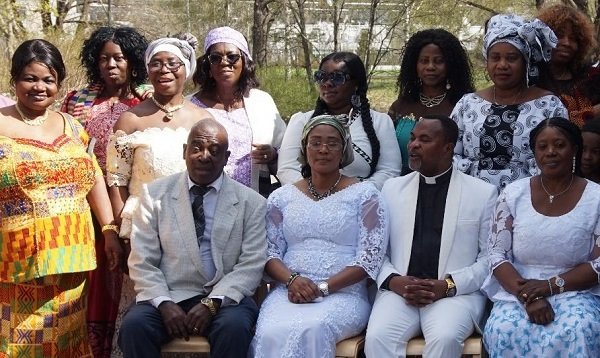
Today, I focus on the Apostolic Church International in Finland, as I continue with my description of institutions and personalities and their accomplishments as members of the Ghanaian Diaspora in Finland.
The Apostolic Church International, Finland (or, Apostolic International Association Ry) was established in October 9, 2023. The Church in Finland has seen significant strides and accomplishments within the short time that it has been established in Finland, which must be highlighted.
History of the Church in Ghana
The Apostolic Church Ghana originated from the 1904–1905 Welsh revival, officially established in Ghana (then called Gold Coast) in 1935 following connections between a local prayer group in Asamankese (a town in southern Ghana), led by Peter Newman Anim, and the Apostolic Church, UK. There were historical splits in 1939 and 1953, but the Apostolic Church attained autonomy in 1985.
Today, the Church is headquartered in Accra. Last year (2025), it dedicated its new 10-storey headquarters, “The Apostolic Church Tower,” in Frafraha, Adenta West in Accra.
Activities of the Apostolic Church in Finland
The Apostolic Church in Finland conducts church service on Sundays. The service starts at 11a.m. in the morning and closes by 1 p.m. in the afternoon. There are no other activities during other days for now.
The Minister in charge of the church in Finland is also the Area Head of Italy Area. He is Pastor Daniel Kofi Addison who is the new Italy Area Head, and has just been transferred from UK South Area to Italy Area during the just-ended Council Meeting in March this year. Italy Area comprises Italy, which has 13 Assemblies, Germany, one Assembly, and Finland, one Assembly.
Elder Ebenezer Amoaning-Coffie is the Presiding Elder in charge of the Assembly in Finland. A Presiding Elder is responsible for day to day activities of the church (Assembly) and reports to the District Pastor, or in the absence of the District Pastor, reports to the Area Head.
Achievements
The Apostolic Church International, Finland was officially registered under the Finnish Law, guaranteeing freedom of worship and providing legal foundation for future growth. The church service is conducted in both English and Twi.
The church opens its doors to all people of every nation, especially Ghanaians who are in Finland and other African nationals. Now, the membership comprises Ghanaians, Nigerians and Sierra Leoneans.
The Church and the Ghanaian migrant community in Finland
The Apostolic Church in Finland plays a prominent role as a religious group that serves Ghanaian migrants and others in the Finnish society.
Thus, the Apostolic Church is a religious body for Ghanaian migrants in Finland and other nationalities who want to worship with them for diversity and better intercultural and multicultural understanding.
Elder Amoaning-Coffie said that the main and primary aim of the church is to bring people closer to God. “We aim to win souls for Christ. We aim to preach the gospel to the world. By propagating the gospel to the people, we are hopeful that they will turn away from any ungodly ways and be good individuals in the community and in society in general”, he stated.
He said that everything is going well so far. A key challenge, however, is how to get more members especially the youth. As a new Assembly, we are in need of instrumentalists, for example. We pray to God Almighty to help us do His work, the Elder disclosed.
Integration
By its activities, the Apostolic Church is helping to ensure integration of its members well into the Finish society. This is important since social interaction and citizens’ well-being are an important part of the integration process in Finland.
As I mentioned some time ago, the role of migrant associations and groups such as the Apostolic Church acting as bridge-builders for the integration and inclusion of migrants through participation in the decision making process and by acting as a representative voice is highly appreciated in Finland. Thank you!
With Dr Perpetual Crentsil

The landscape of the Ghanaian palate is shifting, and not necessarily for the better. In our bustling urban centres, from the streets of Accra to the suburbs of Kumasi, a quiet culinary revolution is taking place; one where the mortar and pestle are being replaced by the pizza oven and the deep fryer. This transition from traditional staple foods like fufu, banku, akple, kenkey, tuo zaafi, and ampesi toward “continental” dishes is more than just a change in appetite; it is a reflection of a deeper social struggle with identity and prestige.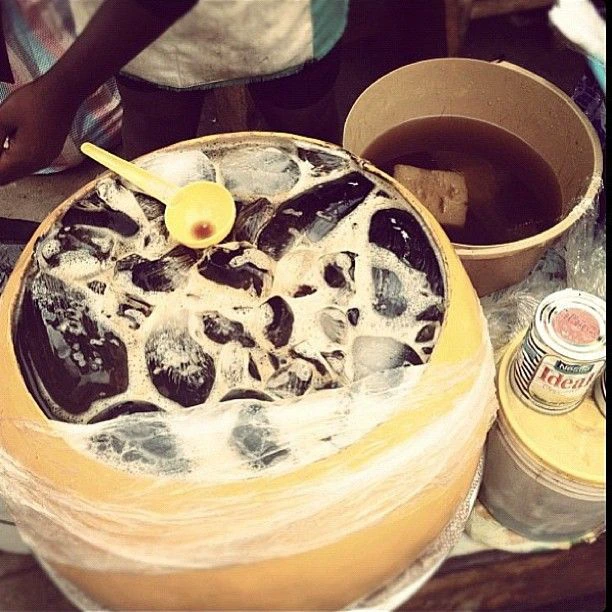
The illusion of modernity
For many, “stepping out” for a meal has become synonymous with consuming foreign cuisine. There is an unspoken social hierarchy where a bowl of Abunuabunu is relegated to the village category, while burgers, pizzas are branded as prestigious choices. We have reached a stage where we equate foreign with modern and local with primitive.
This perception is a dangerous illusion. Our traditional dishes are marvels of culinary engineering complex, nutrient-dense, and deeply rooted in our history. When we choose a processed foreign import over a meal made from local tubers or fermented maize, we are not just changing our lunch; we are eroding the indigenous knowledge attached to our local ingredients and foods.
We need to turn the consumption of indigenous grains and tubers like millet, sorghum, and plantain into a statement of self-worth and national pride.
The cultural and health erosion
Every time a local dish disappears from a restaurant menu to make room for foreign fast food, we lose a piece of our cultural fabric. Traditional Ghanaian cooking is an art that requires patience and skill. By choosing the convenience of foreign fast food, we are raising a generation that may know the taste of a pepperoni pizza but cannot identify the rich, earthy profile of Prekese or the subtle tang of well-fermented dough dishes like corn porridge, banku, etew, abolo, agidi or kamfa, and kenkey.
Furthermore, we are at the crossroads of a nutrition transition. Replacing high-fiber, indigenous crops with calorie-dense but nutrient-poor foreign fast foods is driving a rise in lifestyle diseases such as obesity, hypertension, diabetes, stroke, cancer, and liver disease. We are trading our longevity for 15-minutes convenience or unhealthy diet.
A call for culinary patriotism
It is time for us to appreciate, preserve, and promote our indigenous foods and culinary traditions. We need to be proud of our local dishes, ingredients and cooking methods, rather than relying heavily on foreign or imported foods. We must stop viewing our local delicacies as low-class and start treating our culinary heritage as the high-end gastronomy it truly is.
True sophistication does not come from imitating Western fast food; it comes from innovation and adding values to our own resources. We see glimpses of this potential in the rise of branded Sobolo and the creative use of gluten-free plantain flour in modern baking of flour-based dishes such as bread, cakes, biscuits and others. This is the path forward. We must elevate our local dishes, making them as accessible, affordable, presentable and trendy as any foreign alternative.
To the hospitality industry: Innovate or stagnate
Our hotels and high-end restaurants must lead the charge. They must stop relegating local dishes to the “traditional corner” of the buffet, and apply the same culinary finesse given to imported dishes to our Fante Fante, apapransa, aborbi tadi, fetritoto, akple, abolo, yakayeke, fufu, ampesi, kokonte, wasawasa, tubani, apapransa, mpotompoto, kelewele, aliha, brukutu, pito, and other local dishes. The industry must enhance customer experiences making eating local dishes the ultimate luxury experience for both tourists and residents alike. We must elevate the presentation of our foods by using modern plating techniques to show that a bowl of light soup can be as visually stunning as a French consommé. We need to reclaim our Ghanaian plate before it is too late.
To the policy makers: Let us encourage buying of local ingredients to promote the local food industry and economy. There should be educational programmes and talks about the nutritional and cultural benefits of local foods so that people understand their value.
We need to encourage serving traditional dishes at school programmes, parties, and celebrations instead of only fast foods,
To the Youth: Let us value and appreciate our traditional dishes instead of always choosing foreign foods. There must be balance in our choice of local and foreign dishes. Confidence in our culture encourages others to respect it too. Our local dishes can also be promoted by sharing pictures, recipes, and videos on platforms such as Instagram, TikTok, and WhatsApp to make them attractive and trendy.
Young citizens must learn from their parents and elders how to prepare local meals to keep the knowledge and cultural relevance alive. Local dishes can be modernised to appeal to younger generations and tourists.
Conclusion
We cannot afford to trade our heritage for foreign cuisines which are gaining grounds across the country at an alarming rate. We must disabuse our minds of the perception that anything foreign or imported is better than those locally made. Our health, economy, and identity are tied to the soil. It is time to stop apologising for our local flavours and start celebrating them. It is possible to embrace modernity without losing ourselves and our cultural identity. Let us make the Ghanaian kitchen the heart of our modern identity once again.
By: Marilyn Gadogbe