News
Christ the King Catholic Church walks for peace

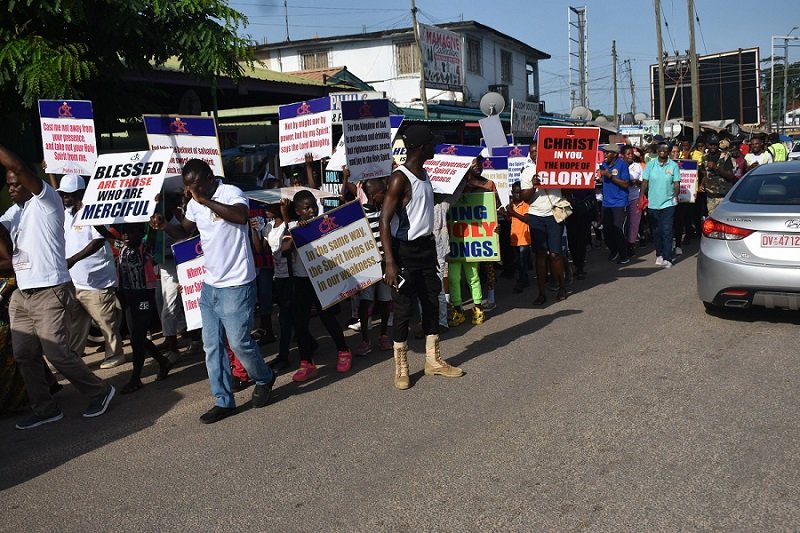
Christ the King Catholic Church at Effiakuma and its outstations last Saturday went on a Peace Walk to drum home the need for peace in Ghana.
The walk was part of activities planned to celebrate the 60th Anniversary of the church which was started by the Franciscan Friars, an Order in the Catholic Church.
It started from the main Parish at Effiakuma through St. Augustine’s Church at Effia to Immaculate Conception at Anaji through the principal streets of Effia-Kwesimintsim Municipal Assembly and back to Effiakuma covering over 20 kilometres
The Parish Priest Rev. Fr. Vitus Edem Yao Mensah, his assistant Rev. Fr. Derrick Y. Bressey supported by Rev. Frs. Thaddaeus Apetorgbor, Emmanuel Adjei Nsiah and Christian Ahiawodzi all of the Christ the King Catholic Parish led the members.
They carried placards some of which read “Ghana is a PEACE Loving Nation, Jealously Preserve the PEACE, A Nation Without PEACE will know no Development, Be your Brother’s Keeper, When there is War, Women, Children and the less Privileged Suffer Most, Pray for PEACE and UNITY in Ghana”.
Others were “Unforgiveness will kill Ghanaians, Love does not hate, Trust in God with all your heart, Christ is in you, the hope of your glory, Don’t grieve God’s Holy Spirit is in and you are sealed.”
From Peter Gbambila, Effiakuma.

News
188 vehicles impounded in Kumasi as Police crack down on fake sirens and illegal car modifications

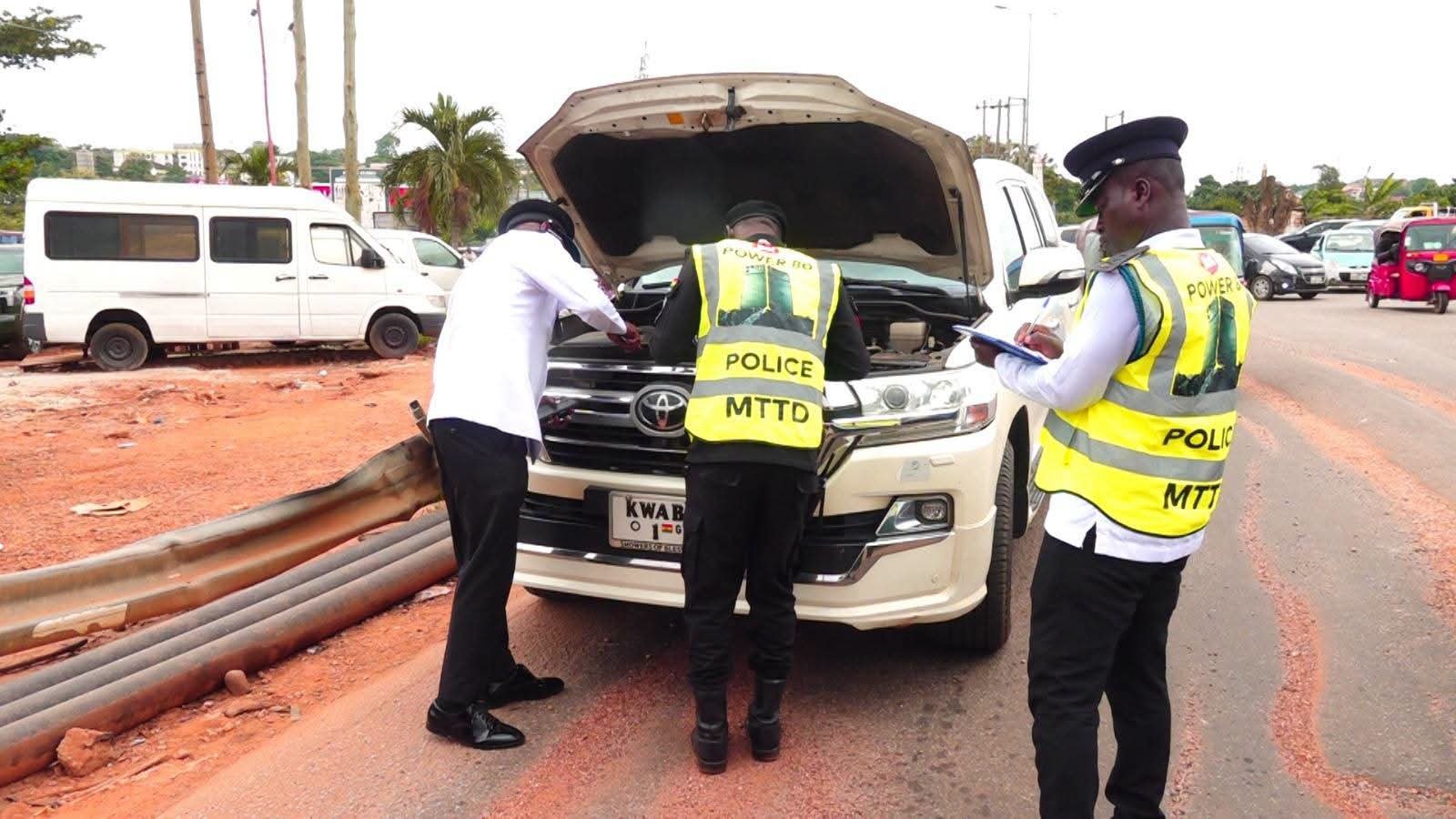
The Ghana Police Service has launched a major clampdown in the Ashanti Region targeting drivers using unauthorized sirens, strobe lights, and illegally modified vehicles.
The special operation, led by the Ashanti Regional MTTD with support from the Central MTTD in Accra and officers from National Headquarters, focused on two busy hotspots: Airport Roundabout and Santasi Roundabout in Kumasi.
During the exercise, 188 vehicles were stopped for various traffic violations. Officers removed and seized illegal sirens, horns, strobe lights, and improvised headlamps fitted on both private and commercial vehicles.
Beyond the seizures, drivers were taken through road safety education and cautioned to adhere strictly to the Road Traffic Regulations. Police also warned against the unlawful use of road shoulders and verges, which often causes congestion and accidents.
According to the Police, the operation forms part of a wider national campaign to restore discipline, improve road safety, and stop the misuse of emergency signals by unauthorized persons.
“The Ghana Police Service will continue these enforcement exercises across the country. Our goal is to ensure order on our roads and protect all road users,” statement said.
Residents in Kumasi welcomed the move, with many commending police for cracking down on vehicles that impersonate emergency and security cars.
By Edem Mensah-Tsotorme
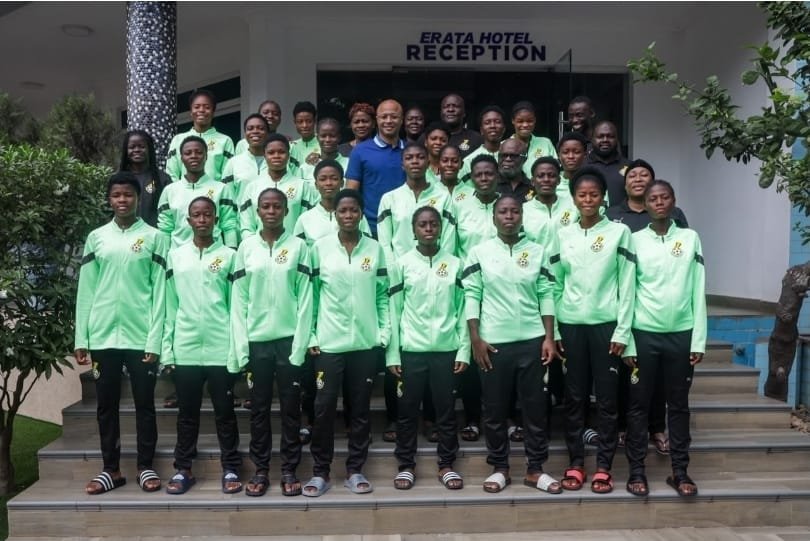
Former Black Stars captain, Andre Dede Ayew made a surprise appearance at the Black Maidens’ camp on Friday, delivering a powerful pep talk ahead of their make-or-break FIFA U-17 Women’s World Cup qualifier against Senegal.
Andre Ayew spent time with both players and technical staff at the team’s base as final preparations ramp up for Saturday’s decisive return leg at the Accra Sports Stadium.
With a World Cup ticket on the line, Ayew urged the young girls to rise to the occasion.
“Opportunities like these do not come around often and I encourage you to play with courage, discipline and belief in your abilities,” he told the team.
The 2010 World Cup quarter-finalist also called for pride, unity and full commitment.
“You need to stay united, enjoy the moment and leave everything on the pitch. The entire country is behind you and believe you can qualify,” he added.
Ayew reminded the Maidens to trust the work they’ve put in throughout the campaign and to represent Ghana with honor.
Black Maidens Management Committee Chairman, Nana Sarfo Oduro, said the visit came at the perfect time.
“Having someone of Andre Ayew’s stature come to support the girls means a lot. His words have lifted the team’s spirits and given the players extra motivation as we prepare for this important game,” he stated.
Ghana hosts Senegal on Saturday at the Accra Sports Stadium. A win will book the Black Maidens’ place at the 2026 FIFA U-17 Women’s World Cup in front of home fans.
By Edem Mensah-Tsotorme

 News1 week ago
Police arrest four suspected drug peddlers, recover firearm, narcotic substances in Mankranso operation
- News1 week ago
Okyeame Kwame thanks Galaxy International School for co-parenting with his family to raise daughter
- News3 days ago
DVLA denies losing GH¢308,000 in alleged theft involving service personnel