Hot!
Building profitable ventures: The story of three audacious entrepreneurs


- /home/u249204778/domains/spectator.com.gh/public_html/wp-content/plugins/mvp-social-buttons/mvp-social-buttons.php on line 27
https://spectator.com.gh/wp-content/uploads/2022/03/Ms-Ruby-Buah.jpg&description=Building profitable ventures: The story of three audacious entrepreneurs', 'pinterestShare', 'width=750,height=350'); return false;" title="Pin This Post">
- Share
- Tweet /home/u249204778/domains/spectator.com.gh/public_html/wp-content/plugins/mvp-social-buttons/mvp-social-buttons.php on line 72
https://spectator.com.gh/wp-content/uploads/2022/03/Ms-Ruby-Buah.jpg&description=Building profitable ventures: The story of three audacious entrepreneurs', 'pinterestShare', 'width=750,height=350'); return false;" title="Pin This Post">
Starting a business can be quite challenging as it requires a tough mind-set and clear vision in order to succeed. In this edition, we highlight the stories of three young Ghanaian entrepreneurs who have trodden slippery roads to establish viable ventures.
They are Ms. Ruby Buah, the Founder of Kua Designs and Kua Kids, Mr. Kevin Okyere, Founder & C.E.O of Springfield Energy, as well as Kimberley and Priscilla Addison, Founders of ’57 Chocolate brand.
Ruby Buah
In 2009, she transitioned from working as a Financial Analyst to start her fashion business. She worked at Coca Cola Enterprises in Atlanta, Georgia, before looking for a creative outlet and began experimenting with various types of art in her leisure time.

What began as a pastime in jewellery-making swiftly grew into a company. She moved to New York three years after starting her part-time jewellery company to get a degree in Jewellery Design at the famed Fashion Institute of Technology.
Unsurprisingly, she expanded her jewellery range by adding an equally exciting handbag line. After a few years of running her elegant store in Ghana, she expanded it further in 2015 by introducing a children’s brand.
Ruby says “she makes an effort to appreciate the less glamorous aspects of her profession as much as she treasures the finished items that line the shelves of her luxury store in Accra.”
The brand name ‘Kua’ has a dual meaning: It is Ruby’s mother’s name and also means “Keeping us Authentic”. The name, according to her, “is most appropriate for her collection which incorporate authentic gemstones and original African fabrics straight from Ghana.”
Kevin Okyere
The CEO and philanthropist displayed entrepreneurial potentials at a very young age. By the time he was 11, he was already selling iced water to football supporters at the Kumasi Sports Stadium to make extra pocket money.

During his family’s annual summer vacation trips to London, he would take on jobs with textile companies in the U.K. After completing his High School education in Ghana, he proceeded to the United States where he studied Accounting at George Mason University in Virginia. While studying, he took several jobs at varying points.
He moved backed to Ghana in 2004 and joined his elder sister in her business to understand how the country worked. A year after working for his sister, he put together a small team of investors and established Westland Alliance Ltd, a telecoms company that provided international call routing services for AT&T and several international calling card companies.
The company was extremely successful, but it was not long before he got tired of the telecoms business and decided to opt-out.
Later, he started working with a business acquaintance who supplied crude oil and condensates to the Tema refinery. As he interacted frequently with this associate, he learned that there was a shortfall of storage facilities for petroleum products in Tema.
Flush with cash from his telecom adventures, he acquired land and began building a storage tank farm in Tema, close to the refinery. This marked the genesis of Springfield Energy’s flagship trading business.
“Unlike in the U.S, Ghana was virgin territory for a lot of businesses. There were too many opportunities to explore in Ghana and I knew I could be more successful home than abroad. I knew I wanted to run my own business, but I wasn’t even sure of what I was going to do,” he told Forbes in 2018.
Kimberley & Priscilla Addison
Starting a bean-to-bar chocolate business in Ghana was not the sisters’ original career trajectory.
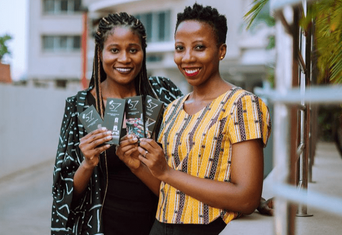
Kimberly studied French and International Relations with a concentration in social justice at Boston College while Priscilla majored in French and International Development, with focus on food security, at Dickinson College in Pennsylvania.
Both were interested in non-profit sectors addressing women’s education, human trafficking, value chains and agriculture. But a visit to one of Switzerland’s largest chocolate factories inspired their venture into confectionery.
Once they returned to Ghana, they started by roasting raw cacao with a standard kitchen oven in their home. They took courses on chocolate making and confections and trained with people in the field and did lot of research and reading about the industry.
They developed their chocolate recipes through trial and error and received feedback from family, friends, and visitors who worked within and outside of the chocolate industry, while seeking advice from people who worked in the industry.
The Chocolate was first launched in 2016 with five signature flavours: 73 per cent dark chocolate, 55 per cent milk, white, mocha latte (coffee flavour) and bissap (hibiscus flavour). The company name ’57 is short for 1957, the year of Ghana’s independence.
“57 is about patriotism and sparking the entrepreneurial spirit among the Ghanaian youth and using unique Ghanaian symbols.
“Over the long-term, we aim to create an African chocolate brand that is known world-wide, but most importantly one that surpasses our lifetime. We are working towards having our chocolate sold across the continent of Africa and around the globe.
“We hope for our chocolate to continue to reflect and build upon the unique traditions and culture that make us call Ghana and Africa at large home! We hope that ‘57 Chocolate inspires people from Ghana, and across the continent especially the youth, to create, develop, and consume made in Africa products of premium value,” the sisters noted.
By Spectator Reporter


General Secretary of the New Patriotic Party (NPP), Justin Kodua Frimpong, has filed his nomination to contest the position of General Secretary again as the party begins its rebuilding efforts ahead of the 2028 general elections.
He was accompanied by party stalwarts and supporters who were in high spirits, expressing confidence that he is the right person to hold the position.
Speaking after filing his nomination, Mr Kodua Frimpong assured the rank and file of the party that he would not disappoint them.
“I can assure you that the faith the rank and file of the party have had in me, I will never disappoint them,” he said.
He also pledged to run a clean campaign devoid of personal attacks.
“I can assure you that our internal campaign will be devoid of personal attacks,” he told his fellow contestants and the rank and file of the party as he seeks to retain his position.
His tenure has seen the party through the 2024 general elections, where the NPP lost power to the National Democratic Congress (NDC) after eight years in government.
The party is currently in a rebuilding phase, with internal elections scheduled to elect new national executives to lead its reorganization towards the 2028 polls.
The General Secretary position is considered one of the most influential in the party’s administrative structure, responsible for the day-to-day running of the party secretariat and implementation of party decisions.
By Edem Mensah-Tsotorme

The University of Ghana Medical Centre (UGMC) has disputed claims made on social media by comedian Michael Blackson concerning the treatment given to his late mother, saying a review found that the allegations did not accurately reflect what happened during her stay at the hospital.
In a statement issued in Accra on August 5, 2026, the management of UGMC expressed condolences to Mr. Blackson and his family over the death of his 83-year-old mother, who died at the facility on July 16, 2026.
The hospital said it had taken the concerns raised by Mr. Blackson seriously and conducted a thorough review in line with its clinical and administrative procedures.
According to the statement, the facts presented by Mr. Blackson on social media contained “numerous inaccuracies” and did not accurately reflect the medical care provided to his mother.
UGMC explained that she was referred to the facility from another hospital and received treatment there from May 27 to July 16, 2026, a period of about eight weeks.
The hospital stated that it would not release details of her diagnosis, treatment, medical records or other aspects of her care because it had a duty to protect patient confidentiality, even after death.
It said the decision was intended to respect the dignity of the deceased and the privacy of her family.
UGMC further stated that all clinical decisions at the facility are made by qualified healthcare professionals based on medical judgment, established standards of care and the best interests of the patient.
The statement added that such decisions are made in consultation with authorised family representatives where necessary and that billing and financial procedures are governed by institutional policies and are separate from clinical decision-making.
The hospital noted that it values feedback from patients and their families and considers both positive and negative comments important for improving the quality of care.
Mr. Blackson had earlier used social media to criticise the care his mother received at UGMC, prompting the hospital’s response.
By: Jacob Aggrey