Features
Publicans at the airport

- /home/u249204778/domains/spectator.com.gh/public_html/wp-content/plugins/mvp-social-buttons/mvp-social-buttons.php on line 27
Warning: Trying to access array offset on false in /home/u249204778/domains/spectator.com.gh/public_html/wp-content/plugins/mvp-social-buttons/mvp-social-buttons.php on line 27
&description=Publicans at the airport', 'pinterestShare', 'width=750,height=350'); return false;" title="Pin This Post">
- Share
- Tweet /home/u249204778/domains/spectator.com.gh/public_html/wp-content/plugins/mvp-social-buttons/mvp-social-buttons.php on line 72
Warning: Trying to access array offset on false in /home/u249204778/domains/spectator.com.gh/public_html/wp-content/plugins/mvp-social-buttons/mvp-social-buttons.php on line 72
&description=Publicans at the airport', 'pinterestShare', 'width=750,height=350'); return false;" title="Pin This Post">
The publicans were the most detested people in ancient Israel during the time of Jesus, when the Roman Empire ruled the nation as an imperial occupying power. They were Jewish tax collectors employed indirectly by the Roman government and classified by their fellow Israelites as collaborators of the enemies of Israel.
Roman businessmen usually established companies through which they would acquire certain Jewish provinces for renewable periods of five years, and charge taxes on behalf of the imperial government. These entrepreneurs would then employ local Jewish men in their acquired territories to collect those taxes comprising duties on imports and exports, bridge tolls, poll tax, and levies on merchants who came to Israel to buy and sell.
The position was open to bids and the highest bidder, invariably a wealthy Jew, got his proposal accepted and won the right to do business in the territory concerned. Such collectors would be given a threshold of revenue expected from them. Whatever they got over and above the threshold was theirs. And so, they used all kinds of unethical methods to collect it for the government and themselves.
First, they would impose a fictitious assessment on property or income and inflate the rates at their discretion in order to rake in a higher percentage of tax and make maximum profit at the expense of the hardworking and helpless people. Moreover, these unscrupulous tax collectors harassed the people and charged them on the spot.
And it did not end there. Hours or even minutes after your unpleasant encounter, you were likely to meet another tax collector who would also demand tax. Sometimes, the publicans were accompanied by Roman soldiers and the oppressed people had no recourse to justice anywhere.
For their corrupt practices, these cruel tax collectors were regarded by their fellow Jews as, not just traitors working for their oppressors, but also, as extortioners and leeches that drained the lifeblood of the people by their exorbitant taxes.
Even more condemning of these hated people were the rabbis, that is, the religious leaders, who considered them unclean because of their contact with the Romans. They excommunicated them from the synagogues, forbade them from exchanging their money at the temple treasury, and prohibited them from testifying as witnesses in court. Thus, despite the substantial wealth they made, these publicans were derided and ostracised from their own communities. Yet, in defiance, they furrowed their brows and shrugged off the jeers and sneers. Now, Israel is a democratic country; they are not under the hegemony of any empire, and thankfully, the publicans are nowhere to be seen.
But, sadly, the publicans have resurfaced, not in Israel, but in Ghana. They are everywhere but in this article, those on the radar are the kind operating at the airport. They are encouraged by the powers that be for the share they would get. The operations of this new breed remind me of a certain woman somewhere in the Ashanti Region nicknamed, “Maame Ap3nkwa nya wuo,” which translates to, “The woman who got death while looking for life.”
It happened that the woman’s pastor proclaimed a fast for the congregation with the following instruction: “You may do it continually for seven days from six to six, or you can fast-track it by doing three days dry fasting,” which implied that you could not drink any water or eat for three days. The woman weighed the options and chose the latter. After just one day, she realised that she was gasping for breath. In anguish, she exclaimed: “Ei, me b3 p33 nkwa anaa s3 owuo,” meaning: “Did I come seeking life or death,” That is how she got her name.
The inception of COVID 19 brought in its wake the loss of precious lives. The National Security Coordinator, Mr. Joseph Kyeremeh, a family friend, known among my siblings as K-Joe, succumbed painfully to the virus. Another heavyweight who was not spared by the deadly virus was Dr. Jacob Plange-Rhule, FRCP, FWACP, FGCP (July 27, 1957 –April 10, 2020), a Ghanaian physician, academic, and Rector of the Ghana College of Physicians and Surgeons from October 2015 until his death in 2020.He was the private doctor of my first son about three decades ago in Kumasi, and one of the finest gentlemen I ever came across. How can I forget the loss of Nanabanyin Pratt, my own former Managing Director at New Times Corporation who, perhaps, in admiration of my straight talk, called me “Wogyafo.” You have to find out what that means.
Given the frequency and scope of death resulting from COVID, it became imperative for the Government to adopt stringent measures to stem the tide. As part of the interventions, personal protective equipment were supplied to healthcare workers. The wearing of masks was enforced while the use of sanitisers was also recommended. Mass gatherings were banned, compelling churches to go online, and become financially unstable. Funerals suffered a drastic cut in donations adding to the sorrow inflicted by a COVID-related death.
Another intervention adopted in the heat of the pandemic, was the introduction of a regime of testing by the Government to determine the COVID status of arriving international travellers, and prevent a situation where a positive person would slip into the country and spread the virus. The Ghana Airports Company Limited, in collaboration with a group calling itself the Frontier Healthcare Services Limited, is in charge of the programme at the Kotoka International Airport. All these measures were taken because we were seeking life. But, like the Ashanti woman in the tale related above, we are gasping for breath.
From the way things are going, I see some similarity between Israel’s ancient experience at the hands of the tax collectors and the imperial government. In those days, the Roman government just waited for what it deemed its fair share. Whatever the publicans imposed on the people was none of their business. I smell the presence of the publicans at the airport and other places. Fortunately, we are not under the hegemony of any foreign power. “Y3n ara asaase ni.”“This is our own land.” Yet, unfortunately, the publicans are operating as typical of them, with all impunity and the Government, through its agent, has given them the latitude to impose an unjustifiable and unbearable testing fee on the people.
In many jurisdictions the world over, the fee has been drastically reduced due to mass vaccination everywhere and the reduction in the spread of the virus. So, for what justifiable reason should the testing cost $50 for Ghanaian and other ECOWAS citizens, and $150 for other nationals? The most painful and irritating aspect of the whole thing is that even people with proof of being vaccinated within the stipulated timeframe before arriving, are still compelled to undertake the test.
Yet, according to information on their own website, passengers must possess a COVID-19 negative PCR test from an accredited laboratory in the country of origin. The test should have been done not more than72 hours before the scheduled departure time from the country of origin. You take all this precaution, and they still insist on taking the test and charging you unjustifiably.
Annoyingly, they have the guts to tell travellers arriving from the US or UK, with all their stringent testing regimes that they have tested positive for COVID and must be quarantined at a hotel at their own expense, which is all part of the grand scheme to extort money from people.
Is the Government not just folding its arms and waiting for its “fair share” of the revenue from the “publicans?” Have they considered the pain it takes to make $50? That is more than GH¢300 which is somebody’s monthly pay in Ghana in this day and age. Miss Mercy Agyei-Ankomah, a former English language teacher at the Juaben Senior High School, now based in Vietnam, says she used to be paid GH¢1,500, Do you know how much that is in dollars? It is about $250. That means Frontier Healthcare Services charge a fifth of a teacher’s monthly salary for a few minutes they spend testing an arriving passenger.
For all you know, the Government just gets a token while the collectors pocket the biggest chunk of the money accruing from the testing. That is the way it worked in ancient Israel. There must be an immediate intervention to save passengers from this rip off by these latter-day publicans.
In January, the MP for North Tongu, Mr. Samuel Okudzeto-Ablakwa described the fees as an extortion and cautioned that if the cheating was not stopped by February, Parliament would intervene. Please, Homourable, February ended a long time ago, and March has already crossed the half-way mark. We are anxiously waiting for your next move.
Meanwhile, another legislator, Mr. Davis Opoku Ansah, the MP for Mpraeso Constituency, has added his voice to calls for a drastic reduction of the fees, saying that even though we need to keep track of the virus and deal with it through interventions like testing, we must reduce the charges because they are harming trade and tourism.
Whoever the cap fits, let them wear it. Over to you, Joe Lartey!
Contact:
teepeejubilee@yahoo.co.uk
By Tony Prempeh

Features
Confronting newborn abandonment in Ghana: When a cry for help is heard in a dustbin – Part 2


The root causes: It is never just one reason
My years of counselling at CPAC show me abandonment is rarely an act of malice. It is the tragic endpoint of seven overwhelming distresses:
1. Severe maternal mental illness —The hidden emergency
a) Clinical Postpartum Depression (PPD): This is far beyond “baby blues.” It is a severe mood disorder that can appear weeks to months after birth. Due to a massive drop in hormones, extreme sleep deprivation, and emotional exhaustion, the mother feels deep sadness, worthlessness, and complete emotional numbness towards her baby. Picture: A new mother sits by her bed all day, staring blankly. Her baby cries for hours, but she cannot lift her hands to carry the baby. She whispers, “This baby would be better off without me.” She does not hate the baby; she feels she has completely failed as a mother.
b) Peripartum Psychosis (Postpartum Psychosis): This is a psychiatric emergency. Rare but extremely dangerous, appearing suddenly within the first 2-3 weeks after delivery. The mother completely loses touch with reality. She hears commanding voices telling her to abandon the baby, or believes the baby is possessed by an evil spirit or is a “spirit child” who will bring a curse. Picture: A mother genuinely believes she heard a voice saying, “Leave this child at the crossroads at midnight or your family will die.” She abandons the baby not out of hatred, but because her broken mind believes she is obeying a higher spiritual order to save her family.
c) Pre-existing untreated Schizophrenia: This is a chronic, severe mental disorder that existed before the pregnancy. The stress of pregnancy and labour shatters her fragile coping. She suffers from paranoid delusions — believing people want to poison her and the baby — flat affect (zero facial expression), and grossly disorganised thinking, making it impossible to plan how to feed or clean a baby. Picture: A young woman whose family called her illness “spiritual attack” instead of taking her for medication wanders away after delivery, completely forgetting she even gave birth, leaving the infant behind.
2. Extreme socio-economic deprivation: For many girls in some parts of Ghana such as Kasoa, Madina, or Bekwai, poverty is not a statistic; it is a daily panic. No money for antenatal care, no money for hospital delivery, no money for baby diapers or formula. When a mother cannot feed herself, the thought of feeding another mouth feels impossible. Some mothers say, “I left her where someone richer would find her, because I could not watch her starve to death in my hands.” It is a distorted act of survival.
3. Intense societal stigma and shame: In Ghana, pregnancy outside marriage, teenage pregnancy, or pregnancy from rape can bring extreme family rejection. The girl is called “spoilt,” beaten, banned from church, or sacked from school. The fear of bringing shame to the family name is heavier than the fear of police. So she hides the pregnancy for 9 months, delivers alone, and abandons in secret to protect her family’s “honour.”
4. Paternal abandonment — The Man Who Ran Away: Behind almost every abandoned baby is a man who vanished. He says, “It is not mine,” or “Abort it,” and switches off his phone. The mother is left utterly isolated — no emotional, financial, or social support. She is criminalised alone, but the abandonment started with him. Psychological research shows paternal denial is one of the strongest predictors of maternal panic and newborn abandonment.
5. Substance abuse disorders: Alcohol, tramadol, and other drug addiction impair the brain’s executive functioning — the ability to plan, judge consequences, and process emotions. A mother struggling with addiction may give birth in a highly intoxicated or withdrawal state, unable to comprehend the needs of the newborn, leading to neglect and eventual abandonment.
6. The spirit child cultural phenomenon and superstition: In some remote pockets of Northern Ghana and even in few parts of Central and Ashanti regions, public health research shows babies born with congenital deformities, severe disabilities, or whose mothers die in childbirth are branded as “spirit children” or cursed. In extreme instances, families, under cultural pressure, mandate that such babies be exposed or abandoned at shrines or bushes. This is not mental illness, but a harmful cultural belief system that still kills.
The invisible wounds
On the baby: Risk of death from hypothermia, sepsis, and infection. Survivors suffer Anaclitic Depression and Failure to Thrive due to lack of touch. As adults, they battle Reactive Attachment Disorder, chronic mistrust, and identity crisis — “Why did my mother leave me in a dustbin?”
On the mother: Lifelong hidden grief, intense guilt, chronic PTSD, depression, and elevated suicide risk. A prison cell does not heal this.
On the nation: Overburdened orphanages like Osu Children’s Home, draining health budgets, and overworked Social Welfare officers.
SKIP THE QUEUE, TAP THE NEWS

You can now read the Ghanaian Times and The Spectator newspapers from the comfort of your device via TimesNewsPlus.
Join our WhatsApp Channel: https://whatsapp.com/channel/0029VbBElzjInlqHhl1aTU27
“There is no one righteous, not even one; there is no one who understands; no one seeks God. But now a righteousness from God, apart from law, has been made known, to which the Law and the Prophets testify. This righteousness from God comes through faith in Jesus Christ, to all who believe. For there is no difference; – Rom. 3:10, 21-22. (NIV)
Introduction
Dictionaries define righteousness as “behavior that is morally justifiable or right.” Such behavior is characterized by accepted standards of morality, justice, virtue, or uprightness. The Bible’s standard of human righteousness is God’s own perfection in every attribute, every attitude, every behavior, and every word. Thus, God’s laws, as given in the Bible, both describe His own character and constitute the plumb line by which He measures human righteousness.
The bad news is that true and perfect righteousness is not possible for man to attain on his own; the standard is simply too high. The good news is that true righteousness is possible for mankind, but only through the cleansing of sin by Jesus Christ and the indwelling of the Holy Spirit. We have no ability to achieve righteousness in and of ourselves. But Christians possess the righteousness of Christ, because “ For He made Him who knew no sin to be sin for us, that we might become the righteousness of God in Him.” – 2 Corinthians 5:21. This is an amazing truth. On the cross, Jesus exchanged our sin for His perfect righteousness so that we can one day stand before God and He will see not our sin, but the holy righteousness of the Lord Jesus.
Establishing our hearts in righteousness
“Keep your heart with all diligence, for out of it spring the issues of life” – Proverbs 4:23
According to the above verse in Proverbs, our heart is the source of our life. Our life flows from our heart. The Holy Spirit resides in the spirit of the born again Christian. So there is a strong influence of the Holy Spirit in the heart of the new-born Christian. But our heart is also comprised of our soul. As Christians we can choose to focus our soul on the Lord, or on evil things. If we focus on corrupt, immoral, and evil things our heart will be affected detrimentally. It will cause our heart to be crooked or wicked, instead of straight or righteous. So the Scripture says to keep, or guard, our heart. It is wise to protect our heart as what we allow to dominate our heart will inevitably become the fruit, or influence the outcome, of our lives.
One way to approach life is to continually ask the question, “How will this decision or action affect my heart?” Everything we do, every thought we entertain, everything we watch, read, or listen to, shapes our heart. Therefore, the future prosperity of our life will flow from how well we care for our heart.
Think of everything you do, every moment of time, as a seed. We have been given responsibility for choosing which seeds to plant in our heart. What will you grow in the garden of your heart? What seeds will you choose? Our heart is our garden, and our life is the fruit of our garden. So next time you are tempted to dwell on a bad thought, think, “Do I want this seed to grow and manifest in my life?” Next time you are tempted to indulge in a sinful action ask yourself, “Do I want the extension, or fruit, of this sinful action to be what I am known for?”
God gives us the freedom to plant whatever we like in our garden. God loves us regardless of the good or bad choices we may make in our lives. You may be reaping the fruit of some poor choices right now. And God is still saying, “I love you.” But He has wise advice for us; He desires we have a good life. He says, “Guard you heart with all diligence.” This Hebrew word translated ‘diligence’ conveys the meanings of: prison and guard (ibid). A superintendant of a prison is very particular as to what goes in and out of his prison. A prison has very tight security. Just as a superintendant watches over his prison, so we should also supervise our heart (our lives). We should exercise meticulous security with regards to what enters into our heart. Actually, even what comes out of it, as the Scripture says, “ Wherefore, my beloved brethren, let every man be swift to hear, slow to speak, slow to wrath” – James 1:19, as “For out of the abundance of the heart the mouth speaks.” –Matthew 12:34b.
If what goes into, and what comes out of, our heart determines the success of our lives, what is the first important principle to establish in our heart? “In righteousness you shall be established;” – Isaiah 54:14
Righteousness is the key foundational truth we need to first establish in our heart. Jesus said, “But seek first the kingdom of God and His righteousness, and all these things shall be added to you.” –Matthew 6:33. Notice Jesus said, “His righteousness”, not our own righteousness. We have to seek and understand God’s righteousness. Isaiah 54:14 says, “Their righteousness is of me, saith the Lord.” God’s righteousness comes from God, not from within us. Humans cannot make themselves God’s righteousness, as all humans have sinned and are therefore inferior to God. God’s righteousness is a gift from God: “ For He made Him who knew no sin to be sin for us, that we might become the righteousness of God in Him.” – 2 Corinthians 5:21
Righteousness, or right standing with God, has been attained for us through the exchange Jesus made on our behalf. Jesus took our sin and gave us His righteousness. God’s righteousness is imparted to us when we are made a new creature in Christ – 2 Corinthians 5:17. This righteousness is a gift from God and undeserved by us: “For if by the one man’s offense death reigned through the one, much more those who receive abundance of grace and of the gift of righteousness will reign in life through the One, Jesus Christ.”- Romans 5:17
Through our faith in Jesus’ blood, shed to remit our sins – Romans 3:25, God imparts righteousness to us by His grace. We actually become a new righteous creation, fully identifying in Jesus’ death, burial, resurrection and ascension. This is the foundational miracle we need to understand and have established in our heart. All the other miraculous promises of God come the same way, by God’s grace through faith. Righteousness must be established in our heart for us to truly have faith to receive our rich inheritance in Christ. Jesus has been made unto us righteousness (1 Corinthians 1:30). We are now “For all the promises of God in Him are Yes, and in Him Amen, to the glory of God through us”. – 2 Corinthians 1:20
Establishing our minds in righteousness
God expects that, when we accept Jesus Christ as our Lord and Savior, we will be radically changed. In Romans 12:2 He tells us, And do not be conformed to this world, but be transformed by the renewing of your mind,
This transformation is to be a metamorphosis, of a magnitude at least comparable to that by which a caterpillar becomes a butterfly. He expects us to become totally different.
Scripture uses many different images to express the change that should occur: We become “a new creation; old things have passed away; behold, all things have become new.“ – 2 Cor 5:17. It is almost as if we become a new species. Scripture speaks of the “first Adam” who was earthly and fell into sin, and the “second Adam” (Jesus Christ) who was sinless and holy – Rom. 5:12-19; 1 Cor 15:44-49.
We are “made new in the attitude of our minds” – Eph. 4:23.
We “put off our old self” and “put on the new self” – Eph. 4:22,24; Col 3:9-10.
We “live by the Spirit” and not by the flesh – Gal. 5:16; Rom 8:13.
We become “instruments of righteousness” rather than “instruments of wickedness” – Rom. 6:13.
Each of these metaphors, in a different way, emphasizes the magnitude of the change that is expected. Each is dramatic and astonishing in itself; their cumulative effect is even more powerful. We are talking about a tremendous transformation. It should be visible to others, but its internal effect should be far greater than what others can perceive.
The goal of this transformation
What is the goal of this metamorphosis? Scripture states it in a number of different ways, which overlap and can be seen as different ways of expressing the same basic concept. Scripture often does this, because our minds are inadequate to comprehend, and our language inadequate to express, the full scope of God’s revelation to us.
To be continued!
Stay blessed!
For further inquiries please contact us on Tel Nos. 0243588467 or 0268130615
Email: saltnlightministries@gmail.com
Website: saltandlightministriesgh.org
SKIP THE QUEUE, TAP THE NEWS
You can now read the Ghanaian Times and The Spectator newspapers from the comfort of your device via TimesNewsPlus.
Join our WhatsApp Channel: https://whatsapp.com/channel/0029VbBElzjInlqHhl1aTU27

 Entertainment1 week ago
Rhythms On Da Runway returns November 28 with 16th edition themed ‘Unbound’
- Entertainment1 week ago
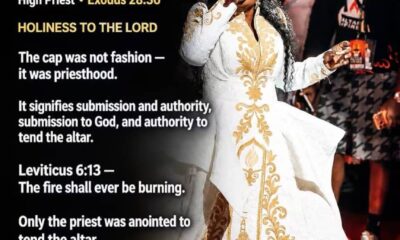
Ohemaa Mercy’s Tehillah Experience outfit was priestly regalia, not costume – Management clarifies
 News1 week ago
Janet Asana Nabla criticises Mahama over China curriculum controversy involving Haruna Iddrisu