Features
Where are the gatekeepers?

- /home/u249204778/domains/spectator.com.gh/public_html/wp-content/plugins/mvp-social-buttons/mvp-social-buttons.php on line 27
Warning: Trying to access array offset on false in /home/u249204778/domains/spectator.com.gh/public_html/wp-content/plugins/mvp-social-buttons/mvp-social-buttons.php on line 27
&description=Where are the gatekeepers?', 'pinterestShare', 'width=750,height=350'); return false;" title="Pin This Post">
- Share
- Tweet /home/u249204778/domains/spectator.com.gh/public_html/wp-content/plugins/mvp-social-buttons/mvp-social-buttons.php on line 72
Warning: Trying to access array offset on false in /home/u249204778/domains/spectator.com.gh/public_html/wp-content/plugins/mvp-social-buttons/mvp-social-buttons.php on line 72
&description=Where are the gatekeepers?', 'pinterestShare', 'width=750,height=350'); return false;" title="Pin This Post">
The passion for freedom is ineradicably ingrained in every human breast. In fact, when you see children displaying any streak of rebellion at that tender age, it is an outward manifestation of an inward disposition for freedom. But they soon realise, regretfully though, that there is a limit to their freedom. That is when their parents rightly heed the advice from the Holy Scriptures to not spare the rod. I know this from experience.
In God’s opinion, “Foolishness is bound in the heart of the child, but the rod of correction shall drive it away from him,” Proverbs 22:15. I do not think that back in the day, there was anyone as effective as my mother in applying this time-honoured catchphrase. Talk of a thoroughbred matriarch! That refers to my mum, Auntie Aggie, as she was popularly called.
She was as indulgent as she was penalising in her approach to nurturing. Her penetrating gaze in your direction while you misconducted yourself, was enough warning. That space meant grace for you. But to persist in your indiscretion implied courting trouble and reaping the due recompense. The rod would definitely be applied without any more grace. How I miss her!
Without any doubt, democracy thrives on liberty whose roots are in the freedom of the press, including freedom of speech. Professor Wole Soyinka, the man whose political activism made him a constant thorn in the flesh of Nigeria’s military dictators, once said: “The greatest threat to freedom is the absence of criticism.” But as scathing as he was in his publications, the Nigerian Nobel laureate who became the first African south of the Sahara to be so honoured in 1986 in the category of literature, did not just use his pen or voice to fight for the oppressed. He did so responsibly because he knew the implications of default.
In the former Soviet Union, a fresh wave of freedom hitherto unheard of in that rigid, iron-clad regime, blew across the republics of the federation when Mikhail Gorbachev, emerged as the new head of state. He quickly moved towards reform highlighted by his policy of openness whose core features were “glasnost” and “perestroika,” the terms for political and economic reform respectively.
In the process, he turned out to be the unlikeliest of leaders to become a proponent of free speech. “How can we live if not through criticisms from below, correcting our policies, fighting negative phenomena? I cannot imagine myself living without this form of democracy,” he famously said as he embarked on his bold agenda to dismantle the suffocating culture of silence under which dissent was a crime. No wonder, he also won a Nobel prize for peace.
Just as in the Soviet Union, maybe in less severe terms, a culture of silence prevailed in Ghana. Various governments, right from Ghana’s early days under colonialism, through to Dr. Kwame Nkrumah’s post-independence era, as well as the military regimes that followed, hid behind the criminal libel law to hound and punish people for the slightest hint of opposition which was synonymous with pointing out wrongdoing. Given the latitude and scope of the law, Ghanaians were deprived of any safeguards against excesses of that draconian statute. You criticised the government at the peril of your life. Extra-judicial killings were rampant.
Editors of private newspapers were tortured. Notable among them were Dr. Chris Asher Snr of the Palaver who blazed the trail in the struggle to entrench freedom of the press before the likes of Tommy Thompson and John Kugblenu, publisher and editor respectively, of the Free Press, took over with Haruna Atta of the Statesman, Kweku Baako, Kwesi Pratt and Ewusi-Brookman of the Pioneer.
Also deserving of recognition are columnists such as Professor P.A.V. Ansah of the Chronicle, who was the Dean of the School of Communications Studies, University of Ghana, Legon; Professor Adu Boahene, and Lawyer Obeng Manu who wrote for The Pioneer.
Gradually, the struggle yielded dividends reaching its climax with the repeal of the Criminal and Seditious Libel Act by Parliament on Friday, 27th July 2001. This was in fulfillment of a pledge by candidate J.A. Kufuor of the New Patriotic Party (NPP) to do so if he was elected.
The dismantling of the harsh law immediately led to a proliferation of the media in all its forms. More private newspapers have since been established. Radio stations have sprung up in every nook and cranny of the country, leading to a very vibrant and robust media free to voice views contrary to that of the government. Social media platforms are also inundated with all sorts of contrary opinions that have all served to make Ghana one of the most media-friendly and free countries in Africa, and indeed, the world.
Unfortunately, a section of the media appears to be on a downward trajectory. Some are taking this newfound, hard-won freedom farther than it was intended. They are behaving as if the floodgates have been opened for irresponsible journalism. To them, freedom of the press has no boundaries. They misconstrue freedom of the press to mean the right to venture into prohibited territory at will without any scruples. That is a false paradigm.
Madam Eleanor Roosevelt, wife of US President Franklin Delano Roosevelt, and the longest-serving American first lady, (1933-1945), who was a great champion of freedom, disagrees with that notion. She says, “Freedom makes a huge requirement of every human being. With freedom comes responsibility. For the person who is unwilling to grow up, the person who does not want to carry his own weight, this is a frightening prospect.” That responsibility is to be law-abiding or face the consequences of your breach. Pope Paul II puts it this way: “Freedom consists not in doing what we like, but in having the right to do what we ought,”
Many unscrupulous people, taking undue advantage of the decriminalisation of free speech and the ensuing liberal media climate, have resorted to crass disregard for ethics and are unprofessionally spuing messages that are obviously defamatory and seditious, all in the name of freedom of the press.
And people who should know better are rather leading the parade of coup mongers to beat war drums. When you willfully cross the line to challenge the boundaries of the law, that is presumptuous trespass. It is as if you are testing the limit of what is tolerable, and you must not blame anybody if you find yourself in an unpleasant embrace of the long arm of the law.
Governments are ordained by God to regulate society. In fact, governments are described by the Holy Scriptures as ministers of God for the praise of those who do well and the punishment of those who breach the law. God says they do not bear the sword in vain. In other words, governments have punitive powers. For that matter, we are told to expect punishment when we fall foul of the law.
Thomas Jefferson, the primary draftsman of the Declaration of Independence of the United States, America’s first Secretary of State (1789–94), its Second Vice President (1797–1801), and the third president (1801–09), extolled the importance of the press by stating: “Were it left to me to decide whether we should have a government without newspapers or newspapers without a government, I should not hesitate a moment to prefer the latter.”
His reasons: “The people are the only censors of their governors: and even their errors will tend to keep these to the true principles of their institution. To punish these errors too severely would be to suppress the only safeguard of the public liberty. The way to prevent these irregular interpositions of the people is to give them full information of their affairs through the channel of the public papers, and to contrive that those papers should penetrate the whole mass of the people. The basis of our governments being the opinion of the people, the very first object should be to keep that right.”
An Akan proverb says: “Nnfa mcmcne nnhy3 m’anum na wonnka s3 m’anum bcn,” to wit, “Do not sneak stinking fish into my mouth and charge me with having foul breath,” Do not misbehave and charge the government with high-handedness. Let the press grow up as Mrs. Roosevelt advises, otherwise we are not worthy of Jefferson’s encomium; otherwise, we justify the stance of those who opposed the repeal of the criminal and seditious law. Before freedom, gatekeeping was the watchword. Where are the gatekeepers now?
By Tony Prempeh
Contact: teepeejubilee@yahoo.co.uk


There is a scripture that is found in Matthew 6:22 which says that the lamp of the body is the eye and therefore the eye must see well to enable the body to get to its destination.
What most people do not know is that behind the scenes, there is a strong interaction between the eyes and the brain before a picture becomes clear. The state of mind therefore is crucial to the eye seeing clearly to enable the body to process accurately the information the eyes are feeding it for proper identification of what the eyes see.
This is similar to how a person behaves i.e. what informs the decisions that forms in the mind that results in the actions that a person performs. The actions of a person does not therefore just happen but is as a result of things that went on in the mind, which in most cases resulted from information passed on to it by the eyes either consciously or unconsciously.
There are so many issues that affect our society which makes one wonder, whether the people who displayed such acts were created by someone or something other than God.
How can a person see a beach created by God with beautiful beaches and fresh air blowing all around, decides to defecate at such places, and therefore desecrate the environment? lt is simply mind boggling?
When other people in other countries who dwell on the coast are using their beaches for tourist attraction purposes as a means of livelihood and also to promote environmental health, some people living around our beaches, have turned them into rubbish dumping sites and toilets.
It is a very sad situation and the earlier we did something about it the better. It is a national emergency that must engage the attention, first of the government and then the citizenry, where religious bodies and NGOs must play a critical role.
The things we focus on in this country, needs to be addressed. Our minds which processes the info the eyes send to the brain, must be disciplined. There are certain behaviours that a disciplined mind can ignore even when the eye has provided info to the brain. One of the things a disciplined mind does, is the avoidance of a second look, which is critical for every person who wants to avoid adultery or fornication.
Once a person is not blind, he will see things. The boobs, the ‘shankus’, the coca cola shapes, the light complexioned, the dark complexioned etc. the eyes will definitely see and report same to the brain. What the brain or the mind decides to do or instructs the eye to do is the issue.
It can decide to instruct the eye to take a second look and let the mind drool over it or say ignore it and that will be the end.
If the mind becomes trained to focus on environmental issues like clean environment, the eyes will automatically be reporting on insanitary conditions to the brain as and when it sees them. The mind will pay attention to such data and begin to process them and to identify solutions to deal with the reported insanitary conditions.
There is the need to encourage citizens to train the mind to focus on the right thing so that in tandem with the eyes, focus will be maintained. When the mind is so trained, it communicates with the eye to also focus on hood things that helps in both are spiritual life and our secular lives, for indeed the eyes are the lamp of the body. God bless.
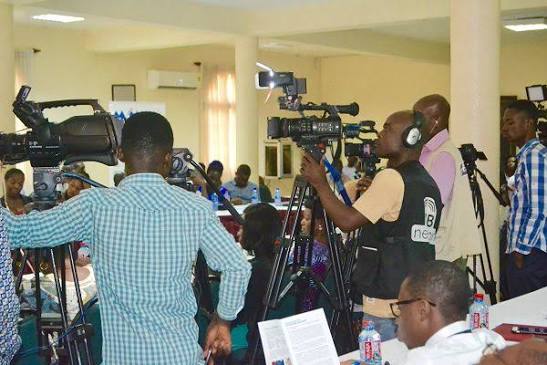
THE relationship between New Times Corporation (NTC) and African Concrete Productions (ACP) is based entirely on matters of the stomach. Each depends on the other in a dietary symbiosis, reinforced by the close proximity of each other
At lunchtime, you’d see a particular set of Times workers marching regimentally to ACP to face the wall. You’d think they are soldiers. It has long been declared that the company manufactures the best kokonte in the Greater Accra Region. ACP is, therefore, a culinary haven for those NTC kokonte fans, both male and female.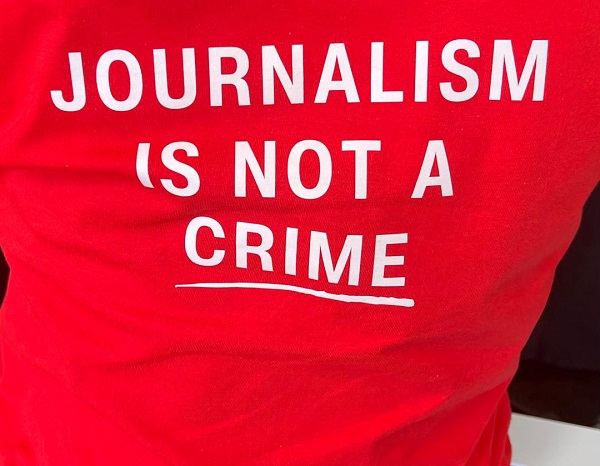
As the NTC kokonte warriors cross the border to ACP, you’d see some ACP banku fanatics dancing joyously to NTC. They are lucky folks because they do not have to obtain visa to enter into ‘Times’ to attack the balls of banku with precision and accuracy. They also claim that the lightsoup at ‘Times’ is arguably the best in West Africa.
So the relationship between the two entities was quite cordial and based practically on stomach palaver, until ACP workers staged an industrial revolution, whereupon the managing director, accountant and estate manager were allegedly stripped naked and locked up in a room. An insurgency had began in earnest.
An ACP worker came to ‘Times’, this time not to eat banku and okro. He had come to inform newsmen that juicy stuff awaited them at ACP. It could make a front page lead story.
A camerawoman and a female reporter were accordingly dispatched to go and bring back news, juicy news as juicy as kokonte and groundnut soup.
I was driving to work when I espied the familiar camerawoman clicking away outside the ACP premises. I didn’t see any ‘Times’ reporter but angry workers who were on the verge of getting violent. I slowed down and the driver behind blew his horn at me like a lunatic. I drove on.
Later, I heard the reporter and camerawoman were harassed and brutalised. The report came,. “The camerawoman, Mrs Salome Adonu-Agbottah and reporter Mrs Doreen Allotey, in an attempt to retrieve the camera which the workers had seized from them were severely beaten. They were manhandled and almost pushed into a big gutter opposite the company’s premises.
BRUISES
“….The camerawoman had bruises on her body, her hand bag was destroyed and the money in it stolen. Mrs Allotey’s watch was also snatched and her feet stamped on.”
Luckily, it was not her nose that was trampled upon. She has a beautiful nose.
The bad news was received with extreme sorrow. If the victims had been men, it would not have seemed too bad. But to brutalise women is just unacceptable. The New Times Corporation has not stopped mourning the incident which has been condemned in many circles.
Some people keep asking me why Times sent females to cover a potentially violent demonstration. I tell them they might as well ask why CNN’s amazon, Christina Amanpour, is assigned to cover the carnage in Bosnia-Herzegovina and Rwanda. She is always on the frontline in jeans and jacket.
Journalism is a potentially hazardous profession, and once you accept to study and practise the trade, you might as well bone up to face any assignment as long as your superiors feel you are capable of handling it or you have demonstrated the capacity to handle it. Both males and females can be assigned anywhere, anytime just like policemen and women are assigned.
The only difference between cops and pressmen is that the latter are armed only with a pen and the former with a gun. The question is should newsmen also arm themselves so that in any event of an assault they would not be found wanting in self-defence? They can’t adequately defend themselves with a pen and a jotter. A pen cannot even disfigure an opponent’s upper lip.
Photo-journalists have particularly suffered violence. Spectator ace-cameraman Vincent Dzatse was severely assaulted by AMA men when he attempted to take pictures of their indiscretions.
Sports cameraman, P. K. Arthur has been beaten more than once at the sports stadium when riots errupted and he wanted to capture it on his lenses.
Some sports journalists have been banned from entering the Accra Sports Stadium by supporters because in their comments, they didn’t write “sense”. Some supporters once nearly lynched Christian Abbew, Spectator Sports Editor, near a courtroom. He was stoned like the biblical Stephen. He had gone to defend a contempt charge.
I think it is time journalists met and discussed how best to defend themselves in any event of an attack by individuals or mobs. In the pursuance of their duty, they must be free from harassment and assault.
Some journalists go to work and return home with a black-eye or a double fore-head. It is just not right. Something has to be done about it. I think journalists should be armed. But first we must be trained in the use of firearms so that our warning shot do not hit below the belt. What about training in Kung Fu?
This article was first published on Saturday, October 17, 1998.