Features
49 Years On: Remembering Shirley Graham Du Bois Beyond the Shadow of History

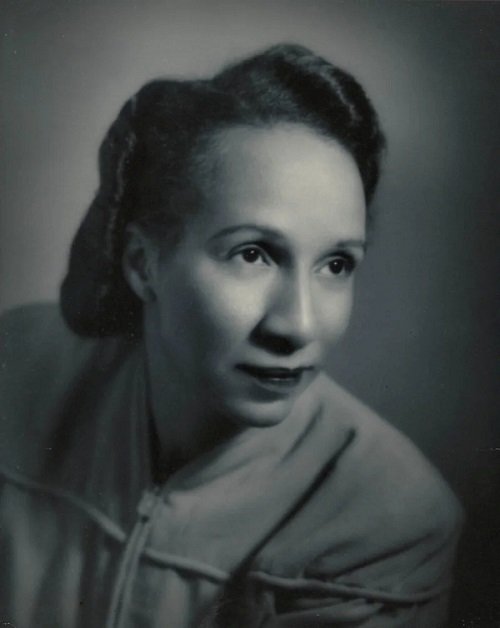
History often remembers Shirley Graham Du Bois as the wife of W.E.B. Du Bois. But she was never just that. Today, March 27, 2026 marks 49 years since her passing.
Long before her name became permanently linked to one of the most influential intellectuals of the twentieth century, Shirley Graham Du Bois had already established herself as a formidable force in her own right. She was a writer, a composer, a playwright, and a political thinker whose work engaged deeply with questions of race, identity, and liberation.Yet, like many women in history, her story has often been told in relation to someone else.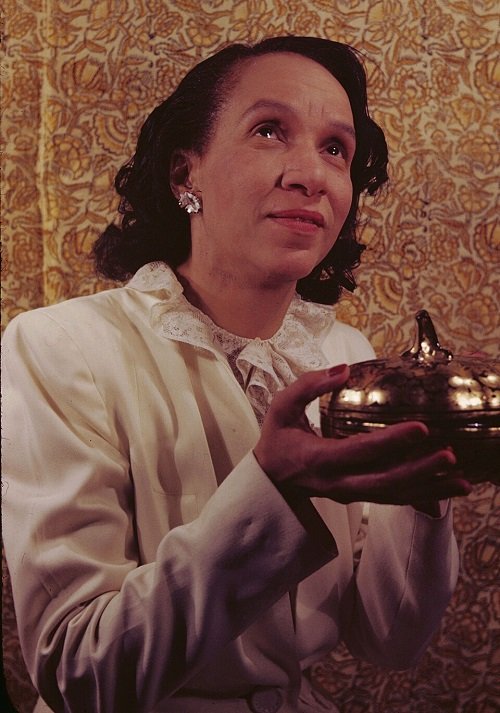
It is a familiar pattern. Proximity to greatness becomes a substitute for recognition. But in Shirley’s case, that framing does her a disservice. She was not adjacent to history. She was actively shaping it.
Before she ever became Mrs. Du Bois, she was Shirley Graham. A woman navigating and challenging the cultural and political landscapes of her time. Her work in theatre and music was not simply artistic expression. It was a deliberate intervention. Through her plays and compositions, she explored Black life with urgency and depth, insisting on narratives that were often ignored or suppressed.
Art, for her, was not separate from activism. It was one of its most powerful forms. She understood that culture could move people in ways that politics alone could not. And so she used it, strategically and unapologetically, to advance a broader vision of Black dignity and self-definition. She did not wait to be invited into conversations. She created them.
What makes her story even more compelling is not only who she was, but the choices she made. At a time when Africa was still emerging from the shadows of colonial rule, when many in the diaspora viewed the continent through distance or uncertainty, Shirley Graham Du Bois made a deliberate decision to align her life with Africa’s future.
Together with her husband, and within the wider vision of leaders such as Kwame Nkrumah, she saw in Ghana something far greater than geography. She saw possibility. Ghana, newly independent and filled with ambition, represented a bold experiment in Black self-governance and cultural renewal. It was a place where history could be rewritten by those who lived it. For Shirley Graham Du Bois, this was not symbolic. It was personal. Ghana was not where she ended up. It was where she believed the future was.
In choosing Ghana, she became part of a broader movement that connected Africa to its diaspora in a deeply intentional way. Intellectuals, artists, and activists were reimagining identity, belonging, and purpose across borders.
Within this space, she lived, worked, and contributed to a growing cultural and intellectual energy that defined Ghana in its early post-independence years. And then, as life would have it, she remained. Today, she rests in Ghana. A country she chose at a defining moment in history.
At the W.E.B. Du Bois Memorial Centre for Pan-African Culture, her story lives on. Visitors walk the grounds, observe the mausoleum, and encounter the legacy of W.E.B. Du Bois in ways that are both educational and reflective.
As the institution mandated to manage, preserve, and transform this historic site, the W.E.B. Du Bois Museum Foundation carries a responsibility that goes beyond conservation. It is a responsibility to tell the full story, while advancing a vision to transform the Centre into a world-class museum, research, and cultural complex that reflects the global significance of both W.E.B. Du Bois and Shirley Graham Du Bois.
And within that story, Shirley Graham Du Bois must be seen. She chose Ghana. She lived here. She rests here. Yet how often do we remember her not as an extension of someone else’s legacy, but as a force in her own right?
In our efforts to honour great men, history has sometimes asked women to stand just slightly out of frame. Their contributions remain, but their visibility fades. Shirley’s story challenges that pattern. It asks us to reconsider how we remember, how we tell stories, and how we assign significance. Because to remember her fully is not to diminish anyone else. It is to complete the story.
There is also something deeply relevant about her decision to choose Ghana. In a time where conversations about identity, belonging, and diaspora continue to evolve, her life offers a perspective that feels both historical and immediate. She did not approach Africa as an abstract idea or a distant origin. She approached it as a living, evolving space. A place where she could belong, contribute, and help shape the future.
That distinction matters. It reframes Ghana not simply as a place of heritage, but as a place of purpose. It reinforces the idea that the relationship between Africa and its diaspora is not static. It is dynamic, intentional, and continually being shaped by those who choose it.
Shirley Graham Du Bois chose it. To remember her is not simply an act of tribute. It is an act of recognition. It is to acknowledge a woman who understood, perhaps earlier than many, that Africa was not only a point of origin, but a place of possibility. It is to recognise her as a cultural force, a political thinker, and a Pan-Africanist whose life extended far beyond any single title.
And it is to ask ourselves whether we have told her story with the fullness it deserves. The question is no longer who Shirley Graham Du Bois was. History has already answered that. The question now is whether we are prepared to remember her as she truly was. Not in the shadow of another name, but in the clarity of her own. Because she did not simply accompany history. She helped shape it. And she chose Ghana as the place to do so.
By: Terry Mingle
PR and Communications Specialist
W.E.B. Du Bois Museum Foundation
Email: terry.mingle@webdbmf.org







The quiet crisis in the Ghanaian field
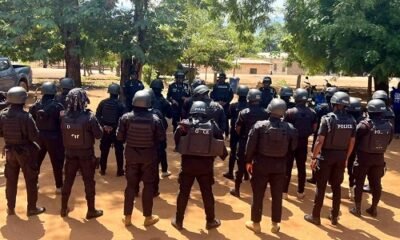
In many Ghanaian communities today, from the vegetable hubs of Akumadan to the grain belts of the Northern Region, farmers are being squeezed from both ends. On one side are the suffocating rising costs of imported inputs. Synthetic fertiliser prices that jump without warning and chemical pesticides that are not only expensive but often misused due to a lack of technical oversight. On the other side is the relentless pressure to produce in the face of exhausted soils, erratic rainfall patterns, and the emergence of aggressive new pest outbreaks like the Fall Armyworm.
The result is a quiet, systemic crisis; thus, our smallholder farmers are working harder and spending more of their meager capital on external inputs, yet they are struggling to secure stable yields or achieve decent profits.
Redefining organic: From boutique to backbone
In the current national conversation, organic farming is often misunderstood. It is frequently treated as a “boutique” label, something meant for the export shelves of Europe or the high-end health shops in suburban Accra. This narrow thinking is dangerous. Organic farming, properly understood, is not a niche lifestyle choice; it is a sophisticated biological system built around soil health, compost restoration, and integrated pest management.
For Ghana, this is not a fashionable trend; it is a vital National Resilience Strategy. If Ghana invests in organic and agroecological practices at scale, starting with decentralised compost production and credible safety standards, we can sever the cord of input vulnerability and rebuild our agricultural heritage from the ground up.
The problem: The trap of imported dependency
Ghana’s food production has become dangerously addicted to inputs we do not control. Our current model relies on a global supply chain that is increasingly volatile. Synthetic fertilisers and agro-chemicals are tethered to the price of natural gas and vulnerable to currency swings. When the Cedi fluctuates or global shipping is disrupted, the burden falls squarely on the Ghanaian farmer.
Organic approaches offer a practical escape from this dependency trap by shifting the center of productivity back to local Biological Capital: compost, green manure, and cover crops. These methods do not just reduce immediate costs; they treat the soil as a long-term asset. A nation that depends on imported fertility is always just one global crisis away from a hunger epidemic. By focusing on organic soil restoration, we transform the soil from a mere medium for chemicals into a living, self-sustaining engine of growth.
Climate change and the yield gap myth
One of the loudest arguments against organic farming is the question: “Can it produce enough?” Critics point to a potential yield drop during the transition phase from chemical-heavy systems. However, in the context of the climate crisis, this argument is incomplete.
Most of Ghana’s farming is rain-fed. As our rainy seasons become more unpredictable, synthetic-heavy soils, which are often low in organic matter, struggle to retain moisture. In contrast, organic systems perform significantly better under drought conditions. Carbon-rich, composted soil acts like a sponge, holding water longer and keeping crops alive during dry spells.
A slightly lower yield that is stable, resilient, and cheaper to produce is far better for a Ghanaian farmer’s pocket than a high yield that requires expensive chemicals and collapses entirely when the rains fail. Stability is the true measure of food security, not just peak volume.
Public health: The farm-to-table connection
The pressure to produce market-perfect vegetables for consumers in Kumasi or Accra often leads to the cocktail effect, where farmers mix multiple high-toxicity pesticides to ensure no insect damage is visible. This carries hidden, staggering costs: acute respiratory illnesses for farmers, long-term hospital visits for consumers, and a growing public mistrust in local produce.
Organic practices, such as biological pest control and crop rotation, reduce the reliance on these heavy chemical sprays. When we support organic-by-practice farming, we are investing in a preventive healthcare strategy. We protect the farmer in the field and the Ghanaian family at the dinner table.
The economic multiplier: Jobs in the green economy
Scaling organic farming creates a new value chain that could employ thousands of youth. Unlike imported fertilisers, compost and bio-pesticides must be produced locally.
• The compost economy: Establishing municipal organic waste processing plants creates jobs in waste collection, processing, and distribution.
• Bio-inputs: Local entrepreneurs can lead the way in producing botanical extracts and neem-based bio-pesticides, keeping money circulating within the Ghanaian economy rather than sending it abroad to multinational chemical firms.
A five-point action plan for a greener Ghana
To move organic farming from the fringe to the mainstream, we need a “who-does-what” roadmap that moves beyond rhetoric into institutional action:
- Scale up compost as national infrastructure
Municipal assemblies, in partnership with the Ministry of Food and Agriculture (MoFA), must prioritise the conversion of city organic waste into high-quality compost. We should establish regional compost hubs near major farming belts. Compost should be treated with the same importance as roads or electricity for it is fundamental infrastructure of food security. - Re-tooling extension services
The current extension model is often geared toward chemical-intensive agriculture. MoFA extension officers must be retrained to provide practical, hands-on modules for farmers. This includes teaching Indigenous Microorganisms (IMO) collection, advanced composting techniques, and multi-cropping strategies that naturally suppress pests. - Build truth-in-labelling and consumer trust
We need the Ghana Standards Authority (GSA) and the Food and Drugs Authority (FDA) to establish credible, low-cost certification systems. We don’t need expensive international labels; we need a Verified Safe or Organic-by-Practice seal that allows a consumer at Agbogbloshie market to buy with confidence, knowing the produce is free from toxic residues. - Leverage institutional procurement
The government is one of the biggest food buyers in the country. The Ghana School Feeding Programme and government hospitals should pilot sourcing from verified organic-by-practice farms. This provides a guaranteed market and a price floor for farmers who take the risk to transition away from chemicals. - Incentives for the next generation
Organic farming is high-knowledge farming. We must provide small grants or low-interest Green Credits for youth-led cooperatives. If we give young graduates the tools to start Soil Clinics or composting businesses, we make agriculture attractive, modern, and profitable.
Conclusion: The choice before us
Organic farming is not a luxury for the wealthy; it is a strategy for national survival. It is the path toward a Ghana that is less dependent on the whims of global markets and more reliant on the strength of its own ecological intelligence.
Ghana must decide now! Will we keep chasing short-term productivity through expensive, imported dependency? Or will we build a lasting food system through soil restoration and biological wisdom? The sooner we treat our soil as a living national asset, the sooner we can secure a food system that truly serves all Ghanaians. The time to transition is not when the next crisis hits; the time to transition is now.
By Felicia Bonnah Quansah
After a couple of days, Martin had finished breakfast and was about to leave, when his mother motioned to him to wait.
“Martin, I came here from Koforidua three days ago, not because I have nothing to do at home, but because your father and I thought we should find out how you and Sarah are doing. Yet since I’ve been here, you’ve not sat down with me for even fifteen minutes.”
“Mama, I’m getting late for work. Can’t this wait till when I get back in the evening?”
“When will you come back this evening? And in what state will you be? What’s happening to you, Martin? Where do you go after work every evening?”
“Mama,” he said as he moved to the door, “I’m sorry I have to leave. Moreover, I’m not a boy anymore. I’m quite capable of managing my affairs.”
But his mother blocked the door.
“If you are capable of managing your own affairs, why did you call to make all those complaints about Sarah? Since I’ve been here, I’ve noticed that the place is always clean, there’s always good food available. She washes your clothes and even irons them. And what’s your response? You’ve turned yourself into a ghost, leaving home first thing in the morning and coming home late, every day. All those tales you told us about Sarah, they have turned out to be lies. Listen, you either change this stupid lifestyle, or we will force you to change.”
“What will you do, Mama, beat me up?”
His Mama surprised him with a big, nasty slap, nearly flooring him. Very angry, he picked his briefcase and went out.
He came home very late as usual, ate, and dropped off to sleep. The following morning he confronted me as I was preparing his breakfast.
“Sarah, what nonsense have you been telling my mother? If you can’t keep your mouth shut, then it’s best you go to your parents. After all, even though our parents gave their brief chat, the elderly lady went to her room.”
“So what’s happening?” she asked. “Has there been any improvement since the old lady has been here?”
“No. Things have gotten worse. Apparently, he called her and made all kinds of allegations against me. And she’s found out the truth. But you know, he’s not paid her any attention. He’s not sat down with her for five minutes. This morning he was quite rude to her, and she slapped him.”
“Oh dear. And she’s leaving today?”
“Yes. I’ve asked her to come with us and drop at the station.”
“I don’t believe this. Martin is not dropping her at the bus station? Sarah, where did you pick this guy from? If he can do this to his mum, then you had better leave before things get really bad.”
“His mum says she and his dad will go and apologise to my parents, and then I can leave. I have no regrets whatsoever. By the way, what did Paul Allotey say?”
“Basically, he liked you the moment he saw you. He wished you weren’t married. If you were single, he would have done everything to grab you.”
“Life’s like that, isn’t it? Whilst someone is treating you like garbage, someone else is wishing he could have you. He is quite a guy. But aren’t you hitting it off with him already?”
“He’s a very nice guy. I certainly like him. But you deserve him, so let’s see if we could make something happen.”
An hour later, I sent the following note to Martin: “Hi, this is to inform you I walked back with him, and he begged his mum to come back. Very reluctantly, she came down, and Martin picked up her suitcase.”
“Okay Mama,” I said. “I will see you at the house shortly.” But he held me again.
“Sarah, I need to have a word with you. Please wait a minute.” I waited as he led his mother to the car, placed the suitcase in the boot, and came back.
“Sarah, I’ve been very foolish. Please forgive me. I need you very badly. I, I’m in trouble.” He walked with me to Paul’s car.
“Hi, Dinah and Mr Allotey, please forgive me, I need to have a little discussion with my wife. Please.”
“Oh, that’s okay,” Paul said. “Sarah, let’s do it another time.”
Unwillingly, he followed me to her room. Tears streamed down her cheeks as she heard him out.
“Ei Martin, you see what your arrogance has gotten you. You prefer a prostitute to this beautiful girl? Let’s go to the police now. Twenty thousand cedis. Goodness! I’m calling your father, then we’ll go to the police.”
At the police station, we were handed over to Inspector Beatrice Addy who, surprisingly, listened patiently to Martin.
“Okay,” she said. “Martin, you are fortunate that your wife and your mother are standing by you even though you were disloyal to them. I will get together with my colleagues, and hopefully we can get at least some of your money for you. It appears that the lady is a fraudster, in addition to being a prostitute. So our team will locate her, and I believe you will recover some of your money. I am very glad that you have come back together with your family. I hope this unfortunate incident will make the family stronger.”
Dinah called soon after we returned from the police station.
“Okay, what’s the news?”
“He got into a problem with a prostitute he’s been going out with. She stole twenty thousand cedis from him. Now the scales seem to have fallen from his eyes.”
“Oh dear, oh dear. You can’t leave now then. Hang on a bit. Give him a chance. But don’t compromise on going to school.”
“That’s exactly what I plan to do. But I will insist that he makes changes immediately. No more hanging around with the boys after work, no more getting drunk every day. And I hope after the experience with the prostitute, he will keep clear of girls. Actually, from the signs we are seeing now, I think he is already a changed person.”
“Sarah, that girl, I don’t know what she did to me. I just, she seemed to control me.”
“You said you are in trouble. What has happened?”
“Immediately I get home, your father and I will go to her parents and apologise to them, then I will personally come back and take her home. I hope you understand the implications of the behaviour you are putting up. You are not only rejecting Sarah, you are rejecting your parents. You can go away. Sarah will take me to the Accra station.”
To my great surprise, he left.
Dinah came in just when I came out of the bathroom. She greeted Martin’s mother and sank into the sofa.
Paul stopped his car, and I carried the old lady’s suitcase in. We drove off to the station, and I led her to buy the ticket. I hugged her warmly, and she boarded the bus. As I was walking to the car, I saw Martin, looking as if he had been run down by a car, rushing towards me.
“Sarah! Please Sarah, where is she?” I pointed in the direction of the bus, and moved forward. But he held me.
“Please, don’t go away. I need your help. There’s something we need to discuss. Please.”
“She defrauded me. She asked me for some money when I dropped her yesterday. I took out my cheque book to sign out one thousand cedis, but she suggested that I simply sign it so that she filled in the details later. A short while ago I saw a message on my phone that twenty thousand cedis had been withdrawn by the girl.”
“Martin, I told you that the girl is a prostitute. She was waiting for the right moment to strike. Listen, I can’t handle this alone. We can’t make too much noise about it, but it is certainly a criminal case. Let’s talk to your mum. She will scold you, but she’s your mother.”
“Have you had the chance to speak with him?”
“No. His mother insisted that we make a report to the police. We came back some fifteen minutes ago. He just left for the office. He sounds really apologetic, but I won’t assume anything now. By the way, how did lunch go?”
“Very well. He dropped me at home. He’s picking me up at six.”
“You and the Borla Man are doing rather well, aren’t you?”
“Yes. The only problem I had was you. He has a soft spot for you, but now that you and Martin are sorting things out, I’m going all out.”
Martin came home at five forty-five. He hugged me and asked whether supper was ready.
“The stew is ready,” I replied. “I was about to boil some yam.”
By Ekow de Heer

 News1 day ago
Agona West NDC demands unqualified apology from Paul Adom-Otchere over alleged misleading editorial
- News1 week ago
Eid not only moment of celebration but call to sustain values of discipline – President Mahama
- Entertainment1 week ago
Ghana Music Awards-USA @ 7 Unveils FIFA World Cup-Themed Celebration in Princeton