News
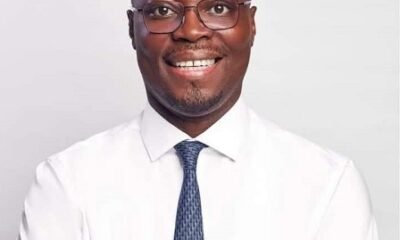
Workforce must move to higher productivity—Dr Baah


The Secretary General of the Trade Union Congress (TUC), Ghana, Dr Yaw Baah says the country must work to move majority of its 13 million workforce from a low productivity service sector to a higher one like manufacturing.
This type of development module, he said, was the one employed by advanced countries in Europe and should be replicated here to help achieve the economic transformation envisioned by the Ghana Beyond Aid (GBA) agenda.
Speaking at a virtual forum on COVID-19 and GBA in Accra yesterday, he said economic growth would be minimal with only eight per cent of the workforce in the manufacturing sector and 49 per cent in the service sector.
The forum, organised by the GBA committee was on the theme “COVID-19 and our march towards Ghana Beyond Aid; turning adversity into opportunity”.
It was aimed at stepping up public education and social mobilisation towards achieving the vision.
Explaining the European example of economic transformation, Dr Baah said they used a model in which they moved workforce through agriculture to industry and then the service sector.
“But in Ghana, we have moved large chunk of people from agriculture straight to service sector. We have skipped the industry sector. The industry is the chief provider of jobs”
“That is how we have missed the transformation of our economy and this is the time to change under the GBA. We have to move a chunk of our workers from the low producing informal sector to higher production informal sector”, he said.
According to the TUC boss, the country’s struggle against colonial masters did not end with the attainment of independence, rather it was the beginning of the strife to coordinate her own socio-economic development.
On the COVID-19 pandemic, he said, it had shown the country that the GBA was “indeed appropriate and timely. The GBA vision should be our guide in our efforts to move over the pandemic”, he said.
The Senior Minister, Yaw Osafo-Maafo, in a brief address, described the GBA vision as relevant to the country’s development adding that “if Ghana is to become self-sufficient, it is now.”
Metropolitan Archbishop of Cape Coast, Archbishop Charles Gabriel Palmer-Buckle, made a strong case for a paradigm shift in mindset and attitude to achieve the vision because the country was losing sight of its values and virtues.
He said Ghanaians needed to commit to the values of honesty, transformation, handwork, systematic and patriotism and move from cynicism, mistrust and selfishness, which he said was more dangerous than corruption.
BY JONATHAN DONKOR


The Diaspora Affairs Office at the Office of the President has hosted a delegation of African diaspora women who are in Ghana ahead of a planned Presidential Conferment of Citizenship ceremony.
The Director of Diaspora Affairs, Kofi Okyere Darko, explained in a Facebook post that the visit was a gesture of appreciation by the delegation to the Government of Ghana for its continued efforts to reconnect Africans in the diaspora with their ancestral homeland.
He indicated that the ceremony, scheduled for next Monday, will officially grant Ghanaian citizenship to members of the delegation as part of the country’s broader engagement with the African diaspora.
The delegation was led by Erica Bennett, Founder of the Diaspora Africa Forum.
According to Mr Okyere Darko, her years of advocacy have played an important role in strengthening ties between Africa and people of African descent living abroad.
He noted that the group’s journey towards citizenship represents not only a legal process but also a cultural and spiritual return to their roots.
Also present at the meeting was Natalie Jackson, an attorney who is also expected to receive Ghanaian citizenship during the ceremony. She works closely with renowned civil rights lawyer Ben Crump.
Mr Okyere Darko emphasised that Ghana remains committed to strengthening relationships with the African diaspora and promoting unity, identity, and shared heritage among people of African descent worldwide.
By: Jacob Aggrey

Ghana has signed a debt restructuring agreement with the Kingdom of Belgium as part of efforts to restore the country’s economic stability after the financial crisis that hit the nation in 2022 and 2023.
The Minister of Finance, Cassiel Ato Forson, today disclosed that he signed the agreement on behalf of the Government of Ghana.
He explained that Ghana experienced a very difficult period during the crisis, which forced the government at the time to declare a debt default.
However, he indicated that the country is now recovering and witnessing a significant economic turnaround.
According to him, stronger systems are also being put in place to ensure that Ghana does not return to such a situation again.
Dr Forson noted that the agreement with Belgium is the eighth deal Ghana has concluded with countries under the Official Creditor Committee as part of its external debt restructuring programme.
He expressed appreciation to the Government of Belgium for its support and partnership with Ghana during the process.
The Finance Minister thanked Carole van Eyll, Ambassador of Belgium to Ghana, for her role in strengthening relations between the two countries.
The agreement forms part of Ghana’s broader effort to restructure its external debts and stabilise the economy following the crisis.
By: Jacob Aggrey

 News1 week ago
Finance Minister outlines new gold policies to boost reserves and curb smuggling
- News1 week ago
Sam George launches the 2026 Meteorological Awareness Month; presents the 2026 seasonal forecast for southern Ghana
- Hot!1 week ago
Breaking: Footballer who killed two children in Abesim handed lifetime sentence