News
Sam George launches the 2026 Meteorological Awareness Month; presents the 2026 seasonal forecast for southern Ghana


- /home/u249204778/domains/spectator.com.gh/public_html/wp-content/plugins/mvp-social-buttons/mvp-social-buttons.php on line 27
https://spectator.com.gh/wp-content/uploads/2026/02/WhatsApp-Image-2026-02-24-at-16.05.34-1.jpeg&description=Sam George launches the 2026 Meteorological Awareness Month; presents the 2026 seasonal forecast for southern Ghana', 'pinterestShare', 'width=750,height=350'); return false;" title="Pin This Post">
- Share
- Tweet /home/u249204778/domains/spectator.com.gh/public_html/wp-content/plugins/mvp-social-buttons/mvp-social-buttons.php on line 72
https://spectator.com.gh/wp-content/uploads/2026/02/WhatsApp-Image-2026-02-24-at-16.05.34-1.jpeg&description=Sam George launches the 2026 Meteorological Awareness Month; presents the 2026 seasonal forecast for southern Ghana', 'pinterestShare', 'width=750,height=350'); return false;" title="Pin This Post">
The Minister for Communication, Digital Technology and Innovations, Samuel Nartey George, has officially launched the 2026 Meteorological Awareness Month with a presentation of the 2026 major rainy season forecast for southern Ghana.
The event forms part of activities marking this year’s World Meteorological Day under the theme; “Observing Today, Protecting Tomorrow.”
Mr. George said the theme highlights the importance of accurate weather observations in protecting lives and property.
He explained that strong data collection today helps the country prepare for floods, droughts and other extreme weather events tomorrow.
According to him, reliable weather information is important for farmers, traders, engineers, health workers and households across the country.
He stated that government is working to reposition the Ghana Meteorological Agency (GMET) as a centre of excellence in the sub-region.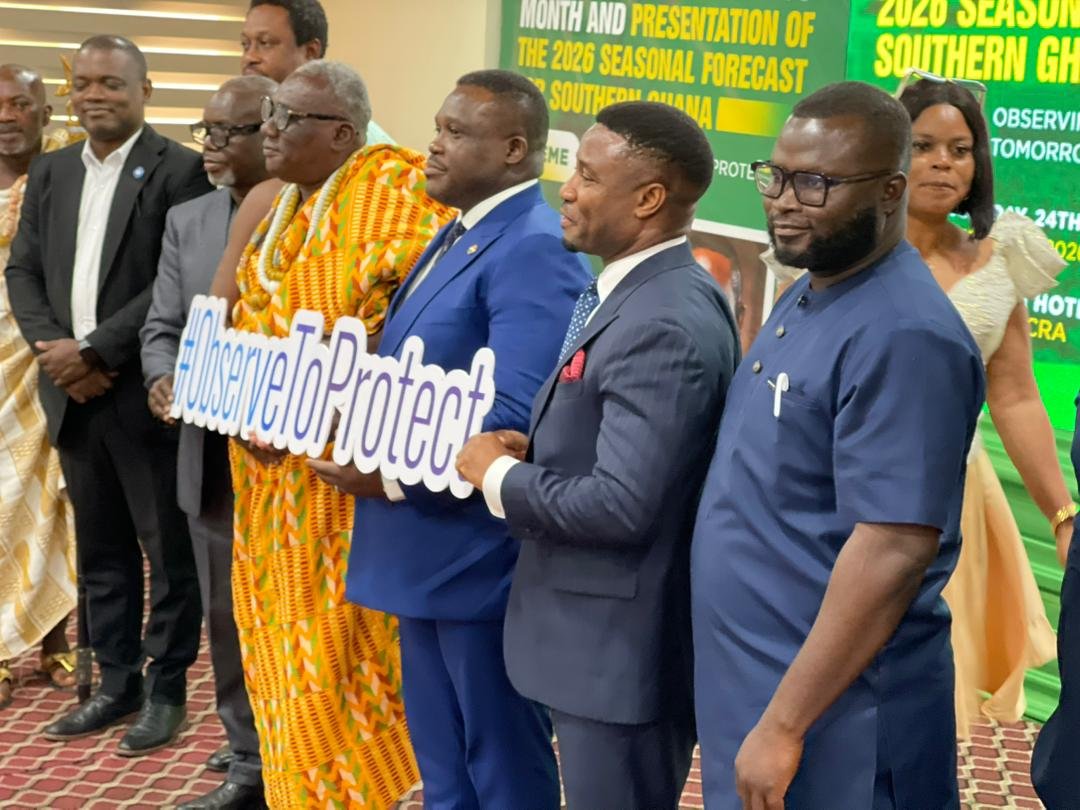
He noted that plans are underway to review existing laws to give the agency more authority and align its operations with modern technologies such as artificial intelligence and big data.
The Minister disclosed that the Common Alerting Protocol has been integrated into major communication networks to ensure that verified weather warnings reach communities quickly.
He added that GMET’s alerts are now visible on major global weather platforms, which has increased Ghana’s visibility and credibility in weather forecasting.
Presenting the seasonal forecast, Mr. George said the rains in southern Ghana are expected to begin from the third week of February in most areas, while some places may experience delayed onset until early March.
He explained that some parts of the southwestern and eastern coastal areas may record below-normal rainfall between March and May, but rainfall is expected to improve between April and June.
He advised farmers to wait for steady rains before planting and urged residents to clear gutters to reduce flooding.
The Acting Deputy Director-General (General Services) of GMET, Vivian Abla Kally, said the Meteorological Awareness Month has grown into a major national campaign over the past three years.
She explained that the initiative was introduced to educate the public and improve understanding of weather and climate information.
She noted that meteorological services affect nearly every sector of the economy, including agriculture, aviation, water resources and disaster management.
According to her, while natural disasters cannot be prevented, early information can help reduce damage and save lives.
Ms. Kally said the 2026 seasonal forecast will serve as an important planning tool for farmers, disaster managers and policymakers.
She stressed that early warning and public education remain central to the agency’s mandate.
She added that the agency will continue to strengthen collaboration with stakeholders and expand public outreach to build a more weather-aware and climate-resilient Ghana.
The Director-General of GMET, Dr. Eric Asuman, said the Awareness Month is a national call to action to build resilience against climate change.
He emphasized that accurate observation is the foundation of reliable forecasting and warned that weak data systems could put lives and investments at risk.
He revealed that the agency is transitioning from manual to automatic weather stations to improve real-time data collection.
He also said GMET is digitizing its operations and preserving historical climate records to strengthen forecasting and research.
Dr. Asuman urged institutions, farmers and the media to use the seasonal forecast responsibly.
He said preparedness begins with information and protection begins with action.
The Board Chairman of GMET, Mr. Selasie Woanyah, said reform and modernization are necessary to improve public trust in the agency’s work.
He noted that the board is committed to improving communication and ensuring that weather information is clear and easy to understand.
The Secretary-General of the World Meteorological Organization, Professor Celeste Saulo, commended Ghana for strengthening its early warning systems.
She said understanding weather and climate information helps countries plan better and save lives, adding that observing today is key to protecting tomorrow.
By: Jacob Aggrey





Residents of Brodi, a farming community in the Tain District of the Bono Region, have been left in shock and mourning following the alleged murder of a 45-year-old woman by her husband, who later died by suicide.
According to information gathered by the Ghana News Agency (GNA), the suspect, popularly known as Kwabena Jack, believed to be in his 50s, allegedly attacked and killed his wife, Abena Donkor, while the couple were working on their farm on Monday, August 11, 2026.
Mr Kingsley Obah, Assembly Member for the Brodi Electoral Area, confirmed the incident to the GNA.
He explained that after news of the woman’s death spread through the community, residents launched a search for the suspect. His lifeless body was later discovered in a nearby bush on Tuesday, August 12, 2026.
Police have since conveyed both bodies to the Tain District Government Hospital, where they have been deposited for preservation and autopsy.
Investigations into the incident are ongoing. -GNA
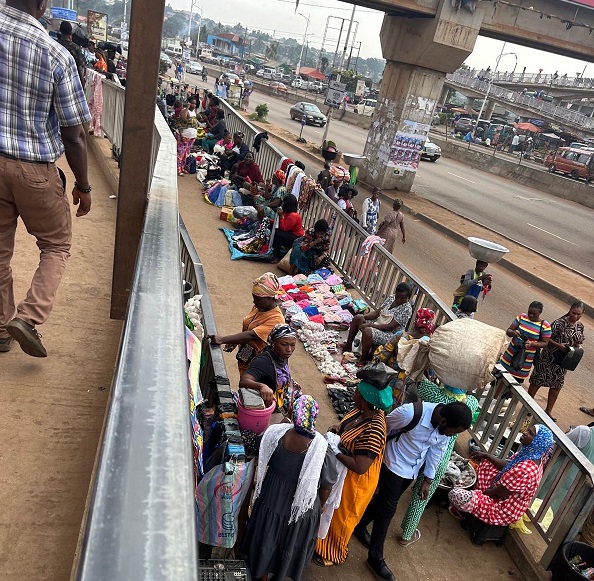
Hawkers and roaming preachers have taken over the five-metre high Madina REDCO footbridge and adjoining streets, making it increasingly difficult for pedestrians to use the facility intended to promote safe road crossing.
The traders have virtually turned sections of the footbridge into a marketplace, displaying their wares on the floor using jute sacks, plastic sheets and metal trays, while others have occupied both sides of the walkway with their merchandise.
Foodstuffs such as okro, garden eggs, pepper, onions, dried fish, smoked fish, grains, spices and other groceries are openly sold on the footbridge and along the roadside, forcing pedestrians to weave through the crowded path.
Clothing and fashion accessories including slippers, brassieres, panties, socks, bags and other household items are also displayed for sale, leaving only limited space for commuters to use.
The situation is worsened by the presence of itinerant preachers who position themselves on the footbridge with public address systems to evangelise, drawing crowds to further obstruct pedestrian movement.
Head porters are also seen crossing the highway through the median while carrying heavy loads instead of using the footbridge, exposing themselves to the danger of being knocked down by speeding vehicles.
Also, portions of the footbridge are showing signs of deterioration. Several metal railings are rusted, bent and loosely secured with pieces of wire, raising concerns about the safety of users, especially children, the elderly and persons with disabilities.
Sections of the concrete surface are worn and chipped, while makeshift wooden supports attached to parts of the structure suggest temporary repairs.
After a visit by The Spectator last week, it emerged that many commuters preferred crossing the busy Madina Highway instead of using the footbridge because of the congestion created by the trading and preaching activities.
For years, successive attempts by the police, the military and the La Nkwantanang Madina Municipal Assembly to address congestion around the REDCO and Zongo Junction enclave have yielded little success, with the area becoming notorious for roadside trading, indiscriminate parking and pedestrians refusing to use the footbridge.
A pedestrian, who gave her name only as Maame Yaa, described the situation as worrying, saying the footbridge, which was constructed to protect lives, had gradually lost its purpose because of the growing encroachment by traders and preachers.
According to her, many pedestrians were discouraged from using the facility because navigating through the crowded walkway had become difficult and uncomfortable.
She appealed to the La Nkwantanang Madina Municipal Assembly and other relevant authorities to intensify enforcement to prevent unauthorised trading and other activities on the footbridge and ensure it served its intended purpose of promoting pedestrian safety.
However, during the visit, personnel of the Ghana National Fire Service (GNFS) were seen carrying out a decongestion exercise to remove hawkers from sections of the roadside around the footbridge as part of efforts to improve public safety and ease the movement of both pedestrians and motorists.
The exercise forms part of a pilot project initiated by the Municipal Fire Commander for Madina, Division Officer II (DO II) Abdul Salia, who assumed command of the Madina Municipal Fire Station three months ago.
Speaking in an interview with The Spectator, DO II Abdulai Salia, who is also a long time resident of the community, said the month long project began on July 1 and ended on July 31, with 30 firefighters deployed daily to regulate traffic, clear hawkers from the streets and footbridge, and create access for emergency vehicles.
Continued on page 12
By Esinam Jemima Kuatsinu