News
When the torches went out: Tamale’s fire festival silenced by fear


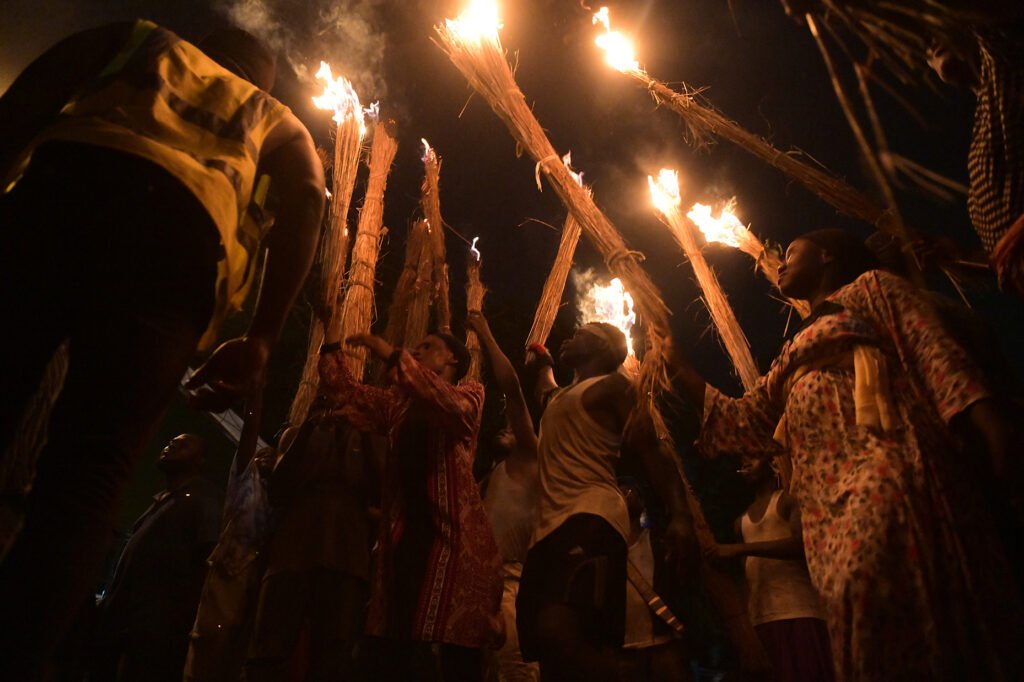
The night air should have been ablaze with torches. Children should have been darting through alleyways with fire-lit sticks, their laughter harmonising with the ancestral drums.
Elders should have been narrating ancient legends under the glow of a thousand flames, while chants soared into the heavens.
But on the night of July 6, Tamale stood still, cloaked not in the radiant warmth of Bugum Chugu, the Fire Festival, but in an unsettling quiet.
The torches were unlit, the chants unsung. A sacred fire had been extinguished before it could even begin.
‘Bugum Chugu, one of Northern Ghana’s most spiritually charged and historically significant annual celebrations, was officially cancelled in 2025 by the Overlord of Dabang, Yaa Naa Abukari II, following advice from Ghana’s Police Service. The announcement, made in the final week of June and widely reported in local media, stated:
“His Majesty, the Yaa Naa, acting in consultation with the security agencies, has called off this year’s Bugum Chugu to preserve peace and avert any threats to public safety.”
Security intelligence had revealed that certain factions, believed to be aligned with longstanding rivalries within the traditional area were allegedly planning to hijack the festival’s intensity to incite unrest and potentially cause bloodshed.
The ‘Bugum Chugu’ is a sacred reenactment of a legendary rescue, dating back over 700 years, when a prince from the ancient Dagbon kingdom went missing one night. In desperation, the community lit grass torches and swept through the dark savannah.
He was eventually found under a tree, and in joy and reverence, the people lit more torches and danced through the village, believing that the fire had guided them. That act of unity, faith, and thanksgiving became a ritual passed through generations.
The festival is observed annually on the 9th night of Muharram, the first month of the Islamic lunar calendar, making the exact date shift each year.
In 2025, it was scheduled for July 6.
While Tamale and Yendi remain the most vibrant hubs, Bugum Chugu is celebrated across the Dagbon Traditional Area including Savelugu, Tolon, Karaga, Gushegu, Saboba, and even among diaspora Dagombas in Europe and the Americas.
The ceremony is the remembrance of ancestors, unity, and symbolic cleansing through fire, which unfolds dramatically in a single night.
After evening prayers, the community gathers, elders in flowing smocks, youth in symbolic warrior garbs at the chief’s palace or central point.
A ceremonial fire is lit. From it, thousands of bundled grass torches are ignited, where a massive procession ensues, winding through the streets, accompanied by drumming, chanting, and sporadic gunfire from ancient muskets. It’s a sensory explosion of firelight and emotion, culminating in symbolic acts of purification and triumph.
The Fire Festival is often described as “emotionally charged” because it taps into deep cultural memory, ancestral pride, and a sacred identity that survived colonialism, conflict, and modern transformation. When rival factions threaten to politicise or manipulate that energy, the festival becomes volatile.
As one police report warned, “an emotionally heightened atmosphere like Bugum Chugu provides the perfect opportunity for old tensions to resurface violently.”
Against this backdrop, Alhaji Yussif, someone who actively participates in the rituals of the festival expressed both sorrow and understanding. He told The Spectator that the cancellation was a very good decision taken by the King.
“It protected the dignity of our festival and prevented it from being weaponised,” he added.
In homes where old men folded their festival smocks early, at playgrounds where children asked why the sky was dark, in diaspora communities who had booked flights to be part of the sacred night again.
The cancellation reflects a larger truth that, cultural traditions cannot thrive in the shadow of conflict. Where peace falters, memory falters. Ritual becomes risk and festivals which is meant to be vessels of unity become flashpoints of division.
The Dagbon Kingdom, once crippled by decades of leadership disputes, saw healing in 2019 when the Yaa Naa was enskinned after years of mediation. That moment was a beacon of reconciliation. But the cancellation of Bugum Chugu 2025 reminds us that peace is not a destination, but it is a daily commitment.
The Yaa Naa’s decision, though heartbreaking, was a lesson in leadership. It calls on every stakeholder, youth, elders, chiefs, politicians, civil society to protect peace, not only for stability, but for the survival of tradition itself. Because the flames of the Fire Festival do more than illuminate the night.
If we let conflict dictate our celebrations, we risk surrendering the very soul of who we are.
But if we defend peace, fiercely and intentionally, we will reclaim the fire.
And when that time comes perhaps next year, the skies of Tamale will blaze again.
The torches will rise, the drums will speak, the ancestors will hear and the children of Dagbon will once more walk with fire in their hands and pride in their hearts
By Geoffrey Buta

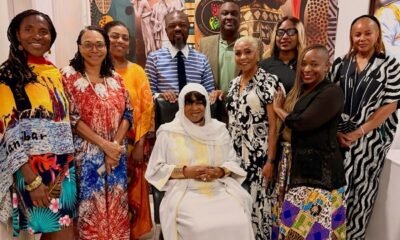








The Diaspora Affairs Office at the Office of the President has hosted a delegation of African diaspora women who are in Ghana ahead of a planned Presidential Conferment of Citizenship ceremony.
The Director of Diaspora Affairs, Kofi Okyere Darko, explained in a Facebook post that the visit was a gesture of appreciation by the delegation to the Government of Ghana for its continued efforts to reconnect Africans in the diaspora with their ancestral homeland.
He indicated that the ceremony, scheduled for next Monday, will officially grant Ghanaian citizenship to members of the delegation as part of the country’s broader engagement with the African diaspora.
The delegation was led by Erica Bennett, Founder of the Diaspora Africa Forum.
According to Mr Okyere Darko, her years of advocacy have played an important role in strengthening ties between Africa and people of African descent living abroad.
He noted that the group’s journey towards citizenship represents not only a legal process but also a cultural and spiritual return to their roots.
Also present at the meeting was Natalie Jackson, an attorney who is also expected to receive Ghanaian citizenship during the ceremony. She works closely with renowned civil rights lawyer Ben Crump.
Mr Okyere Darko emphasised that Ghana remains committed to strengthening relationships with the African diaspora and promoting unity, identity, and shared heritage among people of African descent worldwide.
By: Jacob Aggrey

Ghana has signed a debt restructuring agreement with the Kingdom of Belgium as part of efforts to restore the country’s economic stability after the financial crisis that hit the nation in 2022 and 2023.
The Minister of Finance, Cassiel Ato Forson, today disclosed that he signed the agreement on behalf of the Government of Ghana.
He explained that Ghana experienced a very difficult period during the crisis, which forced the government at the time to declare a debt default.
However, he indicated that the country is now recovering and witnessing a significant economic turnaround.
According to him, stronger systems are also being put in place to ensure that Ghana does not return to such a situation again.
Dr Forson noted that the agreement with Belgium is the eighth deal Ghana has concluded with countries under the Official Creditor Committee as part of its external debt restructuring programme.
He expressed appreciation to the Government of Belgium for its support and partnership with Ghana during the process.
The Finance Minister thanked Carole van Eyll, Ambassador of Belgium to Ghana, for her role in strengthening relations between the two countries.
The agreement forms part of Ghana’s broader effort to restructure its external debts and stabilise the economy following the crisis.
By: Jacob Aggrey

 News1 week ago
Finance Minister outlines new gold policies to boost reserves and curb smuggling
- News1 week ago
Sam George launches the 2026 Meteorological Awareness Month; presents the 2026 seasonal forecast for southern Ghana
- Hot!1 week ago
Breaking: Footballer who killed two children in Abesim handed lifetime sentence