News
W.E.B. Du Bois Museum Foundation Marks 157 Years of the Du Bois Legacy

- /home/u249204778/domains/spectator.com.gh/public_html/wp-content/plugins/mvp-social-buttons/mvp-social-buttons.php on line 27
https://spectator.com.gh/wp-content/uploads/2025/02/IMG_4348-1000x600.jpg&description=W.E.B. Du Bois Museum Foundation Marks 157 Years of the Du Bois Legacy', 'pinterestShare', 'width=750,height=350'); return false;" title="Pin This Post">
- Share
- Tweet /home/u249204778/domains/spectator.com.gh/public_html/wp-content/plugins/mvp-social-buttons/mvp-social-buttons.php on line 72
https://spectator.com.gh/wp-content/uploads/2025/02/IMG_4348-1000x600.jpg&description=W.E.B. Du Bois Museum Foundation Marks 157 Years of the Du Bois Legacy', 'pinterestShare', 'width=750,height=350'); return false;" title="Pin This Post">
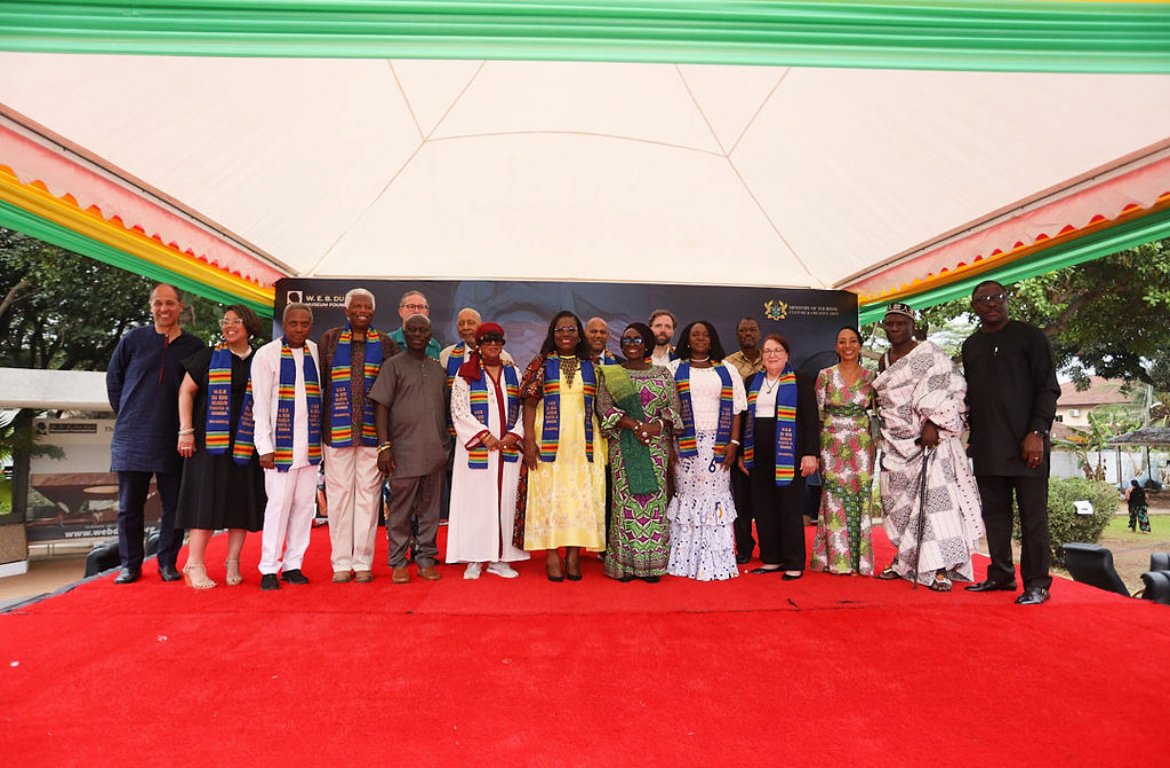
On February 23, 2025, the W.E.B. Du Bois Museum Foundation, in collaboration with the Ministry of Tourism, Culture & Creative Arts, hosted a commemorative event marking the 157th anniversary of the birth of Dr. W.E.B. Du Bois.
The ceremony, held at the W.E.B. Du Bois Memorial Centre for Pan-African Culture in Cantonments, Accra, Ghana, featured reflections on his life and work, along with a solemn wreath-laying ceremony to honour his enduring contributions to Pan-Africanism, racial equity, and social justice.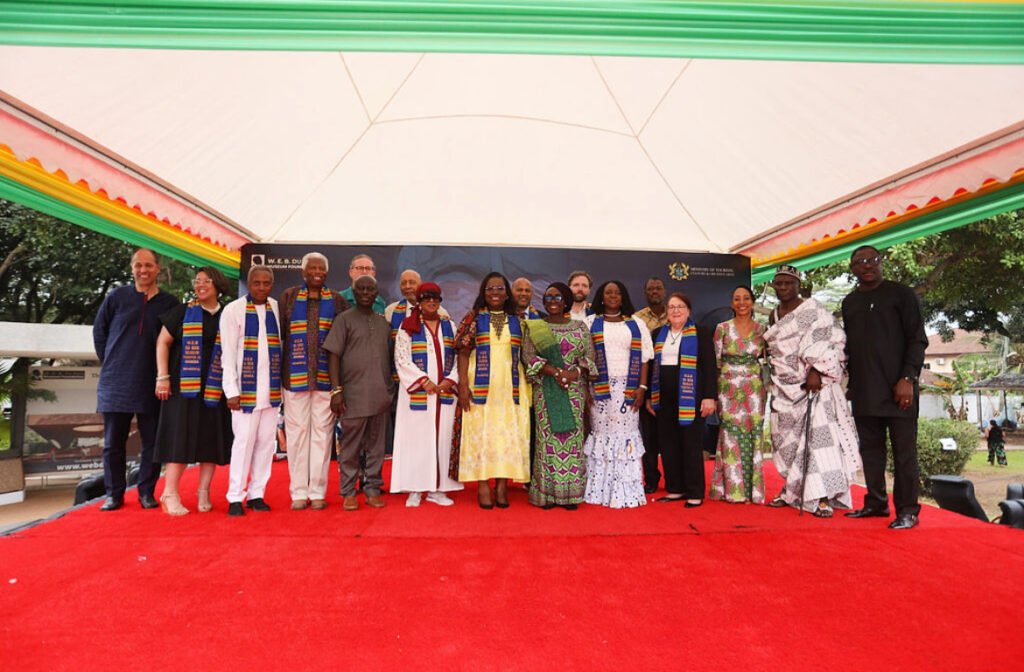
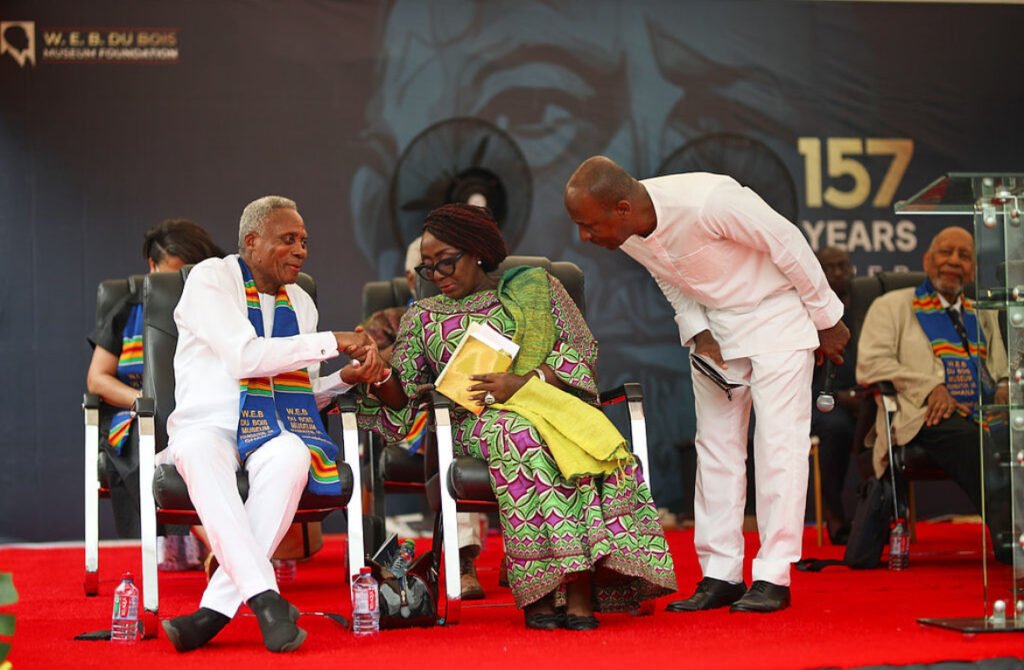
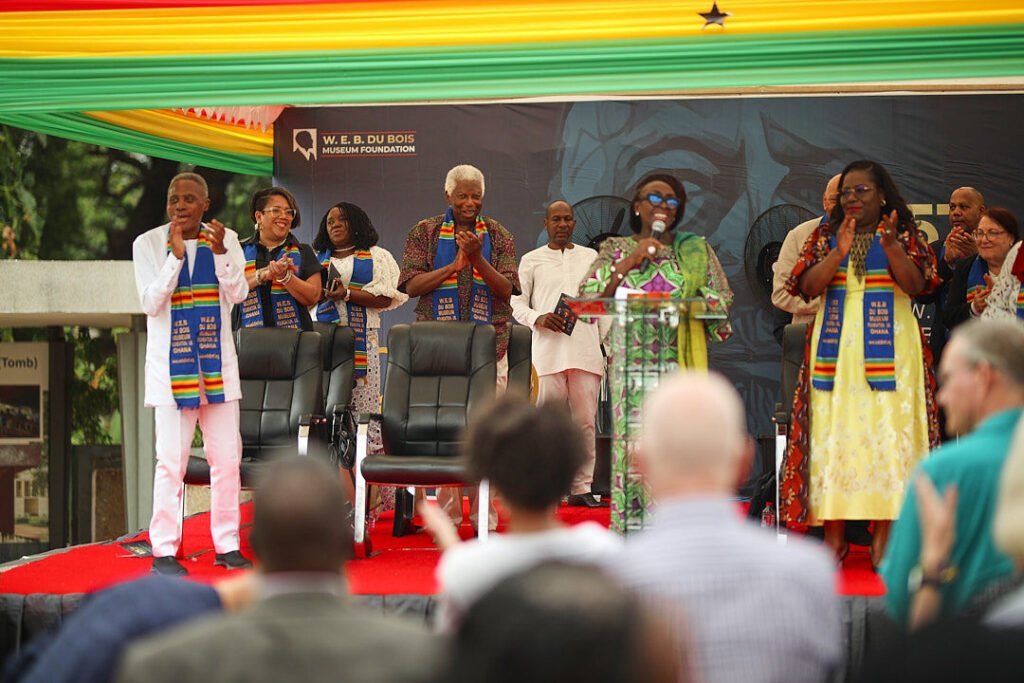
The programme commenced with the arrival of the delegation led by Nana Oye Bampoe Addo, Deputy Chief of Staff, who represented the President of the Republic, H.E. John Dramani Mahama.
The event opened with an invocation, followed by the Ghanaian National Anthem, setting the tone for an afternoon of insightful discussions and tributes.
The Minister for Tourism, Culture and Creative Arts, Abla Dzifa Gomashie emphasised Ghana’s privilege and responsibility as custodians of the remains of great Pan-African figures like W.E.B. Du Bois.
She highlighted the Du Bois Center as a key cultural and historical site under her ministry, reaffirming the government’s commitment to preserving and promoting Pan-Africanism.
The minister acknowledged the alignment of this initiative with the National Democratic Congress (NDC) manifesto and her personal dedication to ensuring its success.
Expressing gratitude to all who have contributed intellectually, financially, and through advocacy, she noted the recent World Bank-funded renovation of the Kwame Nkrumah Memorial Park as an example of ongoing efforts to enhance Ghana’s cultural heritage.
She welcomed the financial commitments made toward the Du Bois Center’s restoration and pledged to review previous plans to advance the project.
The Minister further emphasised the importance of the Black Star Experience, a flagship programme championed by her ministry, and called for collective support, prayers, and goodwill in fulfilling these goals.
In a moment of cultural reverence, she invited the audience to stand and applaud in honour of W.E.B. Du Bois on his 157th birthday, underscoring the significance of his legacy in shaping Ghana’s creative and cultural landscape.
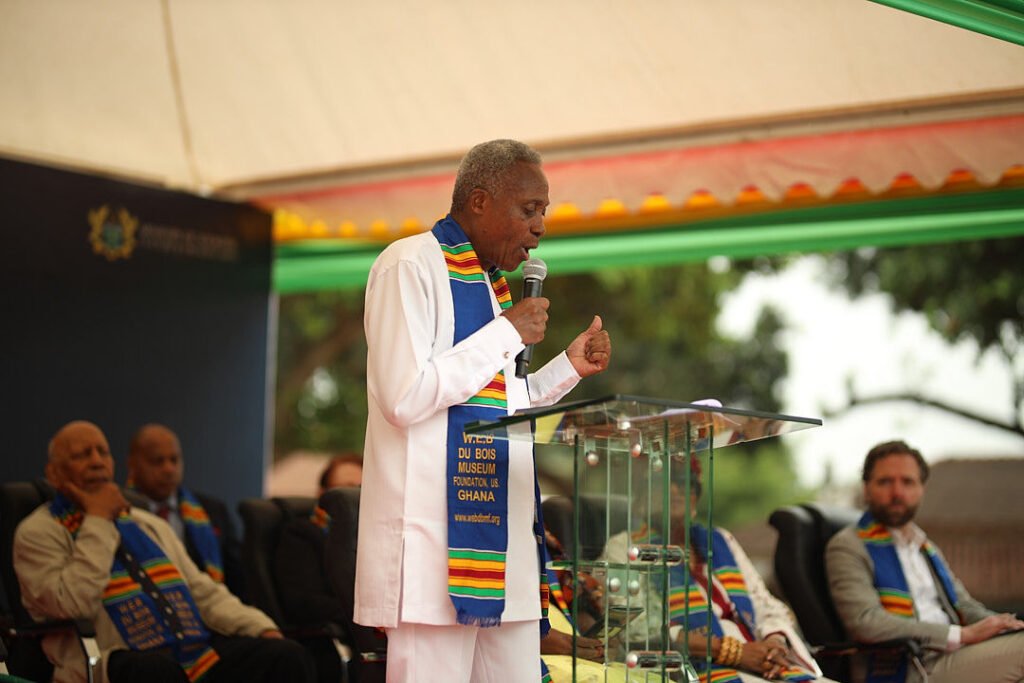
Japhet Aryiku, the Executive Director of the W.E.B. Du Bois Museum Foundation, extended a warm welcome to all in attendance to all in attendance and clarified that the Government of Ghana had neither sold nor leased the Du Bois Centre land to the foundation.
He revealed that instead, the foundation has committed to raising millions of dollars to develop the facility for the benefit of the Ghanaian people.
He emphasised that under the agreement, the foundation is dedicated to restoring and renovating Dr. Du Bois’ iconic bungalow, with full funding already secured.
Mr.Aryiku further announced plans to construct a new memorial to house Du Bois’ remains, alongside a space for reflection and meditation, featuring an eternal flame. Additionally, a state-of-the-art museum will be established to honor the life and work of Dr. Du Bois and Shirley Graham Du Bois.
Given Du Bois’ extensive global contributions over his 95-year life, Aryiku acknowledged the monumental nature of the project but reaffirmed the foundation’s determination to accomplish it.
He also highlighted the critical need to preserve Du Bois’ extensive collection of books and papers, which are deteriorating due to Ghana’s humid climate.
To address this, the foundation has partnered with the Library of Congress under a four-year agreement to provide technical support for restoration and conservation efforts.
Mr.Aryiku expressed excitement about the upcoming construction of a world-class research library that will house these invaluable works, making them accessible to scholars and the general public.
Representatives from the W.E.B. Du Bois Museum Foundation, the Du Bois family, the Government of the United States, and the Government of Ghana placed wreaths in his memory, accompanied by music that underscored the moment’s significance.
This was followed by remarks from Mr. Daniel Rose, Chairman of the W.E.B. Du Bois Museum Foundation, delivered by Dr. Deborah Rose.A distinguished panel shared reflections on the remarkable life and work of Dr. Du Bois.
Among the speakers were Odell Murry, Custodian of the Du Bois Legacy, Dr. Preston King, an American academic and civil rights activist, Dr. Whitney Battle-Baptiste, Director of the W.E.B. Du Bois Center at UMass Amherst, Prof. Alhassan S. Anamzoya, Head of Sociology at the University of Ghana, Ramsey Ryan, Chief of Staff at the Library of Congress, and Jeffrey Peck, great-grandson of Dr. Du Bois. Each speaker shared powerful insights into Du Bois’ impact on civil rights, scholarship, and global Pan-African movements.
The event was also graced by the presence of several dignitaries and very important figures, including Hon. Nana Oye Bampoe Addo, Deputy Chief of Staff, Hon. Abla Dzifa Gomashie, Minister for Tourism, Culture, and Creative Arts, Hon. Samia Yaba Nkrumah, H.E. Irchad Razaaly, European Union Ambassador to Ghana whose support and participation further emphasized the significance of this gathering.
The W.E.B. Du Bois Museum Foundation remains committed to preserving Du Bois’ legacy and fostering education on Pan-Africanism and social justice. The gathering served as a powerful reminder of his lasting influence and the ongoing efforts to honor his contributions to global history.
The mission of the W.E.B. Du Bois Museum Foundation is to honor the life of W.E.B. Du Bois and Shirley Graham Du Bois by transforming the W.E.B. Du Bois Center for Pan African Culture into a world-class museum complex, promoting a deeper understanding of African and African American history, and fostering global dialogue on racial equity, justice, and cultural heritage.
At the heart of its vision, the W.E.B. Du Bois Museum Foundation seeks to promote the study and appreciation of African and African-American heritage, history, and culture.
Through exhibitions, research, and educational initiatives, the foundation strives to inspire new generations to embrace and continue Du Bois’ vision of justice, equality, and intellectual empowerment. With a steadfast commitment to preserving historical narratives, the foundation works to ensure that Du Bois’ teachings and philosophy remain relevant in today’s society.








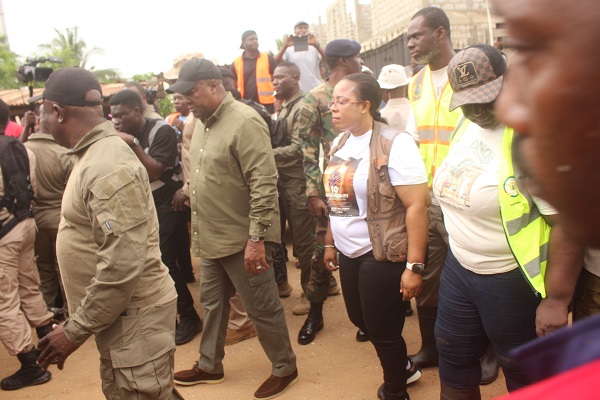
The Greater Accra Regional Minister, Mrs Linda Obenewaa Akweley Ocloo, expressed satisfaction with the outcome of the two-day nationwide cleanup exercise, describing it as a major step towards tackling flooding and poor sanitation, while warning that authorities would clamp down on persons who continued to pollute the environment and obstruct waterways.
The Minister made the remarks after touring some of the region’s worst flood-affected communities, including Nungua, Alajo, Tse Addo and Apenkwa on Friday, and Alajo, Madina and Abelemkpe on Saturday, to assess the progress of the nationwide sanitation campaign.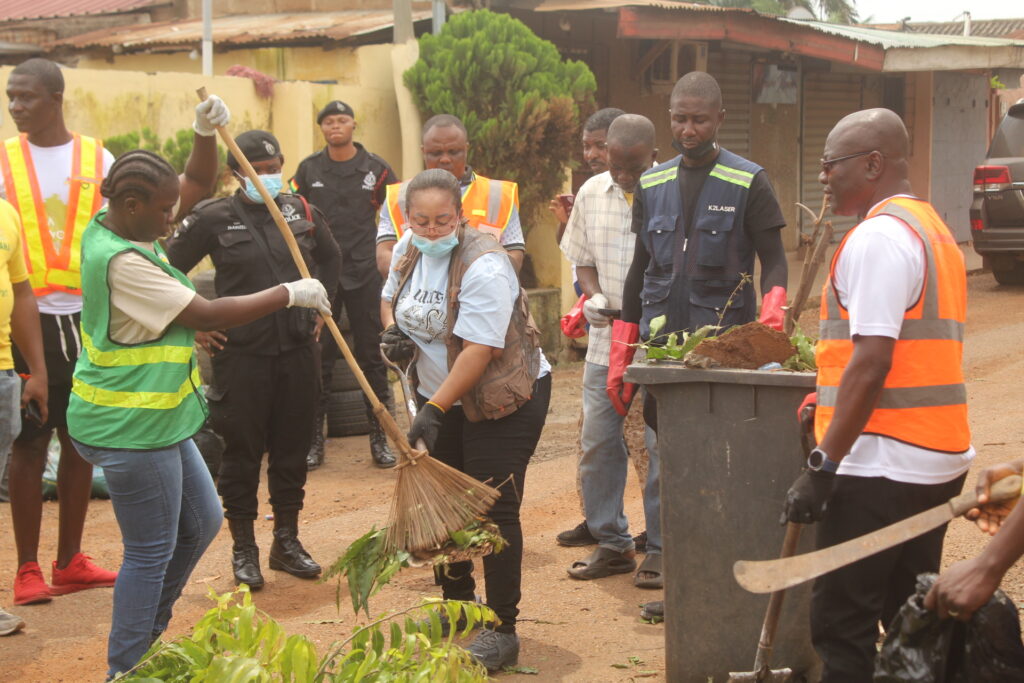
She said the exercise had significantly improved the condition of drains and waterways in the affected communities and demonstrated what could be achieved when government institutions and residents worked together towards a common goal.
Mrs Ocloo commended the Ghana Armed Forces, the Ghana Police Service, the Ghana National Fire Service, the Ghana Immigration Service, the National Cleanup Assistance Trust, Metropolitan, Municipal and District Assemblies (MMDAs), sanitation workers, volunteers and residents for their commitment and support throughout the exercise.
She said their collective efforts had contributed immensely to the successful removal of refuse, silt and other materials that had blocked drains and increased the risk of flooding in many parts of the region.
The Minister noted that the quantity of waste removed from drains and waterways had exceeded the expectations of the organisers, describing the situation as a reminder of the need for residents to adopt responsible waste disposal practices.
Mrs Ocloo stressed that environmental sanitation remained a shared responsibility and should not be left to government or the assemblies alone.
She urged residents to make cleanliness part of their daily lives by properly disposing of refuse, keeping drains free from waste and discouraging practices that degraded the environment.
The Minister cautioned that the Greater Accra Regional Coordinating Council, in collaboration with the MMDAs and the security agencies, would intensify the enforcement of sanitation regulations against individuals and businesses that dumped refuse into drains, built on waterways or engaged in activities that contributed to flooding.
She said authorities would also undertake targeted demolition exercises to remove structures that obstructed the natural flow of water where necessary, adding that such measures were essential to protecting lives and property.
Mrs Ocloo further warned traders and market operators against ignoring directives issued during sanitation exercises, stating that those who defied official instructions in future risked having their goods confiscated.
She disclosed that more than 300 additional trucks had been deployed during the exercise to transport the huge volumes of waste generated after the initial fleet proved inadequate for the scale of work across the region.
The Minister said relief items had already been distributed to all 27 flood-affected districts through the National Disaster Management Organisation (NADMO) and the Ministry of Local Government, Chieftaincy and Religious Affairs, while contingency funds approved by the President had supported ongoing desilting, dredging and other emergency interventions.
Mrs Ocloo assured residents that the Greater Accra Regional Coordinating Council would sustain the clean up campaign through continuous monitoring, public education and stricter enforcement of sanitation laws.
She appealed to residents to maintain the momentum created by the exercise, saying a cleaner, safer and flood-resilient Greater Accra could only be achieved if every citizen accepted responsibility for protecting the environment.
By Enoch Ntiamoah Siaw
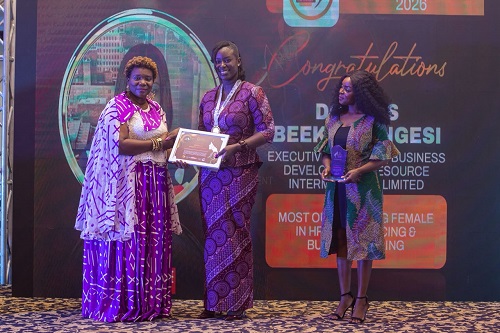
The Executive Director of Human Resource Intermediaries Ghana Limited, Dr Dorcas Beeko Mangesi, has been honoured as the Most Outstanding Female in HR Outsourcing and Business Easing at the 12th Feminine Ghana Achievement Awards 2026.
Receiving the award, Dr Mangesi expressed excitement over the recognition, describing it as an acknowledgement of her contributions to the human resource outsourcing industry.
She explained that Human Resource Intermediaries Ghana Limited is an HR outsourcing firm that manages workers on behalf of companies and also provides recruitment and training services.
According to her, the award reflects the impact of her work over the years and motivates her to do even more.
“I have contributed a lot to the industry and for me to be recognised at this level shows that the work I have done over the years has been recognised,” she said.
Dr Mangesi noted that this was her first time receiving such an award and also her first participation in the Feminine Ghana Achievement Awards.
She described the recognition as unique because it serves as a personal brand and highlights the achievements of women in leadership positions.
According to her, the award is also a symbol of women empowerment and should inspire young women to pursue their careers with determination.
She urged young girls to take their education seriously, remain focused and work hard despite the challenges women often face in the corporate world.
She observed that although men continue to dominate many areas of business, women who remain committed and give their best can rise through the ranks and earn recognition.
“I am an example. I am speaking from experience,” she said.
Dr Mangesi expressed appreciation to the organisers of the awards for recognising her work in the HR outsourcing industry.
She thanked her team members for their support, saying their efforts contributed to her success.
In addition, she expressed gratitude to her husband for his encouragement throughout her career and thanked everyone who has supported her journey.
By: Jacob Aggrey