Features
Understanding mortality: Exploring the Complexities of human existence

- /home/u249204778/domains/spectator.com.gh/public_html/wp-content/plugins/mvp-social-buttons/mvp-social-buttons.php on line 27
Warning: Trying to access array offset on false in /home/u249204778/domains/spectator.com.gh/public_html/wp-content/plugins/mvp-social-buttons/mvp-social-buttons.php on line 27
&description=Understanding mortality: Exploring the Complexities of human existence', 'pinterestShare', 'width=750,height=350'); return false;" title="Pin This Post">
- Share
- Tweet /home/u249204778/domains/spectator.com.gh/public_html/wp-content/plugins/mvp-social-buttons/mvp-social-buttons.php on line 72
Warning: Trying to access array offset on false in /home/u249204778/domains/spectator.com.gh/public_html/wp-content/plugins/mvp-social-buttons/mvp-social-buttons.php on line 72
&description=Understanding mortality: Exploring the Complexities of human existence', 'pinterestShare', 'width=750,height=350'); return false;" title="Pin This Post">
Mortality is an inherent aspect of life, a universal experience that has sparked philosophical, theological, and scientific inquiry throughout human history. This article aims to provide a comprehensive and nuanced exploration of mortality, acknowledging the complexity of the topic and the diverse perspectives surrounding it.
The Biological Imperative
From a biological standpoint, death is a natural part of the life cycle. It serves as a mechanism for the evolution of species, allowing for the passing on of genetic material and the adaptation to environmental changes.
Evolutionary Perspective: Death allows for the recycling of resources, promoting the survival and adaptation of species.
Life Span and Senescence: Cellular aging and the limitations of biological systems contribute to mortality.
Philosophical and existential perspectives
Existentialism: Emphasises individual freedom and responsibility in the face of mortality.
Meaning and purpose: The finite nature of life can prompt individuals to seek meaning and purpose.
The human condition: Mortality is a fundamental aspect of the human experience, shaping our perceptions and values.
Cultural and spiritual views
Afterlife and spirituality: Many cultures and religions believe in an afterlife or spiritual continuation.
Rituals and mourning: Cultural practices surrounding death reflect the significance of mortality in human experience.
Legacy and remembrance: The impact of one’s life can transcend mortality.
Ethical considerations
End-of-life care: Ethical debates surround issues like euthanasia, assisted dying, and palliative care.
Quality of life: Balancing the value of life with the quality of life is a complex ethical issue.
Resource allocation: Societal decisions about healthcare and resource distribution involve considerations of mortality.
Psychological Impact
Grief and loss: The experience of mortality can evoke profound emotional responses.
Fear and anxiety: The awareness of mortality can lead to existential anxiety.
Appreciation and gratitude: Recognising mortality can foster appreciation for life.
Conclusion
Mortality is a multifaceted aspect of human existence, influencing how we live, relate, and find meaning. Understanding and acknowledging mortality can prompt deeper reflections on life and our place in the world.
By Robert Ekow Grimmond-Thompson

Amniotic fluid is the vital, specialised environment that cradles the developing fetus throughout gestation.
Far from being a static reservoir, it is a dynamic, metabolically active substance that facilitates growth, protects the fetus from physical trauma, and plays a crucial role in organ development.
Understanding the fluid mechanics and biochemical composition of this medium is essential for obstetric care and fetal medicine in 2026.
1. Composition and dynamic turnover
Amniotic fluid is a complex, aqueous solution that undergoes constant turnover. Its composition changes as pregnancy progresses, reflecting the maturation of fetal organ systems.
Early gestation: The fluid is primarily an extension of maternal plasma, filtered across the fetal membranes (the amnion and chorion).
Mid-to-late gestation: The composition becomes dominated by fetal contributions. The fetus swallows amniotic fluid, which is then processed by the fetal kidneys and excreted as urine. This “swallow-excrete” cycle is the primary driver of fluid volume regulation.
Key components: Beyond water, the fluid contains fetal skin cells, lanugo (fine hair), vernix caseosa (protective skin coating), electrolytes, proteins, carbohydrates, lipids, and antimicrobial peptides, all of which serve to nourish and protect the fetus.
2. The functional importance of fluidity
The “fluidity” of this environment is not merely descriptive; it is functional. The amniotic sac provides a highly regulated physical and chemical niche:
Mechanical protection: The fluid acts as a shock absorber, cushioning the fetus against external physical impact and preventing the umbilical cord from being compressed against the uterine wall, which could jeopardize oxygen supply.
Musculoskeletal development: The buoyancy provided by the fluid allows the fetus the freedom of movement necessary for the development of muscles and the proper formation of skeletal structures.
Temperature regulation: By maintaining a constant thermal environment, the fluid protects the fetus from fluctuations in maternal core temperature.
Infection defense: Amniotic fluid contains a suite of innate immune factors, including lysozyme and various immunoglobulins, which provide an essential barrier against ascending bacterial infections.
3. Clinical assessment: Volume as a Diagnostic Marker
Obstetricians monitor amniotic fluid volume throughout pregnancy as a key diagnostic metric. Deviations from the normal range are categorized as follows:
Oligohydramnios (Low Fluid Volume): This can be a sign of fetal growth restriction, renal dysfunction (the fetus is not producing enough urine), or placental insufficiency. It is a critical indicator that necessitates immediate diagnostic investigation to ensure fetal wellbeing.
Polyhydramnios (Excess Fluid Volume): This is often associated with conditions that interfere with the fetus’s ability to swallow or process fluid, such as gastrointestinal obstructions or maternal conditions like gestational diabetes.
The Amniotic Fluid Index (AFI)-the sum of the deepest vertical pocket of fluid in each of the four quadrants of the uterus-remains the standard ultrasound measurement tool for assessing these volumes in clinical practice today.
4. The fluidity of developmental signaling
Recent research in 2026 has deepened our understanding of amniotic fluid as a “signaling soup.” It contains an array of extracellular vesicles and microRNAs that facilitate communication between the fetus and the maternal environment. These molecules are critical for signaling the initiation of labor and preparing the fetal lungs and gastrointestinal tract for the transition to postnatal life.
Conclusion
Amniotic fluid is a sophisticated, life-sustaining medium that serves as the biological interface between mother and child. Its complex dynamics-constant production, ingestion, and recycling-ensure the physical, thermal, and immunological security required for human development.
In modern obstetrics, the ability to monitor the volume and composition of this fluid provides a window into fetal health, allowing clinicians to detect and address potential complications proactively. As our knowledge of the biochemical signaling pathways within the amniotic sac continues to expand, so too does our capacity to ensure optimal health outcomes for both the mother and the fetus.
By Robert Ekow Grimmond-Thompson
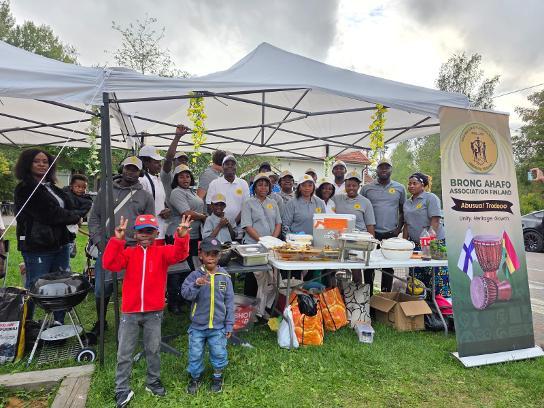
Today, I focus on the Brong Ahafo Association Finland, as I continue with my description of institutions or personalities and their accomplishments as part of the Ghanaian Diaspora in Finland.
The association in Finland has chalked significant achievements or successes which must be made known to the public.
Aim and mission
The Brong Ahafo Association Finland was established in 2007. The three people who met to plan the birth of the association are Mr Augustine Tweneboah-Kodua, Elder Matthew Anini, and the late Mrs Comfort Dapaah Agyemang. They invited many others to help establish the association, which is officially registered as the Brong-Ahafo Association Finland.
The mission of the Brong Ahafo Association includes the promotion of unity among people from the former Brong-Ahafo Region of Ghana, which is currently divided into three regions—Ahafo, Bono, and Bono East Regions.
The association also aims to preserve and promote the Bono and Ahafo culture or traditions. Also, its goals include contributing to developmental projects in the Ahafo, Bono and Bono East Regions of Ghana. Another key aim is to help strengthen cooperation of its members and other Ghanaian migrants with others in Finland as the host country.
Events and achievements
The Brong Ahafo association acts as a family to its members. In this way, it can be said that although Finland has a robust social welfare system, the association comes in where close family support or interaction is needed.
Living away from one’s home country and family is not easy and as such the Brong Ahafo Association becomes an important part of social networks, vital in providing informal social security that cannot be provided by public institutions.
The association also serves as an ambassador of Ghanaian culture in the Finnish society by promoting cultural engagements. Its members engage in volunteering its time and skills, in helping individual members and for charity projects in their home regions in Ghana. The association also actively participates in cultural celebrations and family gatherings organised by individual members. It also holds an annual Easter party during Easter period.
Role in the Ghanaian community in Finland
The association plays a prominent role in the Ghanaian community in Finland. The association was the first to be formed after the Ghana Union Finland. It is thus a pioneer in that sense of an association representing a Ghanaian ethnic group. The association helps or gives support to its members who are bereaved as a way to commiserate with them and to help them organise the funeral.
The Brong and Ahafo association also collaborates with the Ghana Union Finland, an association for Ghanaian migrants in Finland whose aims include bringing together all Ghanaian migrants resident in Finland and promoting cultural activities for a better intercultural and multicultural understanding. Thus, the group also mobilises members for various activities that help in integration efforts in the Finnish society.
Displaying a rich culture
By its activities, the Brong Ahafo association proudly displays the Bono and Ahafo culture, as part of the larger Akan culture in Ghana. Like other groups representing the Ga-Adangbe, Mfantseman, Eastern Region, and Nzema, the association endeavours to showcase the culture and values of their ethnic origins as well as hold the general Ghanaian heritage in high esteem.
“The association has been quite effective in maintaining cultural identity of the Bono and Ahafo people, creating social networks among members and with others in Finland”, the Secretary, Mr Kwasi Owusu Afriyie, stated.
Members volunteer to support in informal ways that public institutions may lack the full capacity to accomplish, which also helps to integrate members into the Finnish society. Through social events, traditional celebrations, and home visits, the association acts as family for its members during postpartum periods, child dedication in church, funeral rites, etc.
Challenges
The pace of organising things for the association can slow down sometimes, but it is quite impressive to note how members revive it and keep the ‘family spirit’ alive.
The COVID-19 period made the association quite dormant. Bringing back people together has been quite challenging, and requires much dedication before reorganisation can pay results, the Secretary hinted.
Finding a suitable venue and the funding for organising cultural events is quite challenging. It is also not easy supporting important life events such as helping nursing mothers who have no family in Finland. Thank you.