Editorial
Traffic light crisis in Koforidua: Urgent action needed to ensure road safety

- /home/u249204778/domains/spectator.com.gh/public_html/wp-content/plugins/mvp-social-buttons/mvp-social-buttons.php on line 27
https://spectator.com.gh/wp-content/uploads/2023/10/Traffic-light-at-Koforidua.jpg&description=Traffic light crisis in Koforidua: Urgent action needed to ensure road safety', 'pinterestShare', 'width=750,height=350'); return false;" title="Pin This Post">
- Share
- Tweet /home/u249204778/domains/spectator.com.gh/public_html/wp-content/plugins/mvp-social-buttons/mvp-social-buttons.php on line 72
https://spectator.com.gh/wp-content/uploads/2023/10/Traffic-light-at-Koforidua.jpg&description=Traffic light crisis in Koforidua: Urgent action needed to ensure road safety', 'pinterestShare', 'width=750,height=350'); return false;" title="Pin This Post">
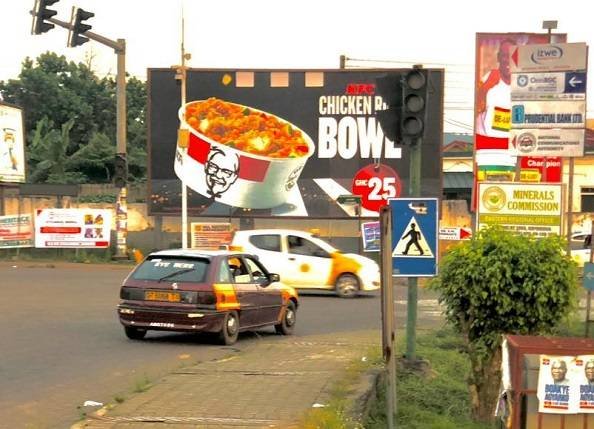
● Traffic lights at Koforidua
Our country relies on a well-functioning traffic management system, including traffic lights, to ensure the smooth flow of vehicles and motorcycles.
Lately, we have observed a rising concern, especially in Koforidua, the capital of the Eastern region, regarding the alarming state of our traffic lights.
The malfunctioning traffic lights have not only disrupted the flow of traffic but also become a significant contributor to accidents on our roads. The safety of our citizens is at stake, and urgent action is needed to address this pressing issue.
Specifically, I draw attention to the dire condition of several traffic lights in Koforidua, such as those at Poly Junction, Kenkey Factory Junction, Capital View Hotel, and the other crucial intersections.
These traffic lights are in a state of disrepair, posing a grave danger to motorists and pedestrians alike.
Take, for example, the situation at Poly Junction, a bustling intersection in Koforidua. The traffic lights at this location have been non-functional for a considerable period, leaving drivers and pedestrians in a state of uncertainty.
Those approaching from the Poly road are left clueless about when to stop or proceed as the lights remain inoperative.
The absence of any traffic signal on this path has resulted in a haphazard and potentially hazardous scenario. Vehicles only move when drivers from Okorase and Adweso halt their progress.
Such a situation not only hampers the efficiency of our transportation system but also increases the risk of accidents. It is imperative that the relevant authorities take swift action to rectify this situation before a preventable disaster occurs.
Repairing or replacing these malfunctioning traffic lights should be an urgent priority, and regular maintenance must be part of the plan to prevent further breakdowns.
I earnestly beseech the responsible authorities to ensure that all traffic lights within the Koforidua Township function properly. The safety of our citizens, as well as the efficient flow of traffic, relies on these vital components of our road infrastructure.
Prompt and sustained action is crucial to maintain and enhance the safety and functionality of our traffic management system.
By George Obeng Osei
Koforidua

Dear Editor,
The recent death of Nana Yaw, also known as Dinero/Terry, has left various communities deeply shaken over the circumstances under which a life was lost.
Reports suggest that he went missing after a phone transaction in Teshie and was later found dead. Allegations have circulated that he visited a female friend despite having a pregnant wife at home.
Even if such allegations were true, does that mean he deserved to die? The answer is no. Infidelity is a moral failing, but it is not a crime punishable by death. To suggest otherwise is to normalize violence and diminish the value of human life.
This tragedy should remind us of the urgent need for justice and accountability. His family especially his expectant wife deserves compassion, not judgment. As a community, we must reject victim‑blaming and focus on preventing such senseless losses in the future.
Nana Yaw’s death is not just a personal tragedy, it is a call to action.
We must demand thorough investigation, ensure those responsible are held accountable, and commit ourselves to building a society where disagreements and mistakes do not end in violence.
Princess Wonovi,
Dansoman
The situation at Percheyire R/C Basic School in the Yilo Krobo district is a warning concerning Ghana’s rural education facilities as pupils in Primary four through six are forced to learn inside a building of mud walls, worn-out roofing sheets, and rotting wooden pillars.
It is more than just an infrastructural shortfall. It indicates a fundamental failing of public safety and educational justice.
Every day, when pupils and teachers arrive at school, their safety is in danger because a school building has such fundamental flaws that it could collapse during a storm.
The classroom is now a hazard rather than a haven for learning for the 30 upper primary pupils and their teachers. A single extreme weather event could cause a mud construction to fall dangerously because it depends on makeshift timber pillars.
These children are routinely deprived of the instructional hours that the national curriculum promises them when the arrival of rain inevitably necessitates the suspension of classes to save lives, books, and furniture.
A deeper systemic problem is revealed when Rev. Elizabeth Korasare, a former teacher, reveals that this identical arrangement has not changed in 38 years.
Some proponents contend that local government institutions like the Ghana Education Service (GES) and the District Assembly are solely to blame for the main failure. Actual rehabilitation has been postponed due to administrative inactivity, despite official site visits and reports submitted by the school administration.
According to this viewpoint, there is a problem with the way emergency educational funds are allocated and prioritised when a community school is left in a dangerous condition for decades while waiting for budgetary allocations.
This point of view highlights the necessity of corporate social responsibility (CSR) programmes, non-governmental organisations (NGOs), and public-private collaborations. When state machinery fails, supporters contend that combining corporate money with citizen mobilisation provides a more flexible way to replace deteriorating structures.
It is a pity that Percheyire R/C Basic School’s surrounding infrastructure worsens the school’s structural deterioration. Children travelling from nearby communities like Togodo are severely restricted in their access due to an inadequate road network.
When more than 60 school-aged children in a single nearby town are cut off from regular attendance due to distance and bad roads, the school’s capacity to raise the district is substantially limited. A contemporary classroom block will only be successful if students can get there safely.
The lives of Percheyire’s pupils and teachers are at risk, therefore the Spectator is pleading with the Yilo Krobo District Assembly and other interested parties to rebuild the primary block.