Features
Thoughts and truths …the true reflections of life & living itself

- /home/u249204778/domains/spectator.com.gh/public_html/wp-content/plugins/mvp-social-buttons/mvp-social-buttons.php on line 27
Warning: Trying to access array offset on false in /home/u249204778/domains/spectator.com.gh/public_html/wp-content/plugins/mvp-social-buttons/mvp-social-buttons.php on line 27
&description=Thoughts and truths …the true reflections of life & living itself', 'pinterestShare', 'width=750,height=350'); return false;" title="Pin This Post">
- Share
- Tweet /home/u249204778/domains/spectator.com.gh/public_html/wp-content/plugins/mvp-social-buttons/mvp-social-buttons.php on line 72
Warning: Trying to access array offset on false in /home/u249204778/domains/spectator.com.gh/public_html/wp-content/plugins/mvp-social-buttons/mvp-social-buttons.php on line 72
&description=Thoughts and truths …the true reflections of life & living itself', 'pinterestShare', 'width=750,height=350'); return false;" title="Pin This Post">
Thought has been defined as the product of mental activity; that which one thinks like a body of thought; a single act or product of thinking; an idea or notion to collect one’s thoughts; the actor process of thinking; a mental activity; and the capacity or faculty of thinking, reasoning and imagining such as all his thought went into his work.
It is also understood as a consideration or reflection such as the thought of death terrified him; or as a meditation, contemplation, or recollection as in deep thought; or as an intention, design, or purpose, especially a half-formed or imperfect intention as “we had some thought of going”; or an anticipation or expectation as in “I had no thought of seeing you here”; and as a consideration, attention, care, or regard as in “She took no thought of her appearance.”
The same ‘thought’ could be understood to mean a judgement, opinion, or belief as in “According to his thought, all violence is evil”; or as a very small amount; a touch; bit; or trifle as in “The steak is a thought underdone”; and as an intellectual activity or the ideas, opinions, characteristic of a particular place, class, or time as “Greek thought.”
Generally therefore, ‘thought’ as a noun or ‘thoughts’ constitute the act or process of thinking, deliberation, mediation, or reflection; a concept, opinion, or idea; and a philosophical or intellectual idea typical of a particular time or place and application of mental attention and consideration as in giving some issues some thought.
TRUTH, on the other hand, has been defined to include the true or actual state of a matter; the conformity with fact or reality as in the truth of a statement; a verified or indisputable fact, proposition, principle, or the like such as mathematical truths; the state or character of being true; and the actuality or actual existence.
It also connotes actuality or actual existence; or an obvious or accepted fact; truism; or platitude; or an ideal or fundamental reality apart from and transcending perceived experience as the basic truths of life; or honesty, sincerity or truthfulness; or fidelity or constancy; and an agreement with a standard or adjustment.
‘Thoughts and Truths’, the book therefore, is a compilation of articles, which seeks to espouse the whole phenomenon of life and living in all its forms and shades, especially its complexities and abstracts in the final analysis at the point of death, do not make sense to the ordinary person, unless you are imbibed with higher levels of discernment – the faculty of discerning; acuteness of judgement and understanding.
What it means to anyone, therefore, is that the real spoils of life will always be for the individual with a high sense of discernment, astuteness, insightfulness, clear-sightedness, sagaciousness, perceptiveness, perspicaciousness and shrewdness to recognise and appreciate one’s lifetime role as a student of this life with all its thoughts and truths; ready to seize moments of opportunity in leadership and politics to ride the wave to change fortunes.
You see, this life with all its vanities, choices, emotions, mirrors, opportunities, frailties, absurdities, mysteries, windows, doors, contradictions, fallacies, crosses, errors, imperfections, inconsistencies, insecurities and complexities: are the seeming mirages of life and all its abstracts; and it has never been for the faint-hearted, naive or those afraid of falling from any height or failing.
Remember Cain, the first ‘politician’, seizing the moment, even with the death of his own brother, Abel and then turning round, when he realised there was bounty on his head to negotiate a ‘curse’ on the heads of the bounties after him.
Such is the bare essence of “Thoughts and Truths” of a person.
We are informed that, those who succeed in this life and rise up to the very top of their careers, politics and life in all its complexities, are those who are never afraid to fail, the number of attempts notwithstanding, and also ready to lie through their teeth and die trying for their moments in history and time.
The conundrum, which faces us therefore as a nation and as a people, is the base of our failings and lack of systematic development, accessible to all and across the length and breadth of Ghana. Truth be told, we are not ready to accept that we have a problem and also lack the right leadership to take charge and address the contemporary issues that confront us.
We are also not ready to accept that we are failing as a nation because we never dream big as we are only content with the small ‘village’ thoughts and achievements.
Look at our drainage systems with all the perennial flooding, recall the objections raised against the building of the Akosombo Dam by the then fathers of some of our contemporary leadership: ‘that it was too big at the time and we did not need the excess capacity’ – just as the thinking against the Ameri Power Plant issue; and yet I marvel at the administrative structures built centuries ago across the Americas and Europe like the underground railway systems.
Why do they always, through generations past, think big for the future, whilst we do the very opposite of thinking small: is that our destinies as a people and as a nation?
Does it not amaze you how the railway lines we had just in the immediate years of our Independence, could not be extended nor expanded to the northern territories with a countrywide networking and yet, railways continue to be the major source of transportation in India, Pakistan and the United States of America (USA) with national and trans-continental and or underground networks?
Not sure if we sometimes don’t see ourselves as an accursed people, living under or subject to a curse and as a doomed, ill-fated, damnable, execrable or detestable people?
Corruption, we are told, is as old as creation and yet whilst others have been able to institute measures that make such acts most expensive to the indulging person, we on the other hand worship every act and aspects, openly and without shame, whilst our people wallow in extreme, abject poverty without the simple and most basic of necessities in our villages and communities; otherwise how on earth will some of our Members of Parliament (MPs) acquiesce to such a deal as Agyapa?
No matter how much we clothe this ‘state capture’, supposedly for a selected few or family members, nobody should deceive himself or herself into forgetting that this ‘EARTH’ has its own way of resetting herself over centuries and millions of years, regenerating herself, otherwise where is all the gold of Mansa Musa, the ninth mansa of the Mali Empire, who is recorded in time and history as one of the wealthiest people in history, for his current family lineages or descendants?
For those of us, non-historians, Mansa Musa inherited a kingdom that was already wealthy, but his work in expanding trade made Mali the wealthiest kingdom in Africa. His riches came from mining significant salt and gold deposits in the Mali kingdom. Elephant ivory was another major source of the wealth and the bottom-line is he did not steal from his people nor deny them their due share as he invested in his people.
Maybe, our politicians need to learn and take a page from the lives of such men as Mansa Musa, a ruler, scholar, statesman, and devout man of faith; a 14th century African emperor, who reigned from 1312 to 1337 with their accomplishments, including building a national mosque with his own personal resources for his people.
If we cannot think far, we should also look at the life and times of yet another black king of Africa – Sundiata Keita, the first ruler of the Mali Empire in the 13th century, who laid the foundation for a powerful and wealthy African Empire and proclaimed the first charter of human rights, the Manden Charter.
‘Thoughts and Truths’ by its mixture seeks to provide us with the opportunity to take a second and third or possibly, a fourth and fifth look at this nation, Ghana and her people, and swear to ourselves that no matter what the circumstances we find ourselves, now and or in future, we will endeavour to always pursue epoch-making pursuits, those non-selfish in nature nor parochial, but always in the best or supreme interest of our people and descendants, the broader society and our nation, Ghana.
We should always only consider actions that will lead to an opening of a new era, as in human history, thought, or knowledge; expand the frontiers of our nationhood, not only in politics but all facets of our human existence as a people and as a nation: that for which you were born into this country as a ‘GHANAIAN’, first and foremost.
The essence of ‘Thoughts & Truths’ is to showcase a real, basic and invariable nature of experiences that will allow one to experience the dichotomies of life, in all its imperfections, making up the real reasons why we sojourn here on earth, no matter how brief.
Finally, have you ever wondered the purpose for which you have the days, months and years ahead of you to spend here on earth; or for you, it is the usual ‘EAT & DRINK, FOR TOMORROW YOU DIE’ – is that why you are here or better still, why you came to the world as a ‘Ghanaian’?
Pause for a moment to think about and ponder over these things because ‘Thoughts & Truths’, indeed, is the true mirror reflection and measure of a person’s life and living itself.
The writer is a land economist & appraiser,
events architect & planner, sport business
consultant, social commentator and an author
By Magnus Naabe Rex Danquah

THE QUR’AN FORBIDS RELIGIOUS PROVOCATION
There is a remarkable verse in the Qur’an which every Muslim preacher should memorise.
Allah says:
“And do not insult those they invoke besides Allah, lest they insult Allah in hostility without knowledge.” (Qur’an 6:108).
Think about this carefully.
Allah knows that the unbelievers worship false gods.
Yet Allah tells Muslims: Do not insult their objects of worship.
Why?
Because your speech may provoke an even greater offence.
This establishes a profound principle:
A Muslim must not fight religious provocation with religious provocation.
If someone insults what we hold sacred, we do not respond by insulting what they hold sacred.
If someone attacks Islam, we defend Islam with knowledge.
If someone misrepresents Muhammad (pbuh), we explain who is Muhammad to him.
If someone lies about Islam, we answer with truth and knowledge.
We do not allow another person’s bad behaviour to dictate our own morality.
LOOK AT MUHAMMAD (PBUH) — HE WAS INSULTED BEFORE WE WERE
Servant of Allah,
Sometimes we speak as though the Prophet (pbuh) lived in a world where everyone respected him.
No.
He was mocked and insulted. Quran 37:36, Quran 15:6
He was called a liar, magician, and a mad man. Quran 51:52, Quran 17:47
He was ridiculed. Quran 6:10
His followers were tortured, and some were killed. Quran 85:8-10
He himself was persecuted, leading to his migration to Madina.
Yet he remained the Messenger of Allah.
Allah said:
“Indeed, we know that your heart is distressed by what they say.” (Qur’an 15:97)
Allah acknowledged the Prophet’s pain.
Islam does not say that insults do not hurt. They hurt.
But the question is: What do you do with the pain?
THE DAY OF TA’IF: WHEN THE PROPHET (PBUH) COULD HAVE CHOSEN
REVENGE
One of the most powerful examples is the journey of the Prophet (pbuh) to Ta’if.
He went seeking support for his message.
Instead, the people rejected him and incited their children and others against him.
He was chased.
He was insulted.
He was struck with stones until his feet bled.
He was physically and emotionally exhausted.
Then the Angel of the Mountains came to him.
The two angels offered to crush the people of Ta’if between the mountains.
The Prophet (pbuh) could have said: “Do it.”
But he did not.
Instead, he hoped that Allah would bring from their descendants people who would worship Him.
This account is recorded in the authentic hadith literature, including Sahih Muslim (Muslim, 1795).
What a lesson!
The Prophet (pbuh) had suffered injustice.
But he did not turn his pain into indiscriminate revenge.
He saw beyond the offender.
He saw the possibility of tomorrow.
And this is one of the greatest characteristics of prophetic leadership:
The Prophet (pbuh) did not merely ask, “What punishment does this person deserve?”
He also asked, in effect: “What can this person become?”
THE PROPHET IN MADINAH: LEADER OF A DIVERSE SOCIETY
When Muhammad (pbuh) migrated to Madinah, he did not enter an empty city.
Madinah contained different communities, including Muslims and Jews, and there were also Christians who interacted with the Muslim community.
The Prophet became the political and communal leader of Madinah.
The Sahifah (A Covenant) of Madinah, preserved in the early sīrah (Prophet’s biography) tradition, established arrangements concerning mutual obligations, security, justice and relations among the communities of the city.
This is important:
The Prophet did not build Madinah by teaching Muslims to hate everyone who was not Muslim.
He built a society governed by covenant, responsibility and justice.
Allah says:
“Allah does not forbid you from being kind and just to those who have neither fought you because of your religion nor driven you from your homes. Indeed, Allah loves those who act justly.” (Qur’an 60:8)
This is not weakness.
This is Islam.
THE PROPHET DEALT WITH JEWS IN MADINAH
‘A’ishah (Wife of the Prophet) narrated that the Prophet (pbuh) bought food from a Jewish man on credit and gave him his iron armour as collateral.
“The Prophet purchased food from a Jew on credit and mortgaged his iron armour to him.” (Sahih al-Bukhari, 2068)
Think about it.
This was Muhammad.
The Messenger of Allah.
Yet he conducted lawful commercial dealings with a Jewish citizen.
He did not say: “He is not a Muslim, therefore I cannot deal with him.”
No.
Islam gave him a relationship governed by justice and trust.
Jabir رضيهللاعنه narrated:
“A funeral procession passed before us and the Prophet (pbuh) stood up, and we stood with him. We said, ‘O Messenger of Allah, it is the funeral of a Jew.’ He said: ‘When you see a funeral procession, stand.’” (Sahih al-Bukhari, 1311)
Another narration records his response: “Is it not a soul?” (Sahih al-Bukhari, 1312–1313)
What kind of heart did Muhammad (pbuh) possess?
A heart that recognised human dignity even in death.
THE PROPHET AND THE CHRISTIANS OF NAJRAN
The Prophet also received the Christian delegation of Najran.
They disagreed with him theologically.
Yet when they requested a trustworthy person, he did not choose someone because of hatred.
He selected Abu ‘Ubaydah ibn al-Jarrah.
The Prophet said:
“I shall send with you a man who is truly trustworthy.”
He then appointed Abu ‘Ubaydah.
This is authentically reported in Sahih al-Bukhari 4380–4381.
Notice something profound:
The Prophet could disagree with people without becoming dishonest toward them.
That is the standard we need today.
The author is the chief Imam of Katamanso Municipal and Certified Counsellor and Governance Expert.
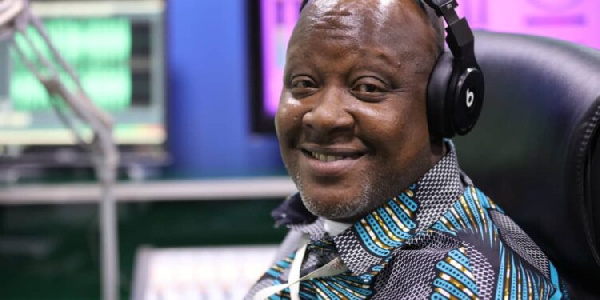
CECIL, alias Lee of Community 3, Tema, and formerly of Vibe FM, has said he would recommend the Sikaman Palava’ column to hypertensives, that is, those suffering from high blood pressure. According to him, the column is a medical therapy and a perfect prescription for the afflicted.
Well, Lee might be right, because mails I receive from all over the world, courtesy of the Internet have also alluded to a calming effect of the column. Emails pour in from as far as the Philipines, are oiling my knuckles. I feel flattered.
I get mails from the Middle East, Canada, United States and some African countries. I often get amazed that playing with words on paper elicits such profound interest in my readers. I thank my readers for the recognition and acknowledgement.
However, I am not alone in this game of humour peddling. Oldboy Professor Kwesi Yankah who has been a great inspiration is one personality whose word juggling has illuminated the pages of newspapers, right from the Abonsam Fireman days. His pen is still dripping of humour.
Where is Ivan Dornu Adjokatcher, the ex-darling of THE MIRROR? Full of wit, he ran a column that had quite a following. One day he met me and I told him he was crazy if not, then he was downright mad.
Ivan went and edited a private newspaper and had a brush with the owner. He left. He sent me a postcard from the United States. Very good pals we’ve always been. He needs to return to the fold.
Now, Ghana journalism would have been tasteless without writers of humour, those who see the interesting side of serious issues.
Nigerian humorists are great and some of their writers have really made all the difference in the newspaper industry, with their amazing paper industry sense of humour.
Many of them studied journalism in Ghana with our folks here and went on to carve niches for themselves. Nigerians have a good sense of humour and this is exemplified in their drama and writings.
Read Chukwemeka Ike and Elechi Amadi and you’ll be getting the drift. Even Wole Soyinka (Nobel prize winner for literature) whom I sometimes consider overly stiff and pedantic, exudes a unique kind of humour in his plays.
In Ghana, aside Amu Djokoto’s “The Strange Man’ which spots many faces of humour and Atukwel Okai whose poetry induces some mirth, the literati have generally gone dry of humour.
Any good piece of writing must either be poetry or prose must either be highly intellectual, controversial or humorous. Ghanaian writers should take up the challenge and publishers should offer the platform for the expression of various genres of penmanship.
Every publisher in Ghana is doing only school books. Is all that publishing is about? Only a few like Woeli and Holiano are doing something else.
In Ghana broadcasting, there are great touches of humour worth reading. Foremost is Kwame Sefa Kayi who gave Radio Gold a great and left to pitch camp with Peace FM.
He hosts a very explosive morning Kokrokoo programme that could blow through the roof tops if it is not tempered with humour. When you have guys like Kwaku Baako Junior, Kwesi Pratt (also Junior?), Baby Ansaba and boxing supremo NDC titan, Ama Benyiwa-Doe, on the show, only a sense of humour can avert mayhem.
They are all nice fellows but when it comes to politics, I fear for Kwame’s jaws. I wonder how he survives day after day.
Kwame’s spontaneous burst of humour once in a while does the programme a lot of good. No wonder his programme was last year adjudged Best CIMG Radio Programme.
Let’s not forget JOY FM’s Ato-Kwamena and of course Bola Ray also of Joy and “Music Music fame. They know what it takes to make others laugh. I hate to miss Ato during the newspaper review on Joy. I always have something to laugh about.
At least, you can laugh in Ghana even if you are not permitted to sneeze on Sundays and public holidays.
This article was first published on Saturday August 19, 2006
SKIP THE QUEUE, TAP THE NEWS
You can now read the Ghanaian Times and The Spectator newspapers from the comfort of your device via TimesNewsPlus.
Join our WhatsApp Channel: https://whatsapp.com/channel/0029VbBElzjInlqHhl1aTU27