Features
Responding to religious insults with faith, wisdom and restraint (Part 2)

THE QUR’AN FORBIDS RELIGIOUS PROVOCATION
There is a remarkable verse in the Qur’an which every Muslim preacher should memorise.
Allah says:
“And do not insult those they invoke besides Allah, lest they insult Allah in hostility without knowledge.” (Qur’an 6:108).
Think about this carefully.
Allah knows that the unbelievers worship false gods.
Yet Allah tells Muslims: Do not insult their objects of worship.
Why?
Because your speech may provoke an even greater offence.
This establishes a profound principle:
A Muslim must not fight religious provocation with religious provocation.
If someone insults what we hold sacred, we do not respond by insulting what they hold sacred.
If someone attacks Islam, we defend Islam with knowledge.
If someone misrepresents Muhammad (pbuh), we explain who is Muhammad to him.
If someone lies about Islam, we answer with truth and knowledge.
We do not allow another person’s bad behaviour to dictate our own morality.
LOOK AT MUHAMMAD (PBUH) — HE WAS INSULTED BEFORE WE WERE
Servant of Allah,
Sometimes we speak as though the Prophet (pbuh) lived in a world where everyone respected him.
No.
He was mocked and insulted. Quran 37:36, Quran 15:6
He was called a liar, magician, and a mad man. Quran 51:52, Quran 17:47
He was ridiculed. Quran 6:10
His followers were tortured, and some were killed. Quran 85:8-10
He himself was persecuted, leading to his migration to Madina.
Yet he remained the Messenger of Allah.
Allah said:
“Indeed, we know that your heart is distressed by what they say.” (Qur’an 15:97)
Allah acknowledged the Prophet’s pain.
Islam does not say that insults do not hurt. They hurt.
But the question is: What do you do with the pain?
THE DAY OF TA’IF: WHEN THE PROPHET (PBUH) COULD HAVE CHOSEN
REVENGE
One of the most powerful examples is the journey of the Prophet (pbuh) to Ta’if.
He went seeking support for his message.
Instead, the people rejected him and incited their children and others against him.
He was chased.
He was insulted.
He was struck with stones until his feet bled.
He was physically and emotionally exhausted.
Then the Angel of the Mountains came to him.
The two angels offered to crush the people of Ta’if between the mountains.
The Prophet (pbuh) could have said: “Do it.”
But he did not.
Instead, he hoped that Allah would bring from their descendants people who would worship Him.
This account is recorded in the authentic hadith literature, including Sahih Muslim (Muslim, 1795).
What a lesson!
The Prophet (pbuh) had suffered injustice.
But he did not turn his pain into indiscriminate revenge.
He saw beyond the offender.
He saw the possibility of tomorrow.
And this is one of the greatest characteristics of prophetic leadership:
The Prophet (pbuh) did not merely ask, “What punishment does this person deserve?”
He also asked, in effect: “What can this person become?”
THE PROPHET IN MADINAH: LEADER OF A DIVERSE SOCIETY
When Muhammad (pbuh) migrated to Madinah, he did not enter an empty city.
Madinah contained different communities, including Muslims and Jews, and there were also Christians who interacted with the Muslim community.
The Prophet became the political and communal leader of Madinah.
The Sahifah (A Covenant) of Madinah, preserved in the early sīrah (Prophet’s biography) tradition, established arrangements concerning mutual obligations, security, justice and relations among the communities of the city.
This is important:
The Prophet did not build Madinah by teaching Muslims to hate everyone who was not Muslim.
He built a society governed by covenant, responsibility and justice.
Allah says:
“Allah does not forbid you from being kind and just to those who have neither fought you because of your religion nor driven you from your homes. Indeed, Allah loves those who act justly.” (Qur’an 60:8)
This is not weakness.
This is Islam.
THE PROPHET DEALT WITH JEWS IN MADINAH
‘A’ishah (Wife of the Prophet) narrated that the Prophet (pbuh) bought food from a Jewish man on credit and gave him his iron armour as collateral.
“The Prophet purchased food from a Jew on credit and mortgaged his iron armour to him.” (Sahih al-Bukhari, 2068)
Think about it.
This was Muhammad.
The Messenger of Allah.
Yet he conducted lawful commercial dealings with a Jewish citizen.
He did not say: “He is not a Muslim, therefore I cannot deal with him.”
No.
Islam gave him a relationship governed by justice and trust.
Jabir رضيهللاعنه narrated:
“A funeral procession passed before us and the Prophet (pbuh) stood up, and we stood with him. We said, ‘O Messenger of Allah, it is the funeral of a Jew.’ He said: ‘When you see a funeral procession, stand.’” (Sahih al-Bukhari, 1311)
Another narration records his response: “Is it not a soul?” (Sahih al-Bukhari, 1312–1313)
What kind of heart did Muhammad (pbuh) possess?
A heart that recognised human dignity even in death.
THE PROPHET AND THE CHRISTIANS OF NAJRAN
The Prophet also received the Christian delegation of Najran.
They disagreed with him theologically.
Yet when they requested a trustworthy person, he did not choose someone because of hatred.
He selected Abu ‘Ubaydah ibn al-Jarrah.
The Prophet said:
“I shall send with you a man who is truly trustworthy.”
He then appointed Abu ‘Ubaydah.
This is authentically reported in Sahih al-Bukhari 4380–4381.
Notice something profound:
The Prophet could disagree with people without becoming dishonest toward them.
That is the standard we need today.
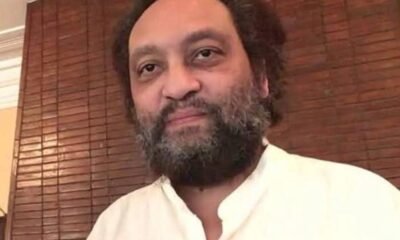
The author is the chief Imam of Katamanso Municipal and Certified Counsellor and Governance Expert.

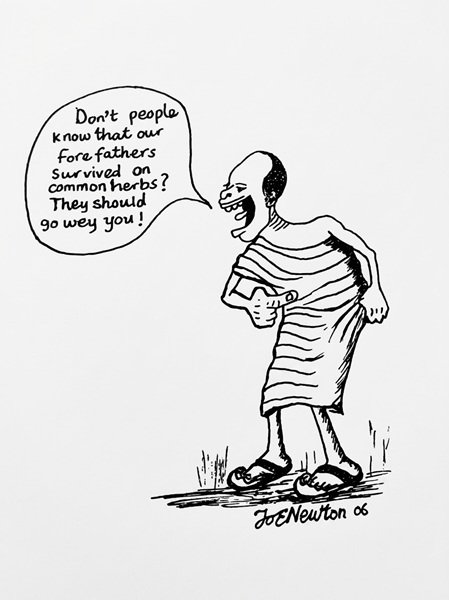
THE typical itinerant salesman in Sikaman is a herbalist. He is normally a slim macho with the capacity to perambulate the expanse of area covering the triangle of Accra-Tema-Ashiaman. In short, he can walk a total of 60 miles a day, marketing a product that cures every disease, including poverty. 
The door-to-door herbal pharmacist advertises his product by word of mouth. He has nothing to do with the Food and Drugs Board (FDB). After all, his concoctions do not feature on FM stations.
Those herbalists who cannot walk to propagate the herbal gospel, liaise with drivers of mass transportation and their mates. They are, therefore, given the chance to sell their products on Benz buses that ply the routes.
Normally, the herbalist starts his sales message with a prayer and Bible study. He asks the passengers to bow down their heads in supplication to God the father, the son, the Holy Spirit.
When a herbalist asks the passengers to close their eyes and bow their heads, Moslems on board naturally feel offended. They feel that the herbalist has no right to assume that every passenger is a Christian. They think such an assumption is an affront to Islam.
So a Moslem on board will raise the hand for a point of order. He’ll remind the herbalist that it would be in his own interest to mind his language.
“Be careful the way you address people in a public place. Not every person here is a Christian,” he’d state assertively.
Of course, the herbalist will promptly ignore him, but would all the same “watch” his tongue. Who knows whether or not the Moslem brother is inspired by Quoranic zeal to defend the tenets of Islam to the hilt?
When he starts saying, “Wallahi!” and “Inshallah!” it could be the beginning of proclaiming Islam as supreme, a point which must be driven home with talibanic precision.
So the herbalist must tread carefully lest he steps on fire.
The herbalist could even add a measure of mirth to it all, by announcing that Christians on board today have very interesting company on the journey, but that should not detract from the business of the day.
The Moslem brother will weigh the words carefully and offer a wry smile.
He must be careful the occasion does not degenerate into the use of semantics and proverbial oration to deride his conviction that public utterances must be mindful of religious sensibilities. He has made his point very clear and expects that it is taken in good faith in the interest of a peaceful journey.
The herbalist will now open the New Testament and preach salvation, stating clearly that salvation can come only through Jesus Christ and NOBODY else.
The Moslem brother will now start twitching his moustache. The visible and almost revolutionary reflexes of his upper lip can be an indication that sentiments have begun superseding reason, and the outcome could well be tragic now shift uneasily in his seat.
The time has come for him to also express his right to the religion of his fore-bears. He’ll put his hand into his pocket and rise to his feet. The time has indeed come!
This article was first published on Saturday, September 9, 2006
When the cause of a particular problem like sickness, disease, sudden illness, a social issue etc. are not known, it stands to reason that resolving it becomes a huge challenge.
Citizens would understand the government when public announcements are made to the effect that government is trying to find a solution to the issue, even though it is taking a while for it to be resolved because citizens are rational beings.
On the other hand, if the solution to a particular issue is known to everybody but the government for whatever reason, is dragging its feet in resolving it, citizens become frustrated and begin to lose trust in their leaders.
One such issue is the heavy traffic along a section of the Kasoa – Odokor road. A short stretch of bad road between the traffic light at the Weija Government Hospital and the entrance to the entrance of the overhead that leads to the N1, is the cause of the problem but nothing is being done about it, day after day, week after week, month after month. Thus is clearly unacceptable.
Another issue that requires urgent attention is the lack of pavements along a lot of streets in parts of the various Municipal Assemblies. Exercise is a prerequisite for long life and healthy living and for those of us who it has become a way of life, this issue of people putting up structures right to the edge of the drains beside the roads, are making life difficult for us.
We are compelled to walk along the roads, putting our lives at serious risk. Pedestrians should never be compelled to compete with vehicles on our streets and roads. Roads and streets are made for vehicles and pavements are made for pedestrians. That is the norm. Any attempt to normalise a situation where pedestrians are mingling with vehicles is insanity.
It is the road regulations that makes it so and therefore district or municipal assemblies are to take responsibility and ensure that spaces for pavements are not encroached upon. Citizens have rights that must be protected by their leaders and making pavements available to pedestrians, is one of them.
When we hear of teachers having sex with students, it appears it is something recent. It is not a new phenomenon. It has been there since Adam. Perhaps this issue is getting much attention due to the proliferation of social media. It was an open secret in times past when Teachers were in relationships with female students and some married them immediately after completion of school.
Some teachers were also known to be having unholy interactions with female pupils but due to the times that these acts occurred, human rights issues and the awareness around it, allowed such unscrupulous teachers to get away with their crimes.
Now we are in a different era and so a Headmaster is now in hot waters. He is alleged to have raped about 19 female students and as usual, some officials tried to cover it up and are also in hot waters and their actions or inactions in the matter are under investigation.
Why the man has been allowed to roam freely without being arrested is simply mind boggling. It appears that the law applies differently, depending on who you are. This issue came to public attention sometime in August this year, yet the police had not arrested or invited this man for question regarding the rape allegation.
It has come out that he is a Constituency Secretary of the ruling party and the question in the public domain is that, is it because he is a political figure that is why he is still walking around without questioning? I believe in the rule of law so let us hold our breadth and let the proper thing be done.
The police must however be seen to be active in this matter. God bless.
SKIP THE QUEUE, TAP THE NEWS
You can now read the Ghanaian Times and The Spectator newspapers from the comfort of your device via TimesNewsPlus.
Join our WhatsApp Channel: https://whatsapp.com/channel/0029VbBElzjInlqHhl1aTU27