News
Social media hindering tobacco control –FDA


The use of social media, entertainment content and online sales platforms are making tobacco control and related enforcement of its law increasingly challenging, the Acting Director of the Tobacco and Substances of Abuse Directorate of the Food and Drugs Authority (FDA), Dr Martin Kusi, has said.
According to him, promotion of tobacco and other nicotine products through these communication channels have presented fresh challenges that requires stakeholders to come up with new ways to identify and document possible violations.
Dr Kusi, expressed the concerns at a two-day training workshop for journalists and Civil Society Organisations (CSOs) in Accra on Tuesday under the Tobacco Policy Action Fund for Africa Project, initiated by Management Sciences for Health.
The workshop was aimed at strengthening the capacity of the participants to monitor emerging forms of tobacco promotion and gather information that could support enforcement of Ghana’s tobacco control laws.
The workshop was occasioned by the growing popularity of substances including Shisha and other nicotine products among the youth despite the efforts to curb its use.
Dr Kusi stressed that information gathered through monitoring activities needed to be properly documented and channeled through the appropriate reporting and referral mechanisms to facilitate enforcement.
He, therefore urged journalists and CSOs to strengthen their capacity to identify tobacco related promotional content and report suspected violations, particularly in digital spaces where such material could reach large audiences.
The Country Representative of the World Health Organisation (WHO), Dr Joana Ansong, said the training was particularly important as Ghana’s tobacco control landscape changes with the emergence of shisha, electronic cigarettes, vapes and other novel nicotine products.
Gladly, she explained that Ghana’s national smoking prevalence was relatively as low as 4.8 per cent but that, she added should not lead to complacency.
That notwithstanding, she stated that some regions including the Upper West Region recorded significantly higher rates approaching 10 per cent.
Dr Ansong said there was a growing appeal for shisha among young people, young adults and females, particularly because of its attractive flavours.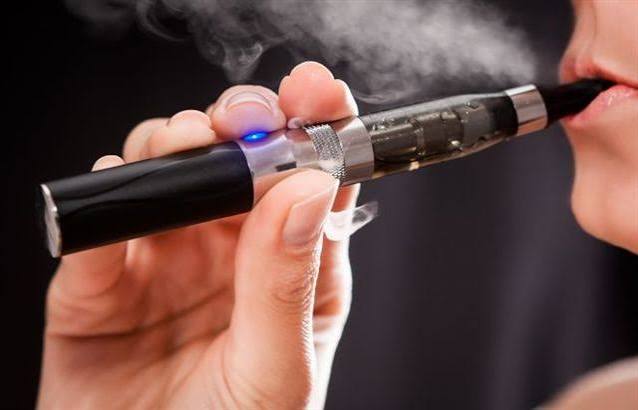

She also drew attention to electronic cigarettes and vapes designed in forms resembling cartoon characters, toys, school supplies and other everyday objects, saying such designs could appeal particularly to young people.
Dr Ansong said tobacco use remained one of the leading preventable causes of death globally, with about 1.2 billion people using tobacco worldwide and about seven million people dying annually from tobacco related causes.
She further noted that tobacco use contributed significantly to cardiovascular diseases, stroke, chronic respiratory diseases and more than 20 types of cancers, while about 1.6 million deaths annually resulted from exposure to second hand smoke.
Ghana’s tobacco control framework is anchored in the Public Health Act, 2012 (Act 851) and the Tobacco Control Regulations, 2016 (L.I. 2247), which prohibit tobacco advertising, promotion and sponsorship.
By Stephanie Birikorang
The root causes: It is never just one reason
My years of counselling at CPAC show me abandonment is rarely an act of malice. It is the tragic endpoint of seven overwhelming distresses:
Psychology
1. Severe maternal mental illness —The hidden emergency
a) Clinical Postpartum Depression (PPD): This is far beyond “baby blues.” It is a severe mood disorder that can appear weeks to months after birth. Due to a massive drop in hormones, extreme sleep deprivation, and emotional exhaustion, the mother feels deep sadness, worthlessness, and complete emotional numbness towards her baby. Picture: A new mother sits by her bed all day, staring blankly. Her baby cries for hours, but she cannot lift her hands to carry the baby. She whispers, “This baby would be better off without me.” She does not hate the baby; she feels she has completely failed as a mother.
Advertisement
b) Peripartum Psychosis (Postpartum Psychosis): This is a psychiatric emergency. Rare but extremely dangerous, appearing suddenly within the first 2-3 weeks after delivery. The mother completely loses touch with reality. She hears commanding voices telling her to abandon the baby, or believes the baby is possessed by an evil spirit or is a “spirit child” who will bring a curse. Picture: A mother genuinely believes she heard a voice saying, “Leave this child at the crossroads at midnight or your family will die.” She abandons the baby not out of hatred, but because her broken mind believes she is obeying a higher spiritual order to save her family.
c) Pre-existing untreated Schizophrenia: This is a chronic, severe mental disorder that existed before the pregnancy. The stress of pregnancy and labour shatters her fragile coping. She suffers from paranoid delusions — believing people want to poison her and the baby — flat affect (zero facial expression), and grossly disorganised thinking, making it impossible to plan how to feed or clean a baby. Picture: A young woman whose family called her illness “spiritual attack” instead of taking her for medication wanders away after delivery, completely forgetting she even gave birth, leaving the infant behind.
2. Extreme socio-economic deprivation: For many girls in some parts of Ghana such as Kasoa, Madina, or Bekwai, poverty is not a statistic; it is a daily panic. No money for antenatal care, no money for hospital delivery, no money for baby diapers or formula. When a mother cannot feed herself, the thought of feeding another mouth feels impossible. Some mothers say, “I left her where someone richer would find her, because I could not watch her starve to death in my hands.” It is a distorted act of survival.
Geographic Reference
3. Intense societal stigma and shame: In Ghana, pregnancy outside marriage, teenage pregnancy, or pregnancy from rape can bring extreme family rejection. The girl is called “spoilt,” beaten, banned from church, or sacked from school. The fear of bringing shame to the family name is heavier than the fear of police. So she hides the pregnancy for 9 months, delivers alone, and abandons in secret to protect her family’s “honour.”
Advertisement
4. Paternal abandonment — The Man Who Ran Away: Behind almost every abandoned baby is a man who vanished. He says, “It is not mine,” or “Abort it,” and switches off his phone. The mother is left utterly isolated — no emotional, financial, or social support. She is criminalised alone, but the abandonment started with him. Psychological research shows paternal denial is one of the strongest predictors of maternal panic and newborn abandonment.
5. Substance abuse disorders: Alcohol, tramadol, and other drug addiction impair the brain’s executive functioning — the ability to plan, judge consequences, and process emotions. A mother struggling with addiction may give birth in a highly intoxicated or withdrawal state, unable to comprehend the needs of the newborn, leading to neglect and eventual abandonment.
6. The spirit child cultural phenomenon and superstition: In some remote pockets of Northern Ghana and even in few parts of Central and Ashanti regions, public health research shows babies born with congenital deformities, severe disabilities, or whose mothers die in childbirth are branded as “spirit children” or cursed. In extreme instances, families, under cultural pressure, mandate that such babies be exposed or abandoned at shrines or bushes. This is not mental illness, but a harmful cultural belief system that still kills.
The invisible wounds
Advertisement
On the baby: Risk of death from hypothermia, sepsis, and infection. Survivors suffer Anaclitic Depression and Failure to Thrive due to lack of touch. As adults, they battle Reactive Attachment Disorder, chronic mistrust, and identity crisis — “Why did my mother leave me in a dustbin?”
Babies & Toddlers
On the mother: Lifelong hidden grief, intense guilt, chronic PTSD, depression, and elevated suicide risk. A prison cell does not heal this.
On the nation: Overburdened orphanages like Osu Children’s Home, draining health budgets, and overworked Social Welfare officers.
SKIP THE QUEUE, TAP THE NEWS
Advertisement
Discover more
Africans & Diaspora
pregnancy
Trash Cans
You can now read the Ghanaian Times and The Spectator newspapers from the comfort of your device via TimesNewsPlus.
Join our WhatsApp Channel: https://whatsapp.com/channel/0029VbBElzjInlqHhl1aTU27








An Accra High Court has set November 4, 2026, to rule on the bail application filed by the former Ashanti Regional Chairman of the New Patriotic Party (NPP), Bernard Antwi Boasiako, popularly known as Chairman Wontumi.
The bail application is pending his appeal against a 20-year jail sentence.
The court fixed the date after hearing arguments from both counsel for the applicant and the prosecution.
Chairman Wontumi is seeking bail pending the determination of his appeal challenging the conviction and sentence.
The court will deliver its ruling on whether to grant the bail application on November 4.
The Conviction
On July 20, 2026, an Accra High Court presided over by Justice Audrey Kocuvie-Tay convicted Bernard Antwi Boasiako, popularly known as Chairman Wontumi, on 6 illegal mining-related charges.
He was found guilty of assigning mineral rights without ministerial approval and intentionally facilitating an unlicensed mining operation, contrary to the Minerals and Mining Act, 2006 (Act 703) as amended, in connection with Akonta Mining Company Limited’s operations on the Samreboi concession in the Tano Nimiri Forest Reserve in the Western Region.
The law provides a custodial sentence of 15 to 25 years for those offences. The court sentenced him to 20 years imprisonment and a fine of 10,000 penalty units [GH¢120,000]. The court said failure to pay the fine will attract an additional 3-year term, to run concurrently.
His company, Akonta Mining Company Limited, was also fined after the court considered mitigating circumstances.
Current Bail Application
His legal team filed a bail application pending appeal in August 2026. The application was first scheduled for August 19 but was adjourned. Today, October 15, 2026, the court heard arguments from both sides and fixed November 4, 2026 to rule on whether to grant bail.
The defence argues he is not a flight risk, respected all bail terms before conviction, and that his appeal has 19 grounds with strong prospects of success. The State, represented by Deputy Attorney General Dr. Justice Srem-Sai, opposed bail, arguing he poses a flight risk and that his grounds do not meet the exceptional circumstances threshold for bail after conviction.
Other Cases Pending
Despite the 20-year sentence, he still faces two other major cases:
A Ghana Exim Bank case where he, together with Wontumi Farms Limited and another accused, allegedly obtained over GH¢14.3 million between 2018 and 2022 under false pretences for a farming project, using forged documents, leading to losses exceeding GH¢30 million.
Charges include defrauding by false pretences, uttering forged documents, money laundering and causing financial loss to the state.
By Edem Mensah-Tsotorme

The Public Accounts Committee (PAC) has urged the Ghana Revenue Authority (GRA) to intensify efforts to recover unpaid taxes from public institutions and businesses cited in the Auditor-General’s reports.
The committee asked the Authority to verify the amounts owed and collect outstanding payments from organisations including the Ghana Airports Company Limited, Ghana Water Company Limited and the Electricity Company of Ghana.
The call was made when the GRA appeared before the Committee yesterday.
This comes as the GRA reported that it had exceeded its revenue target by the end of September.
The Chairperson of the Committee, Abena Osei Asare, commended the Authority and the Auditor-General for their work, but called for greater transparency in tax collection, stressing that taxpayers should pay only what is required by law.
Representatives of the National Pensions Regulatory Authority (NPRA) also appeared before the Committee, with the Ministry of Energy and Green Transition and its agencies expected to appear next.
By Edem Mensah-Tsotorme