Features
Beyond the ribbon: Unveiling the complex realities of breast cancer- Part 1

Public awareness campaigns have successfully cast breast cancer into the global spotlight, typically framed through a uniform lens of pink ribbons, early detection drives, and triumphant stories of survival. While these initiatives have driven vital mammography compliance and research funding, they often perpetuate a sanitised narrative. Beneath the polished public messaging lie complex, less-discussed clinical realities and emotional burdens that patients, families, and healthcare providers must navigate long after the initial medical milestones have passed.
1. The myth of the clean ending (The Post-Treatment Cliff)
A prevalent cultural assumption is that a breast cancer diagnosis is a discrete, finite event: a patient receives a diagnosis, undergoes surgery and treatment, rings a victory bell, and returns entirely to their former life.
The reality of chronic survivorship: For many individuals, active treatment is merely the first grueling chapter. Once daily hospital visits cease and hair begins to regrow, patients frequently encounter what clinicians call the “post-treatment cliff”-a sudden isolation where support structures fade, yet physical and psychological recovery is only beginning.
Lingering sequelae: Chronic fatigue, neurotoxicity (nerve tingling or numbness), lymphedema (painful swelling in the arm or chest wall), and cognitive shifts (colloquially termed “chemo brain”) often persist for years, permanently altering daily functioning and professional capacity.
2. Tumor heterogeneity and the limits of early detection
While screening mammograms save countless lives by catching tumors early, public messaging sometimes implies that finding a cancer early guarantees a straightforward cure. Modern oncology recognises that tumor biology is vastly more complex.
Aggressive Subtypes: Not all small tumors behave benignly. Aggressive molecular variants-such as Triple-Negative or high-grade HER2-positive breast cancers-can proliferate rapidly and shed microscopic cells into the bloodstream even when caught at a remarkably small size.
The metastatic reality: A subset of patients diagnosed with early-stage disease will experience a distant recurrence years later. Metastatic breast cancer (cancer that spreads to organs like the bones, liver, lungs, or brain) accounts for the vast majority of breast cancer mortality, yet it often receives a fraction of the nuanced public dialogue compared to localised diagnoses.
3. The Silent marathon of long-term maintenance
For the majority of breast cancer survivors whose tumors are hormone-receptor positive (ER+ or PR+), the conclusion of surgery and radiation does not mean the end of therapy.
Adjuvant endocrine therapy: Patients are frequently prescribed hormone-blocking medications-such as tamoxifen or aromatase inhibitors-to be taken daily for five to ten years.
The quality-of-life trade-off: These medications drastically reduce recurrence risks by starving potential stray cancer cells of estrogen, but they carry profound side effects. Joint stiffness, severe bone pain, accelerated osteoporosis, vasomotor symptoms (hot flashes), and mood disruptions can severely impact quality of life, leading some patients to discontinue therapy prematurely despite the oncological risks.
4. Overlooked populations: men and young adults
Cultural depictions of breast cancer overwhelmingly center on older women, leading to dangerous blind spots for minority demographics within the patient population.
Male breast cancer: Though accounting for less than one per cent of all diagnoses, men develop breast tissue and can contract the disease. Because awareness among men is exceptionally low, male patients often mistake early symptoms for minor skin or chest wall irritations, resulting in delayed diagnoses at more advanced stages.
The unique burden on young adults: Patients diagnosed under the age of 40 face distinct challenges, including navigating fertility preservation before toxic chemotherapy, managing career disruption during peak earning years, and dealing with more aggressive tumor biology alongside prolonged survivorship horizons.
5. Financial toxicity and systemic disparities
A diagnosis of breast cancer triggers an invisible secondary crisis: severe economic strain.
The cost of care: Even with comprehensive health insurance, out-of-pocket expenses for specialised imaging, genetic testing, reconstructive procedures, and ongoing prescription drugs can accumulate rapidly.
Disparities in outcomes: Socioeconomic status, geographic location, and systemic healthcare inequities heavily influence survival rates. Access to advanced clinical trials, genomic assays (like Oncotype DX), and top-tier multidisciplinary care remains unevenly distributed, creating a disparity where ZIP code can heavily dictate clinical prognosis.
ROBERT EKOW GRIMMOND-THOMPSON
SKIP THE QUEUE, TAP THE NEWS
You can now read the Ghanaian Times and The Spectator newspapers from the comfort of your device via TimesNewsPlus.
Join our WhatsApp Channel: https://whatsapp.com/channel/0029VbBElzjInlqHhl1aTU27

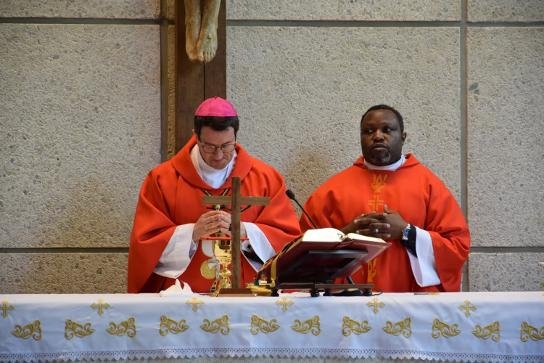
On Sunday, October 11, 2026, it was the turn of Ghanaian Catholics in Finland to lead the singing in the church service of the African Catholic Chaplaincy in Finland (ACCF).
It was indeed a spirit-filled feeling for worshippers present. And for the Ghanaian migrants, the occasion also brought back to them memories of church services in their home country, Ghana.
The ACCF has a roster for each country/community to sing from time to time. Next Sunday will be the turn of the Nigerian community. Other communities that usually sing are the Kenyan/Tanzanian community, the Cameroonian, the Ugandan, group, etc.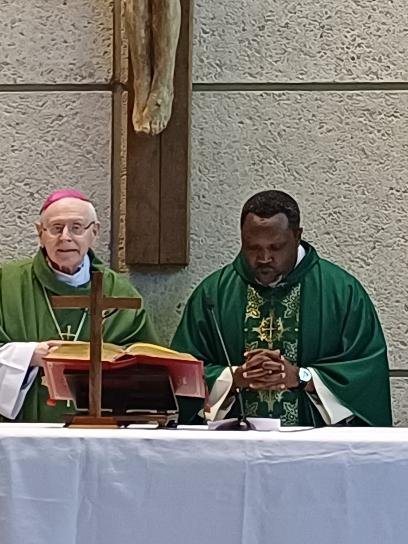
A powerful religious experience
The mass services of the Chaplaincy usually give a powerful religious experience and a display of cultural diversity, especially in occasions such as when the Bishop of Helsinki, Bishop Raimo Goyarrola, celebrated mass with the Chaplaincy on Pentecost Day, May 24, 2026.
There was a similar time of spiritual joy last month (September 27, 2026) when Emeritus Bishop Teemu Sippo, former Bishop of Helsinki, visited the Chaplaincy. Bishop Teemu was the main celebrant, assisted by the Chaplain, Reverend Father Thomas Otieno.
Last Sunday, Reverend Father Bernard Sor, a Ghanaian Catholic priest based in Austria, was the main celebrant in the mass service where he performed a rite of baptism. Fr Bernard had celebrated mass a few months ago when he visited his sister and her husband in Helsinki. 
All these well-attended religious occasions indeed leave lasting memories. The homilies (peaching) by the priests usually emphasize religious tenets such as the importance of loving and serving God in truth, existing in peace with our fellow humans to promote unity in diversity, etc.
Unity in diversity and a colourful display of cultures
The African Chaplaincy church services usually produce impressive displays of diverse cultures from different parts of Africa and elsewhere. The events are often spiced by rich cultural displays of dances and colourful attires which are a delight to watch.

On special occasions, members of the Ghanaian Catholic community, in their gay and colourful kente attire and with adowa dance and music, usually lead the procession into the church. Other communities such as the Cameroonian, Nigerian, Kenyan and Tanzanian as well as Sudanese/South Sudanese groups also put up well-choreographed performances from their cultures.
The African Catholic Chaplaincy in Finland
The African Chaplaincy was founded on June 4, 2017, which was a Pentecost Sunday, in a Pontifical High Mass celebrated by Monsignor Emeritus Sippo S.C.I., the then Bishop of Helsinki, at the St. Mary’s Catholic Parish Church in Helsinki.
The Chaplaincy was created by Bishop Teemu in collaboration with the Diocesan body when they detected a great flocking of African immigrants to Finland, the majority of whom were Catholics. This was to give the immigrants a possibility to integrate into the Finnish society by worshiping as Catholics and in their African cultural identity.
The responsibility of the Chaplaincy was given by Bishop Teemu to Father Dr Leonard Wobilla Shwei, who is thus the first Chaplain and ably led the Chaplaincy. He was succeeded a few years ago by Father Thomas Otieno, who continues to move the Chaplaincy forward. Thank you!
GHANA MATTERS column appears fortnightly. Written in simple, layman’s terms, it concentrates on matters about Ghana and beyond. It focuses on everyday life issues relating to the social, cultural, economic, religious, political, health, sports, youth, gender, etc. It strives to remind us all that Ghana comes first. The column also takes a candid look at the meanings and repercussions of our actions, especially those things we take for granted or even ignore. There are key Ghanaian values we should uphold rather than disregard with impunity. We should not overlook the obvious. We need to search for the hidden or deeply embedded values and try to project them.
With Dr Perpetual Crentsil
SKIP THE QUEUE, TAP THE NEWS
You can now read the Ghanaian Times and The Spectator newspapers from the comfort of your device via TimesNewsPlus.
Join our WhatsApp Channel: https://whatsapp.com/channel/0029VbBElzjInlqHhl1aTU27
She did not find out he was cheating. She found out he was drowning.
It was two weeks after their beautiful wedding. The jollof was still in the fridge. A loan officer called her number-not his-and politely asked, “Madam, please tell your husband to pay his overdue loan. We have been calling him.”
That was how she discovered her new husband had entered their marriage with a hidden debt of over GH¢ 40,000. No cheating. No other woman. Just a financial secret.
And that is how many Ghanaian marriages begin to die. Not with a shout, but with a secret alert on a phone.
We prepare for the wedding. We do not prepare for the wallet.
What is money honesty?
Let me define it simply. Money honesty is not that you both earn the same. It is that you both know the same. It is the ability to sit down and say without fear:
“This is how much I earn.”
“This is how much I owe.”
“This is how I was raised to see money.”
“This is what scares me about money.”
Financial transparency is not about control. It is about clarity. You cannot build trust on top of secrets.
Many couples tell me, “Counsellor, we love each other, love will handle money.” I always answer, “Love is the car, but money honesty is the fuel. Love without honesty cannot move.”
How To Buy Your Marriage Insurance Today – My 5-Step Protocol
If you are engaged, newly married, or even 20 years in marriage, you can still fix this. At Counsellor Prince & Associates Consult—CPAC, this is what I give couples:
Step 1: The 90-Minute Money Naked Session.
No phones, no blame. Each partner writes down on paper: Monthly income, monthly debts, monthly family obligations, savings, and your biggest money fear. Then you exchange papers. Read it. Don’t react for 24 hours. Just absorb.
Step 2: Create OUR Money, YOUR Money, My Money.
You need three pots. OUR money for rent, food, school fees, utilities, properties, and the like— joint contribution. YOUR money and MY money—a small agreed allowance no one questions. This stops the feeling of being controlled.
Step 3: The No-Secret Debt Rule.
Agree from today: No new loan, no new hire purchase, no new family financial commitment above GHS 500 without telling each other first. Not permission, but information.
Step 4: Talk About Your Money Personality.
Are you a Spender or a Saver? Are you Risky or Safe? Most Ghanaian marriages are a Spender married to a Saver. Neither is wrong. But if you don’t understand your partner’s personality, you will call his saving “stinginess” and her spending “wastefulness.”
Step 5: Do a Monthly 30-Minute Money Date
Not an argument date. Light, with tea. “How did we do this month? What worried you? What should we plan for next month?” Couples who do this divorce far less.
My Final Word
Before you say “I Do” at the altar, have pre-marital counselling and also have the money talk on the sofa.
Ask your partner:
“If I lost my job today, how long can we survive?”
“What debt are you bringing into this marriage?”
“How much do you send to your family monthly and will that continue?”
If he or she gets angry that you asked, don’t get married yet. A person who is angry about accountability will be abusive about money.
Marriage insurance is not bought at Star Assurance or Enterprise. It is bought in honest conversations when no one is watching.
The wedding costs one day. The marriage costs a lifetime. Don’t enter a lifetime contract and covenant with hidden costs.
You can still insure your marriage today.
Source:
Counselor Prince Offei, CPAC’s founder, is a leading Mental Health Professional, Marriage Counsellor, Author, ADR Expert/Arbitrator, and Spectator Newspaper Columnist. He writes on relationships, marriage, parenting, special needs support, and their connection to mental health. For therapy, counselling, or enquiries, contact Counselor Prince & Associates Consult (CPAC) in Accra on 0559850604 / 0551428486.
SKIP THE QUEUE, TAP THE NEWS
You can now read the Ghanaian Times and The Spectator newspapers from the comfort of your device via TimesNewsPlus.
Join our WhatsApp Channel: https://whatsapp.com/channel/0029VbBElzjInlqHhl1aTU27