News
The Bagre ritual

I live in a flood prone area of Accra. I have lost a couple of hundred prized books, including a hard-drive containing the first seven chapters of a book I had begun writing, household items and diamonds to flooding. I know how it feels to begin life from ground zero after acquiring possessions over thirty-five years. It is not something I wish for anyone to experience; natural disasters of any kind.
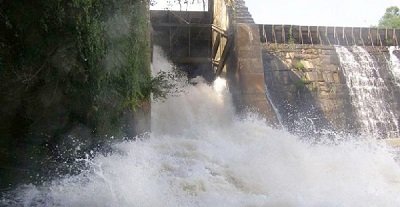
Just a couple of days ago, Burkina Faso experienced over seventy-five centimeters of rain in one day and so that country was compelled to open the spillways of the Bagre Dam on the Black Volta and the Kompienga Dam, releasing excess water into Ghana. When this happens, all regions in Northern Ghana are affected. Places already affected are in Lawra, Wa East and West, Daffiama, Nadowli, Jirapa, Savelugu, West Mamprusi, Mamprugu, North Gonja and Kumbungu Districts or Municipalities.
The people mostly affected are farmers, whose farms and dwellings are destroyed, making them poorer. This has become an annual ritual. As a nation, we all know that the northern sector of this country is our food basket; feeding us our yams, groundnuts, shea, millet, upland rice, onions, tomatoes and many more. My question, therefore, is: why do we witness this yearly ritual of seeing our compatriots up north go through this?
Already, reports from research groups forecast food shortage in Ghana in the coming days due to the floods in the north of the country. I must admit that the situation has been compounded by torrential rain in northern Ghana itself, but that is no excuse for our inability to find a lasting solution to this flooding menace.
Hurricane Ida just hit the southern coast of the United States, especially the State of Louisiana. It is an annual occurrence of nature, not man-made as in the case of the two dams in Burkina Faso. Americans are not happy about this hurricane menace, but there is nothing they can do about nature’s fury, so what they do is prepare adequately to mitigate its effect by putting warning systems in place for the citizens of the affected areas.
The music capital of the world, New Orleans is hard hit be this hurricane just as many other southern states of the Union. But they are prepared; they take measures to brave it all even if the disaster overwhelms them. The whole nation is alert to the annual occurrences. When the tornado (or twisters as they are called) season comes, America is prepared.
They have constructed storm drains so that as soon as the tropical squall passes, the water drains off into the drains and goes into the ocean. There is not a single storm drain Ghana can boast of, though someone tells me there is one under the Kaneshie Market in Accra. Ghana is never prepared for situations like these.
Bagre, on the other hand, is not a natural occurrence. Nature does not open the spillway; men do. This has been happening since the Bagre was constructed in 1999 and our leaders have not found a permanent solution to this problem. Who am I to suggest to a sovereign country like Burkina Faso to dredge and deepen the Black Volta so their dam can take in more water, though it can be done?
What Bagre unleashes on Ghana is nothing compared to disasters elsewhere, but because those affected are poor peasant farmers, the effect is grave. As I write, how many Ghanaians are aware of this yearly ritual of flooding from the two dams in the north of our country? Our journalists are busy with political stories to notice the humanitarian catastrophe that befalls the very people who produce food to feed us. It is only our national newspapers carry this, albeit on their back pages.
Our National Disaster Management Organization (NADMO) alerts the people to the danger only after the Burkinabe authorities announce plans to open the spillways. Our leaders have since 1999 done little or nothing to solve this problem. We have pet projects that give no benefit whatsoever to our compatriots in need of permanent solutions to their collective problems. A news item I chanced upon stated that the Police have been deployed to some of the flooded areas in the north. Police?
In almost all jurisdictions I know, fire fighters are the first responders to any form of disaster. The Police only come in to maintain law and order. We have NADMO, but is that organization well equipped with the requisite manpower training and resources to do what must be done in such circumstances?The Police?
If Libya could build an artificial river in the desert, can we not borrow money to construct the largest water reservoir ever to harvest the spilled water from Bagre and Kompienga dams? This is achievable if our leaders avert their minds to it. Water from the reservoir could last a farming season when the water is used to irrigate the farmlands through construction of canals.
On the other hand, when water levels fall behind these two dams Ghana can sell the water in the reservoir to the Burkinabe to raise the level in their dams. I am told reverse engineering can make this possible. Can we imagine what benefits will accrue to this country when the north can produce food crops all year round?
This is not supposed to be a political or partisan issue. It is an issue of leadership. But when there is election, our politicians go to campaign in these very areas to be given the chance to either go to Parliament or the Flagstaff/Jubilee House. But as soon as they are given the votes, the people are left to their own fate to fend for themselves. I implore the opinion leaders and people of influence in those areas to make this annual ritual an election issue if the problems are not solved before then.
Until we hold our leaders by whatever will make them act on our behalf, they will always take us for dunces. While we take our leaders on, let us also be mindful of what wisdom we think we possess. When I was growing up in Koforidua, there was not a single case of flooding in the municipality until only recently. In our wisdom, we have tiled all our residential compounds to the extent that there is virtually no surface soil to soak in rain water. As a result, there is flooding at the least precipitation. So it is in Accra and all other urban environments.
But how long shall we live with the Bagre ritual?
akofa45@yahoo.
By Dr. Akofa K. Segbefia
.


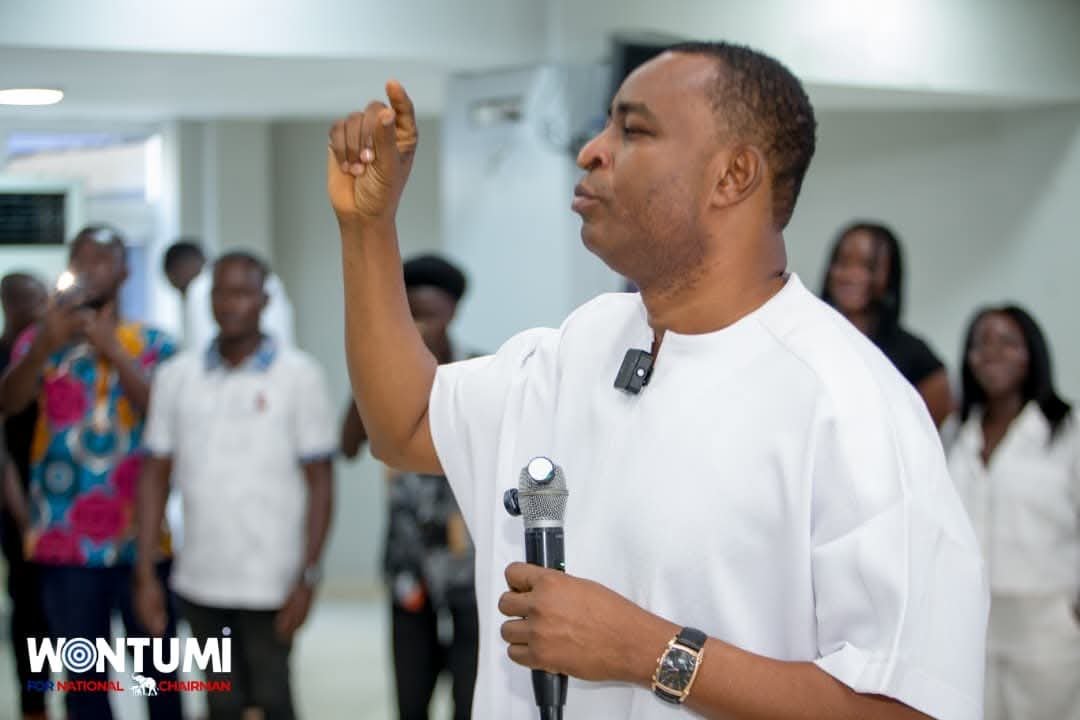
The state has closed its case in the Republic v Akonta Mining and two others.
The case was heard earlier today at the Accra Criminal Court, where state prosecutors and CID investigators from the Ghana Police Service closed the Republic’s case.
In all, the prosecution called three witnesses to prove its case, two former employees of Akonta Mining Company Limited and a detective from the Ghana Police Service.
According to an update on the case, the two former employees testified to Mr Bernard Antwi-Boasiako’s deep involvement in Akonta Mining Company’s alleged illegal mining activities in the Tano-Nimiri Forest Reserve.
The police detective tendered in evidence drone footage and other audio-visual materials and official communications in support of the testimonies of the two former Akonta Mining employees.
The accused persons, through cross-examination of the witnesses, sought to dissociate themselves from every mining activity in the Tano-Nimiri Forest Reserve.
At the close of the prosecution’s case, counsel for the accused persons asked the court to allow him to call the first prosecution witness back into the witness box for further cross-examination.
The court gave him up to Friday, October 30, to file a formal motion to recall the witnesses.
The case has been adjourned to November 4 for the motion to be heard.
By Edem Mensah-Tsotorme
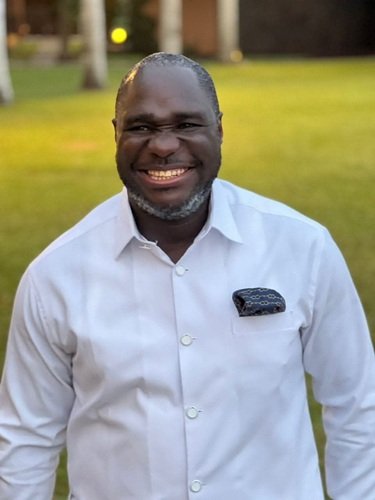
Dr Palgrave Boakye-Danquah, spokesperson to NPP Ashanti Regional Chairman Bernard Antwi Boasiako, popularly known as Chairman Wontumi, has called on the government and Parliament to undertake major reforms in Ghana’s prison system, including the construction of a dedicated prison hospital and the introduction of regulated conjugal visits.
In a press statement issued on Tuesday, October 27, 2026, Dr Boakye-Danquah shared Chairman Wontumi’s observations and recommendations following his remand on July 20, 2026.
According to the statement, Chairman Wontumi’s experience in prison has given him the opportunity to interact with prison officers and inmates and observe the challenges facing the Ghana Prisons Service.
The statement noted that the NPP chairman believes the correctional system must move beyond punishment to focus on rehabilitation, welfare and productivity.
One of his major concerns is the lack of dedicated, well-equipped prison hospitals, ambulances and standby generators in several prison facilities.
Dr Boakye-Danquah said Chairman Wontumi had raised concerns about the difficulties in providing medical care to seriously ill inmates, including those suffering from tuberculosis.
He is therefore calling for the construction of a modern prison hospital to serve facilities across the country. In the interim, he has proposed emergency arrangements with the 37 Military Hospital and the Police Hospital.
On the welfare of prison officers, Chairman Wontumi has urged the government to review their salaries, accommodation and conditions of service.
He has also called for proper classification of inmates, arguing that minor offenders should not be housed alongside armed robbery convicts and that persons facing trial for serious offences, including treason and terrorism, should be appropriately separated from other inmates.
The statement further highlighted concerns about the need for counselling and behavioural support for young inmates, particularly those serving sentences for defilement-related offences.
Chairman Wontumi has also called for a clear policy on the classification and management of LGBTQI+ inmates within the prison system.
On family relationships, he has proposed the creation of designated private areas where prisoners can receive visits from their spouses and children.
He believes regulated conjugal visits could help preserve marriages, reduce tension among inmates and support rehabilitation.
“The prisoner is the one in prison, not the children or spouse,” the statement noted, explaining his position on the need to protect family relationships during incarceration.
Chairman Wontumi has appealed to the Ministry of Food and Agriculture to support prison farms with the necessary equipment to improve food production.
According to the statement, the Ghana Prisons Service has access to vast lands and skilled labour but faces a shortage of agricultural equipment, with only one tractor reportedly available for farming and garbage-related activities.
He has further proposed greater collaboration between prison authorities and the justice sector, suggesting that regional prison commanders should be included in relevant discussions because of their knowledge of prison conditions and inmate rehabilitation.
On infrastructure, Chairman Wontumi has called on the government and private sector to invest in modern prison facilities and factories, arguing that the system has seen limited structural improvements over the years.
Appeal to Parliament
Dr Boakye-Danquah said Chairman Wontumi had made a special appeal to Parliament to lead efforts towards comprehensive prison reform.
He is urging the Speaker of Parliament to initiate discussions on prison conditions as a human rights and national development issue.
He has also called on the Majority and Minority caucuses to work together to pass a new Prison Reform Act and approve funding for a dedicated prison hospital, ambulance services, standby generators and agricultural equipment.
Additionally, he wants the Parliamentary Select Committees on Defence and Interior, Health, and Food and Agriculture to undertake working visits to prisons across the country to assess conditions firsthand.
According to the statement, Chairman Wontumi believes bipartisan cooperation between the Majority and Minority caucuses is necessary to secure the legal and financial reforms required to improve the prison system.
He has called for broader prison reforms across Africa, expressing hope that Ghana could lead the continent in improving correctional facilities.
Reflecting on his experience since July 20, Chairman Wontumi stated: “At this experience since July 20th till date, prison doesn’t reform as it should be. I pray that the entire Africa will learn from Ghana.”
The statement added that Chairman Wontumi remained in high spirits.
By: Jacob Aggrey