News
Tamale Central Hosp performs 540 fistula surgeries …out of 600 cases

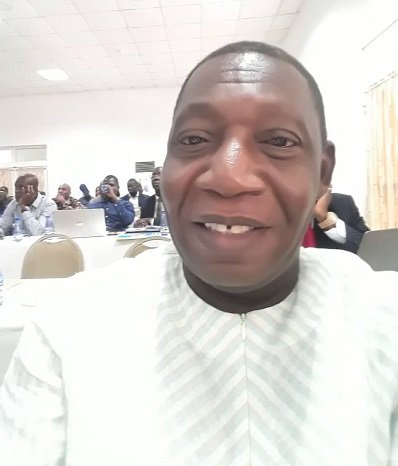
The Tamale Central Hospital (TCH), in the Northern Regional capital has successfully carried out 540 Obstetric Fistula (OBF) surgeries, out of 600 cases over the past four years, the Medical Superintendent of the hospital, Dr Mahamadu Mbiniwaya has disclosed.
He told the Ghanaian Times Thursday in Tamale that the surgery had saved the lives of the women and restored their dignity because they were objects of stigmatisation in their communities.
The cost of fistula surgery is $300 but the United Nations Population Fund (UNFA) supports the TCH, which is the main centre for fistula services for the six regions of the north, with logistics to carry out the surgery for free, he said.
OBF is a debilitating condition caused by obstructed labour, that creates a hole between the bladder and the vagina causing affected women to leak urine or faeces.
The incidence of OBF in Ghana is estimated at 1.8 per 1000 deliveries, according to a report on the burden of OBF in Ghana, authored by the UNFPA and Ghana Health Service in June, 2015.
The report says OBF remains a constant cause of misery to women because of the continuous leaking of urine or faeces and constant wetting of their clothes coupled with emitting of offensive smell.
Dr Mbiniwaya said that the condition was common with women in the rural areas who lacked access to healthcare during birth.
According to him about 90 per cent of women with OBF lose their babies during birth.
The renowned gynaecologist said he had been teaming up with other specialists from the Korle Bu Teaching Hospital to carry out the surgery to help restore the health and dignity of women.
He explained that the women suffered stigmatisation as a result of the condition adding, “They leak urine and smell badly when they are in the midst of other people, so they are shunned and stigmatised.”
Dr Mbiniwaya cited the case of a particular woman who had the condition and kept it to herself for over 30 years because of stigmatisation.
“We operate them, treat them and counsel them, they return to the communities to lead normal lives,” Dr Mbiniwaya said.
“One woman emotionally broke down and rendered her gratitude after she went through a successful fistula surgery,” he added.
He added that 20 women at Kpandai who had the condition were being prepared to undergo the surgery next month.
The TCH boss urged the women who had fistula to come forward for free surgery and treatment, and also encourage people not to stigmatise women with fistula.
Source: Ghanaian Times



A 30-year-old man has been sentenced to 25 years imprisonment with hard labour by the Bekwai Circuit Court for his role in a 2022 robbery at a mining site at Manso Akwasiso in the Ashanti South Region.
The convict, Dominic Ofori, also known as Fanta, was arrested on 16th February 2026 after years on the run. He pleaded guilty before the Bekwai Circuit Court to robbery contrary to Section 149 of the Criminal Offences Act, 1960 Act 29, and was accordingly sentenced to 25 years imprisonment with hard labour.
On March 20, 2022, the Manso Adubia District Police received intelligence that a group of armed men from Manso Abodom were planning to attack a mining site at Manso Akwasiso to rob the owner of gold concentrate. Acting on the information, police mounted a coordinated operation and laid an ambush at the site.
At about 5:30 pm the same day, four-armed men arrived at the site, fired indiscriminately, and robbed the miners of their gold concentrate. The police team on surveillance intervened, resulting in an exchange of gunfire.
Three of the suspects, Abu Abubakar, Musah Latif, and Gideon Takyi, sustained gunshot wounds and were pronounced dead on arrival at St Martins Catholic Hospital at Agroyesum. Dominic Ofori escaped at the time but was later arrested and put before the court.
The Ashanti South Regional Police Command has assured the public of its continued commitment to combating violent crimes and bringing offenders to justice.
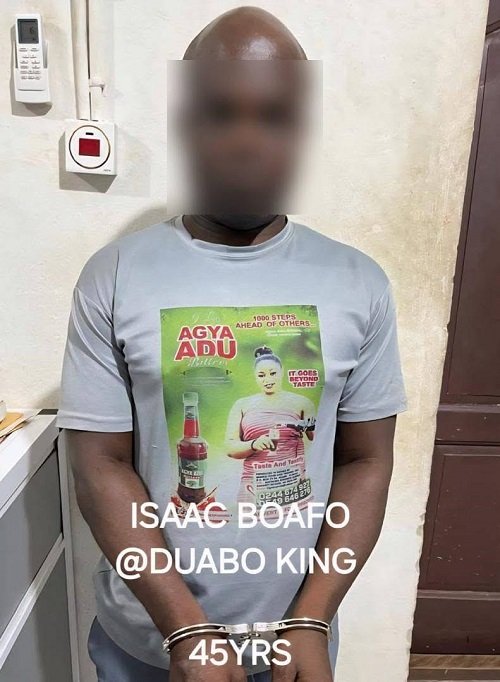
The Ashanti Regional Police Command has arrested 45-year-old Isaac Boafo, also known as “Duabo King,” for allegedly publishing false news intended to cause fear and panic.
Police said the arrest follows a viral TikTok video in which Boafo claimed that four officers at the Central Police Station in Kumasi engaged in inappropriate conduct with commercial sex workers during night patrols in Asafo.
Officers from the Police Intelligence Directorate (Ashanti Region) apprehended Boafo after receiving intelligence about the video.
During questioning, he admitted to creating the video to attract views and engagement online, and acknowledged that he could not prove the allegations.
Boafo also admitted making comments about the President of the Republic for content purposes and could not defend those statements.
He has been formally charged and is in detention as investigations continue.
The Ashanti Regional Police have warned the public against publishing or sharing false information on social media, noting that such acts can cause fear, panic, and damage reputations.
They said anyone found engaging in similar conduct will face legal action.
By: Jacob Aggrey