News
Stop begging for alms… disabled cobbler admonishes PWDs

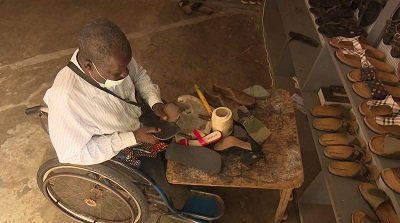
Mr Joseph Odey Mensah, a physically challenged cobbler, has asked persons with disability to stop begging for alms on the streets as the development is damaging to dignity
The owner of the Hope for Disabled Leather Works, located at Teshie in Accra, told The Spectator in an interview that everyone was created with capabilities and begging on the streets was a lazy and undignified way of making a living.
He said, “There is always dignity in labouring to cater for one’s self rather than stooping so low to beg on the streets.”
“I never wanted to become a burden to my family and society at large so I decided to train and become an entrepreneur instead of begging on the streets like many of my fellow disabled persons do.
“I believe in being self-reliant and need to set examples to other disabled persons to work hard and earn a decent living instead of relying on other people for survival,” he stated.
Paralysed in both legs at the age of three, the now 59-year-old man said, he established the company 37 years ago after dropping out of school, and decided to train at the Accra Rehabilitation Centre in 1982.
Singlehandedly, Mr. Joseph Odey Mensah popularly called Joe Mens made birkenstock sandals, students’ sandals and casual leather slippers for men and women.
“I am inspired to change the narrative where disabled persons are associated with begging, to become an entrepreneur and make a huge mark in Ghana’s local shoemaking industry,” he stated.
The father of five further said that, he took good care of his family through his shoemaking business and was working hard to expand the trade across the national capital Accra, and beyond.
“I make five sandals daily and I am able to make a decent amount each day to take care of my children’s education, the family’s upkeep as well as other disabled persons who I assist occasionally,” he stressed.
The country, he said, required everyone to contribute their quota to national development and thatsetting up his business was part of his contribution to the development of the private sector which was the engine of growth.
However, he said, the business was not without challenges as he needed adequate financial and logistical support to expand and employ other persons to earn decent living.
“I have over 80 persons under the ‘Hope for Disabled Persons Foundation’ and I intend to employ them to avoid endangering their lives on the streets,” he said, and called on government to make available the three percent allocated to disabled persons in the District Assembly Common Fund to help start-ups like him grow his companyto employ more persons.
“The allocation is a laudable idea but in reality, we do not receive the funds. I am trying to get government’s auction cars through the Ghana Revenue Authority (GRA) to help distribute the slippers across the country”.
“With the right support, I can get more raw materials to produce in large quantities and distribute across the country instead of relying solely on my small showroom which is outside the capital,” he lamented.
He called on the public to desist from denying disabled persons jobs and consider them assets to society rather than liability.
“Parents must also not abandon their disabled children but support them to reach their full potentials,” he stressed.
By Michael Abayateye


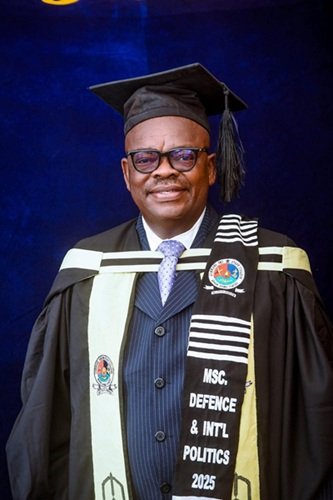
Management and staff of Owass FM have announced the passing of media personality, comedian and politician Seth Kwame Dzokoto following a medical emergency during a live morning show discussion at the station earlier today.
According to the station, Dzokoto was participating in a panel discussion on its morning show “Oman Nkoso” when he suddenly took ill and collapsed.
A statement from the station said its team immediately rushed him to the hospital for medical attention, but he was pronounced dead by the attending medical doctor upon arrival.
“We are deeply saddened by this unfortunate incident, which occurred in the course of our regular programming. Our thoughts and prayers are with his family, loved ones, colleagues, and all those who have been affected by his passing,” the statement said.
Management acknowledged that information about the incident is already circulating in the public domain, but appealed to the public and colleague media houses to respect the privacy of the bereaved family and refrain from circulating unverified information or speculation regarding the circumstances of his death.
Owass FM extended its heartfelt condolences to the family of Seth Kwame Dzokoto.
By Edem Mensah-Tsotorme

The State through the Attorney General (AG) has filed an appeal at the Supreme Court challenging the suspension of the trial in the case of The Republic v Hanan Aludiba and Faiza Seidu.
On Monday, the Court of Appeal suspended the trial in the case. But the prosecution says it has filed an appeal against the suspension order.
According to the update, the law does not allow a criminal trial to be suspended simply because an accused person has complained about some of the charges on the charge sheet, particularly when those complaints were dismissed as meritless.
It argues that if the Court of Appeal’s decision is allowed to stand, no prosecution will ever be possible, since all it would take for a trial to be suspended is an accused person complaining about anything on the charge sheet.
By Edem Mensah-Tsotorme