News
Sports must thrive in 2025


Failures on the sports front in 2024 could force fans to be apathetic in the New Year in order to avoid the disappointments they endured.
There were discontents all over as Ghana failed to make an impact at global events like the Paris Olympic Games, athletics championships, boxing championships and qualifiers and many others.
What may trigger some interest could be the FIFA World Cup 2026 qualifiers set to continue this year.
The FIFA World Cup has a strong appeal capable of turning apathy into a strong feeling and sensitivity to possibly bring the fans back to support the Black Stars bid to qualify.
But in doing so, the performances of the Black Stars have always come to hunt their followers and it remains one thing Coach Otto Addo and his men must resolve to earn the trust of Ghanaians.
The Black Stars occupy the second spot in Group I of the African qualifying for the World Cup behind Comoros on the same points but on inferior goal aggregate.
Against Chad, Central African Republic (CAR), Mali, Madagascar and Comoros, Ghana face a stern battle for the sole ticket allotted the group.
That would definitely not be an easy task but it is also not a challenge above the Stars. When the right players, those committed and dedicated to the Ghana course are selected, Ghana can make it.
The lenses would also be on other sports disciplines that held so much promise but failed to deliver.
Amateur boxing would be one that would attract a lot of attention after failing to excel at the various championships and qualifiers, resulting in the ‘no-show’ of the Black Bombers at the Paris Olympics Games.
Professional boxing, managed by the Ghana Boxing Authority (GBA) supervised a number of entertaining bouts with a number of boxers including John Laryea showing so much promise as world champions.
The GBA, however, was always in the spotlight with legal battles with its stakeholders over enforcement of its own rules.
The controversies with promotions and inadequate security at its fight nights have not made events safe for a lot more patrons although it attracted some new promoters in the year under review.
The year 2025 should offer its President, Abraham Kotey Neequaye, his board and major stakeholders the platform to end the constant fights, respect the rules and work together to produce new world champions and eventually ensure some sanity in the sport.
Athletics gave a good account of themselves but failed at the biggest stage – Olympic Games with the relay teams showing that they were yet to recover from their baton exchange nightmare.
Bawa Fuseini, Charles Osei Asibey, Philipina Frimpong and the other managers of athletics in Ghana must therefore, strive to take the spot a notch higher despite the challenges.
Aside the aforementioned disciplines, there are over 40 disciplines that clearly did their very best to make an impact but failed due to many challenges including finance. There were those who just added to the numbers.
But in the year 2025, every federation must aim to make a difference on the sports scene for the sector to thrive.

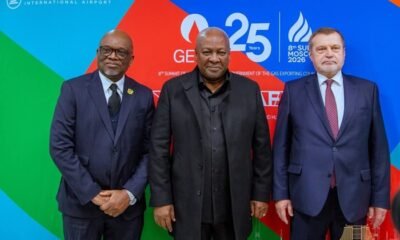




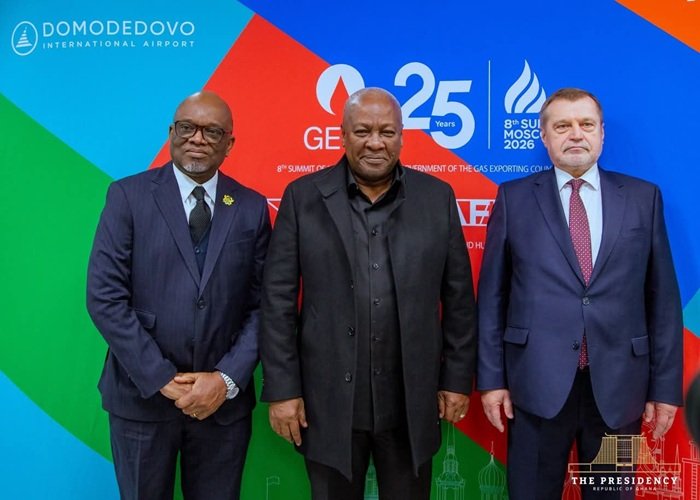
President John Mahama has arrived in Moscow, Russia, from Ethiopia to participate in the 3rd Russia-Africa Summit.
The summit is being hosted by Russian President Vladimir Putin.
During the visit, President Mahama will join fellow African leaders at the Economic and Humanitarian Forum and summit plenary sessions.
He is also scheduled to hold high-level bilateral talks with President Putin and attend a Kente exhibition organised by the Russia-Ghana Parliamentary Forum.
As part of the visit, the President will receive honorary doctorate degrees from the Russian University of Transport and the Peoples’ Friendship University of Russia.
He will also engage Russian businesses and state institutions to advance bilateral cooperation between Ghana and Russia.
By Edem Mensah-Tsotorme
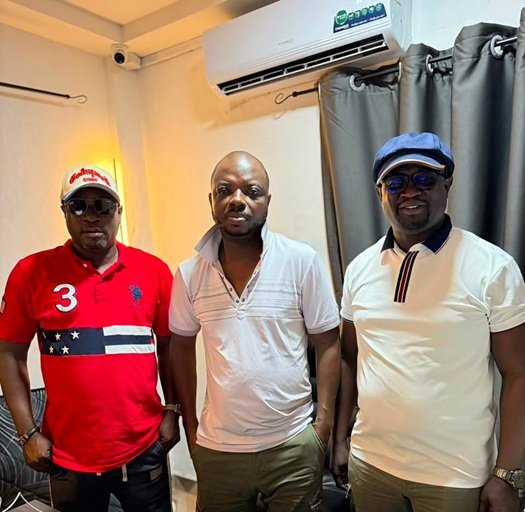
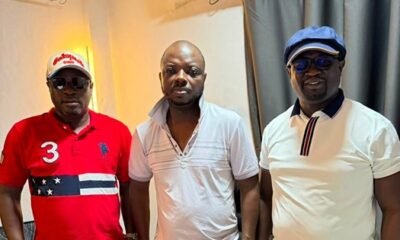
The Greater Accra Regional Organiser of the New Patriotic Party (NPP), Moses Abor, has met with the Bono Regional Chairman of the party, Kwame Baffoe, popularly known as Abronye DC, to address concerns arising from recent social media developments.
In a statement shared , Mr. Abor said he yesterday visited Chairman Baffoe over comments he made on his show, which had raised concern among some party activists.
According to him, he also engaged Charles Opoku Presidoo and ironed out grievances he had earlier held regarding the matter.
Mr. Abor said he was pleased that in the spirit of unity and the party’s shared commitment to return to power in 2028, they had a constructive conversation and addressed the concerns amicably.
“With the matter now resolved, I encourage all Party activists to let the matter rest and redirect our energy toward holding the NDC accountable for its failures and misleading claims,” he said.
He urged party members to continue making the case to Ghanaians on why Dr. Mahamudu Bawumia is the right person to lead the country in 2028.
By Edem Mensah-Tsotorme