Nutrition
Some natural spices you must use at home

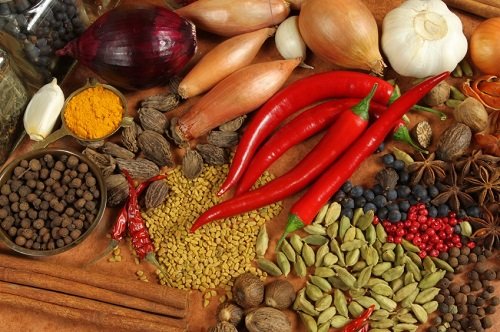
In the midst of the pandemic and other related illnesses one cannot afford to have a weak immune system, eating well balanced food is a sure way to keep the body fit in addition to maintaining and observing safety protocols. Natural spices are enriched with many health benefits and should be constant ingredients in foods to replace artificial spices.
Nutmeg
Nutmeg is a popular spice made from the seeds of Myristicafragrans, a tropical evergreen tree native to Indonesia.
It can be found in whole-seed form but is most often sold as a ground spice.
It has a warm, slightly nutty flavour and is often used in desserts and curries, as well as drinks like mulled wine and chai tea.
Although it’s more commonly used for its flavour than its health benefits, nutmeg contains an impressive array of powerful compounds that may help prevent disease and promote your overall health.
Garlic
Garlic is a plant in the Allium (onion) family. It is closely related to onions, shallots, and leeks.
Each segment of a garlic bulb is called a clove. There are about 10–20 cloves in a single bulb, give or take.
Garlic grows in many parts of the world and is a popular ingredient in cooking, due to its strong smell and delicious taste.
However, throughout ancient history, the main use of garlic was for its health and medicinal properties
Its use was well documented by many major civilisations, including the Egyptians, Babylonians, Greeks, Romans, and Chinese.
Source: www.healthline.com

Nutrition
The First 1,000 Days: Why Ghana’s investment in maternal and child nutrition matters for human capital development


From the start of pregnancy to a child’s second birthday, the first 1,000 days, represents the most important window for human development. Good nutrition shapes the foundation.
During this short window, the body and brain grow at a pace that will never be repeated. When nutrition is inadequate, the damage to physical growth and cognitive development is often permanent. No later investment in education or healthcare can fully reverse these losses. Ghana’s future workforce and economic progress depend on getting nutrition right during this critical period.
Science is clear. A baby’s brain develops rapidly during pregnancy and early childhood, forming the foundation for all future learning and health. Adequate nutrients during pregnancy support the formation of neural connections that underpin learning, memory, and emotional regulation. When pregnant women lack essential nutrients, their babies begin life at a disadvantage. When young children experience severe malnutrition, they miss critical growth periods that do not return.
Ghana faces serious challenges during this critical window. An estimated 68,517 children suffer from severe acute malnutrition. Between 37 and 63 percent of pregnant women are anemic, with iron deficiency particularly common in late pregnancy. These problems translate directly into diminished potential. Malnourished children perform worse in school, earn less as adults, and face higher risks of chronic diseases. The economic losses multiply across generations.
Research worldwide shows that nutrition investments during the first 1,000 days deliver exceptional returns. Well-nourished children learn better, perform better academically, and become more productive adults. Countries that invest in early nutrition experience faster economic growth through stronger, more productive workforces.
Ghana already has effective solutions. Multiple Micronutrient Supplements for pregnant women reduce the risk of low birth weight and preterm birth, while Ready-to-Use Therapeutic Food enables high recovery rates for children with severe acute malnutrition. Both are approved in Ghana’s health guidelines. The problem is not lack of knowledge but lack of access. Coverage remains limited because financing depends heavily on donor support rather than sustainable domestic systems.
Integrating these nutrition interventions into the National Health Insurance Scheme would help close this gap. With a large proportion of mothers and young children already enrolled, NHIS provides a platform for nationwide reach. Recent reforms to health financing further strengthen the case for prioritising essential nutrition services within the scheme.
Ghana’s development agenda emphasizes industrialisation, innovation, and economic transformation. Achieving these goals requires a workforce capable of learning, problem-solving, and sustained productivity. Human capital development, however, does not begin at universities or training centers. It begins before birth.
The first 1,000 days offer no second chances. Each year of delay means another group of children enter adulthood carrying preventable disadvantages. Investing in nutrition during this critical window is not only a health priority; it is a foundational investment in Ghana’s economic future.
Feature article by Womec, Media and Change under its Nourish Ghana: Advocating for Increased Leadership to Combat Malnutrition project
Join our WhatsApp Channel now!
https://whatsapp.com/channel/0029VbBElzjInlqHhl1aTU27

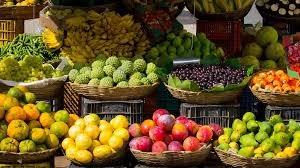
Ramadan, the ninth month of the Islamic lunar (Hijri) calendar, is a period of fasting, reflection, and spiritual growth. A vital part of observing Ramadan is Iftar—the evening meal with which Muslims break their daily fast at sunset. Fruits play an essential role in Iftar, providing nutrition, hydration, and energy after long hours of fasting.
Here are some of the most recommended fruits to include in your Ramadan meals:
Dates
Dates are traditionally used to break the fast. They are rich in sugar, fibre, potassium, vitamins, and minerals, helping to restore energy quickly after fasting.
Watermelon
Watermelon is highly consumed for hydration, as it is composed mostly of water. It can be enjoyed in slices or blended into refreshing smoothies.
Bananas
Bananas are an excellent source of potassium, which helps maintain fluid balance and reduce thirst. They also provide natural energy to keep you going after fasting.
Apples
Apples are fibre-rich and nutritious, promoting heart health, aiding weight management, and improving digestion.
Cucumber
Cucumber is one of the best hydrating fruits, composed of water and fibre, which aids digestion while revitalising the body.
Pawpaw (Papaya)
Pawpaw is low in calories and sugar, rich in fibre, and promotes healthy digestion, hair, and skin. It is a nutritious addition to any Iftar meal.
Including a variety of these fruits during Ramadan not only helps replenish lost nutrients but also supports overall health, digestion, and hydration throughout the fasting period.
By Linda Abrefi Wadie
Join our WhatsApp Channel now!
https://whatsapp.com/channel/0029VbBElzjInlqHhl1aTU27