News
Some DDF projects remain uncompleted, substandard—Auditor General Report


Despite improvement in infrastructure delivery in various Metropolitan, Municipal and District Assemblies (MMDAs) through the implementation of the District Development Funding (DDF), some projects remain uncompleted and substandard, the Auditor General, Mr Daniel Yaw Domelevo has said.
The execution of projects through the DDF in MMDAs, according to the Performance Audit Report on Capital Projects by the Auditor General, had considerably impacted education, health, occupation and the cost of living of individuals in the benefiting communities across the country.
The purpose of the audit was to ascertain whether the assemblies were capable of
planning, procuring contractors, supervising and monitoring the delivery of selected projects in accordance with sound administrative principles, practices and management policies to guarantee value for money.
“Our audit disclosed that there have been improved infrastructure delivery in MMDAs through the implementation of DDF and the impact on the socio-economic development of the communities has been significant,” the report mentioned.
Meanwhile, the report observed that many infrastructural projects commenced by MMDAs had stalled with some completed ones being substandard.
The situation had resulted in the deterioration of some projects within a short period after handing over, hence, denying beneficiaries the expected outcome, the report added.
“Many infrastructure projects undertaken by MMDAs remain uncompleted for a long time while completed ones are of low quality resulting in their deterioration within a short period after handing over, thus denying users the intended benefits,” the report said.
The report which covered a five-year period (2014 to 2019), noticed through the analysis of expenditure of district disbursement on projects showed that significant portion of budget was used to fund developments of educational facilities, Health (CHPS Compounds), KVIPs (sanitation) and Markets (economic).
Some projects included in the report included a six classroom pavilion at Bawjiase SHS, male, female and children’s ward at the Senya Health Center, and a market at Bontrase, all in the Awutu Senya West District.
Others included a teachers’ quarters at Nyariga, police station at Sunbrungu, both in the Bolgatanga Municipality.
The rest were; the Akatsi Main Lorry Park in the Akatsi South District, a two-story community health nursing training hostel at Asafo (Sefwi Wiaswo Municipal Assembly), Yam Market shed at Sang (Mion District).
The report which examined the capacity of assemblies focused on; project identification and planning, budgeting processes, procurement of contractors/Consultants, project implementation (Quality assurance through supervision), project status reporting, accountability (monitoring), and sustainability and impact to beneficiaries.
The DDF was set up in 2008 with the goal of improving the performance of MMDAs in Ghana by providing incentives to assemblies that comply with existing legal and administrative procedures.
BY: FRANCIS NTOW


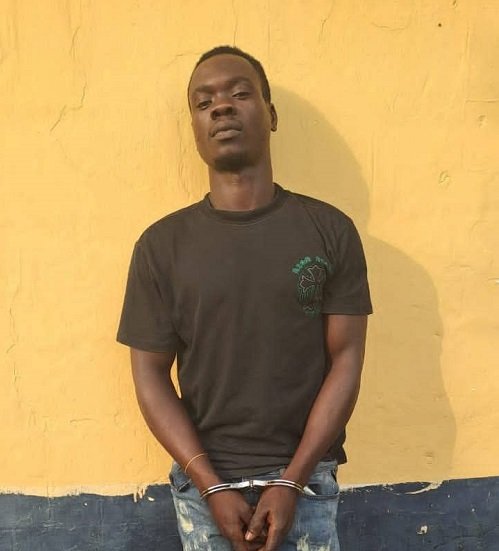
A 30-year-old man has been sentenced to 25 years imprisonment with hard labour by the Bekwai Circuit Court for his role in a 2022 robbery at a mining site at Manso Akwasiso in the Ashanti South Region.
The convict, Dominic Ofori, also known as Fanta, was arrested on 16th February 2026 after years on the run. He pleaded guilty before the Bekwai Circuit Court to robbery contrary to Section 149 of the Criminal Offences Act, 1960 Act 29, and was accordingly sentenced to 25 years imprisonment with hard labour.
On March 20, 2022, the Manso Adubia District Police received intelligence that a group of armed men from Manso Abodom were planning to attack a mining site at Manso Akwasiso to rob the owner of gold concentrate. Acting on the information, police mounted a coordinated operation and laid an ambush at the site.
At about 5:30 pm the same day, four-armed men arrived at the site, fired indiscriminately, and robbed the miners of their gold concentrate. The police team on surveillance intervened, resulting in an exchange of gunfire.
Three of the suspects, Abu Abubakar, Musah Latif, and Gideon Takyi, sustained gunshot wounds and were pronounced dead on arrival at St Martins Catholic Hospital at Agroyesum. Dominic Ofori escaped at the time but was later arrested and put before the court.
The Ashanti South Regional Police Command has assured the public of its continued commitment to combating violent crimes and bringing offenders to justice.
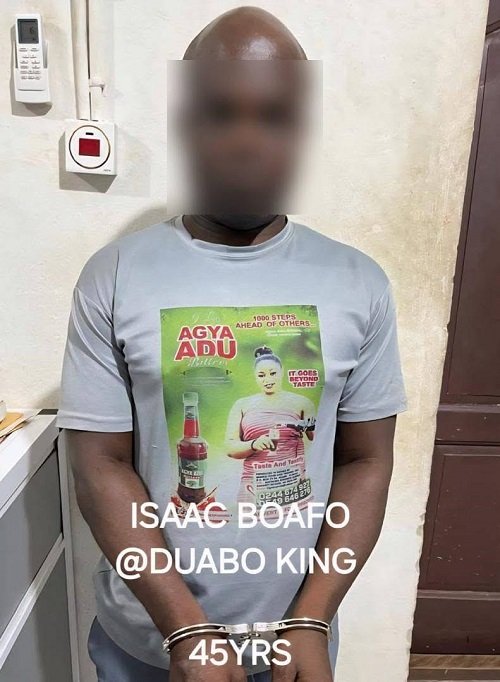
The Ashanti Regional Police Command has arrested 45-year-old Isaac Boafo, also known as “Duabo King,” for allegedly publishing false news intended to cause fear and panic.
Police said the arrest follows a viral TikTok video in which Boafo claimed that four officers at the Central Police Station in Kumasi engaged in inappropriate conduct with commercial sex workers during night patrols in Asafo.
Officers from the Police Intelligence Directorate (Ashanti Region) apprehended Boafo after receiving intelligence about the video.
During questioning, he admitted to creating the video to attract views and engagement online, and acknowledged that he could not prove the allegations.
Boafo also admitted making comments about the President of the Republic for content purposes and could not defend those statements.
He has been formally charged and is in detention as investigations continue.
The Ashanti Regional Police have warned the public against publishing or sharing false information on social media, noting that such acts can cause fear, panic, and damage reputations.
They said anyone found engaging in similar conduct will face legal action.
By: Jacob Aggrey