Features
Should our Health Minister continue to be at post?

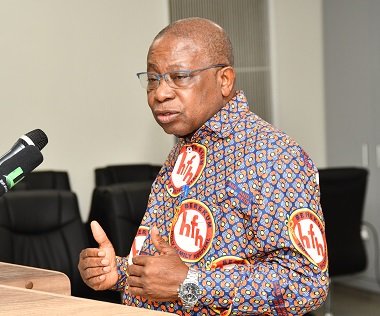
Kwaku Agyemang-Manu
Ghana was the first Sub-Saharan African country to introduce the National Health Insurance Scheme (NHIS) in 2003 through an Act of Parliament (Act 650 Amended Act 852), and its full implementation started in 2004. Under the NHIS Amendment Act 852 (2012), every Ghanaian is required to enroll in the health insurance scheme, which is regarded as one of the social intervention programme introduced by the government to provide financial access to quality and affordable health care to Ghanaians.
The scheme is largely funded by the National Health Insurance Levy (NHIL), which is a 2.5 per cent levy on goods and services collected under the Value Added Tax (VAT), 2.5 percentage points of Social Security and National Insurance Trust (SSNIT) contributions per month.
BACKGROUND OF NHIS
For the benefit of my readers and to refresh their minds about how this laudable initiative came into being, let me take them down memory lane so they can better understand the emergence of the NHIS. The idea to establish the NHIS in Ghana was conceived by former President John Agyekum Kufuor, who used the scheme as a campaign promise in the 2000 general election. He promised to abolish the so-called “Cash and Carry” system of health delivery in the country when he gained power in the county. True to his campaign promise, President Kufuor, after winning the election, introduced the scheme in 2003, during his first term in office.
The main objective of the NHIS was to ensure that it covered all indigenous Ghanaians with the purpose of delivering comprehensive and affordable health care nationwide. The scheme was designed to cover employees both in the formal and informal sectors, the unemployed in rural and urban communities across the country. Since its introduction, the scheme has witnessed remarkable progress in various regimes that came after former President Kufuor’s administration. Former presidents John Evans Atta Mills, John Dramani Mahama and the current President, Nana Addo Dankwa Akufo-Addo, readily embraced the scheme because of its immense benefits to the people and the country in general, and therefore they adopted it as one of the social interventions in the health sector and gave the scheme the needed push.
EXEMPTION OF CERTAIN CATEGORIES
The scope of the scheme was therefore widened to rope in more beneficiaries and was made compulsory by the government based on past experiences that showed that most of the citizens could not engage in the programme and the fact that the government has the duty to protect the general welfare and well-being of all Ghanaians. The flexible nature of the scheme and its lower registration fees made it quite easy for people to register and enroll as members. The scheme was designed to exempt certain categories of people, including older people, from paying certain charges.
Like all human institutions across the globe, the HNIS, despite its successful implementation over the years in the country, has been confronted with a number of challenges and problems, such as poor coverage, poor quality care, corruption, poor stakeholder participation, a lack of clarity on concepts in the policy, intense political influence, and poor funding. These administrative lapses, coupled with other in-built challenges, are indeed, affecting the smooth operation of this laudable scheme. It may interest my readers and patrons to know that the scheme has passed through the hands of many experts on health issues, but to no avail. The current head of the NHIA, Dr. Bernard Okoe Boye, a young and affable medical officer and one-time Deputy Minister of Health, who was appointed by the government recently to manage the place, is overwhelmed with problems, although he is trying his possible best to streamline operations of the NHIS. He has introduced far-reaching ideas to solve some of the problems within the system, but there is still more to be done to make the system productive.
SYNCHRONIZING NHIS AND GHANA CARDS
For instance, plans are well advanced by the new head to team up with his counterparts at the National Identification Authority (NIA) to synchronize the NHIS card with the Ghana Card as a common medium to access primary health care in Ghana. The scheme has also been digitalised to make registration and renewal of cards easier and more effective. Suffice it to say, the NHIS, unlike the “cash and carry” system, which requires upfront payment of medical care and imposes financial stress on Ghanaians in terms of health care delivery, has been a laudable social intervention that needs to be adequately supported by the government if we are to achieve universal health care for all Ghanaians by the year 2024 and beyond.
Frankly speaking, the NHIS has been a source of hope for the majority of people in rural areas who depend on it to access their health needs. However, this all-important scheme is confronted with huge arrears for the service providers, who are finding it difficult to operate the system effectively. When patients visit some of these service providers, they will only be examined by doctors at the Out-Patient-Department (OPD) and told to buy the drugs (even those covered by the scheme) from the pharmacy shops.
HEALTH MINISTER’S ADMISSION OF NHIS FAILURES
Recently, the Minister of Health, Kwaku Agyemang-Manu on whose bosom the whole NHIS lies, admitted that the scheme was not functioning properly as it should, claiming that instead of benefiting from the scheme, poor subscribers were being overcharged and denied necessary services that they had already paid for. He cited his own experiences, claiming that he had to pay for healthcare services out of his pocket when he visited hospitals like Ridge and the University of Ghana Medical Centre (UGMC), even though he is an NHIS subscriber. That was when the minister addressed the Ghana Health Service Senior Managers Meeting 2023 on Tuesday, April 18, 2023.
Indeed, the unfortunate statement from the Health Minister goes to prove he is not on top of issues regarding his outfit, especially the health issues of Ghanaians, which should be his major concern. The entire NHIS programme falls within your purview, and you have to take a keen interest in the scheme and ensure that it works efficiently and satisfactorily. If, as a sector minister, you are complaining and condemning the NHIS as not working, then, as a minister, you don’t know your job and, therefore, you have failed completely. Who do you expect to come and fix the problem when those working there, especially the bosses, take instructions from you, the political head of that place? Elsewhere in certain jurisdictions, you will lose your job immediately for that unguarded and unsavory comment.
MINISTERS MUST OPERATE RESPONSIBLY
Ministers of state are appointed by the President to represent his interests in the portfolios they have been assigned. They are expected to see to the smooth operations of establishments under their various ministries by ensuring that they remain efficient and effective in their daily operations. Failure to ensure that the establishment under their control as ministers of state and political heads is potent and smooth-sailing means they have failed completely and, therefore, are not fit to be in that office.
As a matter of principle, Ghanaians expect people placed in positions of authority by the government to be more responsible and proactive in their daily activities instead of apportioning blame, which is unnecessary. These service providers need money to purchase drugs and other equipment to serve subscribers of the NHIS efficiently. However, if the government defaults on reimbursement, how can they operate effectively?
Contact email/WhatsApp of author:
HYPERLINK “mailto:ataani2000@ yahoo.com”ataani2000@yahoo.com
0277753946/0248933366
By Charles Neequaye


THE state of feeling rejected, could be a terrifying experience especially for those who have become used to fame. If not properly addressed, it could lead to depression and the consequences, could be disastrous.
When you are on top of your game in whatever profession you find yourself such that you become famous, a lot of people try to associate with you. The phone never ceases to ring and one is tempted to feel loved and very important.
When a disaster strikes and the fame or the money which was the source of the attraction fades away, the circle of friends and fans begin to shrink and the phone will start to stop ringing until the call stops voting completely.
You will be shocked at how people you considered friends, will no longer be calling you or pay casual visits as they used to. You will begin to notice that messages you leave after calling them and not getting a response are not replied to and that is when you begin to know who your true friends are.
One of the most popular movie stars was an actress called Sharon Stone. In an interview with one of the media houses that was published, she spoke about how people who should have come around to encourage her in her moment of depression, shunned her. The calls stopped coming.
This is what the Bible admonishes that the arm of flesh will fail you and therefore we should put our trust in God. It could be a very frightening experience and can easily lead to depression.
Human nature being what it is, people will want to get close if things are okay. Everybody wants to associate themselves with interesting things, famous people, rich people etc for mainly selfish reasons.
We need to develop the habit of putting our trust in God and relying less on human beings. The lesson we have to take along in life is that, no one marries his or her enemy so how come people who took vows that they will love each other become so hostile to each other that they want to go their separate ways in life? Such is the reality of life.
It is therefore prudent for people to recognise that, life is full of uncertainties and so there is the need to prepare your mind for uncertainties so that when they occur, they do not disorganise your mental sanity.
A lot of people have experienced situations where people who they could have sworn will never betray their trust have disappointed them when they were through challenging moments.
If there is one thing famous people should desire, it should be the ability to identify who are true friends are. Countless stories abound regarding incidence of celebrities who have lost their shine and their wives divorcing them soon after.
It is sometimes useful as a famous or rich person to sign a prenuptial agreement before marriage to safeguard or protect yourself from any future unpleasant surprises.
People can be very pretentious these days, it goes both ways. There is this real life story where a man married a divorced wealthy woman and convinced her to sell her house so they could build a new one together, with the excuse that people are gossiping that he is being housed by a woman.
The woman agreed and they put up a new building. After a few years the man asked for a divorce, only for the woman to realise that the land on which the building was situated, was bought in the man’s name.
This can drive a person insane, if you are not mentally tough and this happens to you. When people hear that you are homeless, a lot of your so-called friends will stop calling, so that you do not become a burden on them.
By Laud Kissi-Mensah
Join our WhatsApp Channel now!
https://whatsapp.com/channel/0029VbBElzjInlqHhl1aTU27

‘But, er …. I don’t even know your name’.
‘Paul. Paul Allotey. I’m Sarah, by the way. Paul, why don’t you leave me here, since this is the last important thing I’m doing today’.
‘Okay. Now Sarah. I was just thinking. You will be here at the cafe for about an hour. By then it will be about twelve thirty. Then, you would be thinking of buying yourself some lunch, to eat here or to take home. So if you would please allow me, I will take you to one of the nicest eating places in town, and after you have sorted that one out, then I can drop you home. Just that one errand, then I won’t bother you again’.
‘You are not bothering me at all. You are being very kind to me. And I just realised you are a mind reader too. The last item on my agenda was lunch’.
‘I’m so glad I appeared at your doorstep, just in time’.
‘Okay. Now Paul, since you say the cafe is a comfortable place, let’s go in together, and you can do your work while I get my application done’.
‘Okay, Sarah. Thanks. Let’s go’.
We got back in the car at eleven forty-five.
‘So where are we going, Paul?’
‘To Royalty restaurant. It’s a twenty minute drive away’.
‘So, do you enjoy your job?’
‘Most certainly. I won’t change it, not even to be President. And am I right to say that you are preparing to enter the university?’
‘That’s my plan. I hope it works’.
‘It will, if you are determined, and disciplined. You look very much like a disciplined person’.
‘Thank you very much’.
We arrived at Royalty in twenty-five minutes, ‘You are joining me for lunch, Paul’.
‘Thanks for the honour, Sarah. But the bill is on me’.
‘Aren’t you taking on too much for one day?’
‘I never do anything that is bigger than me, Sarah’.
Over the next hour and a half, we discussed fashion, local and international politics, and sports, as we ate and relaxed. Finally, he drove me to the shop.
‘I will never forget you, Paul’.
‘I’m glad to have been helpful. But if you don’t mind, I’ll say it again, your husband is extremely lucky. You are really beautiful’.
‘Thanks again. But do you mind if I call you sometime in the future?’
‘Certainly not. Let me write it here. I will not ask for your number, for obvious reasons. But I will be looking forward to hearing from you. And hopefully, I will see you next month, when I call to drop your bill’.
‘Okay Paul. See you then’. What a lovely day, I said to myself as I opened the front door. I closed the shop and got home by seven. I went straight to the bedroom, stood in the mirror and took a good look at myself. ‘You are a very beautiful woman, Sarah. Never forget that’. I will not forget that, again.
Over the next several weeks, Martin and I had very little to do with each other. In the morning he ate his breakfast and after a shabby ‘I’m going’, he left. He came home around eight at the earliest, ate his dinner and, already soaked in beer, went off to sleep.
He spent the greater part of the weekends at the club house with his friends, playing tennis and partying. My mind was focused on furthering my education, so I didn’t complain to him, and didn’t bother to inform my parents about what was happening. I had decided that I would only take action if he lifted his hand against me again. I spent my free time reading all manner of interesting stuff on the internet, and chatting with my sister on WhatsApp.
One evening, he came home at about eight, rushed to the bedroom and rushed out. An envelope, obviously containing money, dropped out of his pocket, and I picked it up and followed him. I was going to call him and give it to him, but I noticed that there was a young woman in the car, so I went back in, counted it and put it in a drawer in the hall. He came back after some ten minutes.
‘Excuse me, I dropped an envelope containing money. You must have seen it’.
‘Yes, I saw it. Actually, I followed you, and was about to call you and hand it over to you when I realised that there was a woman in the car, so I came back in. I counted it. One thousand cedis.
‘Well let me have it. I have to be going’.
‘I will let you have it if you will tell me who the woman in the car is, and why you are going to give her that amount of money’.
‘Listen, if you waste my time, I will teach you a lesson you will never forget. Give me the money now!’
‘Here’s what we will do, Martin. I know you will give money to her anyway, so I will give it to you, if you will withdraw the threat you just issued. But I want you to know that I will be taking some steps from tomorrow. Things are getting out of hand’.
‘Okay, I’m sorry I threatened you. Can you please give me the money’. I handed it over to him, and he ran out’.
The following morning, I waited for him to finish having breakfast, and told him I wanted to have a word with him urgently.
‘You better be quick. You know I’m going to work’.
‘Well, I want to inform you that I will inform my parents, and your parents, about the situation in this house. As I said yesterday, things are getting out of hand. You spend most of your time drinking. You get drunk every evening, and through the weekend. And you are also spending your time and money on a prostitute’.
‘How dare you? One more stupid word from you …’
‘Am I lying, Martin? You have just started life, yet you are behaving like a rich, elderly man who has already seen his children through university, and can afford a life of fun. As I said, I’m going to inform our parents. Maybe your parents can straighten you out before it is too late’.
‘Look, we can talk this evening. It’s nothing like what you are saying’. He walked away, shocked.
That evening, I was expecting to have a meaningful discussion with him, but his mother called early in the evening to offer me some ‘advice’. Her son had called to say that certain developments at home were disturbing him so much that they were beginning to affect his work.
And, ‘as a loving mother to her daughter’, she was advising me to submit to my husband, and support him in prayer, and not ‘drive him from home’. Men would always be men, and she was telling me ‘from experience’ that no matter how much time Martin stayed away from home, he would always come home to me.
She had been a young wife before, so she understood the challenges I was facing. So I could be assured that if I followed her advice, all would be well. And, of course, she didn’t allow me to tell my side of the story.
Martin came home very late, and very drunk. And from the next morning, he carried on as before. With some hesitation, I called my dad and told him all that had gone on.
‘Well, my daughter. I’m not going to say “I told you so”. I was only trying to protect you. So here’s what we’ll do. Continue doing the best you can, and try not to give him any excuse to harm you, but if things continue to deteriorate, I will take you back.
A couple of days later, my cousin Dinah arrived in Accra from Brussels, having completed her medical course. With Martin’s agreement, I went to Koforidua and spent a couple of days. I spent most of the time chatting about her experiences in the US, but we also discussed my relationship with Martin, and she endorsed Dad’s decision to take action if Martin’s behaviour did not change after two weeks Elaine informed Mom and Dad. We endorsed Dad’s decision to take action if there was no change in two weeks.
Dinah returned with me to Takoradi. Her plan was to spend a couple of weeks, and return to Accra to be posted. I called Paul Allotey, and asked if he would meet her for lunch and, if possible, show her some interesting spots. Delighted, he suggested that we meet at Royalty the next day.
I told Martin about it, to remove any possibility of future disagreement over ‘going out with men’.
‘It’s fine with me’, he said, ‘if, of all the people who could show your sister round this town, you chose a borla man. Doesn’t that indicate the kind of person you are?’
‘ First of all, Martin’, I’ve spoken to him a few times, and he comes across as a decent guy, so I think it is rather unfortunate that you are writing him off when you don’t know him’.
By Ekow de Heer
Join our WhatsApp Channel now!
https://whatsapp.com/channel/0029VbBElzjInlqHhl1aTU27