News
SDA Church boosts rural evangelism with motorbike donation


As part of its 75th anniversary celebrations, the Seventh-day Adventist (SDA) Church has intensified its evangelistic efforts by donating five rugged motorcycles to support outreach in hard-to-reach rural communities.
The motorbikes, handed over during a brief ceremony, are expected to significantly enhance the church’s capacity to spread the gospel in remote areas where transportation remains a major barrier.
The initiative was made possible through the support of Quiet Hour Ministries, a U.S.-based Seventh-day Adventist mission organisation renowned for advancing global evangelism through strategic partnerships and outreach support.
Speaking at the ceremony, the President of the North Ghana Mission of the SDA Church,
Pastor George Kossi-Ekao Amouzou, expressed heartfelt appreciation for the donation.
“We are truly grateful to Quiet Hour Ministries for this timely and generous support,” he said. “These motorcycles will significantly enhance our ability to reach remote areas with the gospel message, strengthening our mission to spread hope and salvation to every corner of our territory.”
Pastor Amouzou noted that the donation reflects the church’s unwavering commitment to spiritual growth and community impact, especially during this anniversary year marked by outreach and reflection.
Quiet Hour Ministries, headquartered in Redlands, California, has supported mission work in over 130 countries through donations, equipment, and short-term mission trips aimed at reaching unreached and underserved populations, he said.
Church officials stated that the motorcycles would be immediately deployed to pastors and lay evangelists working in the field, especially in rural districts where poor road infrastructure often hampers travel.
By Geoffrey–Buta






News
Abu Trica’s extradition case: Prophets, fetish priests demand pay for spiritual solution …Lawyer reveals

Mr Oliver Barker-Vormawor, a lawyer for embattled Frederick Kumi, affectionately called Abu Trica and has made a shocking revelation over the behaviour of some members of the clergy.
According to him in a post on social media, the difficult part of Abu Trica’s trial is not the law but the number of ‘Men of God’ and fetish priests demanding financial sacrifices to help resolve the matter spiritually.
Oliver Barker-Vormawor posted on Tuesday, April 22, 2026, “The most difficult part about the Abu Trica case; is not the law.”
He continued: “It is the number of, prophetesses, evangelists and fetish priests, who have called or messaged to ask us to pay for spiritual solutions.”
It would be recalled that in March this year, the Gbese District Court dismissed a preliminary objection filed by Abu Trica, challenging the extradition proceedings initiated at the request of the United States.
The court, presided over by Anna Akosua Appiah Gottfried Anaafi Gyasi, in its ruling held that the offences forming the basis of the extradition, particularly wire fraud, constitute extraditable offences under the 1931 treaty between Ghana and the United States.
He was then given 15 days counting from March 27 to appeal the decision of the court or be surrendered for extradition to the US.
Against this backdrop, he was on Tuesday, April 22, granted a bail in the sum of GH¢30,000,000 by an Accra High, pending the appeal of his extradition
Mr Kumi was arrested in Ghana in December 2025 following an indictment by United States authorities, alleging that he played a role in a romance scam network that defrauded elderly American victims of more than $8 million.
By Edem Mensah-Tsotorme
News
From panic to pass: how parents, teachers can help children beat BECE, WASSCE exam phobia- Part 1
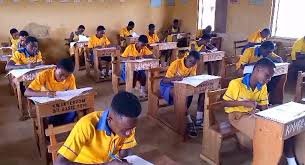
Walk through any Junior High or Senior High compound in Ghana as BECE or WASSCE approaches and you will see it.
A bright girl suddenly quiet. A boy who led class debates now sleeping at his desk. A Form three student with stomach pains every Monday morning.
This is not laziness. This is academic stress. When left unaddressed, it hardens into exam phobia-overwhelming dread that pushes children into burnout, avoidance, and sometimes silence.
As a mental health professional who sits with these children and their parents at Counselor Prince & Associates Consult (CPAC) in Adenta Oyarifa-Teiman, I see the pattern clearly.
Research confirms it. Putwain and Daly (2014) found that high test anxiety predicts lower grades independent of ability. Zeidner (1998) showed that chronic academic pressure raises cortisol, weakens memory recall, and increases school dropout risk. The brain under fear cannot retrieve what it studied.
Understanding the storm: What academic stress really looks like
Exam phobia is not just “being nervous.” It shows up as headaches before mocks, sudden anger when books are mentioned, night-time insomnia, or perfectionism that ends in blank scripts.
Some children over-study until 2 a.m. and forget everything by 9 a.m. Others avoid books completely, scrolling phones instead. Both are distress signals. Dr Kenneth Ginsburg, a paediatrician specialising in adolescent resilience, notes: “Stress is not the enemy; feeling alone with stress is.” Too many Ghanaian children feel alone with it.
The home front: How parents and couples become safe havens, not extra pressure
The first antidote is at home. Structure beats shouting. Set a predictable study slot-same time, same place, with water and a light snack. Then protect sleep like you protect school fees. A tired brain fails faster than an unprepared one. Use the “15-minute start rule”: “Just sit for 15 minutes. If you still can’t, we close and try after a walk.” Often, starting is the hardest part.
Couples must watch their language. “Don’t disgrace us” plants fear. Replace it with “We see your effort. What part feels hardest today?” Praise process, not only position: “You revised three topics and asked for help—that is maturity.” Research by Dweck (2006) confirms that process praise builds resilience while outcome praise increases anxiety.
For caregivers, check your own anxiety. Children borrow our nervous system. If BECE makes you panic, they will panic. One parent grounds—keeps meals, prayer, and bedtime steady. The other pivots—talks to teachers, adjusts timetables, arranges counselling. Both protect rest. An empty cup cannot pour calm.
Resources
– Counsellor Prince & Associates Consult (CPAC): Award-winning Clinical Mental Health and Counselling Facility, accredited by the Ghana Psychology Council.
– School-Based Support: Speak to Guidance & Counselling units, or licensed school counsellors. E.g. Counsellor Blessing Offei – 0559850604 (School Counsellor).
– Contact CPAC for Parent Coaching/Counselling & Student Therapy: 055 985 0604 / 055 142 8486

 Entertainment1 week ago
Deals, Crowds, and Big Wins: Dulcie Boateng’s Porials Pitch 2026 Returns This Weekend
- News3 days ago
Okudzeto Ablakwa engages South African International Relations Minister over Xenophobic attacks
- Entertainment1 week ago
Guinness Ghana Introduces GH¢100,000 Prize for TGMA Album of the Year Winner