Hot!
Russian Embassy only protecting its sovereignty; global economic challenges is due to Ukraine invasion – Stephen Amoah


A member of the Finance Committee in Parliament, Stephen Amoah, has stated that Russia’s attempts to dissociate itself from the current economic challenges in Ghana is only a move to protect its reputation.
He said it is undeniable that Russia’s invasion of Ukraine has exacerbated global economic difficulties, a situation that has caused hikes in general goods and services in Ghana.
The Nyieso MP was reacting to a statement by the Russian Embassy, which attributed the current hardship to the high demand and rising prices of food, raw materials and transportation services as part of the post-Covid-19 recovery.
It argued that difficulties in economies started before the invasion of Ukraine because there has been a steady trend of happenings on the global stage in the last two years.
But in defence of government’s stance, the NPP MP said the move by Russia is only meant to save face.
“There is this ongoing IMF forum in Washington, and member countries have had the opportunity to speak on their countries’ economies, I mean their sovereignties, and all of them are attributing the challenges they are having today to too many factors.
“One, the Covid; two, the war in Ukraine, and I think the authorities from Russia are aware of all these facts and these assertions or claims.
“Of course, they have their prerogatives or exclusive rights to manage the reputations of their sovereignty or their country,” he told JoyNews in an interview.
The Nhyiaeso lawmaker noted that “diplomatically, they wouldn’t want to associate anything untoward or going on against the war with or to their war – they wouldn’t want to see that.”
Inasmuch as any country would have defended its reputation, Mr Amoah stressed that “the facts remain untouched” and that Russia’s invasion of Ukraine has had significant impacts on countries across the world.
What happened?
Vice President Dr Mahamudu Bawumia, while addressing Ghanaians on the state of the economy at the National TESCON Training and Orientation Conference on April 7, noted that aside from the Covid-19 pandemic, the Russia-Ukraine war is adversely affecting the Ghanaian economy.

He noted that the prices of food supplies have shot up because the two countries that are exporters of commodities such as wheat, and grains, have withheld supply due to the crisis.
“The Russia-Ukraine conflict has exacerbated the increase in commodity prices. Russia and Ukraine together account for 30% of global wheat exports; the longer the conflict ensues, the greater the disruption to global food supplies. The conflict is also likely to slow down global growth.
“According to the AfDB, the price of wheat has shot up by 62% since the war began, the price of fertiliser is up by 300%, and the price of maize is up by 36%. Here in Ghana, some 60% of our total iron ore and steel imports are from Ukraine; Russia accounts for some 30% of Ghana’s imported grains, 50% of flour, and 39% of fertiliser.
“So we are directly affected by the Russian-Ukraine war. Unfortunately, we do not know when it would be over,” he said.
But in a statement on Twitter on Monday, the Russian Embassy in Ghana disagreed, saying it cannot be blamed for the current price hikes.
The current situation in the food markets is not a result of two months of this year, but a steady trend of at least two years. Food prices started rising in mid-2020 and reached an all-time high in February 2022.
“This is a real market shock caused by high demand and rising prices on food, raw materials, and transportation services, including freight, in the post-Covid recovery period,” the Embassy tweeted.
Recent reports have indicated that about 10,000 people have lost their lives following the Russia-Ukraine war.
Several sanctions have been imposed on Russia by developed countries.
Most countries say the Russia-Ukraine war is directly affecting their economies and agricultural value chain.
Source: www.myjoyonline.com


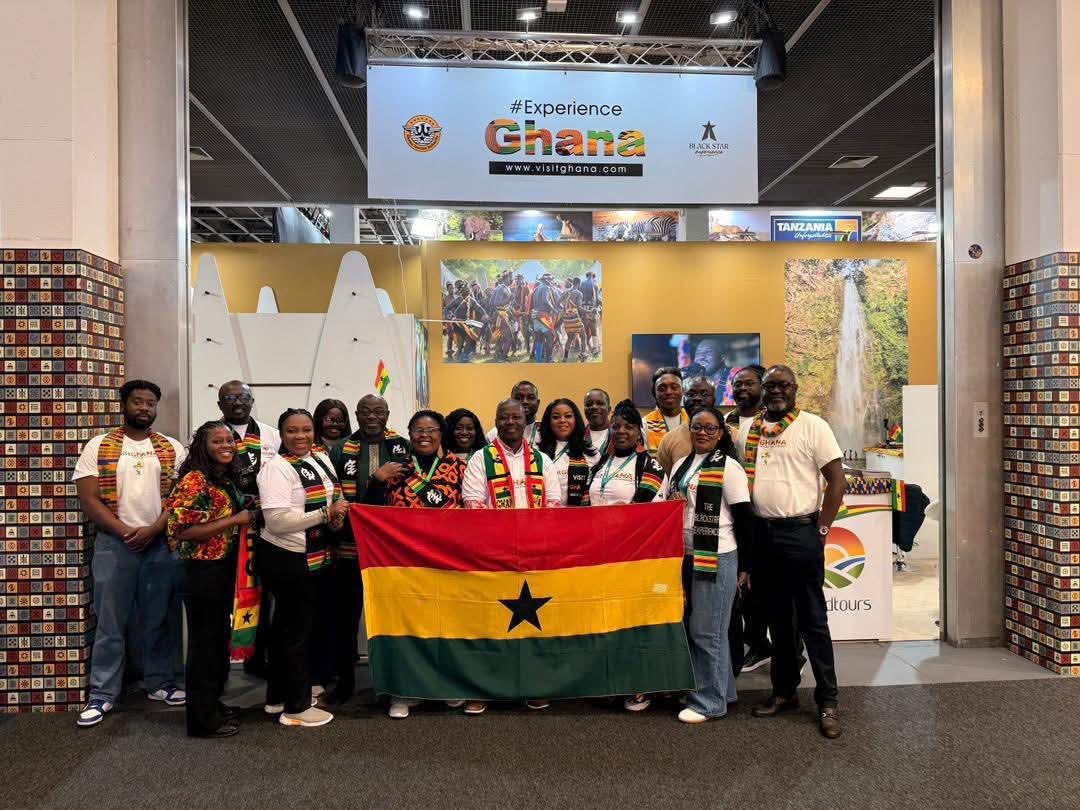
Ghana Tourism Authority is leading Ghana’s participation at ITB Berlin, which opened in Berlin with a vibrant national pavilion highlighting Ghana’s rich cultural heritage, tourism destinations and investment opportunities.
March 5 has been designated as Ghana Day, a special platform to promote Ghana’s languages, cuisine, Kente, festivals and business prospects to the global tourism community. The stand has already drawn strong interest with traditional arts and crafts displays, immersive multimedia presentations and popular Ghanaian snacks.
Seven private-sector players are exhibiting alongside government officials as part of efforts to deepen trade partnerships, expand market access, and attract investment across the hospitality, heritage tourism, ecotourism, and creative arts sectors.
Ahead of the official opening, the Ghana delegation also engaged young Ghanaian investors in Germany in collaboration with V Afrika-Verein and the Ghana Embassy, strengthening diaspora investment linkages and highlighting opportunities within the tourism value chain.
Ghana’s coordinated presence at ITB Berlin 2026 reinforces its strategy to position the country as the Gateway to Africa and a competitive destination for leisure travel and global investment.
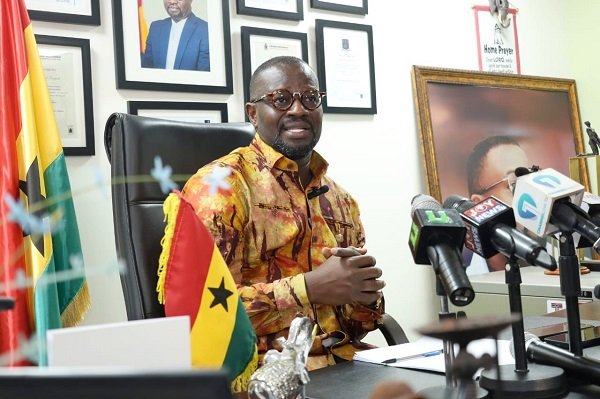
The Member of Parliament for Nsawam Adoagyiri, Frank Annoh Dompreh, has expressed concern over delays in the release of the District Assemblies Common Fund, warning that the situation is stalling development across the country.
On his facebook page, he described as a matter of urgent national importance, the Minority Chief Whip pointed to what he sees as a growing crisis of unpaid contractors, abandoned projects, and halted infrastructure works in many districts.
He noted that several communities are grappling with half completed schools, unfinished health facilities, abandoned markets, deteriorating roads, and stalled sanitation projects.
According to him, many contractors who have executed projects for district assemblies have not been paid, forcing some construction firms to demobilise from sites while workers lose their jobs.
He stressed that the District Assemblies Common Fund is not a discretionary allocation but a constitutional requirement under Article 252 of the 1992 Constitution, intended to support development at the local level.
In his view, years of delayed releases and accumulated arrears have weakened district development financing and disrupted projects meant to improve living conditions in communities.
He further argued that some payments made in recent years were largely the settlement of old debts rather than funding for new or ongoing projects, a situation he believes has affected contractor confidence and local economic activity.
He described the issue as more than a budgetary challenge, characterising it as a development emergency and a governance concern.
He therefore urged the appropriate authorities to pay outstanding DACF arrears, settle contractors who have completed their work, and ensure that transfers to districts are automatic and predictable.
He maintained that decentralisation can only succeed when district assemblies receive adequate and timely funding to carry out development projects.
He emphasised that stalled projects directly affect ordinary citizens, since they rely on such infrastructure for education, healthcare, transportation, sanitation, and economic activities.
He called for renewed attention to grassroots development, insisting that national progress should not be concentrated only in major cities but extended to all communities.
By: Jacob Aggrey

 News1 week ago
Finance Minister outlines new gold policies to boost reserves and curb smuggling
- News1 week ago
Sam George launches the 2026 Meteorological Awareness Month; presents the 2026 seasonal forecast for southern Ghana
- Hot!1 week ago
Breaking: Footballer who killed two children in Abesim handed lifetime sentence