Connect with us

Nutrition

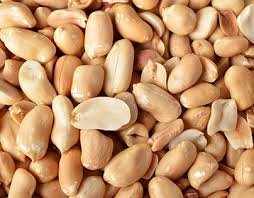
Roasted groundnuts

Published

on

Roasted groundnut
Roasted groundnut

 Ingredients

• 100 grams of groundnuts

• 3 tablespoonfuls of salt

• 330 ml water

Advertisement

• 2 cups of sea/river sand

Preparation

• Remove foreign materi­als like stones or dirt from groundnut.

• Wash it to make it clean.

Advertisement

• Put water on groundnut in saucepan and add salt.

• Cover and allow to boil

• Strain water off. Spread out and leave in the sun to dry

• Heat pot with sand (en­sure the sand is hot enough)

Advertisement

 Pour in the dried ground­nuts and stir (to roast)

• Stir occasionally over low heat to avoid burning of the groundnuts

• Check for doneness by peeling and/or tasting a seed of groundnut

• Bring off fire when groundnuts are light brown in colour and roasted

Advertisement

• Pour into a metal col­ander or cane basket and shake to separate sand from the roasted groundnuts

• Spread out to cool and serve with corn, millet or sorghum porridge, fried or roasted

Advertisement
Continue Reading
Advertisement

Nutrition

From donor dependence to national ownership: Ghana’s path to sustainable child nutrition

Published

on

An estimated 68,517 children in Ghana currently suffer from Severe Acute Malnutrition, yet only about 15 percent receive treatment. This gap is not due to a lack of effective solutions, but to limited and unstable access driven by fragmented, donor-dependent financing. As Ghana advances toward universal health coverage and economic self-reliance, ensuring sustainable and equitable child nutrition services requires urgent policy action.

Ready-to-Use Therapeutic Food (RUTF) and Multiple Micronutrient Supplements (MMS) are proven, cost-effective interventions. RUTF achieves recovery rates of 75–90 percent among children with severe acute malnutrition, while MMS reduces low birth weight and preterm birth. Both interventions are included in Ghana’s Essential Medicines List and Standard Treatment Guidelines. National protocols are finalised and disseminated, and over 600 health workers have been trained. In short, Ghana has laid the policy and technical groundwork.

Despite this readiness, access remains constrained by reliance on donor funding. Time-bound financing leads to supply disruptions, uneven geographic coverage, and weak long-term planning. Service availability often reflects donor priorities rather than population need.

Most critically, national ownership is undermined when lifesaving child nutrition interventions depend on external support. Donor dependence also limits system integration. Nutrition services delivered through projects remain peripheral to routine care. Health facilities cannot fully integrate RUTF and MMS into standard maternal and child health services without predictable supply. Data systems, quality assurance, and accountability mechanisms remain fragmented, preventing these interventions from reaching scale and impact.

Advertisement

Integrating RUTF and MMS into the National Health Insurance Scheme (NHIS) offers a clear pathway to sustainable national ownership. With 84 percent of mothers of children under five already enrolled, NHIS provides an existing platform for rapid and equitable scale-up. The 2025 uncapping of the National Health Insurance Levy further strengthens the financing base. NHIS inclusion would remove out-of-pocket costs for vulnerable families, standardise service delivery nationwide, and embed nutrition care within routine health services.

The cost implications are manageable. MMS costs approximately USD 2.50 per pregnancy for a full course, representing a small fraction of current undernutrition spending. Timely community-based RUTF treatment also reduces costly hospital admissions for complicated and severe malnutrition. Ongoing Health Technology Assessments will provide Ghana-specific evidence to guide reimbursement decisions.

Domestic financing brings broader benefits. It ensures stronger government accountability, improved data reporting, better quality assurance, and long-term planning beyond donor cycles. Most importantly, it affirms that the survival and wellbeing of Ghanaian children are national responsibilities.

The policy decision before Ghana’s leadership is clear. The clinical evidence supports RUTF and MMS. The regulatory framework is established. The implementation capacity exists through trained health workers and operational guidelines. The financing mechanism is available through NHIS with its recently expanded revenue base. What remains is the political committment to prioritise sustainable nutrition financing as part of Ghana’s Universal Health Coverage roadmap and broader development agenda.

Advertisement

Donor support has been valuable in establishing these interventions and building implementation capacity. The transition to domestic financing should be viewed not as disengagement but as graduating to full national ownership. Development partners can continue supporting technical assistance, capacity building, and innovation while Ghana secures sustaining coverage at scale.

The gap between 15 percent coverage and the 80 to 90 percent achievable with adequate financing represents thousands of preventable child deaths and compromised maternal health outcomes annually. Closing this gap through NHIS integration of RUTF and MMS is not merely a technical health financing decision. It is a statement of national values and priorities, affirming that every Ghanaian child deserves access to lifesaving nutrition treatment regardless of circumstance. It is a foundation for sustainable human capital development.

Feature article by Women, Media and Change under its Nourish Ghana: Advocating for Increased Leadership to Combat Malnutrition project.

Join our WhatsApp Channel now!
https://whatsapp.com/channel/0029VbBElzjInlqHhl1aTU27

Advertisement
Continue Reading

Nutrition

Eba and Egusi Stew

Published

on

Delicious eba and egusi

Ingredients

Egusi soup:

  • 2 cups ground egusi (melon seeds)
  • 1 kg assorted meat (beef, goat)
  • Stockfish (pre-soaked/boiled) and smoked fish
  • ½ to ¾ cup palm oil
  • 5 cups spinach or bitter leaf
  • 1 large onion
  • 2–3 seasoning cubes
  • Scotch bonnet pepper (to taste)
  • 1–2 tablespoons ground crayfish

Eba:

  • Gari (white or yellow/red oil-fortified)
  • Boiling water

Preparation

For Egusi Soup:

  1. Boil the assorted meat with chopped onions, seasoning cubes, and salt until tender. Reserve the meat stock.
  2. Heat palm oil in a clean pot on medium heat. Add finely chopped onions and sauté.
  3. Add the ground egusi and fry for 8–10 minutes, stirring constantly to prevent burning, until it turns slightly toasted and crumbly.
  4. Gradually add the reserved meat stock to the fried egusi while stirring to avoid lumps.
  5. Cover the pot and let egusi simmer for 15–20 minutes, stirring occasionally until the oil separates and rises to the top.
  6. Add ground crayfish, pepper, and the cooked meat/fish. Stir and cook for another 5–10 minutes.
  7. Add the washed/chopped vegetables (spinach or bitter leaf) and simmer for 2–5 minutes until wilted but still green.

For Eba:

  1. Boil water in a kettle or pot until it reaches a rolling boil.
  2. Pour hot water into a bowl. Gradually sprinkle the gari into the hot water.
  3. Stir vigorously with a wooden spatula to prevent lumps until the gari is fully incorporated and smooth.
  4. Cover the bowl for 1–2 minutes to allow the heat to steam the eba.
  5. By Theresa Tsetse

Join our WhatsApp Channel now!
https://whatsapp.com/channel/0029VbBElzjInlqHhl1aTU27

Continue Reading
Advertisement

Trending