News
Revocation of EI 144 key to protecting state lands- Solomon Owusu urges government

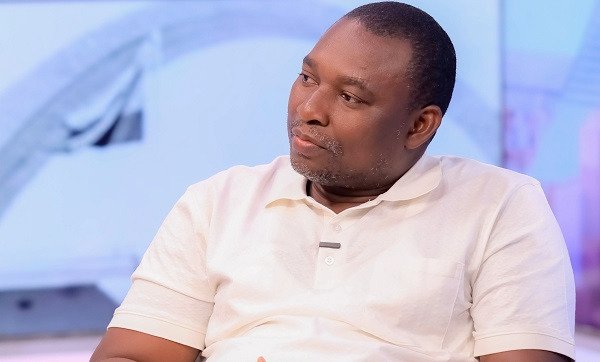
Communications Director of the United Party, Solomon Owusu has welcomed cabinet approval to revoke the sale of state lands without an audit.
He stressed that the move will remain incomplete unless Executive Instrument 144 is also revoked.
Speaking in an interview at TV3 , Solomon Owusu, a land economist by profession, argued that EI 144, also known as the Cessation of Forest Act, opened the door for the transfer of protected forest lands to private interests under questionable circumstances.
He explained that the state began acquiring lands in the early post independence period to support national development, including housing for public sector workers such as teachers, nurses and doctors.
According to him, in the past, public servants posted to new areas were assured of accommodation, unlike today when many are left stranded.
Solomon Owusu linked the current housing challenges faced by public workers to the sale of state lands that were originally meant for government estates.
He accused past state actors of greed, noting that lands acquired for public use have been sold off, leaving the government without space to build essential infrastructure.
On the Achimota Forest, Owusu criticised the decision under EI 144 to release portions of the forest, claiming it was done under the false pretext of returning land to original families who had already been compensated.
He insisted that the lands never truly returned to the families but were instead shared among politically connected individuals.
Owusu praised the recent revocation of LI 2462, which allowed mining in forest reserves, describing it as a positive step.
However, he maintained that revoking EI 144 would demonstrate a stronger commitment to environmental protection and national interest.
He warned that the Achimota Forest remains one of the few green spaces providing clean air in the capital and should be fully protected to preserve its flora and fauna.
He raised concerns about the encroachment of prayer camps and other activities within the forest, blaming weak enforcement by the Forestry Commission for driving away wildlife.
He called on President John Mahama to revoke EI 144, arguing that such a decision would resonate strongly with the public and reflect respect for national heritage and future generations.
With Ghana’s population now exceeding 34 million, he stressed that the state needs land more than ever to support housing, public services and large scale investments.
He further alleged that some state lands have been transferred to politically exposed persons and their associates, citing cases involving prime properties previously belonging to state institutions.
Solomon Owusu questioned how comparative land valuations are sometimes ignored to favour individuals, adding that civil servants at the Lands Commission who facilitate such deals must also be held accountable.
He concluded that state lands belong to all citizens and must be preserved and used strictly for national development rather than private gain.
By: Jacob Aggrey

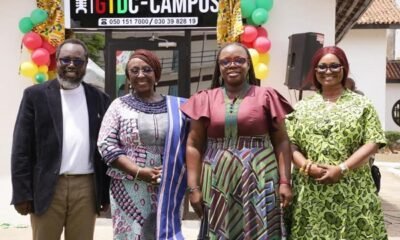




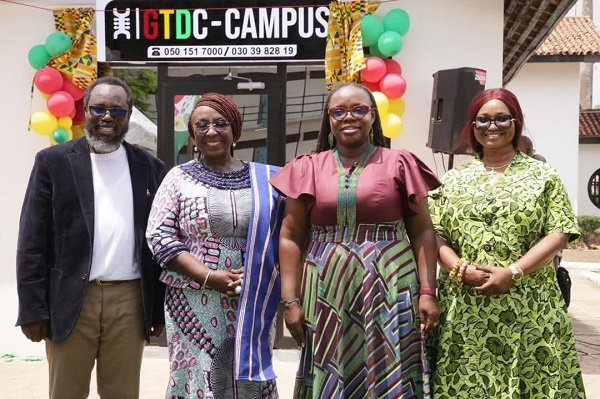
The Ghana Tourism Development Company, GTDC, under the leadership of Prof.Kobby Mensah has launched GTDC Campus Tourism Office at the University of Ghana.
The initiative aims to promote educational and domestic tourism by providing structured campus tour experiences showcasing key heritage sites, including the Archaeology Museum and the School of Performing Arts.
It will also offer students their first travel experience across the continent and inculcate in them love to visit Ghana’s heritage sites.
Addressing the gathering at the launch yesterday, the Minister of Tourism, Culture and Creative Arts, Abla Dzifa Gomashie, described tourism as a vehicle for education and heritage preservation, stressing that the sector must inspire citizens to value and protect national culture for future generations.
The minister highlighted tourism’s connection to disciplines such as history, the arts, economics and environmental science.
The minister further noted that the private sector is the engine of tourism economy, adding that the engines require fuel, which is talents.” by investing in these young people today, you are securing the quality, the innovation and competitiveness of our own industry for tomorrow.
She added that the establishment of the office represents a deliberate investment in the intellectual capital of the country.
The GTDC boss, Prof.Kobby Mensah, said,”at GTDC, we believe that if our tourism has to be sustainable, we have to promote domestic tourism and a very big part of it is getting students to appreciate tourism and helping them to organise tours.”
He added that the University of Ghana itself is a huge heritage site which must be explored.
Prof.Kobby Mensah noted that the initiative, which is one of many to be established across the country, is a joint partnership between GTDC and University of Ghana.
The Vice Chancellor of the University, Prof.Nana Aba Appiah Amfo, said the University is a custodian of heritage which goes beyond the structures and welcomed the establishment of the first Campus Tourism Office.
She was optimistic that the office would be put to good use to achieve the intended purpose.
The launch brought together Stakeholders reaffirming their commitment to nurturing future tourism and hospitality professionals.
By Edem Mensah-Tsotorme
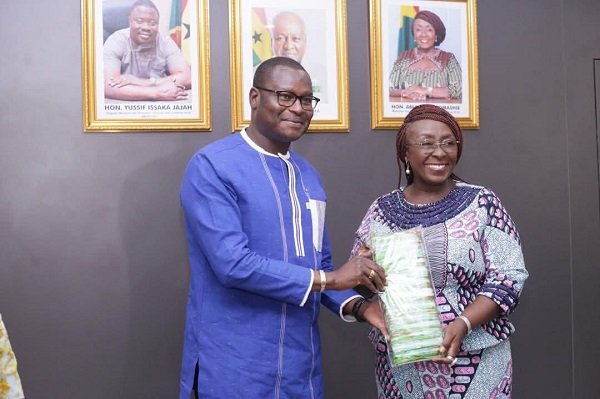
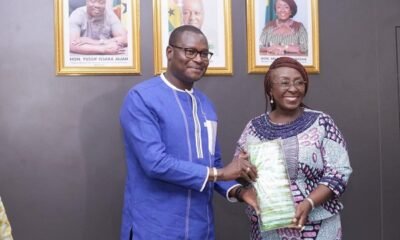
Ghana has officially accepted an invitation to serve as Guest Country at Burkina Faso’s 22nd National Culture Week in Bobo-Dioulasso from April 22 to May 2, 2026.
The invitation was extended by Burkina Faso’s Minister of Communication, Culture, Arts and Tourism, Gilbert Noël Ouédraogo, accompanied by the Ambassador of Burkina Faso to Ghana, H.E. David Kabré.
Receiving the delegation, Abla Dzifa Gomashie reaffirmed Ghana’s commitment to deepening cultural diplomacy and strengthening historic ties between the two nations.
She noted that the festival will create opportunities for young creatives, expand exhibition platforms and promote commercial exchange within the creative sector.
The event will feature cultural performances, a community village and gastronomy fair, an arts market, literary engagements, and a craft and trade fair.
Ghana’s participation is expected to further strengthen bilateral relations between John Dramani Mahama and Ibrahim Traoré, while fostering collaboration within the creative ecosystems of both countries.