Profile
Prof. (Mrs.) Akosua Dickson takes over as KNUST first female Vice Chancellor


It is a truism that “while most people are dreaming of success, winners wake-up and work hard to achieve it.”
The above quotation perfectly fits the first female Vice-Chancellor of the Kwame Nkrumah University of Science and Technology (KNUST) formerly University of Science and Technology (UST) in the Ashanti Regional Capital, Kumasi.
Through commitment, humility, dedication and hard work among other attributes, Prof. (Mrs) Rita Akosua Dickson, a Ghanaian Phytochemist now occupies this enviable position for a four-year term, effective August 1, 2020 to July 31, 2024.
Appointment
The Governing Council of the great institution made the appointment at its 258th (Special) Meeting held on June 25, 2020, upon the acceptance of the Report of the Search Committee for the appointment of Vice-Chancellor of the university.
Prior to her new appointment, the affable Prof. (Mrs) Akosua Dickson served as the 21st Pro-Vice-Chancellor and later as the Acting Vice-Chancellor in October 2018, when the then Vice-Chancellor, Prof. Obiri Danso was asked temporarily to step aside when student agitations and violence rocked the university campus.
Consequently, she was elected the Vice-Dean and ultimately the Dean of Faculty of Pharmacy and Pharmaceutical Sciences (FPPS) of the Kwame Nkrumah University of Science and Technology (KNUST), on two occasions (2016-2018), thus becoming the first female to be appointed to that position in the history of the Faculty.
For three terms (2010-2013) she became the Head of the Department of Pharmacognosy, KNUST.
Prof. Rita Akosua Dickson, Professor of Pharmacognosy, has pledged to continue to live up to her responsibilities notwithstanding any odds that might come her way being
the first female to occupy such an enviable academic position in the 68 years history of KNUST, where she is an alumna.
Education
She began her basic education at the Akantome Primary School at Bolgatanga, the Upper East Regional Capital, through Royal International School, Kumasi, in the Ashanti Region of Ghana.
Professor Dickson then went to St. Monica’s Secondary School at Mampong-Ashanti on Ghana Cocoa Marketing Board scholarship.
She studied for the General Certificate Examination, Advanced Level, at the Wesley Girls’ High School, Cape-Coast, the Central Regional Capital and qualified for the university to study Pharmacy at KNUST.
After graduating in 1994, she was invited by the Department of Pharmacognosy, Faculty of Pharmacy, KNUST, to undertake her National Service and subsequently a Teaching Assistantship position at the Department, alongside her Pharmacy Council which required hospital internship at the Komfo Anokye Teaching Hospital, Kumasi.
Professor Dickson further pursued Research Graduate Studies leading to the award of Master of Pharmacy Degree in Pharmacognosy in 1999 at KNUST.
Her hard work and commitment to duty got her the opportunity to be appointed a Lecturer in 2000 at the Department of Pharmacognosy.
She received a Commonwealth Scholarship award in 2003 to study for Doctor of Philosophy (PhD) degree at Kings’ College, London, and also at the University of London, UK, where she studied a parallel programme in education and acquired a Graduate Certificate in Academic Practice(GCAP).
On her return to Ghana, she was promoted to the rank of Senior Lecturer in 2009 and between 2011 and 2012, Professor Dickson won a Commonwealth Academic Fellowship at the Department of Pharmaceutical and Biological Chemistry, School of Pharmacy, University of London, UK, as a visiting Scientist Researching into Bioactive Natural Products as well as Novartis Fellow in collaboration with Seeding Labs in the United States of America.
She was promoted to Associate Professor of Pharmacognosy in 2014.
Experience
As an accomplished Phytochemist, her scientific knowledge and research expertise have impacted the international scientific community in terms of training, mentorship and scientific appraisals.
Her research work spans the identification and development of bioactive natural products as standard medicines for the treatment and management of communicable and non-communicable diseases, among others.
She is keen on phytopharmaceutical analysis and quality control of herbal medicines to ensure their safety and efficacy, with the conviction that Africans can reduce the continent’s disease burden by exploring the use of its flora and fauna.
Professor Dickson’s research mentorship has led to the training of a number of Master of Philosophy (MPhil) and PhD students, some of whom are currently employed in renowned public universities in the country including KNUST, and research centres in Ghana.
Membership
She has actively engaged the global scientific community with her research contributions. Currently, she has over 80 published scientific articles and conference proceedings to her credit. In addition, she has authored and co-authored five books and book chapters within the domain of her expertise.
She is very visible on renowned academic platforms such as Research Gate, Google Scholar and Scopus with research impact of over 24,000 article reads and more than 700 citations in various scientific disciplines.
Among other engagements, she serves as a reviewer for several journals in pharmacognosy, natural products chemistry and phytochemistry.
She is presently the Editor-in-Chief of the International Journal of Ethnomedicine and Pharmacognosy (IJEP) and editorial member of International Journal of Science and Research Methodology (IJSRM).
She is a member of the Society of Medicinal Plant Research (GA), among other international associations.
The Vice-Chancellor is married to Nana Sarkodie Dickson, a Chartered Accountant, and the couple is blessed with four daughters; Akosua Dickson, Abena Dickson, Akua Dickson and Afua Dickson.
At her leisure time, Prof. Dickson loves to cook traditional foods and share with friends. To maintain healthy lifestyle, she avoids junk foods and goes to the gym to keep fit.
From Kingsley E. Hope, Kumasi



He once sold kenkey to pay his school fees, and now wears the rank of Deputy Commissioner of Police. DCOP Kofi Sarpong, police officer and award winning gospel musician is charting a journey few could script.
In an interview with The Spectator chronicling his rise, the newly promoted DCOP took us on his journey through the ranks.
Early Life
“I was born in Berekum in the Bono Region, then Brong Ahafo, to Comfort Yeboah, affectionately called Maame Yaa, and the late Chief Inspector Kofi Sarpong,” he said.

His family story is one of resilience. His mother had two children before her husband died in an accident. She later married Kofi Sarpong’s father, a police officer, and had two more, himself and his junior brother. “So we are four, unfortunately one is deceased, just last year, so we are three now.”
School and struggle
He started at Berekum Methodist Primary under the old ‘Sito’ system. In Form Two, he moved to Obuasi to stay with a guardian for his Form Three education, then returned to Berekum for Form Four. He later attended Berekum Senior High School where he studied General Arts and shone as an athlete, a sprinter in the 100m, 200m and 4x400m relay.
After O-Levels, his batch was the last to write the exams, his dream was to become a teacher because of his love for children. But financial hardship forced a detour.
“I decided to help myself by going to buy maize and started preparing kenkey to sell at lorry parks and markets in Berekum,” he recalled.
According to him, the people from Berekum know this story. “I can make all types of kenkey, Fante Kenkey, Ga Komi and others. Don’t be surprised to see Kofi Sarpong Kenkey one day.” The proceeds paid his upkeep.
For this reason, he advised the youth “Don’t see life as a smooth journey but find something prudent to do to help yourself in difficult times.”
After grinding his education to a halt due to financial challenges, he now holds a Degree in Public Administration from GIMPA, a Master’s in International Relations and Diplomacy and Project Management, plus other higher certificates, with more in the offing.
The Police Call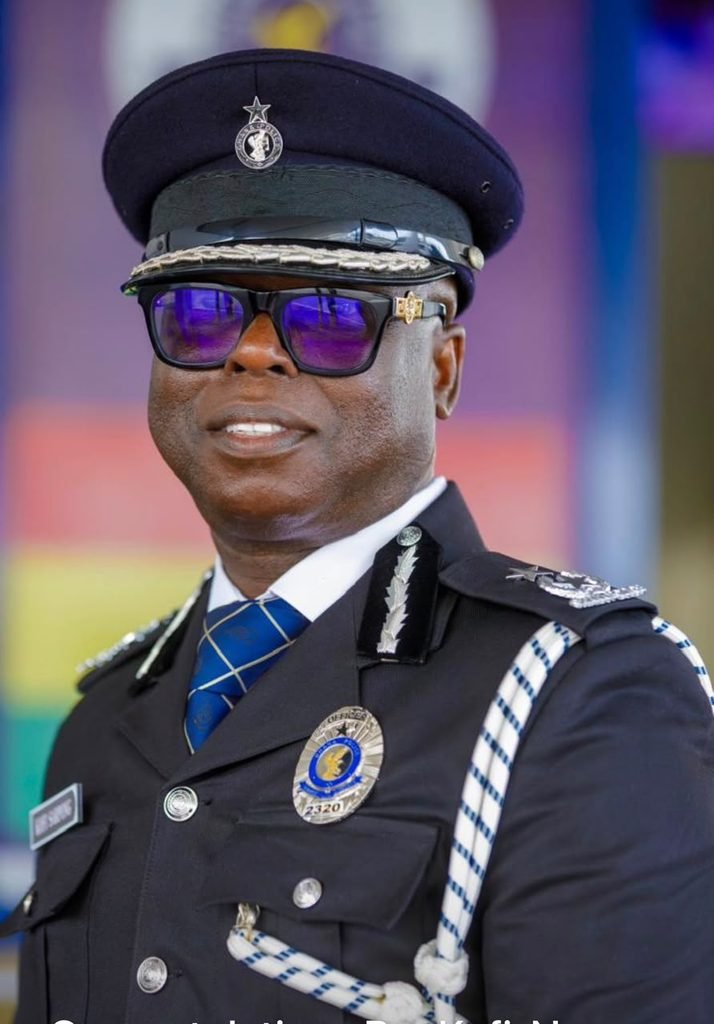
When teaching did not materialise immediately, he moved to stay with his father at Osu, Accra. In 1994, he visited former IGP Nana Owusu-Nsia at Police Headquarters, who told about ongoing police enlistment.
In his head he declined, but outwardly he accepted to try reluctantly. Later, watching TV news and seeing long queues of young people aspiring to join the Police, he was inspired to reconsider.
He went to Berekum for his certificate. Accra enlistment had closed, so he joined the Kumasi exercise. He was selected, passed the exams and went to the Koforidua Police Training School, Galloway. After passing out, he was posted to the Logistics Unit at Police Headquarters.
At Headquarters, a senior officer encouraged young constables to further their education. He took a course in Purchasing and Supply via distance learning from a UK institution. 
Upon completion, the Police administration promoted him from Constable Class One to Chief Inspector, a leap that paved the way for him to enrol at the Police Academy. He graduated as ASP, and the climb to DCOP began.
“The officer corps starts from Assistant Superintendent of Police (ASP) from the cadet,” he explained. “When you graduate from the Police Academy, you are awarded ASP, and you move to Deputy Superintendent of Police (DSP), that’s when I released album to start my music career professionally.”
From there, he rose to Superintendent of Police (SP), Chief Superintendent, Assistant Commissioner of Police (ACP), and now Deputy Commissioner of Police (DCOP). Next is Commissioner of Police (COP).
Music found him in Sudan
On peacekeeping duty in Sudan, officers from different nations came together to hold fellowship led by a Nigerian officer. In December that year, with top-ranked officers present, Kofi Sarpong led the service to the admiration of all.
On his return to Ghana, a Colonel, who was a Matron at 37 Military Hospital and a member of the 37 Methodist-Presbyterian Church invited him to their harvest service. He ministered, and as he stepped out of church, a man approached him with an offer to record him. He declined.
Days later, at the office, the man, Ernest Kwesi, who owned Media Excel Production sent an elderly man to pursue him. He still declined. This compelled Ernest Kwesi himself to visit him at the office. “He told me he had seen something in me.”
Just after Ernest Kwesi left,Kofi Sarpong wrote to then Director General/Welfare, Mohammed Alhassan, and Paul Tawiah Quaye the Inspector General of Police (IGP) at the time. “He opened the letter and said he had been waiting all this while because he had seen me perform at police officers’ events.”
He was summoned to the IGP’s office, a call which scared him, however, it was a good news; his request was approved. Against this backdrop, he informed Ernest Kwesi who quickly visited that evening with highlife musician Akwaboah Jnr., who taught him his first song, ‘Me ko nso hw3 mu’, and they went to the studio.
A song earlier recorded in reggae by Zapp Mallet was totally transformed by Nacee, so they released both versions on the album. Nacee, he says, hugely supported promotion, as did Mark Okraku-Mantey.
He also acknowledge Oware Jnr. who also wrote songs for him.
After his maiden album’s success, police leadership congratulated him. He says he is happy to have inspired other officers to write to the Service to pursue other interests.
An autobiography, he reveals, is in the offing.
Family and food
He is married to Mrs Salomey Sarpong with three children, two boys and a girl: Nana Nketiah, Maame Afia Yeboah Sarpong and Papa Kwabena Aseda Sarpong.
His hobbies are watching athletics and being with family. His favourite foods are fufu and konkonte with groundnut soup.
On music, he teased a collaboration with a top Nigerian artiste, promising fans “hot praises” soon.
He concluded by thanking Ghanaians for their support since his promotion, and thanked the Inspector General of Police for his guidance.
By Edem Mensah-Tsotorme
SKIP THE QUEUE, TAP THE NEWS

You can now read the Ghanaian Times and The Spectator newspapers from the comfort of your device via TimesNewsPlus.
Join our WhatsApp Channel: https://whatsapp.com/channel/0029VbBElzjInlqHhl1aTU27
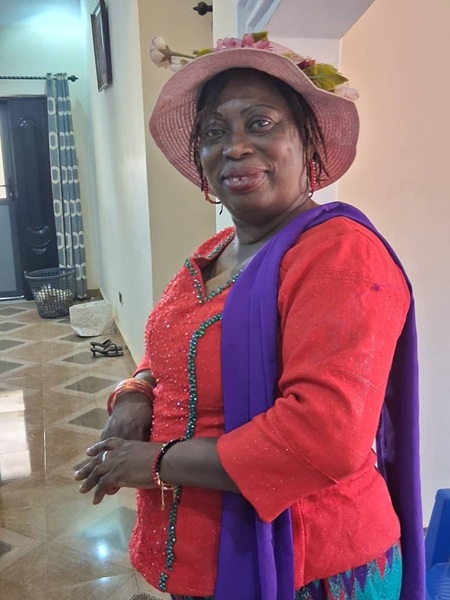
WHEN some of her pupils failed to show up at school, Mary Adotei did not always assume they were absent. Sometimes, she went looking for them.
In the communities where she taught, getting a child into the classroom could require more than preparing lessons. Mrs Adotei remembers occasions when she had to visit the homes of pupils, bathe them, prepare them and bring them to school herself.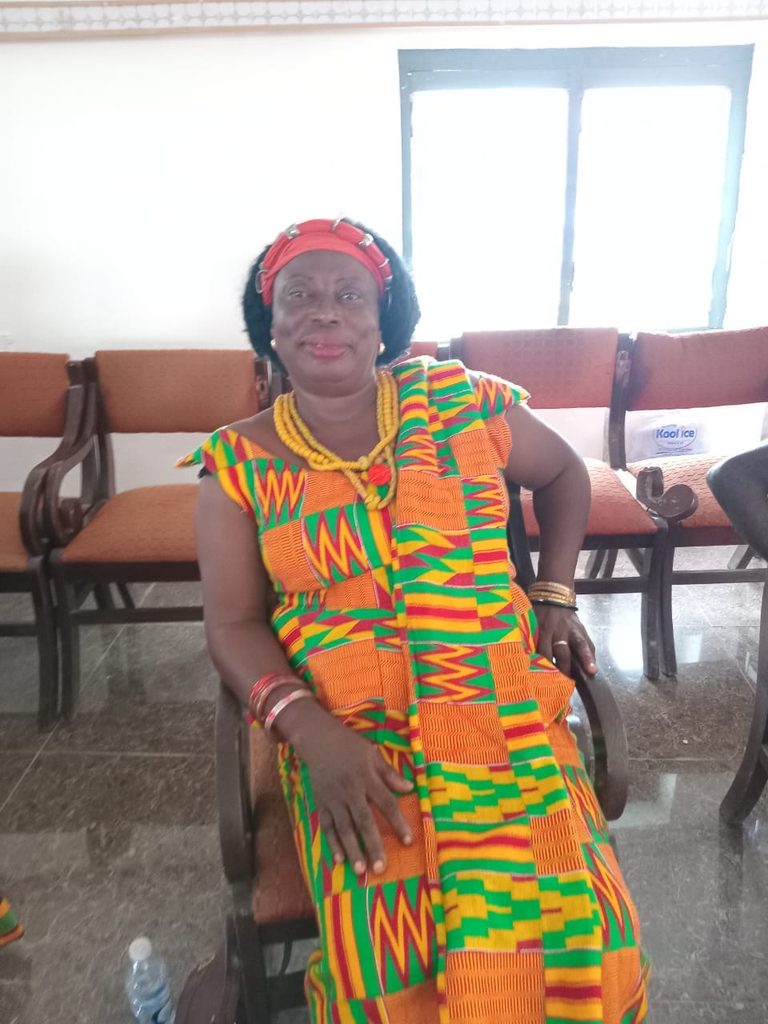
“There were times I had to go to the homes of some of the children, bathe them and bring them to school,” she recalled.
It is a memory that captures much of her journey over the years as a teacher, a profession she entered without knowing it would become central to her identity.
Now, after years of working with children and communities, Mrs Adotei is taking lessons from the classroom into a new arena.
She is contesting the position of Women’s Organiser of the National Democratic Congress (NDC) in the Asikuma Odoben Brakwa (AOB) Constituency in the Central Region, hoping to use her experience working with people to contribute to the welfare of women in the constituency.
But her story begins in the classroom.
After completing her basic and secondary education, Mrs Adotei spent 12 years working as a pupil teacher before she had the opportunity to receive professional training.
In 2006, she entered Fosu College of Education and completed her training in 2011 with a Diploma in Basic Education.

She returned to the classroom and has remained there since, teaching in different communities before moving to her current school, Catholic Boys Basic School in Breman Asikuma, in 2019.
The years have given her a front-row seat to the transformation education can bring.
Some of the children she once taught have grown into professionals, carrying the lessons they learnt in her classroom into hospitals, schools, offices and other workplaces.
Mrs Adotei said she had encountered former pupils who were now doctors, nurses, teachers and even a lawyer.
For a teacher, she said, such moments bring a special kind of satisfaction and reinforce the reason she remains passionate about education.
Her journey, however, has not been without difficult moments.
Teaching in local communities sometimes meant dealing with circumstances that went beyond academic work. Some pupils needed encouragement, personal attention and practical help before they could even settle down to learn.
Those experiences taught her that the challenges confronting people cannot always be solved from a distance. That understanding has followed her into her political activities.
Mrs Adotei has been involved in the NDC for years and previously served as a branch treasurer. She has also supported women in her branch, including assisting some to access medical treatment and providing help to families when the need arose.
She is now making her third attempt at becoming the constituency’s Women’s Organiser.
Her motivation is linked to what she has seen around her.
Mrs Adotei wants women in the constituency to have access to skills and opportunities that can help them become more economically independent.
She believes her years as a teacher have prepared her for the work, too, because the profession has taught her to listen, communicate, understand different circumstances and work patiently with people.
For her, the transition from teacher to political organiser is therefore not a complete departure from the path she has followed.
The classroom taught her to work with individuals. Politics, she hopes, will give her the opportunity to work with a wider group of women.
If elected, Mrs Adotei intends to continue teaching while taking up her political responsibilities. She said she would organise her time to attend meetings and constituency activities without abandoning her duties to her pupils.
Away from school and politics, she is a wife and mother of two sons who are pursuing their degrees at university.
Her message to young girls is shaped by everything she has seen education do for the children she has taught.
For Mrs Adotei, education remains one of the strongest tools available to young people, especially girls seeking to build better futures.
She wants them to stay in school, pursue further education and acquire skills that will prepare them for the future.
“Nowadays, you cannot go forward without education,” she said.
By Esinam Jemima Kuatsinu
SKIP THE QUEUE, TAP THE NEWS
You can now read the Ghanaian Times and The Spectator newspapers from the comfort of your device via TimesNewsPlus.
Join our WhatsApp Channel: https://whatsapp.com/channel/0029VbBElzjInlqHhl1aTU27