Profile
Lilian Sally Addo – championing the UN agenda among Ghanaian youth


Lilian Sally Addo is the Country head of the United Nations Youth Association Ghana (UNYA) and her drive to ensuring the attainment of the Sustainable Development Goals (SDGs), is highly commendable and impactful to the nation.
She is spearheading the affairs and the role of the youth in nation building and making a collaborative effort to help achieve the Resolution 2250 set by the United Nations.
Ms Lilian is using her energy and a resilience to canvass youth across the nation to help maintain peace and security, which was in line with the UN Resolution 2250, as the thematic resolution that deals with the topic of youth from an international peace and security perspective.
The indefatigable lady has championed the association’s goals to be an ardent campaigner for the United Nations objectives here in Ghana in setting an example of youth leadership to maintain peace and security within the nation.
The Spectator exclusively interviewed this promising Country Head last week to discuss the measures put in place by her to make the association a very impactful or vibrant both locally and internationally.
Background/ Education
Ms Lilian hails from Winneba in the Central Region, but was born in Accra to Mr James Addo, a retired police officer cum farmer and Mrs Theodora Addo, a retired nurse.
Lilian schooled at New Hope Preparatory School and St. Mary’s Basic Schools, all at Korle-Bu, a suburb of Accra, and later proceeded to Mfantsiman Girls’ Secondary School, in the Central Region in 1992, where she read General Arts and completed in 1994.
Initially having a passion to be an air hostess, the visionary lady decided to pursue a bilingual course at Alliance Française and the Ghana Institute of Languages to enhance her proficiency in French and Spanish.
Her dream for becoming an air hostess did not materialise, when her parents “thwarted” the idea thus making her delve into Information Technology where she studied and earned an Associate Degree in Management Information System from the Institute for the Management of Information Systems, in the United Kingdom, from 1996 to 1998.
Ms Addo later came back to Ghana and worked at the Standard Chartered Bank, Accra High Street, for a short time.
To add value to herself, she further acquired professional certificates in Local and Wide Area Network (LAN), and (WAN) and Network Topology from Systems Communications Network Institute in the United Kingdom.
Later in life, Lilian aspired to be a lawyer so she read Paralegal Studies at Kaplan University, Davenport, Iowa, in the United States of America in 2012.
“I have love for entertainment so I wanted to be an entertainment lawyer so in 2012 to 2015, I obtained a Bachelor of Science in Entertainment Business Management at Fullsail University at Florida in the United States,” she said.
In quest for more academic achievement, she proceeded to read Master of Science in Legal Studies at the Washington University in St. Loius (School of Law), Missouri, USA, and is currently reading a doctorate degree in Leadership and Business Management at Capella University in Minneapolis Minnesota, USA.
Academic Awards
This “never say never” lady received a President’s Honour List for obtaining a 3.96 grade point in February 2010 term during her studies at Kaplan University, and again received a President’s Honour List for obtaining a 3.96 grade point in April 2009 term at the same university.
Since hard work pays, Lillian again received a Dean’s Honour List for earning a 3.96 grade point for September 2009 term at Kaplan University, and repeated the same record for obtaining 3.96 grade point in July 2010 term at the same school.
Careers/ Professional Achievements
Her zeal for making a remarkable impact on individuals has made her find herself doing multiple jobs.
Ms Lilian is the Chief Executive Officer of Creative Entertainment and Events Management Limited and is also the CEO of Creative Hi-Tech Solutions.
Also Lilian is the founder and president of the Humanitarian Reach-out Foundation, a non- governmental organisation.
While in the United States, she attended a nursing school and worked as a nurse Aide in the hospital.
According to the hardworking lady, she has done businesses across Africa, Asia and the Americas.
“I have trained and managed talents from cultural performers through models and artistes with my company, Creative Entertainment and Events (formerly Riclils Entertainment) and have done fulfilling works with my humanitarian work,” she revealed.
The Zeal for United Nations
She stated that her involvement in the United Nations came into light when she met a group of UN volunteers and they approached her to champion the cause of mobilising the youth to have a louder voice in fulfilling the Resolution 2250.
After accepting the offer, she built a strong UN administration and developed a team out of it in all the current 16 regions of Ghana by going on a national tour to build affiliations.
According to the Country Head, she went to the United Nation’s Headquarters to find out more about strengthening and forming a formidable association under the UN.
“I have attended many conferences organised by the UN and exposed more youths in Ghana to participate in more UN programmes both in Ghana and abroad.
Ms Lilian together with her team has formed a youth parliament with 275 Members of Parliament to advocate the affairs of the association.
Advice to Youth
The rice and kontomire lover admonished the youth to desist from peer pressure and stop living fake lives on social media, because the lifestyle of some youth negatively impacts others.
“The youth must identify their God-given talents, submit to authorities and guidance, and stay focused with the fear of God, which is the only lead-way to success”, she cautioned.
By Alfred Nii Arday Ankrah



In a world where stories shape perceptions and influence change, Michelle Eyram Yorgbe, stands out as a compelling voice dedicated to using media as a tool for transformation.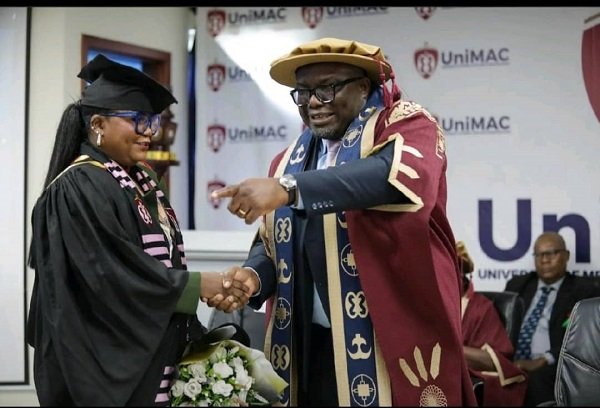
An accomplished journalist and filmmaker, her journey is one marked by excellence, resilience, and an unwavering commitment to social impact.
Eyram’s story begins at Mawuli Secondary School, where her passion for the arts and communication first took root.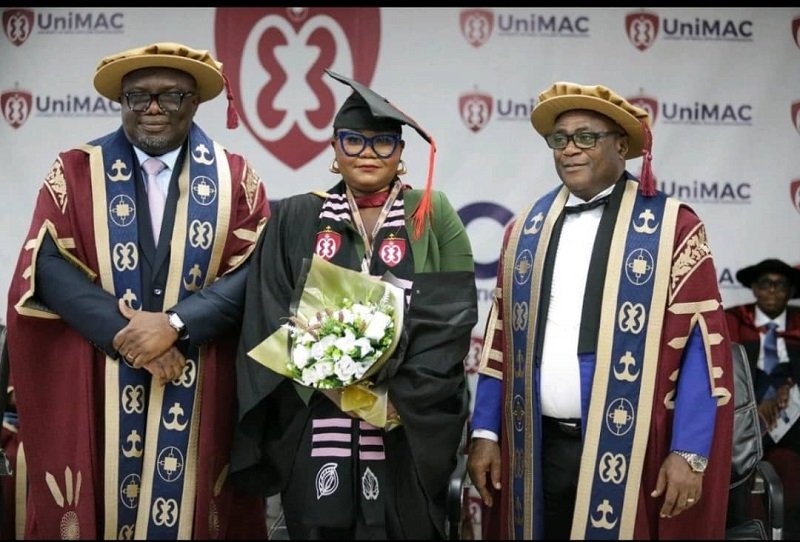
Even at a young age, she exhibited a deep curiosity about the world around her and a desire to tell stories that matter. This early interest would later blossom into a purposeful career in media and storytelling.
Her academic path led her to the National Film and Television Institute (NAFTI), where she pursued a Diploma in Film Directing and Script Writing.
At NAFTI, Eyram honed her creative instincts, learning to craft narratives that not only entertain but also educate and inspire.
Her training laid a strong foundation, equipping her with the technical and artistic skills needed to excel in the dynamic world of film and media.
Driven by a desire to engage more deeply with public discourse, Eyram continued her education at the University of Media, Arts and Communication – Institute of Film and Television (UniMAC-IFT), where she pursued a Bachelor of Arts in Broadcast Journalism.
Her dedication and discipline quickly set her apart. She graduated with First Class Honours and was named the Overall Best Student of UniMAC-IFT in 2024, a remarkable achievement that underscored her commitment to excellence.
But she’s not one to rest on her laurels. After that feat, Eyram advanced to the University of Media, Arts and Communication – Institute of Journalism (UniMAC-IJ) for her Master’s degree in Journalism. Once again, she distinguished herself academically, graduating as the Valedictorian of her cohort with an outstanding Final Grade Point Average of 3.94.
“It’s a big honour to graduate as the Overall Best Graduating student with an outstanding Cumulative Grade Point Average (CGPA) of 3.94 in the MA in Journalism,” she shared her joy with The Spectator.
“What makes it even more beautiful was coming out as the Valedictorian on two occasions. I am so proud. This would, however mean nothing without a direct impact of this on society,” she said.
Her academic journey reflects not only intellectual brilliance but also a relentless pursuit of growth and impact.
In 2025, Eyram’s excellence gained international recognition when she was selected for further studies in Norway through a partnership between UniMAC-IJ and NLA University College under the Erasmus Mundus Mobility Programme.
This opportunity marked a significant milestone, allowing her to expand her horizons, engage with global perspectives, and refine her craft on an international stage.
Yet, beyond her impressive academic achievements, what truly defines Eyram is her heart for service.
She is deeply committed to advocacy and social development, particularly in championing gender equity and supporting marginalised communities.
Her passion for making a difference has seen her actively involved in community initiatives that bring tangible change to people’s lives.
As a volunteer with the Ghanaian Heritage Organisation, an NGO founded by members of the Ghanaian diaspora, Eyram played a pivotal role in community development projects across the Volta Region. Notably, she contributed to efforts that provided boreholes to underserved villages, bringing clean and accessible water to communities in need.
As the organisation’s only member based in Ghana, her role was both unique and impactful, bridging the gap between local needs and diaspora support.
Her commitment to social change is further reflected in her role as a co-founder of the Dreams Impact Foundation, an initiative she established alongside her sisters.
Through this foundation, Eyram has offered support to vulnerable groups by distributing sanitary products to schoolgirls and prison inmates, while also providing essential items to widows in disadvantaged communities.
These acts of compassion demonstrate her belief that storytelling must go hand in hand with action.
Outside her professional and humanitarian work, Eyram is an avid reader and a lover of films. These passions continue to enrich her perspective, shaping her understanding of narratives and reinforcing her dedication to telling stories that resonate and inspire.
As she steps into the next phase of her journey, she remains steadfast in her mission—to use journalism and storytelling as powerful tools for advocacy, social transformation, and amplifying the voices of the unheard.
Her story is not just one of personal success, but of purpose, a reminder that when talent meets passion and service, the result is truly transformative.
Indeed, Eyram is not only telling stories; she is changing lives, one narrative at a time through storytelling and service.
By Esinam Jemima Kuatsinu

In the world of sports, athletes often take center stage while the role of officials remains equally critical, yet less celebrated.
One Ghanaian is steadily changing that narrative. He is Aziz Adimah, a dedicated hockey umpire whose journey from the school field to the international arena reflects passion, resilience, and purpose.
Aziz Adimah’s story with hockey began during his secondary school days. Introduced to the sport in his second year by a peer tutor, what started as a casual interest quickly evolved into a lifelong commitment.
After completing school, he continued playing actively, but by 2008, he made a defining decision to pursue officiating seriously.
That decision marked the beginning of a remarkable turn in his sports journey.

While many athletes aspire to reach the pinnacle as players, Aziz recognised a different path to longevity and impact in the sport. According to him, playing careers especially at the national level can be short-lived, often limited to a few major tournaments.
Officiating, however, offered a broader horizon.
Through umpiring, Aziz found an opportunity not only to stay connected to the sport but also to rise through the global ranks. His dedication has since earned him a place on the international stage, where he proudly represents Ghana.
One of Aziz’s greatest motivations is the honour of representing his country internationally. Having officiated in global competitions, including World Cup qualifiers, he describes the experience as both humbling and inspiring.
Among his most memorable moments was officiating a high-intensity match between Pakistan and England during a World Cup qualifying tournament.
The pace, skill, and tactical depth of the game left a lasting impression on him and reinforced his passion for the profession.
“Being alone on that stage, representing your country is a special kind of pride,” he reflects.
Like every profession, umpiring comes with its own set of challenges. For Aziz, two stand out: logistics and performance expectations.
Unlike players who often benefit from structured team support, umpires must sometimes navigate limited resources, including travel logistics. Additionally, officials are expected to perform at standards higher than the level of play in their home countries which required constant learning, exposure, and adaptation to global trends.
Another major challenge lies in decision-making under pressure. Aziz recounts a particularly difficult moment when, as a video referee, he had to review footage and make a call that resulted in a player receiving a yellow card and a ten-minute suspension.
“In such moments, you know that if you get it wrong, it affects the entire game,” he explains.
Umpiring demands sharp judgment, often within split seconds. Aziz emphasises that fans and players must understand the intensity of this responsibility.
“The umpire processes everything in a split second. Sometimes you get it right, sometimes you don’t but the pressure is always there.”
Fortunately, he highlights the strong support system within the hockey hierarchy; from coaches to technical teams which provides room for reflection, learning, and growth.
Beyond officiating, Aziz is deeply committed to developing hockey in Ghana.
He runs an academy that focuses on nurturing young talent, with programmes for both youth and university students.
Currently, the academy trains players under 20 and is expanding its reach within tertiary institutions.
His goal is to build a strong pipeline of talent while also promoting officiating as a viable pathway in the sport.
However, he notes a significant gap in female participation, particularly in umpiring.
Efforts are underway to intentionally recruit and mentor more women into officiating roles, including collaborations with schools and international professionals.
Outside the hockey field, Aziz maintains a professional career, balancing work responsibilities with his demanding schedule as an umpire.
He credits his workplace –Promasidor Ghana Limited, for being supportive, allowing him to travel for international assignments.
Despite the challenges, he considers hockey not just a profession, but a form of leisure; something he genuinely enjoys.
Currently serving on the international panel just below the elite level, Aziz is determined to climb higher.
His immediate goal is to secure the required assessment scores to qualify for the top-tier panel, which would enable him to officiate at prestigious events such as the World Cup and the Olympic Games.
Driven by ambition, he hopes to become one of the first Ghanaian umpires to reach that level.
To young people considering a career in hockey officiating, Aziz offers both encouragement and realism. While the profession may not yet provide full financial security, it offers exposure, growth, and the chance to make a mark globally.
With structural improvements expected in international hockey, he believes the future holds greater opportunities for umpires worldwide.
A husband and father of two, Aziz Adimah embodies balance, discipline, and vision. His journey is not just about personal achievement but about elevating Ghana’s presence in international hockey.
Through every whistle blown and every decision made, he continues to inspire a new generation proving that sometimes, the most powerful impact in sports comes not from scoring goals, but from ensuring the game is played right.
By Esinam Jemima Kuatsinu
Join our WhatsApp Channel now!
https://whatsapp.com/channel/0029VbBElzjInlqHhl1aTU27


 Entertainment1 week ago
Deals, Crowds, and Big Wins: Dulcie Boateng’s Porials Pitch 2026 Returns This Weekend
- News2 days ago
Okudzeto Ablakwa engages South African International Relations Minister over Xenophobic attacks
- Entertainment1 week ago
Guinness Ghana Introduces GH¢100,000 Prize for TGMA Album of the Year Winner