News
Philip Nai: Why behind-the-scenes professionals deserve respect, value, and strategic growth


- /home/u249204778/domains/spectator.com.gh/public_html/wp-content/plugins/mvp-social-buttons/mvp-social-buttons.php on line 27
https://spectator.com.gh/wp-content/uploads/2025/09/WhatsApp-Image-2025-09-24-at-13.41.21-611x600.jpeg&description=Philip Nai: Why behind-the-scenes professionals deserve respect, value, and strategic growth', 'pinterestShare', 'width=750,height=350'); return false;" title="Pin This Post">
- Share
- Tweet /home/u249204778/domains/spectator.com.gh/public_html/wp-content/plugins/mvp-social-buttons/mvp-social-buttons.php on line 72
https://spectator.com.gh/wp-content/uploads/2025/09/WhatsApp-Image-2025-09-24-at-13.41.21-611x600.jpeg&description=Philip Nai: Why behind-the-scenes professionals deserve respect, value, and strategic growth', 'pinterestShare', 'width=750,height=350'); return false;" title="Pin This Post">
Nearly two decades in Ghana’s media industry have taught me a defining truth: the strength of any broadcast lies not only in the voice behind the microphone or the face on screen, but in the brilliance of those who work quietly to make it all possible.
From my early days at Vibe FM and Unique FM to my current role as lead producer at Joy FM, I have worked with producers, directors, journalists, editors, camera operators, digital strategists, sound engineers, designers, floor managers, technicians, and countless other creative professionals. Together, we have shaped national and global storytelling projects—turning ideas into unforgettable experiences.
That journey has armed me with a toolkit that goes far beyond the mixing console. Skills in journalism, digital marketing, strategic communication, brand management, project management, procurement and supply chain management, media law, and paralegal practice have strengthened my conviction that behind-the-scenes talent is the true heartbeat of this industry. These professionals deserve respect, fair reward, and the opportunity to grow.
Behind-the-scenes professionals are the architects of every winning show, compelling documentary, and live broadcast. They are not errand boys or girls. They are innovators and leaders whose insight fuels programming, ratings, and revenue. When organisations underpay, sideline, or fail to invest in them, they cripple the very engine that powers their platforms.
Respect begins with decisive action from media owners and executives. Fair pay and transparent, performance-linked bonus structures are not perks—they are the baseline for sustaining excellence. Anything less is exploitation. These professionals build the products that keep stations alive.
It is time to abandon the culture of invisibility and token recognition. Media owners must establish clear, merit-based career ladders—from assistant to lead producer, executive producer, director, and senior leadership. Build professional workplaces where behind-the-scenes talent is treated as brand custodians and partners, not as nameless staff executing orders. When management undervalues its creative engine, the enterprise suffers. When it invests, rewards, and recognises them, it unleashes the innovation and loyalty that secure ratings, revenue, and relevance.
Today’s media landscape demands more than technical skill. Producers and directors must evolve into strategists who read data, manage crises, and align content with shifting audience appetites.
Digital marketing and brand management elevate their programmes and personal brands. Procurement and supply chain expertise keep productions lean and effective. Media law and paralegal skills safeguard contracts, copyright, and intellectual property—protecting both creators and organisations.
To every producer, director, editor, camera professional, and technician—your work is the backbone of this industry. Never shrink from demanding the respect and rewards you have earned. To media owners and executives—the future of your platforms depends on how boldly you invest in, recognise, and elevate the unseen brilliance that keeps audiences coming back. Value them, empower them, and watch your brands thrive.






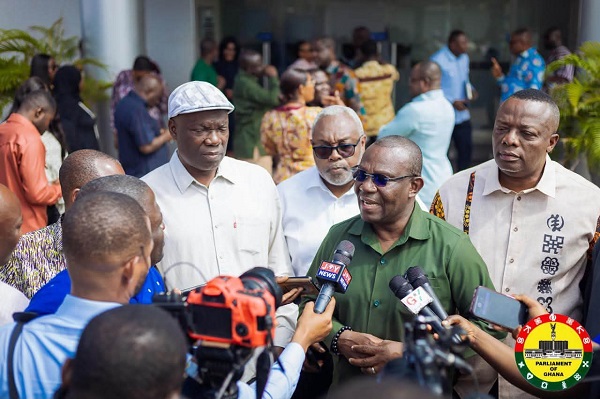
The Parliamentary Select Committee on Energy has appealed to the Ministry of Finance to release GH¢5.6 million to the Petroleum Commission to enable it to establish and operate a world-class data centre.
According to the Committee, access to the funds will strengthen the Commission’s capacity to manage critical upstream petroleum data and improve its operations.
Speaking during the appeal, Chairman of the Committee, Emmanuel Kwasi Bedzrah, said the move was crucial to efforts to revitalise Ghana’s upstream petroleum industry and increase oil production.
He noted that although investment and hydrocarbon production had declined in recent years, Parliament’s approval of an extension of the petroleum agreement to 2030 had attracted additional funding and contributed to an increase in production from about 80,000 to 120,000 barrels per day.
Meanwhile, concerns have been raised over repeated budget allocations for oil exploration in the Voltaian Basin.
Mr. Bedzrah stressed that funds approved for exploration must produce tangible results, adding that the Committee would require clear evidence of progress before supporting future budget allocations for the programme.
The appeal was made during a working visit to the Petroleum Commission as part of the Committee’s oversight activities to assess its operations and management procedures.
During the engagement, the Chief Executive Officer of the Petroleum Commission, Emeafa Hardcastle, took the Committee through the Commission’s working procedures and mandate, which includes regulating, managing and coordinating upstream petroleum activities.
She disclosed that since assuming office in 2025, government had pursued measures to reverse the decline in crude oil production, sustain output and reposition Ghana as an attractive destination for investment in Africa’s increasingly competitive petroleum sector.
In addition, she said government had secured fresh commitments of about US$35 billion to help revitalise the sector.
As part of the oversight exercise, the Committee is expected to conclude its monitoring visit with engagements at the National Petroleum Authority (NPA) and the Ghana Oil Company Limited (GOIL).
By Edem Mensah-Tsotorme
News
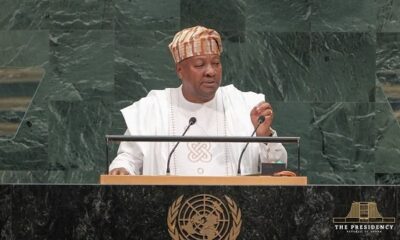
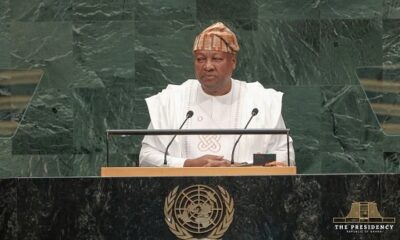
“No civilisation deserves to be annihilated” – Mahama calls for dialogue on global conflicts at UNGA 81
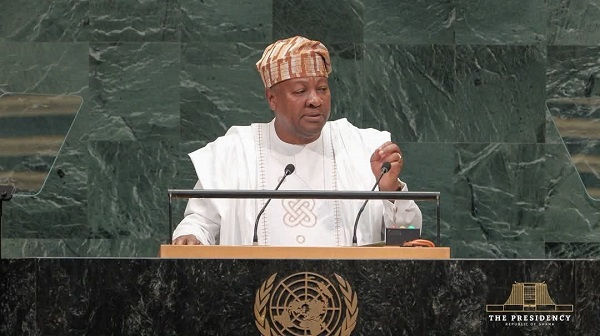
President John Dramani Mahama has called for solidarity and dialogue in resolving global conflicts, insisting that no civilisation deserves to be wiped out.
“No human civilisation deserves to be annihilated, certainly not a member state of the United Nations,” President Mahama stated in his address at the 81st United Nations General Assembly in New York.
He called for solidarity with nations facing terrorism, especially the Alliance of Sahel States (AES), and for a uniform approach to conflicts in Europe, the Middle East and Africa.
On the Middle East, the President called for a return to negotiations, saying “The current Middle East crisis is having a deleterious effect on the world economy.”
“I believe that dialogue can resolve even the most intractable of problems,” he added.
By Edem Mensah-Tsotorme