News
Parliament to insitutionalise National Intergrity Awards to bosst anti-corruption drive

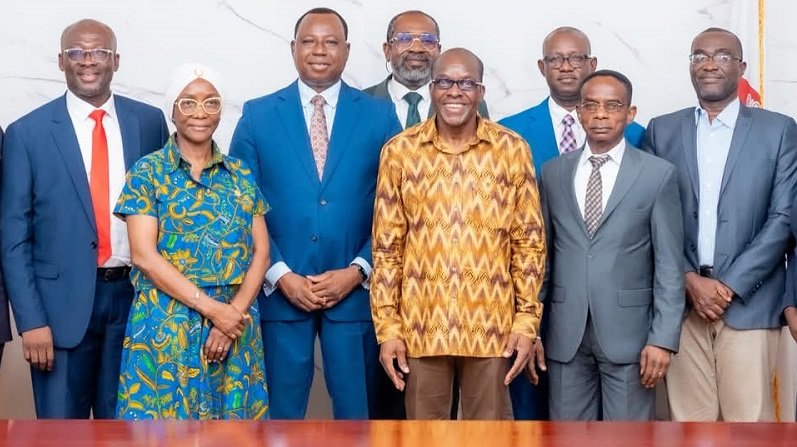
The Parliament of Ghana, led by the Speaker, Alban Kingsford Sumana Bagbin will organise a National Integrity Awards scheme to recognise individuals and institutions demonstrating excellence in the fight against corruption.
The Speaker made this known during a strategic engagement with Ghana’s Key Accountability Institutions (KAI) in Parliament, where he praised their ongoing contributions to promoting transparency and accountability in governance.
Speaker Bagbin emphasized that corruption is a deeply rooted national challenge that cannot be tackled by any single institution alone.
He described it as a “monster” that requires collective responsibility and strong collaboration among key stakeholders. According to him, the awards scheme will not only serve to reward integrity but will also help instill a culture of ethical leadership and public service.
“The time has come for Ghana to celebrate its heroes of integrity,” the Speaker said. “Just as we sanction wrongdoing, we must also recognise those doing what is right. Parliament is committed to walking the talk and partnering with all accountability institutions to make this vision a reality,”he said.
The Clerk to Parliament, Mr. Ebenezer Ahumah Djietror, underscored the need for shared responsibility and adherence to principles of justice in the anti-corruption fight.
CHRAJ Commissioner, Dr. Joseph Whittal, also urged institutions yet to join the accountability network to do so, emphasizing the need for unity and resilience in tackling corruption.
The event brought together key anti-corruption bodies including the Office of the Special Prosecutor (OSP), Economic and Organised Crime Office (EOCO), National Intelligence Bureau (NIB), Ghana Police Service, Ghana Audit Service, Office of the Attorney-General, and civil society organisations such as the Ghana Integrity Initiative (GII) and the Ghana Anti-Corruption Coalition (GACC), along with senior staff of the Parliamentary Service. The awards are expected to become a flagship national initiative to highlight and promote integrity across all sectors.

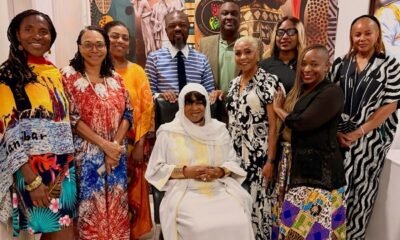







The Diaspora Affairs Office at the Office of the President has hosted a delegation of African diaspora women who are in Ghana ahead of a planned Presidential Conferment of Citizenship ceremony.
The Director of Diaspora Affairs, Kofi Okyere Darko, explained in a Facebook post that the visit was a gesture of appreciation by the delegation to the Government of Ghana for its continued efforts to reconnect Africans in the diaspora with their ancestral homeland.
He indicated that the ceremony, scheduled for next Monday, will officially grant Ghanaian citizenship to members of the delegation as part of the country’s broader engagement with the African diaspora.
The delegation was led by Erica Bennett, Founder of the Diaspora Africa Forum.
According to Mr Okyere Darko, her years of advocacy have played an important role in strengthening ties between Africa and people of African descent living abroad.
He noted that the group’s journey towards citizenship represents not only a legal process but also a cultural and spiritual return to their roots.
Also present at the meeting was Natalie Jackson, an attorney who is also expected to receive Ghanaian citizenship during the ceremony. She works closely with renowned civil rights lawyer Ben Crump.
Mr Okyere Darko emphasised that Ghana remains committed to strengthening relationships with the African diaspora and promoting unity, identity, and shared heritage among people of African descent worldwide.
By: Jacob Aggrey

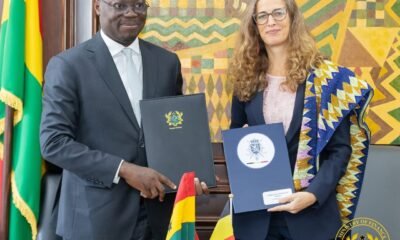
Ghana has signed a debt restructuring agreement with the Kingdom of Belgium as part of efforts to restore the country’s economic stability after the financial crisis that hit the nation in 2022 and 2023.
The Minister of Finance, Cassiel Ato Forson, today disclosed that he signed the agreement on behalf of the Government of Ghana.
He explained that Ghana experienced a very difficult period during the crisis, which forced the government at the time to declare a debt default.
However, he indicated that the country is now recovering and witnessing a significant economic turnaround.
According to him, stronger systems are also being put in place to ensure that Ghana does not return to such a situation again.
Dr Forson noted that the agreement with Belgium is the eighth deal Ghana has concluded with countries under the Official Creditor Committee as part of its external debt restructuring programme.
He expressed appreciation to the Government of Belgium for its support and partnership with Ghana during the process.
The Finance Minister thanked Carole van Eyll, Ambassador of Belgium to Ghana, for her role in strengthening relations between the two countries.
The agreement forms part of Ghana’s broader effort to restructure its external debts and stabilise the economy following the crisis.
By: Jacob Aggrey

 News1 week ago
Finance Minister outlines new gold policies to boost reserves and curb smuggling
- News1 week ago
Sam George launches the 2026 Meteorological Awareness Month; presents the 2026 seasonal forecast for southern Ghana
- Hot!1 week ago
Breaking: Footballer who killed two children in Abesim handed lifetime sentence