News
One Year of Impact: Adiza Ibrahim’s ‘Hey, Diamond!’ empowers thousands

- /home/u249204778/domains/spectator.com.gh/public_html/wp-content/plugins/mvp-social-buttons/mvp-social-buttons.php on line 27
https://spectator.com.gh/wp-content/uploads/2025/10/WhatsApp-Image-2025-10-29-at-13.47.26-1000x600.jpeg&description=One Year of Impact: Adiza Ibrahim’s ‘Hey, Diamond!’ empowers thousands', 'pinterestShare', 'width=750,height=350'); return false;" title="Pin This Post">
- Share
- Tweet /home/u249204778/domains/spectator.com.gh/public_html/wp-content/plugins/mvp-social-buttons/mvp-social-buttons.php on line 72
https://spectator.com.gh/wp-content/uploads/2025/10/WhatsApp-Image-2025-10-29-at-13.47.26-1000x600.jpeg&description=One Year of Impact: Adiza Ibrahim’s ‘Hey, Diamond!’ empowers thousands', 'pinterestShare', 'width=750,height=350'); return false;" title="Pin This Post">
A year after its launch, Adiza Ibrahim’s highly-anticipated book, “Hey Diamond!” , Becoming An Intentional Young Lady” as envisaged by the author has become a powerful go-to resource for women and young girls’ empowerment.
Driven by the support of the Kuburah Diamonds Foundation, Adiza who is known to many as Kuburah Diamonds is not just celebrating a year of the book’s release or sales volumes, rather a year of profound community impact.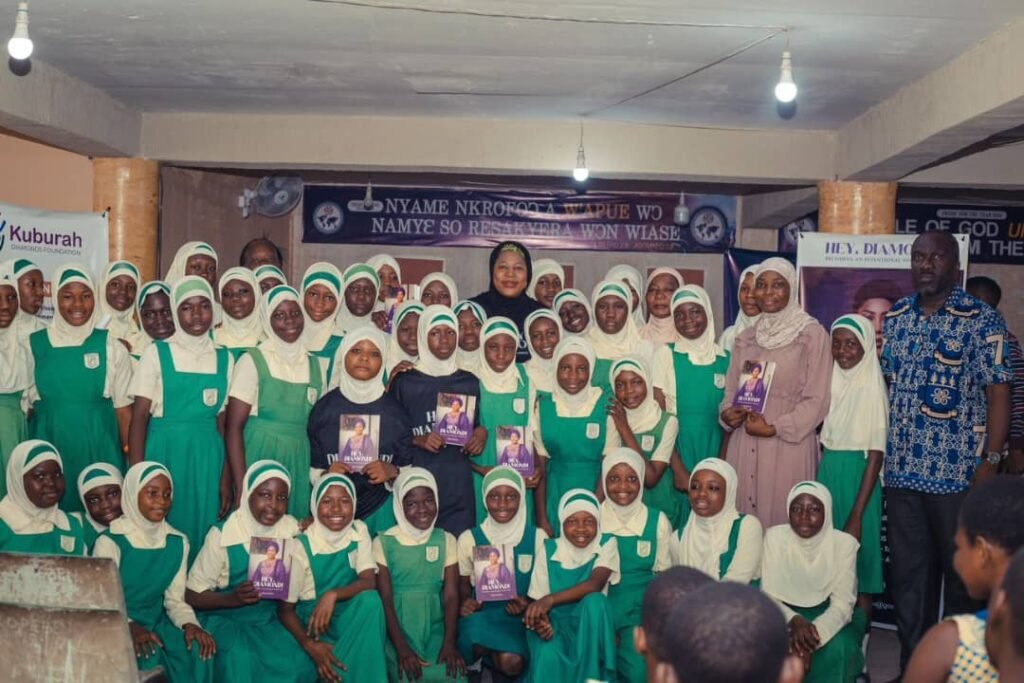
The book, which serves as a manual for the young woman trying to navigate the complexities of life in areas of personal development, education, career path, entrepreneurship, financial literacy, among others has extended its message far beyond its pages, translating its principles into tangible skills for a new wave of socio-economically-empowered women.
The Empowerment Dialogue
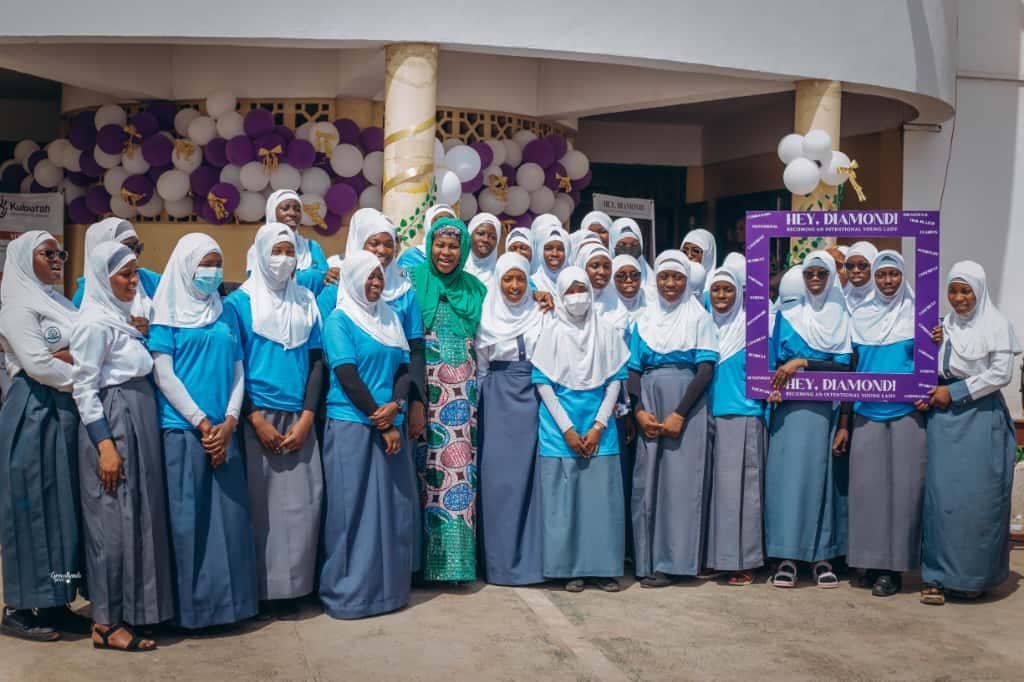
Weeks after the book’s launch, as part of making the message accessible to it’s two major target audience who were the average woman and the young adolescent girl in school, the foundation with the support of the author executed an empowerment dialogue and reading clinic in selected first and second cycle educational institutions.
The programme was strategically designed for young girls who looked up to the author to engage in a question-and-answer session about the book and its back story, as well as the author’s personal journey. Additionally, it sought to build the communicational skills of participants at the forum by encouraging public speaking and reading.
With some outstanding visits, the effort has so far led to the direct empowerment of over 1,000 students within Greater Accra and the Savannah Regions.
The beneficiary schools were the Nima 1 Basic School, Ghana-Lebanon Islamic Secondary School (GLISS), five schools within the Abeka Cluster of Schools , and Nyankpla Islamia Basic and Junior High Schools. Each school had copies donated freely to serve as a reference material in their libraries.
The visits go beyond materializing what the messages in the book preaches to raising young people who believe in themselves and with this, Adiza Ibrahim is ensuring that the intentionality she preaches is expressed loudly.
Wave of Benevolence
Inspired by the vision of the author, Electroland Ghana Limited, KGL Foundation, Ghana Interbank Payment and Settlement Systems (GhIPSS), TT Brothers, and other benevolent individuals were engaged in a collective goodwill drive. Purchases were made for a number of books to delivered freely to friends, family, work colleagues and in some cases community members.
The distribution of this across varied segments ensued that the lessons on financial freedom, humility, entrepreneurship, among others were shared across a group of people who hitherto would not have had access to the book for one reason or another. The support of these people deepens community support for women-driven initiatives.
Adiza Ibrahim affirms “The success of Hey, Diamond!, Becoming An Intentional Young Lady is a clear signal that our young women are not only interested in stories of motivation but ready to become the catalysts in the building of a society with women excellence at the heart of it.”
She further added “We started with the humanitarian and skills development initiatives via the Zango Women Livelihood and Empowerment Program (ZANGWOLEAP) and the Kuburah Diamonds Foundation and then came thorough the book launch. Our efforts are geared towards creating platforms that raises women who are intentional in their path to gain socio-economic independence”
The Next Chapter
Looking ahead, Adiza Ibrahim is planning to host a skills development workshop for over 500 women to empower sustainable livelihoods. Training in soap making, crocheting, tie-and-dye making, among others are expected to be considered strongly.
Dear to her heart and also based on public demand is the ‘Intentional Women Conference’ which will ignite the power of women enterprises in varied fields. With most of her initiatives being self-funded, she is still open to partnerships with people who share the same believe in her initiatives.
Adiza’s works over the years underscores her commitment to human capital development and with ‘Hey, Diamond! Becoming An Intentional Young Lady’, she envisions the empowerment of thousands who will become the future changemakers.
About Adiza Ibrahim
Adiza Ibrahim, popularly known as Kuburah Diamonds is a multiple-award-winning Integrated Marketing Communications professional and humanitarian. She is currently the Head of Marketing and Media Relations at the largest consumer electronics conglomerate in Ghana, Electroland Ghana Limited. Some of her notable honors are: 2024 Marketing Woman of the Year by National Customer Choice Awards, 2024 Outstanding Woman Voice by Humanitarian Awards Global, and the 2023 Ghana Outstanding Women Awards (GOWA)Woman of the Year, among others.
Intentionality & purpose: She emphasises being deliberate and focused in one’s path and choices.
Empowerment through education & skills: She invests in training and capacity building for women and girls.
Breaking stereotypes & enabling potential: She challenges limiting narratives around gender, religion, background.
Corporate leadership with social impact: She blends her corporate role with deep social advocacy.
Authenticity in giving: Her belief that CSR or social initiatives must be meaningful and not just showmanship.
About Kuburah Diamonds Foundation
Incorporated in 2020, Kuburah Diamonds Foundation is a non-profit organization in Ghana committed to empowering girls and women from the Zango communities in building their capacity through skills development training. We believe that by investing in female capital, we empower and equip them to become women of value in creating an equitable society for all.
Email: adizakuburahibrahim@gmail.com










Businessman Mr. Ibrahim Mahama has denied reports linking him to a takeover bid for the Volta Aluminium Company (VALCO).
His reaction follows a demonstration by members of the VALCO Labour Union today, during which some protesters alleged that Mr. Mahama was interested in acquiring the state-owned aluminium company.
In a statement issued by his Special Aide, Rafik Mahama, the businessman said he has “no such interest” and has not made any offer to acquire VALCO.
“The allegation is the latest in several vile attempts to impute the integrity of Mr. Ibrahim Mahama and subject him to needless public engagements,” the statement said.
The statement added that Mr. Mahama’s business track record speaks for itself, describing his companies as “some of the best-run operations across the African continent.”
It further noted that all of Mr. Mahama’s business interests were “legally commenced or acquired” and operate within the law a fact it said explains why his businesses have endured across seven election cycles.
“Mr. Mahama remains committed to contributing his quota to the development of Ghana by investing in business opportunities in Ghana and beyond,” the statement added.
The statement also disclosed that Mr. Mahama has instructed his lawyers to take the necessary legal action over the publication and allegations.
By Edem Mensah-Tsotorme
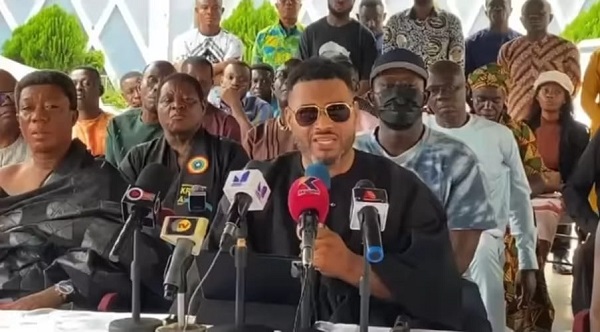
The leadership of Kristo Asafo has dismissed reports circulating on social media and in some media outlets that the late Apostle Kwadwo Safo Kantanka will be buried on July 30, 2026, describing the claim as false.
The current head of the Kantanka family and leader of Kristo Asafo, Kwadwo Safo Akofena Kantanka, addressed the issue during a press conference in Accra today.
He said no burial date has been set and urged members of the church and the general public to disregard any unofficial announcements.
“I urge the members of Kristo Asafo and the nation to disregard any burial date out there,” Akofena said.
He further stressed that neither the leadership of the church nor the Kantanka family has made any such announcement regarding the funeral.
According to him, all official funeral arrangements will be communicated only through a formal statement from the Kantanka family when the time is due.
Akofena Safo Kantanka said the family remains united in ensuring that the final funeral rites are conducted in a manner that befits the legacy of the late Apostle.
He called on Ghanaians to remain calm and wait for the official communication from the family, warning against the spread of misinformation.
Background
Apostle Dr. Ing. Kwadwo Safo Kantanka, founder and spiritual leader of Kristo Asafo Mission of Ghana, passed away recently, plunging the church and the nation into mourning.
The late Apostle was widely known not only as a religious leader but also as an industrialist, inventor, and founder of the Kantanka Group of Companies, which manufactures vehicles and other machinery in Ghana.
Since his passing, there has been heightened public interest in his funeral arrangements.
It would be recalled that a faction of the siblings and family led by former MP Adwoa Safo had earlier announced a proposed burial date and arrangements.
That announcement, however, has been rejected by the current leadership of both the church and the family.
By Edem Mensah-Tsotorme