News
MPA PARTNERS GHS TO LAUNCH A PAPERLESS HEALTH DECLARATION FORM AT THE AIRPORT


- /home/u249204778/domains/spectator.com.gh/public_html/wp-content/plugins/mvp-social-buttons/mvp-social-buttons.php on line 27
https://spectator.com.gh/wp-content/uploads/2020/09/The-2.jpg&description=MPA PARTNERS GHS TO LAUNCH A PAPERLESS HEALTH DECLARATION FORM AT THE AIRPORT', 'pinterestShare', 'width=750,height=350'); return false;" title="Pin This Post">
- Share
- Tweet /home/u249204778/domains/spectator.com.gh/public_html/wp-content/plugins/mvp-social-buttons/mvp-social-buttons.php on line 72
https://spectator.com.gh/wp-content/uploads/2020/09/The-2.jpg&description=MPA PARTNERS GHS TO LAUNCH A PAPERLESS HEALTH DECLARATION FORM AT THE AIRPORT', 'pinterestShare', 'width=750,height=350'); return false;" title="Pin This Post">
MILLENNIUMPROMISE ALLIANCE (MPA) has partnered with Ghana Health Service (GHS) to launch a real-time, electronic version of the Health Declaration Form at the Kotoka International Airport with the commencement of flights to the country.
The Paperless Health Declaration is used to obtain passengers travel history and signs and symptoms in relation to COVID- 19. The systems has already been deployed since the resumption of operation of the country’s Airport.
MPA developed Mobile and Web Health Declaration Applications to replaces the paper-based version that was used prior to the closure of the country’s borders. The App makes it possible for passengers to conveniently fill up the Form; whilst its decision support algorithms and analytics helps the Port Health team to speed up decision making and follow-up.
Travelers can access the Health Declaration App on their mobile phones, tablets or computers through the Ghana Health Service website using the link https:/www.ghs-hdf.org/hdf/.
Additionally, all passengers will have their temperatures screened through the MPA Porthealth Thermocheck booths.
“COVID 19 has ushered in a lot of homegrown ideas and domesticated technological advancements of which I’m Grateful to God to have been useful in such a competitive era together with my MPA team. The project has added a boost to Ghana’s preparedness to open its airports for international flights. I am very proud to leverage on our long-standing partnership with the Ghana health Service to bring this project to life” Chief Nathaniel Ebo Nsarko, Executive Director of Millennium Promise Alliance said.
He added that “due to COVID-19, Technology is being deployed at such a dizzying pace in recent months that it has transformed our world in ways that we least imagined. Coming up with this innovative idea started out to be difficult, if not impossible — and almost certainly up for fierce debate as we have always believed in foreigners than ourselves. Nevertheless, we gave it a shot and here we are, purely Ghanaian but of international standards; proudly Ghanaian.”
This collaboration is part of MPA’s agenda of mobilizing science and cutting-edge technology towards sustainable development and to improve the health and well-being of the population in Ghana.
Millennium Promise Alliance is an International NGO with a vision to eradicate extreme poverty, hunger, and preventable diseases especially in deprived communities.
MPA operates in twenty (20) countries including Ghana and believes in working with country systems and government agencies to empower the rural poor, promote rapid socio-economic development and accelerate the attainment of the Sustainable Development Goals (SDGs).
In Ghana, MPA provides technical support for school health screening, community health workers program, rural diagnostic laboratory services, personal protective equipment for frontline healthworkers among others.
MPA appreciates funding support from the Sergei Brin Family Foundation and GSK; as well as strategic and policy advisory from the Founder and Board Chair Prof. Jeffrey Sachs.


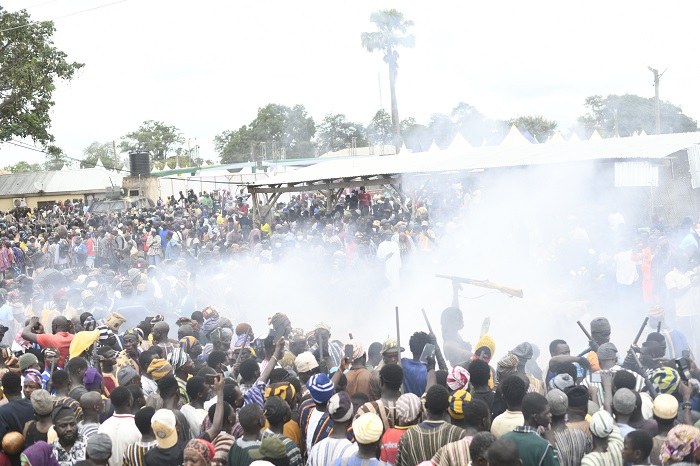
The Dagbon Kingdom on Friday witnessed another defining moment in its centuries-old history as Kampakuya Naa Yakubu was formally enskinned as Regent following the passing of the Overlord of Dagbon, Ndan Ya-Na Abukari II.
The traditional ceremony, steeped in the customs and heritage of the Dagomba people, took place at the historic Gbewaa Palace in Yendi in an atmosphere of grief, reverence and hope.
In attendance was President John Dramani Mahama, who in his tribute described the late Overlord as a distinguished traditional ruler whose leadership strengthened peace, unity and development in Dagbon.

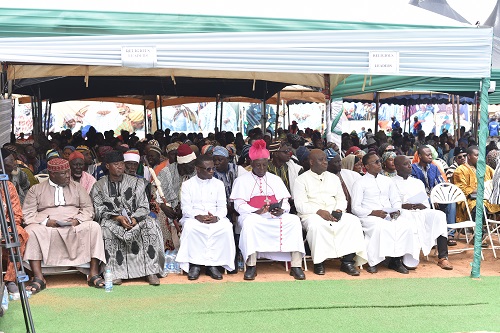
Former Vice President Dr Mahamudu Bawumia also conveyed his condolences to the people of Dagbon.
Also in attendance were chiefs, queen mothers, elders, royal family members, religious leaders and thousands of mourners gathered to witness the installation.
The enskinment of the Kampakuya Naa as Regent is one of the most significant stages in the transition of leadership in the Dagbon Kingdom. It ensures continuity of authority and the preservation of the kingdom’s customs until a substantive Ya-Na is selected by the kingmakers in accordance with Dagbon tradition.
Friday’s ceremony reflected the resilience of one of Ghana’s oldest traditional kingdoms, where centuries-old customs continue to guide leadership transitions with dignity and order.
The late Ya-Na, Ndan Abukari II, who ascended the skin in 2019, is widely remembered for consolidating peace, unity and reconciliation in Dagbon following years of chieftaincy disputes.
Throughout Yendi, the mood remained solemn as residents lined the streets while traditional drumming, chanting and customary rites echoed through the ancient capital. Men, women and children, mostly dressed in black, paid their respects to a monarch whose reign restored confidence in the kingdom’s future.
The installation of Kampakuya Naa Yakubu as Regent now places upon him the sacred responsibility of overseeing the affairs of Dagbon during the mourning period while ensuring that the customs and traditions of the kingdom are faithfully upheld ahead of the enskinment.
After a successful enskinment, attention now turns to the traditional processes that will eventually culminate in the selection and enskinment of a new Overlord. Until then, the Regent will serve as the custodian of the Dagbon Kingdom, ensuring that the customs, authority and dignity of one of Africa’s oldest traditional kingdoms remain intact.
From Geoffrey Buta, Yendi
The Ghana Health Service, with UNICEF support, has trained 100 healthcare providers on adolescent-friendly maternal healthcare services as it expands its Safety Net Intervention programme to 44 additional health facilities in the Central Region.
The one-day training, held in two sessions, equipped midwives, community health nurses, health information officers and district focal persons with the knowledge and practical skills needed to implement the initiative effectively and improve pregnancy outcomes among pregnant adolescents.
The Safety Net Intervention is a special initiative that seeks to address health and social challenges associated with adolescent pregnancy with a comprehensive service including antenatal and postnatal care, skilled delivery services, postpartum family planning, home visits and connections to education and social support services.
By this intervention, the GHS and UNCEF are seeking to mitigate the incidence of adolescent pregnancy, maternal deaths among adolescent girls, neonatal deaths among babies born to adolescent mothers, and child marriage.
They are also seeking increased uptake of postpartum family planning among adolescent mothers and improved educational continuity and economic resilience for adolescent girls.
Mrs Emma Delali Foli, the Central Regional Focal Person for the Safety Net Intervention, explained that pregnant adolescents often faced heightened health risks and limited social support, highlighting the need for specialised healthcare and social interventions.
She said the intervention was introduced in six districts in the Central Region in 2020 and had expanded steadily over the years to 16 of the region’s 22 districts.
Following the addition of the 44 new facilities, the programme was now being implemented in 176 health facilities, with a goal of covering all 22 districts in the short possible time, she added.
Mrs Foli noted that since its introduction, the programme had benefited more than 5,000 pregnant adolescents in the Central Region, while strengthening collaboration with institutions such as the Department of Social Welfare, the Ghana Education Service, the National Youth Authority and the Domestic Violence and Victim Support Unit (DOVVSU).
The intervention, she said, had also contributed to increased uptake of postpartum family planning, stronger referral systems, greater access to social protection services and enhanced involvement of caregivers throughout pregnancy and childbirth.
Mrs Foli indicated that the newly trained health workers were expected to replicate the training at their respective facilities to ensure that other members of the healthcare team were adequately equipped to implement the intervention.
“This is new to them and so they have been trained on the concepts, objectives and goals of the Safety Net Intervention. The components of the intervention, as well as the importance of documentation and reporting, have also been emphasised,” she said.-GNA

 News1 week ago
Prof. Kwabena Twerefou holds inaugural lecture; calls for better stewardship of Ghana’s natural resources
- News1 week ago
Ahanta Heritage Month: Diplomats, youth tour forts, Cape Three Points and historic sites
 News1 week ago
Wa West MP calls for calm, impartial probe into suspect’s death