Health Essentials
Monkeypox outbreak 2022 …and what you need to know

Introduction
It was a warm day in October 2003 in San Diego, California, USA. I was attending the Infectious Disease Society of America’s annual conference. I passionately stood up at a meeting to express my thoughts about media reports connecting Ghana, my country of birth, to a monkeypox outbreak in the US. Fifty three people had contracted monkeypox in a multistate outbreak.
It turned out that after testing and investigation by the CDC, the infection was related to prairie dogs purchased as pets at a pet store in Illinois. The prairie dogs had been kept close to rodents imported from Ghana, a country where the human monkeypox disease has never been reported to date. These rodents were later found to test positive for the monkeypox virus.
The prairie dogs became infected as a result of proximity to the infected rodents and then transmitted the infection to their owners. This resulted in a ban on importation of African rodents into the US to date to prevent further outbreaks. That was the last time the US had an outbreak of monkeypox disease. No one died in the outbreak. One child developed a brain infection or encephalitis.
Monkeypox, a disease caused by the monkeypox virus, occurs very infrequently and in very scattered locations in parts of Africa. There are two clades (or types) of the virus: a West Africa (WA) clade in which 1 to 3.6 out of 100 infected patients die (1% to 3.6% mortality) and the Congo Basin (CB) variant, in which about 10 out of 100 infected patients can die (10% mortality). So far, the virus isolated in this current outbreak is of the West African variant, implying that the risk of dying from this disease is very low.
Background
The outcome of the 2003 outbreak reflects concepts in the natural history of the disease. It is a zoonosis in which humans get infected from infected animals. Monkeypox disease is usually a mild self-limited illness caused by the monkeypox virus. It usually does not require treatment. It can be severe in children, pregnant women, and those with impaired immune systems.
The virus belongs to the orthopox family of viruses. It is a disease that affects animals. It was first discovered in a laboratory monkeys in Copenhagen, Denmark in 1958. The monkeys had been imported from Singapore to study the polio vaccine, giving rise to the name, “monkeypox”. Since then there have been a few more outbreaks in laboratories around the world including the US. However, mentally, people tend to associate it with Africa because in 1970, the first human case was reported in an African child.
Since its discovery in 1970, there have been infrequent occurrences in a few locations around the world. From January 1, 2022, to May 1, 2022, the Democratic Republic of Congo reported 1,238 cases with 57 deaths, while Nigeria reported 46 cases and no deaths. In July and November of 2021, two travelers returning to the US from Nigeria were diagnosed with monkeypox and recovered. Between 2018 and May 2022, there have been nine cases related to travel in non-endemic countries: Two in the US, five in the UK, one in Israel and one in Singapore. None of the travel companions were infected, and only one healthcare worker in the UK became infected.
On May 18, 2022, a man in Massachusetts with no history of travel was diagnosed with a confirmed case of the disease, and eight suspected cases are under investigation. This is occurring at a time when 250 cases have been reported since May 13, 2022, in 18 countries, in persons who have not travelled to the countries where cases have occurred in the past- suggesting a worldwide outbreak. These countries include USA, Canada, Portugal, Spain, Australia, France, Germany, Italy, Netherland, Sweden, and the United Kingdom. Portugal and Spain have the largest numbers. The cases have been found mainly, but not exclusively, in men who have had sex with men, and are seeking care in sexual and outpatient clinics for a rash appearing around the genital areas.
Signs and symptoms
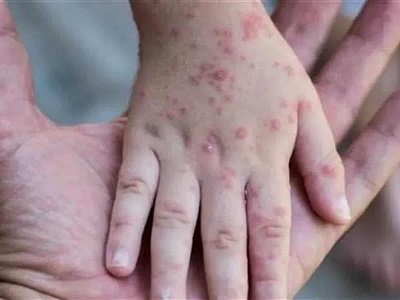
Monkeypox disease starts with a headache, fever, cough, sore throat, and lymphadenopathy (enlarged lymph nodes) accompanied by muscle aches and a profound sense of exhaustion. This lasts about three days and occurs about five to 21days after exposure to an index case. This period of carrying the disease without showing symptoms is known as the incubation period. These initial symptoms are followed by a rash. The rash is made up of flat lesions (macules), which progress to palpable flat-topped rashes (papules), and then to fluid-filled lesions (vesicles). These rashes start around the mouth, progressing to the head, chest and abdomen, and then to the arms and legs, including the palms of the hands and soles of the feet.
Symptoms can mimic chickenpox, smallpox, and syphilis. However, smallpox disease does not present with enlarged lymph nodes. Chickenpox disease has rashes at various stages of development while in monkeypox the stages of the rash is the same on all parts of the body. Chickenpox rash starts on the hands and moves to the centre of the body while the rash of monkeypox starts in the centre parts of the body and marches to the arms and legs. The monkeypox rash is deep in the skin and, therefore, firmer to touch. The individual rashes may have a dimple or appear umbilicated. The fluid in these rashes are infectious. Over a period of two to four weeks, the rashes will scab over and subsequently become noninfectious.
The infected person can transmit the infection in three main ways: direct contact, respiratory droplets and inanimate objects. This period of being infectious starts a day before the person is feverish, and if he or she has a rash, during the whole period of the active rash. First, very close contact may cause the virus in bodily fluids to get onto another person. Second, large respiratory droplets from the sick person can be inhaled leading to infection. Finally, fomites (particles of clothing or other inanimate objects) from the body of the patient can cause the disease to be transmitted too. A pregnant woman can also transmit to her unborn child leading a congenital infection and still birth.
Infection by droplets can occur if an individual is within three to six feet of sick persons. Unlike chickenpox, monkeypox is not airborne and cannot travel for long distances. In this current outbreak, the rash is in the genital area and seems to be occurring in men who have sex with men suggesting that close contact with the skin around the genital area of an infected person is key to the transmission.
Diagnosis
Diagnosis is established by finding the virus using with real time polymerase chain reaction (PCR) or DNA sequencing performed on body fluids from infected persons. There are three categories of sick persons for consideration in view of disease control and mitigation methods.
A suspected case is any person of any age presenting with an unexplained acute rash in a non-endemic country, who has a fever, lymph nose swelling and other characteristic symptoms, and whose rash cannot be explained by causes such as chickenpox, chikungunya virus, zika virus, dengue fever, drug reaction or the more common causes of an acute rash.
A probable case is a suspected case who also has the following: an exposure to a confirmed case, travel history to an endemic country, multiple anonymous sexual partners in the last 21 days, hospitalised or tested positive for the orthopox family of virus with an antibody test or other testing method.
A confirmed case is a probable or suspected case whose bodily fluids have been tested to be positive for the monkeypox virus by real time PCR testing or sequencing. This person should isolate for 21 days, and his or her contacts should be monitored closely.
Prevention and control action points
All doctors and healthcare workers worldwide should be on the lookout for all cases and report to local authorities to allow prompt diagnoses and prevent spread.
All probable and confirmed cases should be reported to the World Health Organisation.
Hospitals and healthcare workers should use standard contact and droplet precautions when they care for these patients. Masks must be worn when in proximity with an infected person because of the respiratory method of transmission. Healthcare workers must promptly identify infections so that confirmed or suspected patients can isolate themselves and prevent transmission and curtail the outbreak.
Specimen from infected, suspected, and probable cases should be handled with care when being transported to designated equipped laboratories to prevent transmission to the laboratory staff.
Treatment and vaccination
In September 2019, a new vaccine, JYNNEOS, was licensed by the FDA for prevention of smallpox and monkeypox in people older than 18 years of age. It was made from the Modified Vaccinia Ankara- Bavarian Nordic (MVA-BN), a live non replicating virus. Its other names are IMVAMUNE, MVA, or IMVANEX. ACAM 2000 is a live vaccinia virus vaccine that was approved in 2007. It tends to cause self inoculation and has been associated with heart muscle inflammation in 5.7 out 1000 recipients. It has 85 per cent efficacy against the monkeypox and has received emergency access investigational drug use for other orthopox viruses such as monkeypox in an outbreak. Both vaccines can be deployed in individuals whose risk of disease acquisition is high and in healthcare workers who have been exposed or may be exposed to the disease.
Tecovirimat is an antiviral agent that occurs in oral formulation and intravenous forms approved by the FDA in July, 2018, and in May 2022 respectively for the treatment of smallpox. Tecovirimat can be used to treat severe monkeypox and is available by calling the US CDC. It goes by the name TPOXX or ST-246. Vaccinia Immune Globulin intravenous (VIGIV) originally licensed for use in complications related to smallpox vaccination is also available for post exposure treatment.
The CDC will take requests for vaccines, Tecovirimat and VIGIV only from State or Territorial health authorities. Medical countermeasures for monkeypox can be obtained by calling the CDC Emergency Operations Centre at 770-448-7100. The CDC can be reached for information by also calling 1-800-CDC-INFO in the US (1800 232 4636)
The general risk of acquiring this infection is currently extremely low. It is nowhere as highly transmissible as COVID-19. The risk of dying from this disease is very low. It has no potential to cause a pandemic.
Stay calm and arm yourself with knowledge.
Ref: www.WHO.Int www.cdc.gov
Dr. Bertha Serwa Ayi is an infectious disease consultant who has been in practice for over 17 years as a specialist.
Www.berthaayi.com
Email: Serwabb@berthaayi.com
By Dr. Kojo Cobba Essel



IF you truly love yourself, you had better read this piece while standing!
The other “inactivity” that rivals sitting for long periods when it comes to poor health and untimely death is LONLINESS! Sitting and Loneliness are the new Smoking.
It is often common to hear a parent tell a child, “Sit quietly and watch television and I will make a quick dash to town.” Well, this harmless and well-meaning statement is now being vilified. That parent could have said “smoke a few sticks of cigarettes while I dash off to town.” Yes “sitting is the “new” smoking.”
Scientists: they keep coming up with many weird findings and unfortunately, we realise after much ado that they may be right. People with sitting jobs have twice the rate of cardiovascular (heart & blood vessel) diseases as those with standing jobs – the bankers are cringing in their seats I bet.
It appears that compared to sitting,
• Sitting continuously brings similar challenges that smoking poses a gossip team. After an hour of sitting, if you walk for a minute or two.
Standing is hard work. Imagine that you need to engage many muscles to stand upright, and this burns energy. Sitting on the other hand is extremely relaxing.
When we sit, the “physiology of inactivity” kicks in and when we think we are relaxing in a chair made from heaven, our body instead rewards us with many bad things; enzymes that break down fat may drop by about 90 per cent calorie burning drops to frightening low levels and soon good cholesterol that protects us also drops. If you sit long enough even your insulin effectiveness drops and you will be courting diabetes in the long run.
I sincerely believe in getting a workout during the day, but you should not think that it gives you a license to sit at your desk for hours on end. We should ensure that we get up from our desk to walk briefly or even stretch. I am not giving you an excuse for loitering around your office or forming ings. When you have a meeting with a handful of people you could lace your boots and start walking while you talk. Who knows being out of a box (office etc) could help you think “out of the box” or even think like “there is no box”. The best aspect of such a meeting is people are more attentive since they are unable to fidget with their smart phones and other gadgets.
All lectures and classes (children are really suffering in school these days) should have a “Heart Preserving” five-minute break after every hour. Spend that time walking and stretching.
All long movies should have commercial breaks that should be used to at least stand
Whenever in doubt, at least stand for a while.
Well some people are trying innovative ways of even having small treadmills at their desk that keeps them moving, others are adopting a new chair design that essentially makes you stand at your desk, a few others sit on exercise balls that forces them to adjust their positions all the time but for the rest of us simply taking breaks and using every opportunity to move is just what the doctor prescribed.
AS ALWAYS LAUGH OFTEN, ENSURE HYGIENE, WALK AND PRAY EVERY DAY AND REMEMBER IT’S A PRICELESS GIFT TO KNOW YOUR NUMBERS (blood sugar, blood pressure, blood cholesterol, BMI)
Dr. Kojo Cobba Essel
Health Essentials/Medics Clinic
(www.healthessentialsgh.com)
Dr. Essel is a medical doctor with a keen interest in Lifestyle Medicine, He holds an MBA and is ISSA certified in exercise therapy, fitness nutrition and corrective exercise. He is the author of the award-winning book, ‘Unravelling The Essentials of Health & Wealth.’
Thought for the week – For good heart health; exercise often, eat healthy, do not smoke, minimise alcohol and sit less
By Dr. Kojo Cobba Essel
Join our WhatsApp Channel now!
https://whatsapp.com/channel/0029VbBElzjInlqHhl1aTU27


I have on several occasions referred to laughter as the “best medicine” just as many others do and over the years, I have expanded my knowledge on the benefits of laughter. We all need to laugh daily and that’s the prescription given by the best doctors all over the world.
I came across the quote “Laughter is the best medicine. Unless you’re laughing for no reason….then you need medicine.” It sounds great and will get you laughing or at least smiling yet I beg to differ. My advice: find a reason to laugh no matter what and if you find none laugh anyway.
A few years ago, I decided to spend my first three hours of being awake laughing or smiling no matter what. It set the tone for a successful day. I did not bother about the early morning traffic, neither did I scream or honk at careless drivers but I guess as the years dragged on and the reality of fuel price hikes, electricity challenges and an ailing Ghana economy among many others hit home, the smile and laughter faded but I ALWAYS get back once I realise I am “short-changing” myself. No matter the struggles you may be facing, remember laughing or smiling will surely make your day so much better.
My prescription for you and myself is “Laugh at least five minutes in the morning and five minutes at the end of the day” no matter what. Do it even if you have no reason to.
Now what does science say about laughter?
1. It helps make the world a better place
a. Laughter is contagious so set the ball rolling by laughing and many others will join in the fun.
2. You learn better
Well, no need to get all serious and mean while you learn something new. A good dose of laughter while you learn may actually make the process more efficient. Word of caution, DO NOT distract others by laughing in an annoying way.
3. You get a health boost
a. We know this, right? I found out that laughter may actually increase good cholesterol while lowering inflammation. We do need more data on this but really, keep laughing, it can’t possibly harm you.
4. Makes you more robust
a. A nervous laughter when your back is against the wall? Laughter helps regulate your emotions in a difficult situation. Crying or frowning is unlikely to have positive returns.
5. Lowers stress and improves memory
a. Stress hormones, especially in the elderly, is reduced by laughter and one’s ability to remember gets a much-needed spike.
6. Makes you more attractive
a. People are always attracted to a “smiling face” or someone who laughs often. They make the party come alive.
7. Improves your relationship
a. Whether you are negotiating a deal at work, interacting with family or friends; laughter creates stronger bonds leading to better outcomes and building stronger relationships.
8. May help burn off some calories
Now I may be pushing this too much, but truth is laughter does raise your energy expenditure and heart rate. Though the calories you burn may be fewer per bout of laughter, every positive thing adds up for our good.
9. Boosts immune function and enhances sleep
a. Say goodbye to frequent common colds and laying in bed for long hours listening to the dogs in the neighbourhood “chitchatting”, a leaking tap dripping or worse still a snore within earshot that will compete with Louis Armstrong on the trumpet.
b. Combine laughter with your daily dose of exercise, and your winning combination is a reality.
10. May improve blood pressure and relax muscles
a. I will not advise you to drop your medication for all day laughter but I am sure laughter will play a positive role in reducing stress, giving you a feeling of wellbeing, relaxing your muscles in the process and your blood pressure may be sending you a thank you beat sooner than later.
Good health, improved learning ability and an enviable memory packaged with an attractive personality and a penchant to build strong relationships sounds like a team player who is destined for success in all fields. That you may agree will make your trips to the bank exciting and of course cause you to laugh all the way to the bank. The cycle repeats itself.Have you had your daily dose of laughter yet?
AS ALWAYS LAUGH OFTEN, ENSURE HYGIENE, WALK AND PRAY EVERYDAY AND REMEMBER IT’S A PRICELESS GIFT TO KNOW YOUR NUMBERS (blood sugar, blood pressure, blood cholesterol, BMI)
Dr. Kojo Cobba Essel
Health Essentials Ltd/Medics Clinic
(www.healthessentialsgh.com)
*Dr. Essel is a Medical Doctor with a keen interest in Lifestyle Medicine, He holds an MBA and is an ISSA Specialist in Exercise Therapy, Fitness Nutrition and Corrective Exercise. He is the author of the award-winning book, ‘Unravelling The Essentials of Health & Wealth.’
Thought for the week – “laughter is contagious – Laugh and the whole world laughs with you.”-
References:
1. Fulfillment Daily -7 science-backed reasons why laughing is good for you (2016)
2. Stanford Business
3. Someecards
By Dr. Kojo Cobba Essel
Join our WhatsApp Channel now!
https://whatsapp.com/channel/0029VbBElzjInlqHhl1aTU27