News
Minority’s concerns over GoldBod’s GH¢22 billion loss not political – Afenyo-Markin

- /home/u249204778/domains/spectator.com.gh/public_html/wp-content/plugins/mvp-social-buttons/mvp-social-buttons.php on line 27
https://spectator.com.gh/wp-content/uploads/2026/08/WhatsApp-Image-2026-08-18-at-13.31.14-500x600.jpeg&description=Minority’s concerns over GoldBod’s GH¢22 billion loss not political – Afenyo-Markin', 'pinterestShare', 'width=750,height=350'); return false;" title="Pin This Post">
- Share
- Tweet /home/u249204778/domains/spectator.com.gh/public_html/wp-content/plugins/mvp-social-buttons/mvp-social-buttons.php on line 72
https://spectator.com.gh/wp-content/uploads/2026/08/WhatsApp-Image-2026-08-18-at-13.31.14-500x600.jpeg&description=Minority’s concerns over GoldBod’s GH¢22 billion loss not political – Afenyo-Markin', 'pinterestShare', 'width=750,height=350'); return false;" title="Pin This Post">
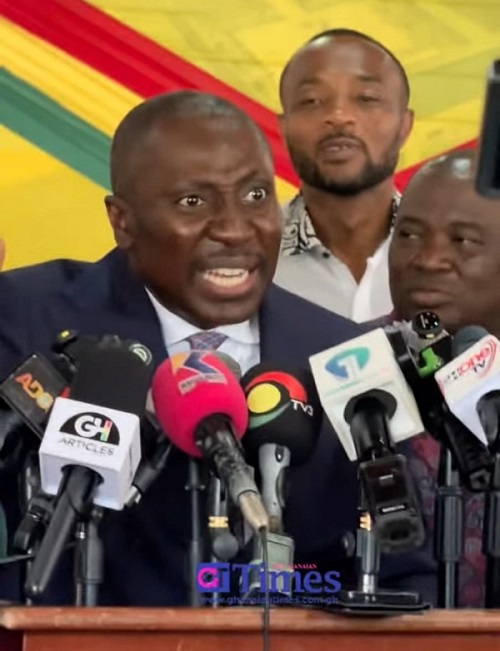
Minority Leader in Parliament, Alexander Afenyo-Markin, has maintained that the Minority’s concerns over the reported GH¢22 billion loss linked to the Ghana Gold Board (GoldBod) are not politically motivated.
He made the remarks at a press conference in Parliament on Tuesday, August 18, 2026, where he defended the Minority’s position on the financial implications of GoldBod’s domestic gold purchasing operations.
Mr Afenyo-Markin stated that the Minority was raising the concerns because Ghanaians deserved clear information about how public funds were used in the gold purchasing programme.
He explained that the figures being cited by the Minority were contained in the International Monetary Fund’s (IMF) report on Ghana and were therefore not figures manufactured by the opposition.
According to him, the IMF identified losses of about US$1.7 billion, equivalent to approximately GH¢22 billion, from the domestic gold purchasing programme in 2025.
He said the IMF attributed the losses to service and assay fees, discounts on gold sold to off-takers and exchange-rate differences between the rates used to purchase gold and the reference rate used by the Bank of Ghana for accounting purposes.
Mr Afenyo-Markin argued that the losses should be subjected to public scrutiny because GoldBod played a central role in buying, aggregating, assaying and exporting the gold, while the Bank of Ghana provided the financing.
He questioned why GoldBod should receive fees from the transactions while the associated losses were reflected on the books of the Bank of Ghana.
The Minority Leader stressed that the location of a loss in an institution’s accounts did not change its economic impact on the country.
He therefore called for answers on the prices paid for gold, how the prices were determined, the selection of off-takers, discounts applied to gold sales and the fees earned by GoldBod.
Mr Afenyo-Markin questioned the risk-sharing arrangement between GoldBod and the Bank of Ghana, arguing that the institution carrying out the commercial activity should not be able to benefit from transaction fees while another institution bears most of the financial risk.
He said the Minority was not seeking to trade insults with GoldBod officials but was focused on holding institutions accountable for the management of public resources.
He urged the government and GoldBod to address the concerns raised by the IMF and provide Ghanaians with clear explanations about the reported losses.
Mr Afenyo-Markin maintained that the Minority would continue to scrutinise the programme because the financial consequences ultimately affected Ghanaian taxpayers.
By: Jacob Aggrey







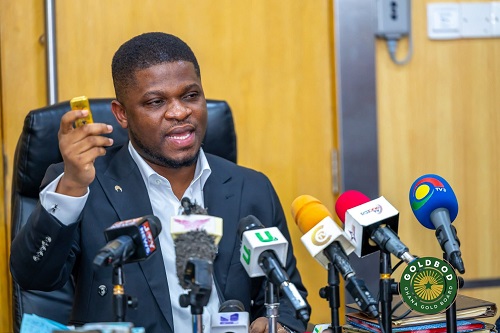
GoldBod Chief Executive Officer, Sammy Gyamfi, has defended the performance of the Ghana Gold Board (GoldBod) following criticism of its operations and management.
Speaking at tthe Government Accountability Series today at the Jubilee House, he said, no where is GoldBod accused for Bank of Ghana’s losses.
He therefore challenged the Minority Leader, Alexander Afenyo-Markin to point to where IMF attributed losses incurred by Bank of Ghana to GoldBod.
“I challenge Afenyo-Markin to point to any page, paragraph, sentence, phrase or punctuation mark in the said referenced report that the IMF accused the GoldBod of having caused the losses reported to have been incurred by the Bank of Ghana,” Sammy Gyamfi strongly stated.
He highlighted the achievements of the board, particularly its role in gold purchases, local refining and efforts to increase value addition in Ghana’s gold industry.
Mr Gyamfi said GoldBod had purchased and refined more than nine metric tonnes of gold in Ghana this year, describing the development as a major change in the country’s approach to gold value addition.
He contrasted the current situation with the previous administration, claiming that during that period, no gold produced in Ghana was refined locally.
“Not a gram of gold produced in Ghana was refined in Ghana. Today, over nine metric tonnes, just this year, of gold we have bought, refined in Ghana. We are changing the value addition story,” he said.
Mr Gyamfi defended the board against criticisms from the Minority that it had made losses, describing some of the comments as reckless and lacking proper research.
He argued that the current Minority leadership should be measured against the standards set by former occupants of the position, including J.H. Mensah, Papa Owusu-Ankomah and Osei Kyei-Mensah-Bonsu.
According to him, the former Minority leaders commanded respect in Parliament because of the depth of their contributions and their ability to engage issues with substance.
Mr Gyamfi referenced Ghana’s gold exports under the previous administration, claiming that about 170 tonnes of gold were exported through formal channels and generated more than $17 billion in one and a half years.
He questioned why those responsible for institutions that recorded significant losses during their tenure were criticising GoldBod’s current operations.
He further dismissed suggestions that he was intimidated by political attacks, noting that politics was a “contact sport” and those involved should be prepared to face criticism.
Mr Gyamfi maintained that he was working in the interest of Ghana and expressed confidence that the board’s record would ultimately speak for itself.
“We are serving Ghana in good conscience, and our record and posterity will speak for us,” he said.
By: Jacob Aggrey
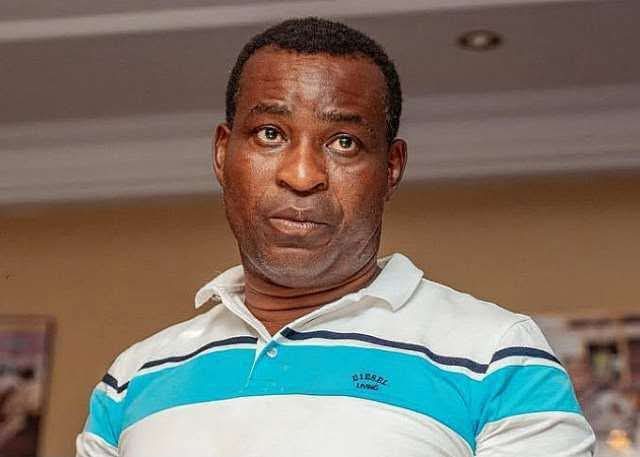
The bail application filed by lawyers for Ashanti Regional Chairman of the New Patriotic Party (NPP), Bernard Antwi Boasiako, popularly known as Chairman Wontumi, has been adjourned to October 15, 2026.
The adjournment followed the failure of Chairman Wontumi and his lawyers to appear before the court when the matter was called.
Deputy Attorney General, Justice Srem-Sai, was present in court.
The application for bail was filed by Chairman Wontumi’s legal team after he became involved in a criminal case before the court.
His lawyers are seeking his release on bail while the case continues.
The court, however, could not proceed with the bail application because neither Chairman Wontumi nor members of his legal team were present.
The development also comes at a time when lawyers are on their annual legal vacation, a period during which the normal activities of the courts and legal practitioners are reduced, although urgent matters may still be heard.
The court has therefore adjourned the bail application to October 15, when the matter is expected to come before it again.
Chairman Wontumi remains subject to the court’s orders pending the determination of the bail application.
By: Jacob Aggrey